Bahrain
Although Bahrain currently operates without a national dementia strategy, it provides a uniquely robust home-based care model through the Community Geriatric Psychiatry Service, which deploys multidisciplinary teams to deliver ongoing treatment and caregiver education directly to patients’ homes. To further assist families navigating the strong cultural expectation of informal caregiving, the Ministry of Health offers the Tawasul educational package to help relatives manage complex behavioral and communication challenges. Meanwhile, local researchers at Arabian Gulf University are contributing to global drug discovery efforts by investigating novel enzyme inhibitors designed to target Alzheimer’s-related tau pathology.

AD Rating
Diagnostic Pathway
Specialized Care
Caregiver Support
National Policies
Access to ATT-s
Highlights

Population
Median age
Health expenditure (% of GDP)
Diagnosis
Diagnosis
Show moreBahrain has no dedicated national Alzheimer’s disease diagnostic protocol, with suspected cognitive decline typically progressing from primary care to specialist assessment. Public healthcare for Bahraini citizens generally covers clinically indicated consultations, investigations, CT, and MRI; PET/CT is available through King Hamad University Hospital. The MMSE is used clinically, while MoCA and Trail Making Test have been used in local cognitive research. No credible published data are available on diagnostic waiting times. APOE ε4 has been investigated locally, but routine Alzheimer’s genetic testing is not documented, and CSF amyloid/tau biomarkers are not routinely available for clinical diagnosis.
Diagnosis pathway
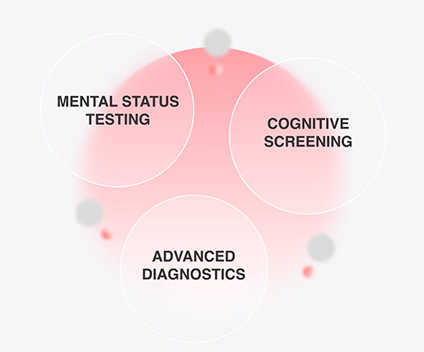
Bahrain has no dedicated national Alzheimer’s diagnostic protocol. Suspected cognitive decline is generally assessed first in primary care, followed by referral to psychiatric, geriatric, or other specialist services in the public or private sector. Ministry of Health facilities provide dementia-related psychiatric and geriatric care. Assessment typically incorporates medical and medication history, caregiver observations, cognitive testing, neuroimaging, and laboratory investigations. Cognitive tests assess domains such as memory, attention, language, and problem-solving; MRI or CT helps exclude structural causes, while blood tests investigate potentially reversible contributors, including vitamin deficiencies, thyroid dysfunction, and infections.
Bahrain does not have a dedicated national protocol specifically for Alzheimer’s disease diagnosis. In practice, the diagnostic route in Bahrain follows the same general pattern seen across the Gulf region: patients or their families typically first raise memory concerns with a general practitioner or family doctor at a primary health centre, since Bahrain’s public healthcare system, run by the Ministry of Health, is structured around primary care as the first point of contact before referral to secondary or tertiary services such as Salmaniya Medical Complex. Older people with suspected cognitive decline are referred onward to psychiatric or geriatric specialists; the Ministry of Health explicitly lists psychiatric care for elderly patients, including dementia, at the Psychiatric Hospital, alongside long-term nursing care at Muharraq Geriatric Hospital and outpatient follow-up across Ministry facilities (moh.gov.bh/Services/ElderlyCare). In the private sector, hospitals such as Bahrain Specialist Hospital and Royal Bahrain Hospital run psychiatry departments that see geriatric patients with dementia and related cognitive disorders, while King’s College Hospital London’s Dubai–Bahrain Clinic outlines a more detailed neurocognitive evaluation process for patients in Bahrain. Clinicians review medical history, current medications and behavioural observations reported by family members or carers. This is followed by cognitive testing to measure memory, attention, language and problem-solving, which helps establish the pattern and severity of impairment. Neuroimaging, usually MRI or CT scans, is then used to rule out structural causes such as stroke, tumours or other brain changes, and laboratory blood tests are used to exclude reversible causes of cognitive decline, including vitamin deficiencies, thyroid dysfunction or infections.
- https://www.moh.gov.bh/HealthInstitution/SalmaniyaMedicalComplex?lang=en
- moh.gov.bh/Services/ElderlyCare
- https://www.moh.gov.bh/Contact/HealthCenter/MHC?lang=en
- https://www.bahrainspecialisthospital.com/
- https://www.royalbahrainhospital.com/
- https://bahrain.kingscollegehospitaldubai.com/
- https://www.moh.gov.bh/Content/Files/HealthInstitution/Patients_and_Visitors_Guide.pdf
- https://www.moh.gov.bh/HealthInstitution/Radiology
- https://bahrain.kingscollegehospitaldubai.com/neurocognitive-disorders/
- https://www.bahrain.bh/wps/portal/en/BNP/HomeNationalPortal/ContentDetailsPage/!ut/p/z1/pZRdc6IwGIX_Cje9ZPISwtelrlVs19pVaWtunBBCzS5fjdGt_35xZ91OYQR3NnfAOYST87wgil4QLdhBvjIty4Jl9fWauhtr6kDofwF4HBEM356ChTucWTCb2Oj5s8BaRVALpoPFfDyygFiIXuOHC2sA1_n_CsKHxxG489D3sDe05yP82R9-XTrgzh6WQyuaWOHURU-IIlpxmaB1woAR33HMhBBmEpHaph8kwiSMOTzBgjBBTmpe6Epv0Touqo0obuBY7pWRyVQYsjBitlVM1ne3gmV6y5kSN6BExrRIDF1Wku_Oz4ydUAfJxa4vhN0I0crY9LdS0o6O7qGnxPtGCcEqcMHFeEDwcmLDvOVvC_6txLaAdjPyfKql5wQ6z-DEad8mtK-FhiCIojG4_mRMiOsvPMdD6zqmd_ENq7rHgxQ_UVSUKq9nb_mBpkg9L_EsbvKY-yYBnJgBw7HJA4xTQtIUMKAQ0F33N9qneZbf397ooMa4LLR41-jlzLF4r7JSiQ-E-TEWqqaU75XUxzbGTLG4Zl4LVfz5Xxi_LWeHsdvnudTN3I16p_bl3FeN5F0fXl2h_394l6JAVR5FUe7bR1kv88fiNp3d2oTGzmu-mWl_8AtTXpER/
Wait times
There is no credible published figure specifically for the interval from GP presentation to specialist dementia assessment, Alzheimer’s disease diagnosis, CT/MRI, or final diagnosis in Bahrain.
Diagnosis cost
Bahraini citizens generally receive free government healthcare under the Sehati programme, including primary and specialist consultations and clinically indicated diagnostic investigations. CT and MRI are available through the public system, although MRI requires consultant referral.
Citizens are entitled to free government health coverage under the national social health insurance programme, Sehati. Government-funded primary healthcare includes diagnosis and referral to secondary/specialist care when required. GP/family-doctor visits and public-sector specialist care are generally covered for Bahraini citizens, rather than requiring routine consultation copayments. Diagnostic investigations are also covered within the government system when clinically indicated. Bahrain’s public radiology service provides CT and MRI, although expensive investigations such as MRI require referral from a consultant.
Cognitive tests
The Mini-Mental State Examination (MMSE) is used within Bahrain’s healthcare system. There is also evidence of the Montreal Cognitive Assessment (MoCA) and Trail Making Test (TMT) being used in cognitive research conducted at Salmaniya Medical Complex, although this study concerned post-stroke cognitive impairment rather than Alzheimer’s disease specifically.
Imaging tests
Computed tomography (CT) and magnetic resonance imaging (MRI) are available in Bahrain’s tertiary healthcare system. The Ministry of Health states that Salmaniya Medical Complex provides both CT and MRI, with these examinations available to outpatients and around the clock for inpatients and emergency patients.
PET/CT is also available in Bahrain, but it is more centralised. Salmaniya Medical Complex does not have its own PET/CT unit; the Ministry of Health states that patients requiring PET/CT are coordinated through King Hamad University Hospital (KHUH). Other published evidence confirms a Nuclear Medicine Department with PET/CT capability at KHUH, and literature describing Bahrain’s tertiary healthcare infrastructure reports PET/CT and PET/MRI at KHUH.
Genetic tests
There is evidence that APOE genotype has been investigated in Bahrain: a Bahrain-based study of cognitive impairment after stroke incorporated the APOE ε4 allele as a potential genetic predictor, demonstrating local capability or access to APOE-related research testing. However, there is no evidence that APOE genotyping or diagnostic sequencing of APP, PSEN1 and PSEN2 is routinely offered specifically for Alzheimer’s disease.
Biomarker tests
Alzheimer’s disease CSF biomarkers — Aβ42, Aβ42/Aβ40, total tau or phosphorylated tau — are not routinely available for clinical diagnosis.
Cognitive Tests
Cognitive Tests
The Mini-Mental State Examination (MMSE) is used within Bahrain’s healthcare system. There is also evidence of the Montreal Cognitive Assessment (MoCA) and Trail Making Test (TMT) being used in cognitive research conducted at Salmaniya Medical Complex, although this study concerned post-stroke cognitive impairment rather than Alzheimer’s disease specifically.
Imaging Tests
Imaging Tests
Computed tomography (CT) and magnetic resonance imaging (MRI) are available in Bahrain’s tertiary healthcare system. The Ministry of Health states that Salmaniya Medical Complex provides both CT and MRI, with these examinations available to outpatients and around the clock for inpatients and emergency patients.
PET/CT is also available in Bahrain, but it is more centralised. Salmaniya Medical Complex does not have its own PET/CT unit; the Ministry of Health states that patients requiring PET/CT are coordinated through King Hamad University Hospital (KHUH). Other published evidence confirms a Nuclear Medicine Department with PET/CT capability at KHUH, and literature describing Bahrain’s tertiary healthcare infrastructure reports PET/CT and PET/MRI at KHUH.
Genetic Tests
Genetic Tests
There is evidence that APOE genotype has been investigated in Bahrain: a Bahrain-based study of cognitive impairment after stroke incorporated the APOE ε4 allele as a potential genetic predictor, demonstrating local capability or access to APOE-related research testing. However, there is no evidence that APOE genotyping or diagnostic sequencing of APP, PSEN1 and PSEN2 is routinely offered specifically for Alzheimer’s disease.
Biomarker Tests
Biomarker Tests
Alzheimer’s disease CSF biomarkers — Aβ42, Aβ42/Aβ40, total tau or phosphorylated tau — are not routinely available for clinical diagnosis.
Treatment & Care
Treatment & care
Show moreBahrain’s dementia care is integrated into geriatric and psychiatric services, with specialist home visits and 24-hour nursing care available, but no documented network of dedicated Alzheimer’s centres. Five Ministry of Health mobile units and community elderly-care centres provide broader home and social support nationwide, although dementia-specific day-care and palliative services remain limited or undocumented. For Bahraini citizens, Alzheimer’s treatment is primarily state-funded, with SEHATI covering eligible chronic-disease treatment and approved medicines. There is no Alzheimer’s-specific caregiver allowance, although disability benefits of BHD 100–200 monthly may apply following formal assessment. The Ministry of Health also provides Tawasul, a dementia-specific education programme supporting families and caregivers.
Specialized facilities and services
Bahrain has specialised dementia services within its geriatric and psychiatric system, but no documented network of dedicated memory clinics or Alzheimer’s centres. The Psychiatric Hospital provides geriatric psychiatry and multidisciplinary home visits for people with dementia aged 65+, while Muharraq Geriatric Hospital offers 24-hour nursing care. Broader elderly-care services include community day centres and five mobile Ministry of Health units covering all governorates, providing home nursing, personal care, and family counselling. However, dedicated dementia day-care and dementia-specific palliative care remain limited or undocumented.
Specialised dementia and Alzheimer’s care. Bahrain has specialist services for dementia within its public geriatric and psychiatric system, rather than a clearly documented network of stand-alone memory clinics. The Ministry of Health identifies a Geriatric Psychiatry Unit at the Psychiatric Hospital, which treats older adults with conditions including dementia and depression. It also provides a community geriatric psychiatry service for people aged 65+, including people with dementia, with multidisciplinary teams making regular home visits. Long-term 24-hour nursing care is available through Muharraq Geriatric Hospital. Thus, specialised dementia care exists, but it is concentrated within a small number of national specialist services rather than distributed through multiple dedicated Alzheimer’s disease centres.
The Ministry of Social Development supervises several elderly day-care centres located in residential communities across the country, providing social, health, psychological, recreational and rehabilitation support, although these are not specifically dementia centres. Home healthcare has particularly broad geographical coverage: the Ministry of Health operates five mobile elderly-care units covering all health regions/governorates, providing nursing, personal care, family counselling and other services at home for people aged 60+ who cannot attend health centres. Dementia patients aged 65+ can additionally receive home visits from the geriatric psychiatry service. This means community and home support is available beyond the main urban hospitals, although dedicated dementia day-care provision is limited.
For people with advanced dementia, relevant long-term and supportive care is available through services such as Muharraq Geriatric Hospital, which provides 24-hour nursing care, alongside hospital, primary-care and home nursing services. However, there is no dedicated dementia-specific palliative-care service.
Approved medication
| Generic Name | Trade Name | Used for |
|---|---|---|
| Donepezil | Aricept, Aricept ODT, Adlarity, Eranz, Memac, Alzepil, Davia, Donecept, Donep, Donepex, Donesyn, Dopezil, Yasnal, Memorit, Pezale, Redumas, Zolpezil, Namzaric* | Donepezil is indicated for the symptomatic treatment of mild to moderately severe Alzheimer’s dementia. |
| Rivastigmine | Exelon, Exelon Patch, Prometax, Rivastach, Nimvastid | Symptomatic treatment of mild to moderately severe Alzheimer’s dementia. Symptomatic treatment of mild to moderately severe dementia in patients with idiopathic Parkinson’s disease. |
| Memantine | Namenda, Namenda XR, Ebixa, Memary, Axura, Akatinol, Maruxa, Nemdatine, Namzaric* | Treatment of adult patients with moderate to severe Alzheimer’s disease. |
*Namzaric = combination of Donepezil and Memantine
Treatment cost
Alzheimer’s treatment for Bahraini citizens is primarily state-funded through the public healthcare system. Government hospitals and health centres provide care free of charge, while SEHATI covers chronic-disease treatment and prescribed medicines included in the approved medicines list.

For Bahraini citizens, Alzheimer’s treatment in the public healthcare system is primarily financed by the state. Bahrain’s Ministry of Health states that it provides citizens with free treatment and rehabilitation services, and WHO documentation confirms that healthcare at government hospitals and health centres is free of charge for Bahraini citizens. The national health-insurance law (SEHATI) also provides for coverage of treatment, including chronic-disease treatment, and establishes coverage for prescribed medicines included in the approved medicines list.
Caregiver support
Bahrain has no Alzheimer’s-specific caregiver allowance, although legislation provides broader material and social support for older people and families providing care at home. People with formally assessed disabilities may receive BHD 100–200 per month, depending on severity, but this is a benefit for the person with the disability, not a caregiver payment, and Alzheimer’s does not automatically confer eligibility. The Ministry of Health also offers Tawasul, a dementia-specific family education package covering communication, behavioural difficulties, depression, driving, and caregiver issues.
There is no financial allowance specifically for care partners of people with Alzheimer’s disease in Bahrain. However, Bahrain has broader state programmes for older people and people with disabilities that may indirectly support a family affected by Alzheimer’s disease. Bahrain’s Law No. 58 of 2009 on the Rights of the Elderly explicitly requires the state to provide material, health and social support to older citizens and, importantly, to provide support to families so that they can care for older relatives within the family home. The law does not, however, establish a specific cash payment for an Alzheimer’s disease caregiver.
There is direct financial assistance for disability, which may be relevant if a person with Alzheimer’s disease is formally assessed as having a qualifying disability. Under Bahrain’s disability legislation, eligible people with disabilities receive a monthly disability allowance. Current rules provide BHD 100 per month for disability and BHD 200 per month for severe disability, with severity determined by the Disability Assessment Committee. The money is an entitlement of the person with the disability rather than a salary for the family caregiver, and Alzheimer’s disease does not automatically confer eligibility.
There is also a dementia-specific family education initiative called “Tawasul” (تواصل). The Ministry of Health describes Tawasul as an educational package specifically developed for people with senile dementia and their families. It forms part of a broader set of Ministry resources addressing Alzheimer’s disease, difficult behaviours associated with dementia, communication difficulties, depression, driving and caregiver issues.
Policy
Policy
Show moreBahrain has no dedicated national dementia strategy or action plan, and no public development plans have been announced despite calls from medical professionals. Law No. 74 of 2006 allows court-appointed guardianship where legal incapacity is established, potentially limiting autonomy and supported decision-making for people with cognitive impairment, in contrast with Article 12 of the UN CRPD. Dementia awareness is also mixed: a 2025 study found that 42.2% viewed dementia as normal ageing and 24.2% as a mental illness, despite 70.9% correctly defining it. Broader GCC research identifies family reputation, privacy, marriageability concerns, and religious or supernatural interpretations as potential contributors to stigma, although these findings are not dementia-specific.
National dementia plan
Bahrain currently lacks a dedicated national strategy or action plan for Alzheimer’s disease and dementia.
Upcoming plans
While medical professionals have urged action, the government of Bahrain has not publicly announced the development of a national dementia plan.
Policy gaps
Legal barriers
Bahrain permits guardianship when individuals are formally assessed as lacking legal capacity, which may stigmatise people with cognitive impairment by assuming broad incapacity. This contrasts with the CRPD’s supported-decision-making principle, which emphasises individual abilities, preferences, and appropriate support.
In Bahrain’s report to the UN CRPD Committee, the government stated that Bahraini law No. 74 of 2006 treats people with “mental disabilities” as lacking legal capacity and that courts may assign guardianship where official reports establish that a person lacks capacity. Such a system can contribute to stigma when cognitive impairment is treated as global inability rather than assessing what decisions the individual remains able to make and what support could enable them to exercise their own preferences. This contrasts with the supported-decision-making principle in Article 12 of the UN Convention on the Rights of Persons with Disabilities, which Bahrain has ratified.
Cultural barriers
Dementia awareness in Bahrain remains mixed, with a 2025 study finding that 42.2% of respondents viewed dementia as a normal part of ageing and 24.2% as a mental illness, despite 70.9% correctly defining it. Broader GCC research identifies family reputation, privacy, marriageability concerns, and religious or supernatural interpretations as contributors to mental-health stigma. Although not dementia-specific, these factors may influence how cognitive decline is perceived and disclosed in Bahrain.
There is some Bahrain-specific evidence of misconceptions about dementia, although the evidence base remains small. A 2025 Bahrain study on dementia awareness reported substantial confusion among respondents: while 70.9% correctly defined dementia, 42.2% also believed dementia was part of normal ageing and 24.2% viewed it as a mental illness. The “normal ageing” misconception is particularly relevant because it can normalise memory loss and behavioural changes rather than encouraging families to seek diagnosis and treatment.
A recent GCC study including the Gulf states identifies mental-health stigma as being shaped by family honour and reputation, concerns about marriageability, strong family privacy/nondisclosure norms, and religious or supernatural interpretations of psychological distress. Because Bahrain is included within this GCC cultural setting, these mechanisms could influence how families interpret or disclose cognitive decline; however, the study concerns mental illness rather than Alzheimer’s disease specifically.
Research
Research
Show moreBahrain’s NHRA is responsible for clinical trial approval and regulation, but the country has no dedicated public-facing national trial registry, with studies generally registered through international databases such as ClinicalTrials.gov. Arabian Gulf University has contributed to preclinical Alzheimer’s drug-discovery research targeting MARK4, including 2020 work on pyrazolopyrimidine inhibitors and 2025 research on apigenin. These studies remain laboratory-based and do not demonstrate clinical effectiveness.
Selected academic institutions
Clinical trials and registries
The National Health Regulatory Authority (NHRA), specifically through its Clinical Trials & CPD Regulation Section, is the primary body responsible for approving and regulating all clinical trials in the Kingdom. It ensures that all human research methodologies meet strict ethical, legal, and safety protections. Bahrain does not maintain a dedicated, public-facing national registry specifically for patients to search for active clinical trials. Any international interventional studies or major observational studies operating within the country are typically registered on global databases like ClinicalTrials.gov.

Selected innovative methods
Arabian Gulf University researchers have participated in preclinical Alzheimer’s drug-discovery research targeting MARK4, an enzyme implicated in tau phosphorylation. A 2020 study examined pyrazolopyrimidine compounds as MARK4 inhibitors, while a 2025 international collaboration investigated apigenin as another potential inhibitor. These studies represent early-stage laboratory research and do not provide evidence of clinical effectiveness in Alzheimer’s patients.
Researchers at Arabian Gulf University in Manama have collaborated on studies targeting MARK4 (microtubule affinity-regulating kinase 4), an enzyme implicated in tau phosphorylation and therefore relevant to Alzheimer’s pathology. A 2020 study investigated pyrazolopyrimidine compounds as MARK4 inhibitors, using biochemical and computational methods to identify compounds capable of interacting with and inhibiting the enzyme. This is genuinely Alzheimer’s-directed drug-discovery research, although it remains preclinical and the work was an international collaboration rather than a solely Bahraini discovery.
More recently, a researcher from Arabian Gulf University co-authored a 2025 study of apigenin, a naturally occurring flavonoid, as another potential MARK4 inhibitor. The researchers investigated whether blocking MARK4 could offer a route toward reducing Alzheimer’s disease-related molecular pathology. This is early-stage laboratory research — not evidence that apigenin is an effective treatment for Alzheimer’s patients.
Support
Support
Show moreBahrain provides free multidisciplinary home-based geriatric psychiatry for people aged 65+, including those with dementia, covering assessment, follow-up treatment, and caregiver education. However, no dedicated media outlet focused exclusively on Alzheimer’s disease or dementia has been identified.
Selected national associations, patient family associations, NGOs:
Selected initiatives
Bahrain’s free Community Geriatric Psychiatry Service provides multidisciplinary home-based dementia assessment, diagnosis, treatment, follow-up, and caregiver education, enabling older people to receive continuing specialist support at home.
Bahrain's Ministry of Health provides the Community Geriatric Psychiatry Service free of charge to citizens and residents aged 65+, including people with dementia. A multidisciplinary team comprising a geriatric psychiatrist, psychiatrist, nurse and social worker conducts regular home visits. The team provides assessment, diagnosis, follow-up treatment and education for both the person and their caregivers, allowing some people with dementia to receive continuing specialist support in their own homes rather than relying entirely on outpatient or institutional care.
Deprecated: trim(): Passing null to parameter #1 ($string) of type string is deprecated in /home/bcdafabe/public_html/wp-content/themes/bricks-child/functions.php on line 753
Dedicated media outlets
Bahrain does not have a dedicated media outlet focused exclusively on Alzheimer’s disease or dementia.