Georgia
While currently operating without a dedicated national dementia strategy, the country is actively working to change this through the “Another Step Toward a Dignified Old Age” initiative, a collaborative project aimed at establishing a formal National Dementia Program. In the meantime, the clinical community continues to adapt to local needs — such as utilising the translated and validated Georgian version of cognitive assessments — as researchers at institutions like Tbilisi State University develop crucial epidemiological data to guide future public health policies.

AD Rating
Diagnostic Pathway
Specialized Care
Caregiver Support
National Policies
Access to ATT-s
Highlights

Population
Median age
Health expenditure (% of GDP)
Diagnosis
Diagnosis
Show moreDementia assessment in Georgia follows a specialist-led clinical pathway, although no national Alzheimer’s-specific protocol is publicly available. Evaluation combines medical and caregiver history, neurological and functional assessment, cognitive screening, laboratory testing, and CT or MRI. The validated Georgian MoCA is widely used and may outperform the MMSE for detecting mild cognitive impairment and Alzheimer’s disease. PET/CT is available in specialised centres, but routine genetic, CSF, and blood biomarker testing is not documented. National waiting-time data are unavailable. GP visits are generally fully funded, while specialist coverage ranges from 70% for most adults to 100% for eligible referred groups.
Diagnosis pathway
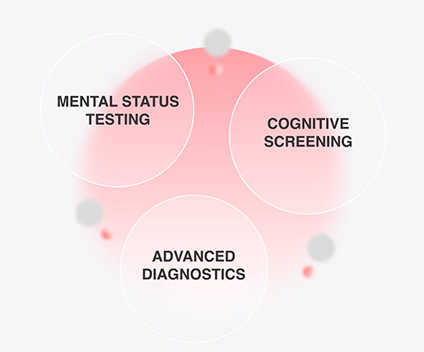
Alzheimer’s assessment in Georgia follows a specialist-led clinical pathway, although no publicly accessible disease-specific national protocol has been identified. Evaluation includes patient and caregiver history, physical and neurological examination, functional assessment, and cognitive screening using the MMSE or MoCA. Laboratory tests exclude reversible causes, while CT or MRI assesses structural abnormalities. If standard evaluation is inconclusive, detailed neuropsychological testing may be undertaken, with CSF biomarkers or PET imaging considered selectively in specialist settings.
The diagnostic pathway for Alzheimer’s disease in Georgia is based on clinical assessment and specialist evaluation, although no publicly accessible national Alzheimer’s disease-specific diagnostic protocol was identified. Patients with memory complaints, cognitive decline, or behavioural changes are typically referred to or seek assessment from a specialist, who performs a comprehensive diagnostic evaluation., The initial assessment includes a detailed medical history obtained from both the patient and a family member or caregiver, together with a physical and neurological examination and an assessment of functional impairment. Cognitive function is evaluated using validated screening tools such as the Mini-Mental State Examination (MMSE) or the Montreal Cognitive Assessment (MoCA).
Following the clinical and cognitive assessment, laboratory investigations are performed to exclude potentially reversible causes of cognitive impairment, including thyroid dysfunction, vitamin B12 deficiency, and metabolic abnormalities. Structural neuroimaging with computed tomography (CT) or magnetic resonance imaging (MRI) is routinely recommended to identify cerebrovascular disease, brain tumours, hydrocephalus, or other structural abnormalities that may contribute to cognitive symptoms. In cases where the diagnosis remains uncertain after standard evaluation, patients may undergo more detailed neuropsychological testing, while cerebrospinal fluid biomarker analysis or positron emission tomography (PET) imaging may be considered in selected specialist settings.
Wait times
No published evidence was identified reporting national waiting times for general practitioner (GP) appointments, specialist consultations, neuroimaging, or other diagnostic investigations for Alzheimer’s disease in Georgia.
Diagnosis cost
Georgia provides full state coverage for GP consultations. Referred specialist visits are fully covered for pensioners, severely disabled people, and socially vulnerable households, while other adults receive 70% coverage and pay a 30% copayment.
For GP or family doctor visits, the state typically covers 100% of the cost. Coverage for specialist visits, such as consulting a neurologist for cognitive decline, depends on the patient’s specific target group. Pensioners, individuals living with severe disabilities, and registered socially vulnerable households receive 100% coverage for specialist consultations, provided they obtain a direct referral from their family doctor. For the general adult population outside of these highly subsidised groups, specialist visits are covered at 70%, which requires a formal copayment of 30% from the patient.
Cognitive tests
The clinical community in the country of Georgia heavily relies on adapted international tools. Specifically, the Georgian version of the MoCA has been formally translated, validated, and widely adopted as a primary screening instrument. Clinical studies within the country have demonstrated that the Georgian MoCA is superior to the MMSE for detecting mild cognitive impairment and Alzheimer’s disease in the local population.
Imaging tests
CT and MRI are available in Georgia through major public and private hospitals and diagnostic centres. PET/CT is mostly available in private specialised centres, including the National Centre of Surgery in Tbilisi, as well as in some public centres.
- https://www.newhospitals.ge/en/department/radiologia
- https://www.mcg.ge/en/services/diagnostic-services/radiology
- https://mardaleishvili.com/en/cell/center-for-radiation-and-nuclear-medicine/
- https://kirurgia.ge/en/full-department/Digital-PET-CT/61
- https://toduaclinic.ge/en
- https://www.ingorokvaclinic.org/
Genetic tests
There is no evidence that genetic testing for Alzheimer’s disease (e.g. APOE, APP, PSEN1 or PSEN2) is routinely offered as part of clinical dementia care in Georgia.
Biomarker tests
There is no published evidence that cerebrospinal fluid (CSF) biomarkers (Aβ42, total tau and phosphorylated tau) or blood-based biomarkers for Alzheimer’s disease are routinely available in Georgia.
Cognitive Tests
Cognitive Tests
The clinical community in the country of Georgia heavily relies on adapted international tools. Specifically, the Georgian version of the MoCA has been formally translated, validated, and widely adopted as a primary screening instrument. Clinical studies within the country have demonstrated that the Georgian MoCA is superior to the MMSE for detecting mild cognitive impairment and Alzheimer’s disease in the local population.
Imaging Tests
Imaging Tests
CT and MRI are available in Georgia through major public and private hospitals and diagnostic centres. PET/CT is mostly available in private specialised centres, including the National Centre of Surgery in Tbilisi, as well as in some public centres.
- https://www.newhospitals.ge/en/department/radiologia
- https://www.mcg.ge/en/services/diagnostic-services/radiology
- https://mardaleishvili.com/en/cell/center-for-radiation-and-nuclear-medicine/
- https://kirurgia.ge/en/full-department/Digital-PET-CT/61
- https://toduaclinic.ge/en
- https://www.ingorokvaclinic.org/
Genetic Tests
Genetic Tests
There is no evidence that genetic testing for Alzheimer’s disease (e.g. APOE, APP, PSEN1 or PSEN2) is routinely offered as part of clinical dementia care in Georgia.
- https://www.newhospitals.ge/en/department/radiologia
- https://www.mcg.ge/en/services/diagnostic-services/radiology
- https://mardaleishvili.com/en/cell/center-for-radiation-and-nuclear-medicine/
- https://kirurgia.ge/en/full-department/Digital-PET-CT/61
- https://toduaclinic.ge/en
- https://www.ingorokvaclinic.org/
Biomarker Tests
Biomarker Tests
There is no published evidence that cerebrospinal fluid (CSF) biomarkers (Aβ42, total tau and phosphorylated tau) or blood-based biomarkers for Alzheimer’s disease are routinely available in Georgia.
Treatment & Care
Treatment & care
Show moreSpecialised dementia care in Georgia is limited and concentrated in Tbilisi, with no nationwide memory-clinic or day-centre network. Private facilities offer residential care, while the Georgian Alzheimer’s Association provides community and caregiver support. Palliative provision is similarly centralised, reaching only around 14% of those requiring it and lacking dedicated dementia programmes. Universal healthcare and private insurance subsidise Alzheimer’s treatment, but incomplete coverage leaves families with copayments and out-of-pocket expenses for uncovered services, medicines, and supplies. Although some chronic-disease medicines receive substantial subsidies, informal caregivers have no dedicated financial allowance or paid family-care benefit, receiving mainly educational and informational support.
Specialized facilities and services
Dementia services in Georgia remain limited and concentrated in Tbilisi, without national memory-clinic or day-centre networks. Private facilities provide specialised residential and nursing care, while the Georgian Alzheimer’s Association offers community support. Palliative provision is highly centralised, reaches relatively few people, and lacks dedicated dementia-specific programmes.
Georgia has limited dedicated Alzheimer’s disease services and no national network of memory clinics. Diagnosis and specialist management are primarily provided through neurology, psychiatry and geriatric services in tertiary hospitals, particularly in Tbilisi. While state-sponsored, long-term facilities are scarce, the private sector has established nursing homes and agencies that explicitly offer specialised care for individuals living with Alzheimer’s disease. Residential facilities offering specialised dementia care also exist in Tbilisi, but there is no evidence of a nationwide network of Alzheimer’s disease-specific day centres. Day-time engagement and community support are facilitated by the Georgian Alzheimer’s Association. Palliative care is available in Georgia and is recognised within the healthcare system, but access remains limited and highly centralised. Recent national data indicate that only around 14% of people estimated to require palliative care receive it. Most inpatient palliative care services and home-based palliative care teams are located in Tbilisi, with very limited provision elsewhere in the country. Dementia-specific palliative care is not widely available, and people with Alzheimer’s disease generally receive palliative care through broader palliative care services rather than dedicated dementia programmes.
Approved medication
| Generic Name | Trade Name | Used for |
|---|---|---|
| Donepezil | Aricept, Aricept ODT, Adlarity, Eranz, Memac, Alzepil, Davia, Donecept, Donep, Donepex, Donesyn, Dopezil, Yasnal, Memorit, Pezale, Redumas, Zolpezil, Namzaric* | Donepezil is indicated for the symptomatic treatment of mild to moderately severe Alzheimer’s dementia. |
| Rivastigmine | Exelon, Exelon Patch, Prometax, Rivastach, Nimvastid | Symptomatic treatment of mild to moderately severe Alzheimer’s dementia. Symptomatic treatment of mild to moderately severe dementia in patients with idiopathic Parkinson’s disease. |
| Galantamine | Razadyne, Razadyne ER, Reminyl, Reminyl XL, Nivalin, Lycoremine, Galsya | Galantamine is indicated for the symptomatic treatment of mild to moderately severe dementia of the Alzheimer type. |
| Memantine | Namenda, Namenda XR, Ebixa, Memary, Axura, Akatinol, Maruxa, Nemdatine, Namzaric* | Treatment of adult patients with moderate to severe Alzheimer’s disease. |
*Namzaric = combination of Donepezil and Memantine
Treatment cost
Public healthcare and private insurance help finance Alzheimer’s treatment in Georgia, with minimal copayments for eligible chronic-disease medicines. Nevertheless, incomplete coverage leaves families responsible for substantial costs associated with uncovered medicines, specialised therapies, and supplies.

In Georgia, treatment for Alzheimer’s disease is financed through the country’s Universal Health Care Programme and private health insurance, although coverage is incomplete. The Universal Programme provides publicly financed coverage for much of the population, but patients often continue to pay part of the cost of outpatient care and medicines. As a result, out-of-pocket spending remains substantial, particularly for chronic conditions. Despite these state provisions, copayments and direct out-of-pocket costs remain a reality for families managing Alzheimer’s disease. For specific medications covered under the Program for Providing Medicine for the Chronic Diseases (PPMCD), eligible patients are responsible for a minimal copayment, typically covering only 10% of the medicine’s value, which is capped at a very low symbolic amount. However, if a patient requires specialised therapies, medical supplies, or medications that fall outside the state’s coverage limitations, the family must cover the remaining balance out of pocket.
- https://www.euaa.europa.eu/sites/default/files/publications/2025-12/2025_12_MedCOI_Georgia_Neurology_0.pdf
- https://www.who.int/europe/publications/i/item/9789289059121
- https://www.who.int/europe/news/item/12-07-2021-georgia-on-the-path-to-universal-health-coverage-but-gaps-persist
- https://rustaveli.org.ge/res/docs/a623ca48786d527dcd2450e0af630fb629f6f290.pdf
Caregiver support
No dedicated financial support exists for dementia caregivers in Georgia, while the Georgian Alzheimer’s Association provides non-financial assistance focused mainly on caregiver knowledge and information.
Georgia does not have financial support schemes specifically for care partners of people living with Alzheimer’s disease. No national caregiver allowance, paid family caregiving programme, or dementia-specific financial benefit for informal caregivers was identified. The Georgian Alzheimer’s Association has had initiatives to improve carer knowledge and access to information but there is no evidence that they provide direct financial assistance to caregivers of people living with Alzheimer’s disease.
Policy
Policy
Show moreGeorgia currently has no adopted national dementia strategy, dedicated legislation, or specific state programme, although a government-supported initiative is developing a Framework Concept for a National Dementia Programme. Limited specialist and community services leave families central to care, creating substantial emotional and financial pressures. Cultural expectations of family responsibility and poor public awareness reinforce stigma, while cognitive decline may be dismissed as normal ageing. These misconceptions can delay help-seeking, discourage open discussion, and contribute to the isolation and marginalisation of affected families.
National dementia plan
Georgia does not have a standalone national Alzheimer’s disease or dementia strategy.
Upcoming plans
There is currently no officially adopted or published national dementia strategy in Georgia. However, a government-supported initiative, Another Step Toward a Dignified Old Age, is developing a Framework Concept for a National Dementia Programme and advocating for its integration into state policy.
Policy gaps
Legal barriers
Dementia care in Georgia operates without a national strategy, specific legislation, or dedicated state programme. Limited specialist and community services increase reliance on informal family caregivers, creating significant financial and emotional pressures and reinforcing dementia as primarily a private family responsibility.
Georgia does not currently have a national dementia or Alzheimer’s disease strategy, nor dementia-specific legislation governing the rights and care of people living with Alzheimer’s disease. Dementia care is largely delivered through the general healthcare and social protection systems, with no dedicated legal framework addressing issues such as supported decision-making, driving, advance care planning, or long-term dementia care. Institutionally, dementia care in Georgia relies heavily on informal family caregiving because specialised community services, memory clinics, and residential dementia care remain limited. Qualitative research conducted in Georgia found that there is effectively no state programme specifically addressing Alzheimer’s disease, leaving families to manage care largely without public-sector support. This lack of institutional assistance places considerable financial and emotional challenges on care partners and may perpetuate the perception that dementia is a private family issue rather than a condition warranting government support.
Cultural barriers
Poor dementia awareness and strong family-care expectations reinforce stigma in Georgia. Cognitive decline may be mistaken for normal ageing, delaying help-seeking and contributing to isolation, emotional and financial pressures, and social marginalisation.
Cultural stigma surrounding Alzheimer’s disease in Georgia is closely linked to limited public awareness and the expectation that families should provide care. Qualitative interviews with relatives of people living with dementia found that families often face the disease largely alone, experiencing social isolation, emotional distress, and financial hardship. Because dementia is poorly understood by the general public, cognitive decline may be viewed simply as an inevitable part of ageing rather than as a diagnosable neurological disorder. These misconceptions can delay help-seeking and discourage open discussion of dementia, contributing to the social marginalisation of both people living with dementia and their care.
Research
Research
Show moreGeorgia’s dementia research encompasses regulated clinical studies, molecular and genetic research, biomarker discovery, neuroimaging, therapeutic investigation, and national prevalence modelling. International collaborations support research into early diagnosis and potential treatments, while prevalence estimates inform healthcare planning. International registries such as ClinicalTrials.gov provide the main public route for identifying recruiting Alzheimer’s trials in Georgia.
Selected academic institutions
Clinical trials and registries
Clinical trials are overseen by the State Regulation Agency for Medical Activities (RAMA) and the LEPL Agency for Regulation of Medical and Pharmaceutical Activities, which operate under the Ministry of Health. While the government tracks studies internally, people living with Alzheimer’s disease and their families looking for actively recruiting interventional Alzheimer’s disease trials should utilise international databases like ClinicalTrials.gov and filter the location specifically to Georgia.
Selected innovative methods
Georgia’s dementia research integrates molecular, genetic, biomarker, neuroimaging, and therapeutic studies with evidence-based national prevalence modelling, aiming to improve early diagnosis, identify future treatments, and strengthen healthcare planning.
Researchers at the International Center for Neuroscience Research in Tbilisi are studying the molecular and genetic mechanisms of brain aging and Alzheimer’s disease. Their work combines biomarker discovery, neuroimaging, and translational neuroscience to identify early indicators of dementia and investigate potential therapeutic targets. The center also collaborates with international researchers on studies of approved and experimental treatments, with the goal of improving early diagnosis and developing future interventions.
A major area of innovation in Georgia is estimating the national challenge of dementia to guide healthcare planning. Researchers from Ivane Javakhishvili Tbilisi State University have developed the country’s first evidence-based estimates of dementia prevalence by adapting European epidemiological models to Georgia’s population. This work provides policymakers with essential data for planning dementia services and identifying future healthcare needs.
Support
Support
Show moreGeorgia lacks dedicated dementia foundations and media outlets. The Georgian Alzheimer’s Association provides information and support, while Another Step Toward a Dignified Old Age promotes policy development, awareness, professional training, advocacy, and improved dementia services.
Selected national associations, patient family associations, NGOs:
Selected initiatives
Another Step Toward a Dignified Old Age aims to advance Georgia’s National Dementia Programme through evidence-based policy, public awareness, professional training, and advocacy, strengthening early diagnosis, care, and support for affected families.
Another Step Toward a Dignified Old Age initiative
Dedicated media outlets
Currently, there are no dedicated media outlets or standalone news portals in the country of Georgia that focus exclusively on Alzheimer’s disease. Instead, news, medical updates, and support resources are primarily disseminated through the Georgian Alzheimer’s Association.