Luxembourg
Luxembourg has one of Europe’s stronger dementia systems, combining universal social health insurance, statutory long-term-care insurance, a dedicated national dementia plan and a highly developed dementia-specific NGO infrastructure. ALA provides home care, six day centres, specialized residential care, counselling, family education and 24/7 support, while the Programme Démence Prévention offers free neuropsychological assessment and personalized prevention for people at the earliest stages of cognitive decline.
The system is also entering a new phase. The 2025 government evaluation of the original national dementia plan has created the basis for a policy update, while Luxembourg’s controlled public access to anti-amyloid therapy from January 2026 places it among the small number of European jurisdictions already financing disease-modifying Alzheimer treatment. Remaining weaknesses include specialist workforce constraints, residential-care waiting lists and the need for stronger data collection and coordination.

AD Rating
Diagnostic Pathway
Specialized Care
Caregiver Support
National Policies
Access to ATT-s
Highlights

Population
Median age
Health expenditure (% of GDP)
Diagnosis
Diagnosis
Show moreLuxembourg uses a two-level dementia diagnostic pathway, progressing from GP or specialist assessment to detailed neuropsychological testing and CT or MRI where required. MMSE, MoCA, and broader cognitive batteries may be used. PET, CSF biomarkers, and genetic testing remain selective specialist investigations, while APOE genotyping is becoming more relevant to anti-amyloid therapies and blood biomarkers remain emerging. CNS insurance largely covers medically indicated diagnostic services, while the free Programme Démence Prévention provides assessment and preventive support for eligible people with early cognitive decline. Luxembourg lacks comprehensive dementia-specific waiting-time data, although delays may affect specialist diagnostics and residential care. Its 2025 policy evaluation identified broader capacity and coordination challenges requiring further improvement.
Diagnosis pathway
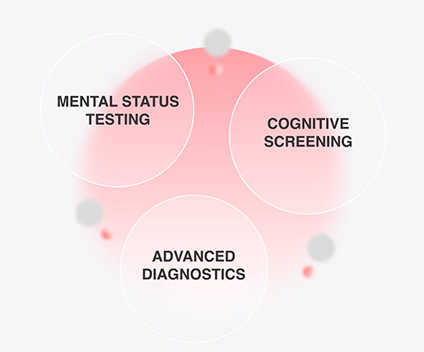
Luxembourg has a structured two-level approach to dementia diagnosis, combining initial assessment in routine clinical practice with specialist evaluation for more complex or uncertain cases. People experiencing persistent memory problems or other cognitive changes may consult a GP or specialist, particularly a neurologist. Initial assessment typically includes medical history, clinical examination, cognitive screening and basic investigations to identify alternative or potentially reversible causes. Where further clarification is required, patients may undergo detailed neuropsychological assessment and brain imaging such as CT or MRI, with additional investigations, including lumbar puncture, available where clinically appropriate. Luxembourg’s national dementia policy explicitly promotes this two-level diagnostic model alongside early diagnosis and national standards for medical management.
The country also links early detection with prevention through the Programme Démence Prévention (PDP), primarily for people with mild cognitive impairment or subjective cognitive decline. Following physician referral, participants receive comprehensive neuropsychological testing, assessment of modifiable dementia risk factors, individualised lifestyle interventions and regular follow-up. Participation is voluntary and free of charge, providing a structured pathway from early cognitive concerns to preventive intervention and potentially enabling support before significant loss of independence occurs.
Luxembourg uses a relatively structured two-level dementia diagnostic model, intended to allow initial assessment in routine clinical practice while referring more complex or uncertain cases for specialist evaluation. People experiencing persistent memory problems or other cognitive changes are generally advised to consult their general practitioner or a specialist, particularly a neurologist. Initial assessment may include medical history, clinical examination, cognitive screening and basic investigations to identify alternative or potentially reversible causes. Where further investigation is required, patients may undergo more extensive neuropsychological assessment and brain imaging such as CT or MRI, while specialist evaluation may also include other investigations, including lumbar puncture, where clinically appropriate. Luxembourg’s national dementia policy explicitly promotes a “two-level diagnosis” standard, alongside early diagnosis and national standards for medical management.
In practice, the pathway begins with recognition of cognitive symptoms and consultation with a GP or specialist, followed by initial cognitive and medical assessment. Patients whose symptoms require clarification can then proceed to more detailed specialist and neuropsychological evaluation, imaging and, in selected cases, additional diagnostic investigations before a diagnosis and treatment or support plan are established. Luxembourg also provides an important early-intervention pathway through the Programme Démence Prévention (PDP), primarily for people with mild cognitive impairment (MCI) or subjective cognitive decline (SCD). Following physician referral, participants receive comprehensive neuropsychological testing, assessment of modifiable dementia risk factors, individualized lifestyle interventions and regular follow-up. Participation is voluntary and free of charge, helping connect early detection with preventive intervention before significant loss of independence occurs.
Wait times
Luxembourg lacks comprehensive dementia-specific waiting-time data, although specialist assessment, neuropsychology, imaging, and residential care may involve delays. Dedicated dementia facilities face capacity pressures, while recent policy evaluation identified wider service coordination and capacity challenges.
Luxembourg does not maintain a comprehensive national database of dementia-specific waiting times. Its small territory and dense healthcare infrastructure facilitate access, but waiting periods can still occur for specialist neurology, neuropsychology, advanced imaging and highly specialized dementia services. The 2025 evaluation of the national dementia policy identified coordination and service-capacity issues as areas requiring further improvement. Capacity pressure is particularly visible in long-term care. The Association Luxembourg Alzheimer operates specialized dementia residential services, but demand can exceed available places, resulting in waiting lists for dedicated institutional care.
Diagnosis cost
Luxembourg’s compulsory CNS insurance largely covers standard dementia diagnosis, including GP and specialist consultations, laboratory investigations, hospital care, and recognised diagnostic procedures, although some patient contributions may remain. Additional reimbursement is available when contributions exceed 2.5% of annualised contributory income, while eligible lower-income residents can use the social third-party payer system. The Programme Démence Prévention is free for qualifying people with mild cognitive impairment or subjective cognitive decline, providing comprehensive neuropsychological assessment, evaluation of modifiable risk factors, personalised preventive interventions, written feedback, and regular follow-up without direct participation fees.
Diagnostic costs are largely covered through Luxembourg’s compulsory health-insurance system, administered principally by the Caisse nationale de santé (CNS). For insured residents, CNS coverage extends to GP and specialist consultations, hospital care, laboratory tests and analyses, and other diagnostic procedures included in the national nomenclature when provided by authorised healthcare professionals or institutions. This means that the principal components of a conventional dementia assessment, medical consultation, laboratory investigations and medically indicated hospital or specialist examinations, generally fall within the reimbursable healthcare system, although the precise reimbursement rate depends on the procedure and applicable CNS tariff. Certain services may require prior authorisation, and procedures outside the official nomenclature are not automatically reimbursed, although exceptional coverage can sometimes be granted following a detailed medical justification and approval by the Social Security Medical Board. Patients may therefore retain some out-of-pocket expenditure, but dementia diagnosis does not normally require them to bear the full cost of standard medically indicated investigations.
Additional mechanisms limit the financial burden of diagnosis and other healthcare use. If a household’s patient contributions exceed 2.5% of annualised contributory income during a calendar year, the insured person can request additional reimbursement for contributions above that threshold. People with modest incomes may also qualify for the social third-party payer system (tiers payant social), under which eligible healthcare expenses are paid directly by the CNS rather than requiring the patient to advance the full amount and subsequently seek reimbursement. Importantly for people at an earlier stage of cognitive decline, participation in the Programme Démence Prévention (PDP) is voluntary and free of charge. The programme includes an extensive neuropsychological assessment, feedback and a written report for the participant and referring physician, assessment of modifiable dementia risk factors, personalised preventive interventions and regular follow-up visits. Consequently, people with subjective cognitive decline or mild cognitive impairment who meet the programme’s criteria can access substantial cognitive assessment and monitoring without direct participation fees.
Cognitive tests
Cognitive assessment begins with brief screening in primary or specialist care, followed by detailed neuropsychological evaluation where necessary. The Programme Démence Prévention explicitly assesses memory, attention and concentration, executive functions, language and visuospatial abilities, and participants receive both oral feedback and a written report that can be shared with their physician. Standard tools such as the MMSE, MoCA and other neuropsychological batteries may be used according to clinical context, but Luxembourg does not mandate one single cognitive instrument for every patient.
Imaging tests
CT and MRI are widely available within Luxembourg’s hospital system and are used to exclude structural causes of cognitive impairment and identify vascular or neurodegenerative changes. OECD data indicate that Luxembourg has a relatively high concentration of diagnostic imaging equipment, with approximately 45 CT, MRI and PET units combined per million inhabitants. PET imaging is also available, although amyloid- or tau-specific PET is not a routine first-line test for every dementia patient. Advanced imaging has become increasingly relevant as Luxembourg prepares for broader use of disease-modifying Alzheimer therapies.
Genetic tests
Genetic testing is not routinely used for ordinary late-onset dementia. Testing for rare pathogenic variants such as APP, PSEN1 and PSEN2 may be considered in cases of very early onset or strong familial clustering through specialist genetics services. APOE genotyping has become more clinically relevant with the introduction of anti-amyloid therapies because APOE ε4 status affects treatment risk and eligibility.
Biomarker tests
CSF biomarkers such as amyloid-β and tau can support the diagnosis of Alzheimer’s disease, particularly in diagnostically uncertain, atypical or early-onset cases. International clinical guidelines recommend their use primarily as specialist investigations rather than population-level screening. However, publicly available Luxembourg sources provide limited information on how routinely these tests are used nationally. Blood-based biomarkers, including plasma phosphorylated tau, are rapidly emerging internationally but should currently be regarded as an evolving specialist diagnostic technology rather than established routine testing in Luxembourg.
Cognitive Tests
Cognitive Tests
Cognitive assessment begins with brief screening in primary or specialist care, followed by detailed neuropsychological evaluation where necessary. The Programme Démence Prévention explicitly assesses memory, attention and concentration, executive functions, language and visuospatial abilities, and participants receive both oral feedback and a written report that can be shared with their physician. Standard tools such as the MMSE, MoCA and other neuropsychological batteries may be used according to clinical context, but Luxembourg does not mandate one single cognitive instrument for every patient.
Imaging Tests
Imaging Tests
CT and MRI are widely available within Luxembourg’s hospital system and are used to exclude structural causes of cognitive impairment and identify vascular or neurodegenerative changes. OECD data indicate that Luxembourg has a relatively high concentration of diagnostic imaging equipment, with approximately 45 CT, MRI and PET units combined per million inhabitants. PET imaging is also available, although amyloid- or tau-specific PET is not a routine first-line test for every dementia patient. Advanced imaging has become increasingly relevant as Luxembourg prepares for broader use of disease-modifying Alzheimer therapies.
Genetic Tests
Genetic Tests
Genetic testing is not routinely used for ordinary late-onset dementia. Testing for rare pathogenic variants such as APP, PSEN1 and PSEN2 may be considered in cases of very early onset or strong familial clustering through specialist genetics services. APOE genotyping has become more clinically relevant with the introduction of anti-amyloid therapies because APOE ε4 status affects treatment risk and eligibility.
Biomarker Tests
Biomarker Tests
CSF biomarkers such as amyloid-β and tau can support the diagnosis of Alzheimer’s disease, particularly in diagnostically uncertain, atypical or early-onset cases. International clinical guidelines recommend their use primarily as specialist investigations rather than population-level screening. However, publicly available Luxembourg sources provide limited information on how routinely these tests are used nationally. Blood-based biomarkers, including plasma phosphorylated tau, are rapidly emerging internationally but should currently be regarded as an evolving specialist diagnostic technology rather than established routine testing in Luxembourg.
Treatment & Care
Treatment & care
Show moreDementia care in Luxembourg integrates neurological, geriatric, and psychiatric treatment with a nationwide specialist support network led by Association Luxembourg Alzheimer. Six day-care centres provide supervision and respite, ala plus delivers multidisciplinary home care, and Beim Goldknapp offers specialised residential provision, including advanced dementia care. Medical treatment is largely financed through compulsory health insurance, while long-term care insurance supports eligible dependency-related services, although accommodation and supplementary expenses may remain. Families receive extensive assistance through counselling, a 24-hour helpline, peer support, respite, and caregiver education programmes addressing both home and residential care. This combination provides strong continuity across disease stages and reduces reliance on informal caregivers. Nevertheless, dedicated residential places remain under capacity pressure, with further expansion identified as necessary.
Specialized facilities and services
Specialist dementia care in Luxembourg extends beyond hospital-based neurological, geriatric, and psychiatric services through Association Luxembourg Alzheimer’s nationwide provision. Six day-care centres offer structured activities, supervision, and caregiver respite, while ala plus delivers seven-day multidisciplinary nursing, personal, household, and autonomy-focused support at home. Psychological counselling, caregiver groups, education, professional training, and a 24-hour helpline provide additional assistance. Beim Goldknapp offers specialised residential and nursing care in a dementia-adapted setting, including support for advanced disease. Despite this extensive infrastructure, demand remains substantial, and expanding dedicated short- and long-term residential capacity is an identified priority.
Luxembourg combines hospital-based neurology, geriatrics and psychiatry with a particularly well-developed dementia-specific social and long-term-care infrastructure. A central provider is the Association Luxembourg Alzheimer (ala), which has developed a nationwide network specifically for people living with dementia and their families. Its services include the ala plus home-care network, six dementia day-care centres and the specialised Beim Goldknapp residential and nursing facility, alongside psychological and social counselling, caregiver support groups, family education, professional dementia training and a 24/7 dementia helpline. The six day-care centres provide structured daytime supervision and activities while also giving informal caregivers periods of respite, helping people with dementia remain at home for longer. ALA states that its facilities and home-care network can provide services covered under Luxembourg’s long-term care insurance system across the country.
The ala plus service extends dementia-specific care directly into patients’ homes and operates seven days a week. Its multidisciplinary staff provide nursing and personal care, assistance with activities of daily living, household support, interventions intended to maintain autonomy, preventive measures and practical support for informal caregivers. The service was specifically established to enable people with dementia to remain in their own homes for as long as possible while maintaining continuity of care.
For people who can no longer be adequately supported at home, Beim Goldknapp in Erpeldange-sur-Sûre provides highly specialised residential dementia care. Its living units, physical environment and care model are specifically adapted to dementia, including a unit designed for residents with advanced and very advanced disease. Care is delivered by a multidisciplinary team including nurses and carers, physiotherapists, occupational therapists, psychologists, social-care professionals and physicians, with an emphasis on maintaining remaining abilities, orientation, mobility and quality of life. ALA describes Beim Goldknapp as Luxembourg’s only residential and nursing home specifically adapted to the needs of people with dementia. Importantly, ALA itself identifies increasing the number of long- and short-term residential places as one of its objectives, suggesting that expansion of dedicated capacity remains a recognised need.
Approved medication
| Generic Name | Trade Name | Used for |
|---|---|---|
| Donepezil | Aricept, Aricept ODT, Adlarity, Eranz, Memac, Alzepil, Davia, Donecept, Donep, Donepex, Donesyn, Dopezil, Yasnal, Memorit, Pezale, Redumas, Zolpezil, Namzaric* | Donepezil is indicated for the symptomatic treatment of mild to moderately severe Alzheimer’s dementia. |
| Rivastigmine | Exelon, Exelon Patch, Prometax, Rivastach, Nimvastid | Symptomatic treatment of mild to moderately severe Alzheimer’s dementia. Symptomatic treatment of mild to moderately severe dementia in patients with idiopathic Parkinson’s disease. |
| Galantamine | Razadyne, Razadyne ER, Reminyl, Reminyl XL, Nivalin, Lycoremine, Galsya | Galantamine is indicated for the symptomatic treatment of mild to moderately severe dementia of the Alzheimer type. |
| Memantine | Namenda, Namenda XR, Ebixa, Memary, Axura, Akatinol, Maruxa, Nemdatine, Namzaric* | Treatment of adult patients with moderate to severe Alzheimer’s disease. |
*Namzaric = combination of Donepezil and Memantine
Treatment cost
Luxembourg largely funds dementia treatment through compulsory health insurance, covering eligible consultations, hospital care, rehabilitation, investigations, and medicines, although some copayments and non-covered expenses remain. Additional reimbursement limits excessive accumulated healthcare contributions. Statutory long-term care insurance separately finances eligible home, day-care, and institutional support for people requiring assistance with daily activities. Association Luxembourg Alzheimer provides covered services through its nationwide home-care, day-centre, and residential network. Together, these schemes offer substantial financial protection for medical and dependency-related dementia care, although families may still face accommodation, personal, supplementary, and non-covered costs, particularly in residential settings.

Medical treatment for dementia is largely covered through Luxembourg’s compulsory social health-insurance system. For insured residents, reimbursable services include consultations with GPs and specialists, outpatient and inpatient hospital treatment, laboratory investigations, rehabilitation and pharmaceutical medicines included within the applicable reimbursement framework. This means that routine neurological, geriatric or psychiatric follow-up and standard pharmacological management of dementia are generally substantially publicly financed rather than paid entirely out of pocket. Coverage is nevertheless tied to the national nomenclature and reimbursement rules, and some services require prior authorisation. Patients may also retain co-payments or expenses for services outside the reimbursement framework, while costs incurred for personal convenience, such as first-class hospital accommodation, are borne by the patient. Luxembourg additionally limits accumulated healthcare co-payments: when an insured person’s eligible contributions exceed 2.5% of annualised contributory income, contributions above that threshold can qualify for additional reimbursement.
Long-term dementia care is supported separately through Luxembourg’s statutory long-term care insurance (Pflegeversicherung), which is particularly important as the disease progresses and patients require assistance with activities of daily living. Eligible people can receive publicly financed dependency-related services in the home, day-care or institutional setting, reducing the amount that families would otherwise have to finance privately. The Association Luxembourg Alzheimer (ala) explicitly states that its nationwide care network, including its home help and nursing service, six day-care centres and residential nursing facility, can provide the services covered by long-term care insurance. ALA also offers additional forms of counselling and support extending beyond the benefits financed by the insurance scheme. Nevertheless, public coverage does not necessarily eliminate all private expenditure: patients and families may still face costs associated with accommodation, personal expenses, supplementary services or services outside the statutory benefit package. Overall, Luxembourg therefore provides relatively strong financial protection for both the medical and dependency-related components of dementia care, although long-term residential care can still generate meaningful out-of-pocket costs.
Caregiver support
Luxembourg offers comprehensive caregiver support through Association Luxembourg Alzheimer, including a 24-hour helpline, psychological and social counselling, family activities, and peer exchange. Six specialised day-care centres provide respite, while the nationwide ala plus service reduces caregiving demands through professional nursing, personal assistance, and household support. EDUKATION DEMENZ provides practical training on dementia, communication, and managing difficult situations, while EDUKATION PFLEGEHEIM supports relatives following residential placement. Statutory long-term care insurance further reduces family burden by financing eligible professional assistance. Together, these services provide a broad continuum of caregiver education, emotional support, respite, and practical assistance across dementia stages.
Caregiver support is one of the stronger components of Luxembourg’s dementia-care system, with the Association Luxembourg Alzheimer (ala) providing several services specifically designed for relatives and informal caregivers. ALA operates a 24-hour dementia helpline (Helpline 24/24) that provides information, guidance and support to people with dementia and their families, including assistance in difficult situations outside normal service hours. Its counselling services offer psychological and social support, practical information about dementia and available services, and guidance on managing the challenges that arise as the disease progresses. Support is complemented by family-oriented activities and opportunities for relatives to exchange experiences, helping caregivers better understand behavioural and cognitive changes while reducing isolation. ALA’s six dementia day-care centres also have an important respite function: by providing professional supervision, therapeutic activities, meals and structured daytime care, they allow relatives to temporarily transfer caregiving responsibilities while enabling the person with dementia to continue living at home. The nationwide ala plus home-care service similarly reduces caregiver burden by providing professional nursing, assistance with activities of daily living, household support and interventions aimed at maintaining the patient’s independence.
ALA also provides structured caregiver education, particularly through its EDUKATION DEMENZ programme. The programme is designed for relatives and other people involved in supporting someone with dementia and provides practical knowledge about the disease, communication and everyday interaction, helping families better understand dementia-related changes and develop strategies for managing difficult situations. A related programme, EDUKATION PFLEGEHEIM, specifically addresses relatives of people who have moved into residential care, recognising that family involvement and emotional strain do not disappear after institutionalisation. Together with counselling, day care, home-care assistance and the 24-hour helpline, these programmes create a relatively comprehensive continuum of caregiver support extending from the early stages of dementia through intensive home care and eventual residential placement. Importantly, Luxembourg’s broader long-term care insurance also helps indirectly protect caregivers by financing eligible professional care and assistance, reducing the extent to which dependency-related care must be provided exclusively by family members.
Policy
Policy
Show moreLuxembourg’s 2013 National Dementia Action Plan established a broad framework covering prevention, diagnosis, treatment, long-term care, caregiver support, and dementia-friendly communities, complemented by the free Programme Démence Prévention for people with early cognitive decline. A 2025 external evaluation recommended a new four-to-six-year strategy with stronger governance, coordination, epidemiological data, workforce planning, participation of people with dementia and caregivers, and improved continuity across health and social care. Future policy must also prepare for disease-modifying Alzheimer’s therapies through expanded diagnostic capacity, appropriate patient selection, MRI monitoring, and financial planning. These requirements became increasingly relevant when access to lecanemab entered national policy discussions in early 2026.
National dementia plan
Luxembourg’s National Dementia Action Plan, established in 2013, addresses prevention, early diagnosis, treatment, long-term care, family support, legal and ethical issues, and dementia-friendly communities. It promotes coordinated health and social care, professional education, and continued home living. The Programme Démence Prévention strengthens early intervention by providing free neuropsychological assessment, modifiable risk-factor evaluation, personalised prevention plans, and regular follow-up for people with subjective cognitive decline or mild cognitive impairment, extending national policy towards risk reduction.
Luxembourg has maintained a dedicated National Dementia Action Plan since 2013, giving dementia explicit recognition as a national health and social-care priority. The strategy takes a broad approach extending beyond medical diagnosis and treatment to prevention, long-term care, social inclusion and the rights of people living with dementia. According to Alzheimer Europe, its principal areas include healthy and active ageing, early and differential diagnosis, medical treatment, support for people with dementia and their families, home care, institutional care, ethics and legal issues, and the development of dementia-friendly communities. Particular emphasis was placed on improving early identification through a structured two-level diagnostic approach, strengthening coordination between healthcare and social-care providers, maintaining people with dementia in their own homes for as long as possible, and improving dementia-specific knowledge among professionals and the general population. The plan therefore treats dementia not only as a neurological condition but also as a long-term social and dependency issue requiring coordinated health, care and community responses.
The national framework has subsequently been complemented by initiatives that place greater emphasis on prevention and intervention before dementia becomes established, most notably the Programme Démence Prévention (PDP). The programme targets people with subjective cognitive decline (SCD) or mild cognitive impairment (MCI) and seeks to reduce modifiable dementia risk factors while monitoring cognitive development over time. Participants undergo detailed neuropsychological assessment and risk-factor evaluation before receiving an individualised prevention plan, which can address areas such as physical activity, cognitive stimulation, nutrition and management of relevant health risks, followed by regular reassessment. Importantly, participation is voluntary and free of charge. The PDP therefore extends Luxembourg’s dementia policy upstream from diagnosis and care toward risk reduction, secondary prevention and earlier intervention, creating a continuum that ranges from prevention and early detection to specialist treatment, home support and institutional dementia care.
Upcoming plans
Luxembourg is moving towards a next-generation dementia policy framework following the government’s 2025 publication of an external evaluation of the National Dementia Action Plan. The review found that Luxembourg should retain dementia as a distinct policy priority rather than subsuming it within broader healthy-ageing policies. It recommended a new four-to-six-year strategy supported by clearer priorities, dedicated resources and stronger inter-ministerial coordination, alongside a designated coordinator to improve implementation and visibility. Further priorities include better epidemiological data and care projections, greater participation of people with dementia and caregivers, more consistent hospital care, stronger monitoring of professional training, expanded prevention, improved caregiver support and preparation for future workforce shortages.
A major policy development occurred in 2025, when the Luxembourg government published an external evaluation of the National Dementia Action Plan conducted by the Flemish Centre of Expertise on Dementia. Commissioned by the government in 2024, the review examined what had and had not been achieved since adoption of the original plan in 2013 and was explicitly intended to identify priorities for updating Luxembourg’s dementia policy in light of new scientific evidence, demographic pressures and international best practice. The evaluation concluded that Luxembourg should retain a dedicated dementia strategy rather than subsuming the issue entirely within broader healthy-ageing policies, recommending a new four-to-six-year plan with clearly prioritised actions, defined resources and stronger coordination between the ministries and organisations involved. It also called for a designated coordinator to improve implementation and visibility, greater participation of people with dementia and family caregivers in policymaking, and substantially better epidemiological data and projections to support future planning of home and residential care. Other recommendations include improving consistency of dementia care in hospitals, monitoring the practical impact of professional training, expanding prevention beyond the existing PDP, strengthening structured support for family caregivers and addressing future workforce shortages.
Luxembourg is therefore moving toward a next-generation dementia framework rather than simply maintaining the original 2013 plan. The 2025 external evaluation identifies stronger governance and coordination, improved epidemiological data and projections, workforce development, greater involvement of people with dementia and caregivers, and better continuity between medical, social and long-term care as important priorities for future policy.
Crucially, the review also argues that Luxembourg must prepare its health system for disease-modifying Alzheimer’s therapies, including consideration of their financial implications and the additional diagnostic and clinical infrastructure required to identify eligible patients and monitor treatment safely. The report discusses the implications of therapies such as lecanemab, which require substantially greater diagnostic and monitoring capacity, including appropriate patient selection and repeated MRI surveillance because of treatment-related risks.These developments became increasingly concrete in early 2026, when access to lecanemab (Leqembi) entered the national policy debate. A parliamentary question submitted on 22 January 2026 specifically addressed access to Leqembi in Luxembourg, with the government issuing its response on 19 February 2026.
Policy gaps
Legal barriers
Rather than operating under a single dementia-specific law, Luxembourg distributes dementia care across health-insurance, long-term-care, and social-care legislation. Patients may therefore navigate separately administered medical, home, day, and residential services, creating coordination challenges recognised in the 2025 policy evaluation. Access to neighbouring European healthcare systems can expand specialist options when domestic capacity is insufficient. However, planned inpatient and certain advanced treatments abroad require CNS approval, while reimbursement arrangements vary depending on the applicable cross-border mechanism. These procedures provide valuable access to larger specialist systems but can add administrative complexity for people with dementia and their families.
Luxembourg has extensive health-insurance, long-term-care and social-care legislation, but dementia care is distributed across several legal and administrative frameworks rather than governed by a single comprehensive Dementia Act. In practice, the medical aspects of dementia, diagnosis, specialist consultations, hospital treatment, medicines and diagnostic investigations, are primarily organised through the health-insurance system, while assistance with dependency and activities of daily living falls largely within the separate long-term care insurance and social-care framework. As dementia progresses, patients may therefore move between healthcare, home-care, day-care and residential services that are financed, regulated and administered through different mechanisms. This fragmentation can make continuity of care and navigation of available benefits more complicated for patients and families, particularly when medical and social needs increasingly overlap. The 2025 external evaluation of Luxembourg’s National Dementia Action Plan consequently identified strategic alignment and inter-governmental cooperation as areas requiring further attention, stressing that dementia affects multiple areas of life and requires coordination among the different actors involved. It recommended stronger governance for the next dementia strategy and better alignment of the organisations and authorities responsible for dementia care.
A further administrative issue arises from Luxembourg’s unusually cross-border healthcare environment. Because residents can obtain specialist treatment elsewhere in the EU, access to services in neighbouring Belgium, France and Germany can supplement domestic capacity, but planned treatment abroad is governed by specific CNS reimbursement and authorisation procedures. Ordinary outpatient consultations within the EU/EEA or Switzerland generally do not require prior authorisation unless the service itself is subject to authorisation under Luxembourg rules; patients normally pay the provider and subsequently request reimbursement. By contrast, planned inpatient treatment and care involving highly specialised and costly equipment generally require prior CNS authorisation, based on an application and assessment by the Social Security Medical Board.
For authorised treatment, coverage may operate through an S2 arrangement, under which treatment is reimbursed according to the rules and tariffs of the country providing care, or under the EU Cross-Border Healthcare Directive, where the patient generally pays first and subsequently seeks reimbursement according to Luxembourg conditions and tariffs. This system gives Luxembourg residents considerable access to the much larger specialist healthcare systems surrounding the country, but it also introduces additional paperwork, authorisation requirements and reimbursement rules that can complicate the pathway for dementia patients requiring advanced diagnostics or specialist treatment abroad
- https://mfsva.gouvernement.lu/en/publications/filtre-senior-telechargements/pan-maladies-dementielles0.html
- https://guichet.public.lu/en/citoyens/sante/remboursement-frais-medicaux/prestations-etranger/soins-etranger.html
- https://cns.public.lu/en/assure/droits-demarches/protection-sociale-etranger/soins-programmes-etranger.html
- https://guichet.public.lu/en/citoyens/life-event/sante/accident-etranger.html
Cultural barriers
Luxembourg’s linguistic and cultural diversity can complicate dementia assessment, as cognitive-test performance may be influenced by language proficiency, education, literacy, and cultural familiarity. Policy resources therefore emphasise culturally sensitive assessment, validated tools, interpreters, and multilingual professionals. Cultural expectations may also affect help-seeking, reliance on family caregiving, and acceptance of formal support. Another barrier is interpreting cognitive decline as normal ageing, which may delay assessment. Luxembourg’s public information consequently distinguishes ordinary age-related forgetfulness from more substantial deterioration affecting memory, reasoning, recognition, and everyday functioning.
Luxembourg’s highly multilingual and multicultural population creates particular challenges for dementia assessment and care, because cognitive testing depends heavily on language, educational background and cultural familiarity. Patients may primarily communicate in Luxembourgish, French, German, Portuguese or another language, while the language in which they are most comfortable may differ from that used by the clinician or by standardised cognitive tests. This is particularly important in dementia diagnosis because language-dependent tasks involving naming, verbal fluency, comprehension and memory can be affected by linguistic proficiency and education, potentially complicating interpretation of cognitive-test scores. Luxembourg’s healthcare framework already recognises multilingual communication as an important issue: official patient-rights guidance states that medical information may be provided in French, German or Luxembourgish and that patients may be accompanied by a translator or interpreter when necessary, while government healthcare information is routinely made available in French, German, English and Portuguese.
The government’s Health Portal also publishes dedicated Alzheimer Europe resources on intercultural dementia care, demonstrating institutional recognition that migration background, language, literacy and cultural expectations can influence access to diagnosis and support. The associated policy recommendations emphasise culturally appropriate assessment and diagnosis, cognitive-assessment tools that are culturally sensitive and properly validated, access to professional interpreters, and expansion of bilingual or multilingual health and social-care workforces. These issues extend beyond diagnosis: cultural understandings of dementia can influence whether families seek professional assistance, expectations regarding family caregiving and willingness to use home-care or residential services. Consequently, linguistic and cultural competence is particularly important throughout Luxembourg’s pathway, from initial cognitive assessment to long-term care and communication with family caregivers.
Awareness and perceptions of ageing represent an additional barrier to timely diagnosis. Memory deterioration may initially be interpreted as an inevitable consequence of growing older rather than a possible symptom of dementia, potentially delaying medical assessment. Luxembourg’s own dementia information materials explicitly distinguish ordinary age-related forgetfulness from more substantial deterioration in memory, recognition, thinking and reasoning that interferes with everyday functioning.
Research
Research
Show moreLuxembourg combines clinical-research capacity with prevention, emerging treatment infrastructure, community care, and financial protection. CIEC and the Luxembourg Research Clinic support clinical trials and international dementia research, although systematic dementia-specific data collection remains an area for development. The free Programme Démence Prévention provides personalised interventions, monitoring, and opportunities for voluntary research participation. Preparations for anti-amyloid therapies are strengthening biomarker, imaging, patient-selection, and safety-monitoring capacity, although evidence does not confirm a dedicated national access programme. Association Luxembourg Alzheimer’s nationwide ala plus service supports home living and caregivers, while statutory long-term-care insurance finances eligible home, day-care, and residential assistance.
Selected academic institutions
Clinical trials and registries
Clinical trials in Luxembourg are coordinated nationally through bodies like the Clinical and Epidemiological Investigation Center (CIEC) and the Luxembourg Research Clinic under the Luxembourg Institute of Health (LIH). Luxembourg participates in European and international dementia research and has increasingly strong infrastructure for biomarker and disease-modifying-treatment studies. PDP participants may voluntarily contribute to dementia research, and programme results have been presented at national and international scientific meetings. Luxembourg has strong administrative health datasets, but the 2025 dementia-plan evaluation indicates that systematic dementia-specific data collection remains an area for further improvement rather than a fully mature national clinical registry.
Selected innovative methods
Luxembourg’s dementia innovation spans prevention, emerging treatment infrastructure, home care, and financial support. The free Programme Démence Prévention provides neuropsychological assessment, risk-factor evaluation, personalised interventions, and follow-up for people with early cognitive decline. Preparations for anti-amyloid therapies require greater biomarker, imaging, patient-selection, and monitoring capacity, although evidence does not confirm a specific national access programme. Association Luxembourg Alzheimer’s nationwide ala plus service supports continued home living through professional care and caregiver assistance. Statutory long-term-care insurance complements medical coverage by financing eligible dependency-related support across home, day-care, and residential settings, reducing the practical and financial burden on families.
Programme Démence Prévention (PDP) – The PDP is one of Luxembourg’s most distinctive dementia-prevention initiatives and focuses on people with subjective cognitive decline (SCD) or mild cognitive impairment (MCI) before established dementia develops. Participants undergo comprehensive neuropsychological assessment and evaluation of potentially modifiable risk factors, followed by an individualized multidomain prevention programme. Depending on individual needs, interventions can address physical activity, cognitive stimulation, social participation, psychological well-being and nutrition, with regular follow-up used to monitor progress and cognitive status. Participation is voluntary and free of charge, making the programme an important bridge between early cognitive assessment and dementia prevention
Controlled Anti-Amyloid Access Programme – The emergence of disease-modifying anti-amyloid therapies represents an important new direction for Luxembourg’s Alzheimer’s system. Access to these treatments requires considerably more specialised infrastructure than conventional symptomatic therapy, including biomarker confirmation of Alzheimer pathology, careful patient selection and repeated MRI monitoring for treatment-related adverse effects such as ARIA. Luxembourg’s preparations for anti-amyloid therapy therefore have implications extending beyond pharmaceutical access, requiring closer integration of specialist diagnosis, biomarkers, imaging and treatment monitoring. However, the claim that Luxembourg has operated a specific nationally financed “Controlled Anti-Amyloid Access Programme” since January 2026 should be treated cautiously: the cited Alzheimer Europe source discusses European access to anti-amyloid treatments but does not, by itself, establish that exact Luxembourg programme or implementation date.
ala plus – Operated by the Association Luxembourg Alzheimer, ala plus is a nationwide dementia-oriented home-care service designed to enable people with dementia to remain in their own homes for as long as possible. Its services include nursing and personal care, assistance with activities of daily living, household support and interventions intended to preserve independence and remaining abilities. Importantly, the service also supports informal caregivers, providing professional assistance that can reduce the amount and intensity of care that must be provided by relatives. Its nationwide coverage makes ala plus an important link between medical dementia treatment and community-based long-term care.
Statutory long-term-care insurance – Luxembourg’s dementia-care infrastructure is reinforced by its statutory long-term-care insurance system, which finances eligible assistance and care for people who have become dependent on help with everyday activities. For people with dementia, this can include professional support delivered at home as well as services provided through day-care and institutional settings, depending on the individual assessment of dependency and entitlement. ALA explicitly provides services falling within this long-term-care insurance framework. The system is particularly significant because it means that the substantial non-medical costs associated with progressing dementia are not left entirely to families, private insurance or charitable organisations, providing an additional layer of financial protection alongside CNS health-insurance coverage for medical treatment.
Support
Support
Show moreLuxembourg’s community dementia initiatives promote awareness, caregiver education, peer support, and inclusion. Association Luxembourg Alzheimer’s annual Memory Walk increases public understanding and visibility, while EDUKATION DEMENZ and EDUKATION PFLEGEHEIM provide practical caregiver guidance across home and residential care. A free monthly support group for people with early neurodegenerative disease encourages peer connection, autonomy, and psychosocial wellbeing. Luxembourg has no independent dementia-specific media outlet; specialist information on dementia, prevention, services, and support is instead disseminated through ALA, demenz.lu, Programme Démence Prévention, Luxembourg’s Health Portal, and Alzheimer Europe.
Selected national associations, patient family associations, NGOs:
Selected initiatives
Luxembourg’s community dementia initiatives combine awareness, caregiver education, peer support, and social inclusion. Association Luxembourg Alzheimer’s annual Memory Walk promotes public understanding, visibility, and solidarity through information and community participation involving people with dementia. EDUKATION DEMENZ equips informal caregivers with practical strategies for understanding cognitive and behavioural changes, communication, and everyday care, while EDUKATION PFLEGEHEIM supports relatives following residential placement. A free, professionally facilitated monthly group also enables people with early neurodegenerative disease to share experiences, concerns, and practical challenges. Together, these initiatives reduce stigma and isolation, strengthen caregiver confidence, and promote autonomy, peer connection, and meaningful participation.
Memory Walk Luxembourg - Organised annually by the Association Luxembourg Alzheimer (ala), the Memory Walk is one of Luxembourg’s most visible public dementia-awareness initiatives, combining information, community participation and solidarity with people living with dementia and their families. The 24th edition was held on 20 September 2025 at Place Clairefontaine in Luxembourg City, where visitors could obtain information about Alzheimer’s disease, other forms of dementia and ALA’s support services, while participating in discussions, entertainment and a public walk through the city. The event also included the inclusive MIL-Chouer choir, bringing together people with and without dementia, including residents of the Beim Goldknapp care facility. Through the recurring theme “A thought for those who forget,” the initiative seeks to increase public understanding of dementia and promote a society in which affected people remain visible, recognised and socially included.
Deprecated: trim(): Passing null to parameter #1 ($string) of type string is deprecated in /home/bcdafabe/public_html/wp-content/themes/bricks-child/functions.php on line 753
EDUKATION DEMENZ - This structured caregiver-education programme is designed for relatives and other informal caregivers of people living with dementia. Rather than providing only general information about the disease, the programme helps participants understand cognitive and behavioural changes associated with dementia and develop practical approaches to communication, difficult situations and everyday caregiving. Education of this kind can help relatives interpret behavioural symptoms as consequences of the condition rather than intentional behaviour, while improving confidence in managing care at home. ALA complements the programme with EDUKATION PFLEGEHEIM, specifically intended for relatives of people living in residential facilities, recognising that family caregivers continue to require information, psychological support and guidance after institutional placement.
Deprecated: trim(): Passing null to parameter #1 ($string) of type string is deprecated in /home/bcdafabe/public_html/wp-content/themes/bricks-child/functions.php on line 753
Support Group for People with Early Neurodegenerative Disease - ALA also provides support directed at people living with cognitive impairment themselves, rather than exclusively at their relatives. Its free professionally facilitated self-help group is intended for people in the early stages of a neurodegenerative condition and meets once a month. The group provides a confidential environment in which participants can discuss their diagnosis, fears, practical difficulties and experiences with others facing similar circumstances. This is particularly valuable in early-stage dementia, when individuals often retain substantial independence and insight but may experience anxiety, uncertainty or social withdrawal following diagnosis. By encouraging peer contact and active participation, the initiative complements clinical treatment with psychosocial support, social inclusion and preservation of autonomy, illustrating Luxembourg’s broader emphasis on supporting people with dementia as active participants in their own care.
Deprecated: trim(): Passing null to parameter #1 ($string) of type string is deprecated in /home/bcdafabe/public_html/wp-content/themes/bricks-child/functions.php on line 753
Dedicated media outlets
Luxembourg has no independent media outlet devoted exclusively to dementia. The main specialist information platforms are ALA, demenz.lu, PDP, Luxembourg’s Health Portal and Alzheimer Europe, which is headquartered in Luxembourg.