

Bolivia
Bolivia provides universal health coverage through the Unified Health System (SUS) and allocates approximately 8.43% of its GDP to health. Diagnosis typically begins in primary care using screening tools such as the Mini-Mental State Examination (MMSE), with referral through SUS to neurology or geriatrics for further assessment, including neuroimaging. Treatment primarily involves donepezil and memantine, which are largely covered under SUS. Key care facilities include Hospital Viedma and Hospital Arco Iris, with imaging services available at national centres in Miraflores. Civil society engagement is led by Asociación Alzheimer Bolivia (AAB), while Law 4034 mandates the establishment of SEDEGES-run support centres, although implementation remains uneven across regions. Research activity is supported by institutions such as UMSA and Hospital de Clínicas, UMSS in Cochabamba, and sites in Santa Cruz, alongside participation in regional initiatives like LatAm-FINGERS and cohort studies. While there have been some steps toward developing a national dementia plan, progress has largely stalled.

AD Rating
Diagnostic Pathway
Specialized Care
Caregiver Support
National Policies
Access to ATT-s
Highlights

Population
Median age
Health expenditure (% of GDP)
Diagnosis
Diagnosis
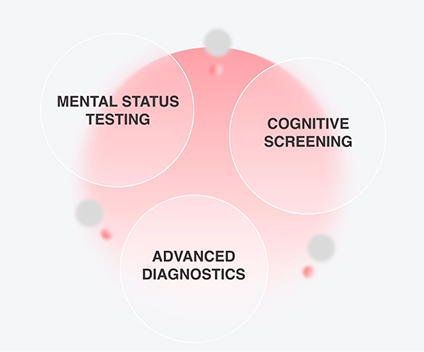
Show moreIn Bolivia, dementia diagnosis begins in primary care with assessment of memory loss and functional decline using DSM/ICD-aligned screening, typically MMSE/MEC. Suspected cases are referred through the SUS via a Boleta de Referencia to neurology, geriatrics, or psychiatry for comprehensive evaluation, including MoCA or ACE-III, labs, and CT or MRI. PET imaging, genetic testing, and biomarkers are not standard. Waiting times often exceed norms, especially in neurology. MRI may be SUS-covered, while public CT tariffs list 300 BOB and private services are higher.
Diagnosis pathway
Dementia pathways begin in primary care, where clinicians assess memory loss and functional decline through medical history, progressive cognitive symptom review, and basic cognitive screening aligned with DSM/ICD criteria. Suspected or complex cases are referred via the SUS system using a Boleta de Referencia to neurology, geriatrics, or psychiatry for comprehensive specialist evaluation and differential diagnosis, including Alzheimer’s disease.
Individuals or family members typically present to a primary care clinic with concerns about memory loss or functional decline. Primary care staff conduct an initial clinical assessment: medical history, review of progressive cognitive symptoms, and basic cognitive screening guided by national protocols that reference Diagnostic and Statistical Manual of Mental Disorders (DSM) or the International Classification of Diseases (ICD) criteria for dementia and distinguish Alzheimer’s disease from other causes.
When dementia is suspected or cases are complex, primary care must issue a Boleta de Referencia with clinical information to refer the person to a second- or third-level facility (neurology, geriatrics, or psychiatry) for specialist evaluation, per the Unified Health System (SUS) referral guide. The referral should be justified, timely, and include prior test results to facilitate specialist access.
Specialists conduct a diagnostic work-up to differentiate Alzheimer’s disease from other types of dementia. National neurology guidelines for diagnosis and treatment include “demencia tipo Alzheimer” alongside other primary and secondary dementias, providing a framework for differential diagnosis and clinical management within Bolivia’s health system.
Wait times
Evidence indicates waiting times in Bolivia’s public system often exceed internal norms, particularly in high-demand specialties like neurology, pointing to structural delays in dementia care.
General studies on public-service waiting times in Bolivia highlight that waits often exceed internal norms, with people commonly waiting beyond intended thresholds for attention in public facilities, pointing to structural bottlenecks in staffing and scheduling, especially for high-demand specialties like neurology. While not dementia-specific, this supports the expectation of prolonged waits at key steps in the pathway.
Diagnosis cost
Under the SUS, advanced imaging such as MRI can be fully covered for eligible patients, with no direct payment required. Public tariff tables list CT at 300 BOB, while private providers report higher prices for MRI, consultations, and diagnostic imaging services.
The Ministry of Health indicates that advanced imaging (e.g., MRI) can be covered under the SUS for eligible patients, meaning no out-of-pocket cost for the study itself when authorized through the public pathway. A ministerial resolution table lists procedure tariffs; for example, “Tomografía Axial Computarizada (cualquier segmento)” shows a reference amount of 300 Bolivian peso (BOP) in the tariff list, illustrating public pricing benchmarks used administratively. People also have the option to use the private sector which is not covered by insurance.
Cognitive tests
Primary care often starts with Mini-Mental State Examination (MMSE) due to familiarity and time constraints. If impairment is suspected, referral via SUS to specialist services is made, where Montreal Cognitive Assessment (MoCA) and Addenbrooke’s Cognitive Examination III (ACE-III) and targeted neuropsychological tests may be used as resources permit, alongside laboratory and imaging exams, per national norms.
Imaging tests
Bolivia’s public pathway uses structural neuroimaging, such as computed tomography (CT) and magnetic resonance imaging (MRI), where available, ordered by specialists as part of the Alzheimer’s disease evaluation per national norms, accessed through the SUS referral system. While advanced positron emission tomography (PET) biomarkers are not described as routine in these national documents.
Genetic tests
There is no clear public documentation that Apolipoprotein E (APOE) risk typing or clinically validated predictive Alzheimer’s disease gene panels are offered routinely in the public health system.
Biomarker tests
There is no public evidence of routine, widely available in-country cerebrospinal fluid (CSF) or plasma biomarker testing in official health-system documents or laboratory service listings. Access to these specialised biomarker assays in practice is therefore likely limited to research centres. One study argues that recently updated Alzheimer’s disease diagnostic criteria, which rely heavily on biomarker evidence such as PET imaging and CSF analysis, are difficult to implement across much of Latin America and the Caribbean due to limited access to advanced technology, trained specialists, and region-specific normative data.
Cognitive Tests
Cognitive Tests
Primary care often starts with Mini-Mental State Examination (MMSE) due to familiarity and time constraints. If impairment is suspected, referral via SUS to specialist services is made, where Montreal Cognitive Assessment (MoCA) and Addenbrooke’s Cognitive Examination III (ACE-III) and targeted neuropsychological tests may be used as resources permit, alongside laboratory and imaging exams, per national norms.
Imaging Tests
Imaging Tests
Bolivia’s public pathway uses structural neuroimaging, such as computed tomography (CT) and magnetic resonance imaging (MRI), where available, ordered by specialists as part of the Alzheimer’s disease evaluation per national norms, accessed through the SUS referral system. While advanced positron emission tomography (PET) biomarkers are not described as routine in these national documents.
Genetic Tests
Genetic Tests
There is no clear public documentation that Apolipoprotein E (APOE) risk typing or clinically validated predictive Alzheimer’s disease gene panels are offered routinely in the public health system.
Biomarker Tests
Biomarker Tests
There is no public evidence of routine, widely available in-country cerebrospinal fluid (CSF) or plasma biomarker testing in official health-system documents or laboratory service listings. Access to these specialised biomarker assays in practice is therefore likely limited to research centres. One study argues that recently updated Alzheimer’s disease diagnostic criteria, which rely heavily on biomarker evidence such as PET imaging and CSF analysis, are difficult to implement across much of Latin America and the Caribbean due to limited access to advanced technology, trained specialists, and region-specific normative data.
Treatment & Care
Treatment & care
Show moreBolivia lacks dedicated memory clinics, but dementia care is provided through major hospitals like Hospital Arco Iris, Hospital Viedma, and the Complejo Hospitalario de Miraflores, with support from AAB. SUS-eligible patients generally receive covered follow-up care and medicines, while private consultations cost around $29. Public SEDEGES centers and AAB provide caregiver education, peer support, and connections to local specialists nationwide, established under Law 4034.
Specialized facilities and services
Although Bolivia lacks dedicated network of memory clinics, dementia services are concentrated in major public hospitals. Hospital Arco Iris and Hospital Viedma act as specialist neurology hubs, and the Complejo Hospitalario de Miraflores supports advanced diagnostics. The Asociación Alzheimer Bolivia connects families to trained clinicians, caregiver education, and local support networks across multiple departments.
Hospital Arco Iris is a publicly accredited second-level hospital with neurology and diagnostic imaging capacity; used by SUS. While not specialised only in Alzheimer’s disease, it functions as a specialist access point.
National referral complex Miraflores is a multi-institutes with national coverage with new CT and angiography equipment deployments. This indicates advanced diagnostics are available at certain national centers in La Paz. People living with dementia referred by SUS can be imaged in such complexes as part of workups.
Hospital Viedma is a large public hospital frequently cited in local reporting with heavy demand for neurology dates. While not a dedicated memory clinic, this is a primary public entry point for specialist neurology, indicating where Alzheimer’s disease evaluations can be found.
Asociación Alzheimer Bolivia (AAB) and its departmental chapters provide carer education, awareness, and connections to local specialists and services across several departments (e.g., Santa Cruz, La Paz, Cochabamba). These chapters are valuable gateways to locate clinicians familiar with Alzheimer’s disease and support resources.
No specific network of memory clinics was found via online search.
Approved medication
| Generic Name | Trade Name | Used for |
|---|---|---|
| Donepezil | Aricept, Aricept ODT, Adlarity, Eranz, Memac, Alzepil, Davia, Donecept, Donep, Donepex, Donesyn, Dopezil, Yasnal, Memorit, Pezale, Redumas, Zolpezil, Namzaric* | Donepezil is indicated for the symptomatic treatment of mild to moderately severe Alzheimer’s dementia. |
| Memantine | Namenda, Namenda XR, Ebixa, Memary, Axura, Akatinol, Maruxa, Nemdatine, Namzaric* | Treatment of adult patients with moderate to severe Alzheimer’s disease. |
*Namzaric = combination of Donepezil and Memantine
Treatment cost
For SUS-eligible patients, treatment and follow-up care provided through public hospitals are generally covered with no out-of-pocket cost when properly referred and authorized. This includes specialist follow-ups and medicines on the national essential list when stocked.

Caregiver support
Bolivia’s Law 4034 created public support centers for Alzheimer’s and dementia under SEDEGES, providing staff and administrative support for families and caregivers, though implementation varies by region. Complementing this, AAB offers caregiver education, awareness activities, peer support, and connections to local specialists and SEDEGES centers nationwide.
Legal framework for support centres (SEDEGES): Bolivia enacted Law 4034 creating centres to support people living with Alzheimer’s disease and other dementias, administered by departmental social services (SEDEGES). The law mandates provision of staff and administration via prefectures/SEDEGES, establishing a public support infrastructure for families and carers.
Caregiver education and community support: The Asociación Alzheimer Bolivia (AAB) operates chapters (e.g., Santa Cruz, national network) that offer carer education, awareness activities, and peer support, and help connect families to local specialists and SEDEGES centres.
Policy
Policy
Show moreBolivia has dementia support centres under Ley 4034 but lacks a national dementia plan. Advocacy by ADI and Asociación Alzheimer Bolivia aims to develop a comprehensive strategy, addressing regional policy gaps.
National dementia plan
In Bolivia there is no current national strategy. Bolivia has a specific law (Ley 4034, 2009) that mandates creating support centres and developing programs for people living with Alzheimer’s disease and other dementias, but this is not a “Plan Nacional de Demencia” or national strategy framework.
Upcoming plans
Alzheimer’s Disease International (ADI) has recently highlighted Bolivia as a country where advocacy is ongoing and urged policymakers to develop a National Dementia Plan. ADI has engaged directly with Asociación Alzheimer Bolivia to build momentum, indicating that no plan is yet in place.
Policy gaps
Legal barriers
The institutional framework in Bolivia reinforces Alzheimer’s disease stigma through judicial interdiction, governed by the Civil Code and the Code of Families. This legal mechanism allows a court to declare an individual “absolutely incapable” due to cognitive impairment, effectively stripping them of their legal personality. Once interdicted, people can no longer sign contracts, manage assets, or make their own healthcare decisions.
Cultural barriers
In rural Andean and Amazonian regions, sudden behavioral changes in older adults – such as agitation, paranoia, or night wandering – may be interpreted as “possession” or the result of brujería (witchcraft). This can lead to the exclusion of the person, as neighbors and even some family members may fear being “contaminated” by the person.
Shifting demographic patterns and urban migration are eroding traditional community support for older adults, leaving many of them with diminished family care networks.
Research
Research
Show moreRegional initiatives such as “No te olvides de mí” help Bolivia raise dementia awareness and promote early contact with primary care, which reinforces clinical pathways and encouraging timely help-seeking.
Selected academic institutions
Clinical trials and registries
The regulatory authority responsible for overseeing and approving all clinical trials in Bolivia is the Agencia Estatal de Medicamentos y Tecnologías en Salud (AGEMED).
Selected innovative methods
Bolivia is strengthening dementia awareness and prevention through regional initiatives like “No te olvides de mí” and its participation in the LatAm-FINGERS clinical trial on lifestyle interventions. These efforts are bolstered by research on the indigenous Tsimane population, whose active subsistence lifestyles contribute to remarkably low dementia rates and slower age-related brain loss.
Bolivia has participated in regional initiatives to improve mental health and dementia awareness and pathways (e.g., “No te olvides de mí” in Andean countries), which have aimed to strengthen community recognition and help-seeking; these complement clinical pathways by encouraging earlier contact with primary care.
Research on the Tsimane, an indigenous forager-horticulturalist population in the Bolivian Amazon, shows that they experience unusually healthy aging outcomes compared with industrialised populations. They have an exceptionally low prevalence of dementia – far lower than in high-income countries – and exhibit significantly slower age-related brain volume loss likely linked to their physically active subsistence lifestyle and low cardiovascular risk factors despite high infection rates.
Bolivia is a participating country in the major multi-national clinical trial LatAm-FINGERS. The study evaluates how multidomain lifestyle interventions (including diet, physical exercise, and cognitive training) can prevent or delay cognitive decline in older adults.
- https://publications.iadb.org/publications/spanish/document/nt-bolivia-envejecimiento-y-atencion-a-la-dependencia-vf.pdf%E3%80%906-2%E3%80%91
- https://pubmed.ncbi.nlm.nih.gov/34038540/
- https://pmc.ncbi.nlm.nih.gov/articles/PMC9458772/
- https://www.bbc.co.uk/news/articles/ceq55l2gdxxo
- https://clinicaltrials.gov/study/NCT06492967
- https://www.cambridge.org/core/journals/international-psychogeriatrics/article/s4-the-latamfingers-initiative-the-first-nonpharmacological-randomized-controlled-trial-to-prevent-cognitive-decline-across-latin-america/5282D5CE0751F36DF95ACF8F3C0324EB
Support
Support
Show moreThere are no targeted dementia initiatives or media outlets in Bolivia, with AAB serving as the primary source of updates, events, and awareness content.
Selected national associations, patient family associations, NGOs:
Selected initiatives
/
Deprecated: trim(): Passing null to parameter #1 ($string) of type string is deprecated in /home/bcdafabe/public_html/wp-content/themes/bricks-child/functions.php on line 753
Dedicated media outlets
Asociación Alzheimer Bolivia (AAB) publishes updates, event notices, and awareness content across chapters; these function as the most consistent, dementia-specific communication streams in Bolivia.