

British Virgin Islands
The British Virgin Islands’ dementia response is primarily awareness and non-governmental organization (NGO)-led, with clinical diagnosis anchored in the public health system through BVI Health Services Authority (BVIHSA) where core structural imaging is available, and costs are shared via National Health Insurance co-payments. Government and non-governmental organizations messaging consistently highlights significant underdiagnosis, noting around 188 officially recorded cases in NHS data while acknowledging that the true prevalence is likely substantially higher. Policy attention to dementia is largely embedded within broader healthy-ageing and non-communicable disease frameworks, rather than articulated through a dedicated national dementia strategy. As a result, while prevention, awareness, and early recognition are increasingly emphasized, driven especially by the Virgin Islands Alzheimer’s Association (VIAA), the system still lacks standardized post-diagnostic pathways, formal caregiver entitlements, and integrated long-term care planning, leaving families to shoulder much of the ongoing care burden.
AD Rating
Diagnostic Pathway
Specialized Care
Caregiver Support
National Policies
Access to ATT-s
Highlights

Population
Median age
Health expenditure (% of GDP)
Diagnosis
Diagnosis
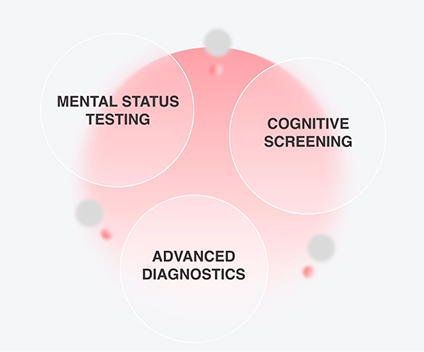
Show moreThe pathway begins with primary care general practitioners who refer patients to specialists at Dr. D. Orlando Smith Hospital, rather than through a dedicated memory clinic model . Diagnostic confirmation relies on standard clinical tools like the MMSE and MoCA alongside structural neuroimaging via CT or MRI scans. However, advanced tools like PET scans, genetic screens, and fluid biomarkers are unavailable. Access faces severe wait times and structural constraints, while National Health Insurance requires patients to pay five to ten percent co-payments for public assessments.
Diagnosis pathway
The diagnostic pathway typically starts in primary care with a general practitioner. Patients are then referred to specialist-led assessments within the public health system at the Dr. D. Orlando Smith Hospital in Road Town, overseen by the BVI Health Services Authority. This follows a standard general practitioner to hospital specialist route rather than a dedicated memory clinic model. The Virgin Islands Alzheimer’s Association provides non-governmental signposting, awareness, and caregiver support. Government efforts also utilise National Health Insurance data to track and quantify officially diagnosed cases.
In the British Virgin Islands (BVI), the dementia diagnostic pathway most commonly begins in primary care, with individuals first presenting to a general practitioner (GP). From there, patients are referred into specialist-led assessment within the public health system overseen by the BVI Health Services Authority (BVIHSA), primarily through the Dr. D. Orlando Smith Hospital in Road Town. This reflects a conventional GP to hospital-based specialist pathway rather than a separate memory-clinic model. Alongside formal healthcare routes, NGO signposting plays a significant role in help-seeking. The Virgin Islands Alzheimer’s Association (VIAA), an Alzheimer’s Disease International (ADI) member organization based in Tortola, is a key local actor for dementia awareness, caregiver support, and guidance on navigating services. Public communications from the BVI government also indicate efforts to quantify diagnosed dementia cases through National Health Insurance (NHI) data, suggesting that dementia diagnoses are being captured within formal health-system records rather than remaining entirely informal or hidden.
Wait times
No standardised wait-time benchmarks are published, but public commentary reveals lengthy delays at Dr. D. Orlando Smith Hospital. Patients experience hours of waiting alongside staff shortages and overstretched personnel. Access outside Tortola relies on remote consultations or referrals due to limited on-site physicians. Complex diagnostics or advanced imaging often necessitate off-island referrals to Puerto Rico, the US Virgin Islands, or the US mainland, adding logistics and insurance delays. These factors indicate that waiting periods are structurally constrained by capacity limitations rather than fluctuating demand.
Although official government communications do not publish standardized wait-time benchmarks for emergency or specialist care, public commentary and first-hand accounts point to persistent and often lengthy delays, particularly at Dr. D. Orlando Smith Hospital, the territory’s only public hospital. Residents regularly report emergency department waits of several hours, even during periods of moderate patient volume, alongside staff shortages, high turnover, and overstretched personnel, which directly affect throughput and patient experience. Concerns are most acute outside Tortola: on sister islands, access often depends on remote consultation or referral, with limited on-site physician availability, adding further delay in urgent cases. For complex diagnostics, specialist input, or advanced imaging and trauma care, patients are frequently referred off-island (US Virgin Islands, Puerto Rico, or the US mainland), introducing additional waiting time linked to logistics, medical evacuation, insurance coverage, and, where applicable, visa arrangements. Taken together, these factors suggest that waiting times are not only unquantified but structurally constrained, reflecting capacity limits in staffing, infrastructure, and on-island specialist services rather than short-term fluctuations in demand.
Diagnosis cost
The BVI operates a National Health Insurance (NHI) system with defined cost-sharing mechanisms. Published benefit schedules indicate that community health clinic services are typically subject to a 5% co-payment, while services delivered at the public hospital carry a 10% co-payment, alongside certain ancillary charges. As a result, even when dementia diagnosis occurs fully within the public system, patients and families incur out-of-pocket costs for consultations, investigations, and follow-up. These costs might, see first comment at first page, increase further if families seek private consultations, expedited imaging, or off-island assessments, reinforcing that dementia diagnosis in the BVI is institutionally anchored but not cost-neutral for households.
Cognitive tests
Cognitive screening and assessment are implied as part of routine clinical work-up in both primary and specialist care, but no BVI-specific national protocol publicly mandates a particular cognitive test battery. In practice, widely used international instruments such as the Mini-Mental State Examination (MMSE) and Montreal Cognitive Assessment (MoCA) are the most plausible tools employed by clinicians. Because English is the official language of the BVI, these tests might not require local language adaptation or translation, and standard English versions can be used without modification. However, there is no public documentation confirming systematic training, cut-off standardization, or territory-wide consistency in test selection or interpretation.
Imaging tests
Structural neuroimaging forms a key part of dementia differential diagnosis in the BVI. BVIHSA Imaging Services at Dr. D. Orlando Smith Hospital lists both computed tomography (CT) and magnetic resonance imaging (MRI) as available on-island modalities, enabling clinicians to exclude secondary causes of cognitive impairment (tumors, hydrocephalus, major strokes) and assess cerebrovascular pathology. Additional radiology services are also delivered through affiliated hospital departments and contracted providers. There is no public evidence of routine positron emission tomography (PET) imaging availability for dementia and advanced functional imaging would therefore require off-island referral or private arrangements, limiting its role in standard diagnostic pathways.
Genetic tests
There is no indication in accessible BVI sources that Alzheimer-related genetic testing (such as APOE genotyping or familial Alzheimer’s disease panels) is included in routine public diagnostic practice. Where genetic testing is pursued, it is likely to be case-specific, privately funded, or arranged off-island, rather than embedded in standardized BVI care pathways.
Biomarker tests
Publicly available data do not describe the routine use of cerebrospinal fluid (CSF) or blood-based Alzheimer’s disease biomarkers in diagnostic care. Policy and advocacy communications emphasize awareness, diagnosis counts, and general system capacity rather than biomarker-guided diagnosis. This might suggest that biomarker testing, if available at all, is limited to research contexts or external referrals, rather than being part of everyday clinical practice.
Cognitive Tests
Cognitive Tests
Cognitive screening and assessment are implied as part of routine clinical work-up in both primary and specialist care, but no BVI-specific national protocol publicly mandates a particular cognitive test battery. In practice, widely used international instruments such as the Mini-Mental State Examination (MMSE) and Montreal Cognitive Assessment (MoCA) are the most plausible tools employed by clinicians. Because English is the official language of the BVI, these tests might not require local language adaptation or translation, and standard English versions can be used without modification. However, there is no public documentation confirming systematic training, cut-off standardization, or territory-wide consistency in test selection or interpretation.
Imaging Tests
Imaging Tests
Structural neuroimaging forms a key part of dementia differential diagnosis in the BVI. BVIHSA Imaging Services at Dr. D. Orlando Smith Hospital lists both computed tomography (CT) and magnetic resonance imaging (MRI) as available on-island modalities, enabling clinicians to exclude secondary causes of cognitive impairment (tumors, hydrocephalus, major strokes) and assess cerebrovascular pathology. Additional radiology services are also delivered through affiliated hospital departments and contracted providers. There is no public evidence of routine positron emission tomography (PET) imaging availability for dementia and advanced functional imaging would therefore require off-island referral or private arrangements, limiting its role in standard diagnostic pathways.
Genetic Tests
Genetic Tests
There is no indication in accessible BVI sources that Alzheimer-related genetic testing (such as APOE genotyping or familial Alzheimer’s disease panels) is included in routine public diagnostic practice. Where genetic testing is pursued, it is likely to be case-specific, privately funded, or arranged off-island, rather than embedded in standardized BVI care pathways.
Biomarker Tests
Biomarker Tests
Publicly available data do not describe the routine use of cerebrospinal fluid (CSF) or blood-based Alzheimer’s disease biomarkers in diagnostic care. Policy and advocacy communications emphasize awareness, diagnosis counts, and general system capacity rather than biomarker-guided diagnosis. This might suggest that biomarker testing, if available at all, is limited to research contexts or external referrals, rather than being part of everyday clinical practice.
Treatment & Care
Treatment & care
Show moreMedical treatment is anchored at Dr. D. Orlando Smith Hospital, where care is delivered through general hospital and community structures rather than dedicated units . Access to pharmaceuticals is regulated by National Health Insurance guidelines, which dictate co-payments for outpatient consultations and monitoring. Significant out-of-pocket and indirect expenses arise from transportation, private alternatives, or off-island care referrals. Specialised psychosocial care and caregiver training are completely absent from state programming, shifting the burden of non-medical long-term care management onto civil society groups and unpaid family networks.
Specialized facilities and services
The Dr. D. Orlando Smith Hospital serves as the core public facility providing general medical, psychiatric, and supportive care for individuals with dementia. However, the territory lacks a dedicated network of dementia-specific or memory clinic structures, meaning clinical care is integrated into general hospital systems. Dementia-specific social support and caregiver education are managed by the Virgin Islands Alzheimer’s Association. This structure implies that while medical management is anchored in the public health system, specialised psychosocial and caregiver services rely heavily on civil society.
The backbone of public dementia-related treatment and care in the British Virgin Islands is the Dr. D. Orlando Smith Hospital, operated by the BVI Health Services Authority (BVIHSA). As the territory’s principal public hospital, it provides general medical, psychiatric, and supportive services relevant to people living with dementia, including inpatient care, outpatient follow-up, and access to diagnostic and imaging services. However, the BVI does not present a clearly documented network of dementia-specific or memory clinic-style services, meaning care is delivered through general hospital and community health structures rather than dedicated dementia units. Dementia-specific support capacity is NGO-linked with VIAA playing a central role in awareness-raising, caregiver education, and community support, particularly in and around Road Town. VIAA activities frequently appear in official communications during World Alzheimer’s Month, underscoring its role as the most visible dementia-focused actor in the territory. This structure suggests that while medical care is institutionally anchored, specialized psychosocial and caregiver-facing services depend heavily on civil society rather than the public system.
Approved medication
*Namzaric = combination of Donepezil and Memantine
Treatment cost
Dementia treatment in the BVI is not cost-free at the point of use. The NHI benefit package explicitly applies co-payments, typically at community clinics and at the public hospital, meaning households still contribute financially to consultations, monitoring, and ongoing care. Costs can rise further when families rely on private-sector routes, seek faster access, require services outside the defined benefit package, or pursue off-island care. These direct medical costs are often compounded by indirect expenses, including transportation, paid caregiving, and lost income for family members who reduce or leave employment to provide care.

Caregiver support
Caregiver support in the BVI is predominantly NGO-driven rather than embedded in a formal state program. The VIAA is repeatedly referenced in public messaging as a key source of caregiver education, peer support, and community awareness, positioning it as a central pillar of non-medical dementia care. While this provides an important support channel for families, it might, see first comment at first page highlights a structural gap: systematic, publicly funded caregiver training, respite care, and psychosocial support are limited, leaving families to rely heavily on voluntary sector initiatives and informal networks. This could be tied to a broader regional context, where dementia care extends beyond the hospital but lacks a fully institutionalized, state-led support framework.
Policy
Policy
Show moreThe British Virgin Islands addresses dementia indirectly through its ten-year Non-Communicable Disease Strategy and lifestyle prevention programmes. The territory lacks a standalone dementia strategy, leaving it without a binding legal framework to guarantee post-diagnostic support, protect patient rights, or clarify capacity pathways. A National Policy for Healthy Ageing has been discussed for years but remains unadopted. While the government provides basic home care, significant public education gaps remain. Culturally, deep-seated social stigma, fear, and denial create a massive underdiagnosis problem. Symptoms are frequently misunderstood as normal parts of ageing rather than medical conditions.
National dementia plan
Government communications in the BVI indicate that dementia is currently addressed indirectly, within broader frameworks related to healthy ageing, non-communicable diseases, and overall health sector planning, rather than through a dedicated dementia policy. References to cognitive health and ageing appear in work toward a National Policy for Healthy Ageing, suggesting that dementia is recognized as part of the wider demographic transition facing the territory. However, based on accessible public sources, there is no clearly adopted, standalone national dementia strategy that sets out unified objectives for early diagnosis, treatment access, post-diagnostic support, caregiver assistance, and long-term care planning. Instead, policy activity remains programmatic and awareness-oriented, relying on periodic campaigns rather than a binding strategic framework.
Upcoming plans
Future policy trajectories focus on the ongoing development of the National Policy for Healthy Ageing to integrate dementia priorities. The government utilises National Health Insurance data to track cases, address underdiagnosis, and guide forward planning. The Ministry of Health and Social Development aims to strengthen support through Aged Care Services, expanding supervised senior programmes in East End, Long Look, and Carrot Bay to reduce cognitive decline. Home care services from the Social Development Department complement hospital options, though significant gaps remain in public awareness and education.
The most visible policy trajectory involves continued development of a comprehensive National Policy for Healthy Ageing, which could potentially serve as a platform for integrating dementia-specific priorities over time. In parallel, the government maintains annual awareness and policy messaging linked to World Alzheimer’s Month, often highlighting the scale of underdiagnosis and encouraging earlier engagement with healthcare services. The increasing use of NHI data to quantify diagnosed dementia cases suggests a growing interest in evidence-informed planning, although this data use has not yet translated into formalized service entitlements or standardized care pathways.
The Ministry of Health and Social Development plans to continue strengthening dementia-related support through its Aged Care Services, including supervised senior programs at East End/Long Look and Carrot Bay that promote socialisation and help reduce loneliness, depression, and anxiety, factors linked to faster cognitive decline. Ongoing home care services provided by the Social Development Department are intended to support families by delivering care in clients’ homes and complementing hospital and community-based health services. While these initiatives form part of the territory’s forward approach, authorities acknowledge that significant gaps remain, particularly in public education and awareness about Alzheimer’s disease and its wider social and health impacts, indicating a continued need for expanded outreach and system development.
Policy gaps
Legal barriers
Dementia management is restricted by the absence of a dedicated legal architecture. Government efforts focus heavily on lifestyle prevention through the Complete Health Improvement Programme under the Non-Communicable Disease Strategy, which fails to establish enforceable legal rights or standardised entitlements once symptoms emerge. Furthermore, the National Policy on Healthy Ageing has not been formally adopted. No legally binding framework defines responsibilities for post-diagnostic support, patient rights, decision-making pathways, or caregiver training, leaving families to navigate complex legal and social challenges without codified state obligations.
The BVI’s response to dementia is anchored primarily in general public health and prevention frameworks, rather than in a dedicated legal architecture for dementia. Government action to date has focused on risk reduction and lifestyle prevention through the Complete Health Improvement Programme (CHIP), which operates under the territory’s 10-year Non-Communicable Disease (NCD) Strategy. While this approach appropriately addresses modifiable dementia risk factors (such as hypertension, diabetes, physical inactivity, and obesity), it does not establish enforceable legal rights or standardized entitlements for people living with dementia once symptoms emerge.
Similarly, dementia-related needs are referenced within broader discussions around a National Policy on Healthy Ageing, which has been discussed for years but has not been formally adopted. As a result, there is no binding legal instrument that clearly defines responsibilities for early diagnosis, post-diagnostic support, caregiver training, respite care, or long-term planning specific to dementia. Instead, dementia falls between policy domains, health, ageing, disability, and social care, without a unified legal framework to coordinate them.
In this context, much of the practical response to dementia relies on voluntary sector action and public messaging, particularly through the VIAA. For example, during the COVID-19 period, VIAA adapted awareness and education activities to online and virtual formats, helping to sustain community engagement in the absence of formal service expansion. Government leaders, including Minister Malone, have publicly encouraged participation in VIAA initiatives and emphasized that, although there is no cure for most dementias, treatments, advice, and support are available, and that open dialogue, framed as “Let’s Talk About Dementia”, is essential.
However, reliance on prevention strategies, awareness campaigns, and NGO-led initiatives highlights a core legal gap: there is no comprehensive dementia-specific framework that guarantees access to post-diagnostic support, protects patient rights, clarifies capacity and decision-making pathways, or formally supports caregivers. In practice, this leaves families navigating complex medical, legal, and social challenges largely on their own, with support depending more on advocacy and goodwill than on codified legal obligations of the state.
Cultural barriers
Deep-seated cultural and social barriers lead to widespread underdiagnosis across the territory. Pervasive public stigma, misinformation, fear, and denial cause families to hide symptoms and delay seeking medical evaluation until dementia reaches advanced stages. Cognitive decline is frequently misinterpreted as a normal or inevitable aspect of ageing rather than a distinct medical condition, which reinforces communal silence. Public health campaigns attempt to counter this fatalism by distributing global evidence on modifiable risk factors to promote proactive health-seeking behaviour and normalise open discussions.
Government statements and public health messaging in the BVI repeatedly acknowledge that many dementia cases remain undiagnosed, reflecting deep seated cultural and social barriers to early recognition and help-seeking. Health officials, including the Minister for Health, have emphasized that stigma, misinformation, fear, and denial continue to surround Alzheimer’s disease and other dementias, discouraging families from seeking assessment and support until symptoms are advanced. Dementia is often misunderstood as a normal or inevitable part of ageing rather than a medical condition requiring timely intervention, reinforcing silence and delayed engagement with services.
At the same time, public messaging has sought to reframe dementia as partly preventable and modifiable, drawing on global evidence from the Lancet Commission that identifies a set of modifiable risk factors.In the BVI context, this evidence underscores the cultural challenge of shifting public perception from fatalism toward risk reduction, lifestyle change, and early diagnosis, and highlights the importance of sustained community education to normalize discussion of dementia, counter stigma, and promote proactive health-seeking behavior.
Research
Research
Show moreAffiliated academic institutions include Ponce Health Sciences University and St. James School of Medicine. The territory lacks locally hosted clinical drug trials, advanced experimental therapeutic pipelines, or centralised registries, forcing residents to seek international research networks off-island. Local innovation is strictly organisational and data-driven; authorities link National Health Insurance diagnostic data to track case numbers and reveal the extent of underdiagnosis. Public prevention campaigns apply international evidence to highlight modifiable risk factors, illustrating that forty percent of cases can be delayed or prevented.
Selected academic institutions
Clinical trials and registries
There is no publicly documented evidence of BVI-based clinical trials or registries for Alzheimer’s disease or other dementias in the core sources reviewed. This may suggest that when residents participate in clinical trials, it would most plausibly occur off-island, through regional or international research networks rather than within the BVI itself.

Selected innovative methods
Innovation is primarily organisational and data-driven rather than technological. Authorities use National Health Insurance administrative data to quantify dementia prevalence and highlight underdiagnosis, reframing cognitive decline as a measurable system-level issue. This is combined with non-governmental community awareness models to provide locally grounded education. Public messaging incorporates international evidence to show that neurodegeneration begins years before clinical symptoms manifest. This life-course approach leverages modifiable risk factor management to demonstrate that up to forty percent of cases could be delayed or prevented.
The most visible form of innovation in the BVI dementia space lies in the linkage of awareness, policy messaging, and administrative data. By using NHI diagnosis data to estimate the number of people living with dementia and publicly highlighting underdiagnosis, authorities have begun to frame dementia as a measurable system-level issue rather than a purely private family matter. This data-informed narrative is complemented by an NGO-led community awareness model, which translates high-level messaging into locally grounded education and support, despite the absence of formal research pilots or technological innovation programs.
During World Alzheimer’s Month, BVI has increasingly framed dementia through an innovation-oriented and prevention focused lens, reflecting evolving global research and policy thinking. Public messaging highlighted by Health Minister Vincent Wheatley aligns with the latest international evidence showing that Alzheimer’s disease and other dementias begin many years before clinical symptoms emerge, reinforcing the importance of early risk identification and long-term prevention strategies. The campaign theme “Never too early, never too late,” promoted globally by ADI, mirrors contemporary research emphasizing modifiable risk factors, early intervention, and life-course approaches to reducing dementia risk and delaying disease progression.
In 2023, VIAA reported that 188 people were officially diagnosed with dementia in the BVI based on NHI’s data, but estimated that the true number exceeds 300 due to widespread underdiagnosis. These assumptions are in line with World Health Organization (WHO)’s international evidence that up to 75% of cases may be undetected. The association emphasized that Alzheimer’s is not a normal part of ageing and places significant strain on families. Drawing on global data, VIAA noted that up to 40% of dementia cases could be delayed or prevented by addressing modifiable risk factors such as smoking, excessive alcohol use, physical inactivity, low social contact, head injuries, diabetes, hearing loss, depression, obesity, hypertension, air pollution, and limited access to early education.
- https://bvi.gov.vg/media-centre/statement-honourable-vincent-wheatley-world-alzheimers-month
- https://bvinews.com/big-shift-happening-in-alzheimers-perception/
- https://bvinews.com/over-300-estimated-to-be-living-with-dementia-in-the-bvi/
- https://bvi.gov.vg/media-centre/statement-honourable-vincent-wheatley-world-alzheimers-month
Support
Support
Show moreSupport is spearheaded by the Virgin Islands Alzheimer’s Association alongside foundations like Unite BVI. Core initiatives include annual World Alzheimer’s Month awareness campaigns, public walks, and free community Dementia Friends training sessions to encourage inclusive business and public service attitudes. Funding is bolstered through Social Security Board contributions and corporate charity quiz events. Permanent public support services remain limited, leaving initiatives time-bound and advocacy-focused. No dedicated dementia media channels exist, restricting information to government press releases and non-governmental social media updates.
Selected national associations, patient family associations, NGOs:
Selected initiatives
Annual World Alzheimer’s Month activities combine government and non-governmental messaging to reduce stigma using insurance data. The Virgin Islands Alzheimer’s Association hosts an annual awareness walk alongside the Nevis Progressive Society to correct misconceptions about ageing. In early 2025, a charity quiz series sponsored by Begbies Traynor Group generated 12,320 dollars for awareness funding. Additionally, the Social Security Board provides financial contributions, while the Unite BVI Foundation collaborates on free community Dementia Friends training sessions to promote inclusive public service and business attitudes.
The most consistently documented initiatives are annual World Alzheimer’s Month activities, which involve coordinated public messaging by the government and VIAA. These initiatives focus on raising awareness, reducing stigma, encouraging early help-seeking, and communicating the scale of underdiagnosis using NHI data. Outside these annual campaigns, there is limited evidence of permanent, programmatic dementia support services, indicating that most initiatives remain time-bound and advocacy-oriented rather than embedded as ongoing public services.
Deprecated: trim(): Passing null to parameter #1 ($string) of type string is deprecated in /home/bcdafabe/public_html/wp-content/themes/bricks-child/functions.php on line 752
The VIAA in partnership with the Nevis Progressive Society, hosts an annual Alzheimer’s disease awareness walk aimed at raising public understanding of Alzheimer’s disease and mobilizing community involvement. The event focuses on correcting the misconception that Alzheimer’s disease is a normal part of ageing, emphasizing that dementia is a progressive brain disease where early recognition and intervention are critical. Association has highlighted that increased community outreach leads more families to recognize early warning signs and seek help, underscoring the importance of prevention and risk reduction. The walk brings together residents, community groups, and advocates as part of broader World Alzheimer’s Month efforts coordinated by ADI reinforcing the role of collective action in supporting people living with dementia and their families.
Deprecated: trim(): Passing null to parameter #1 ($string) of type string is deprecated in /home/bcdafabe/public_html/wp-content/themes/bricks-child/functions.php on line 752
A charity quiz series sponsored by the UK-based consulting firm, Begbies Traynor Group, raised significant funds for VIAA in early 2025, culminating in a final event on 9 April 2025 attended by Governor Daniel Pruce as guest of honour. Hosted at Bamboushay Restaurant & Lounge in Tortola, multiple quiz nights over three months generated 6,160 USD, which Begbies Traynor matched dollar-for-dollar, bringing the total donation to 12,320 USD. The funds support VIAA’s mission to promote Alzheimer’s awareness, prevention, and a dementia-friendly BVI, aligning with ongoing efforts by the Ministry of Health and Social Development to reduce stigma and improve early recognition of dementia.
Deprecated: trim(): Passing null to parameter #1 ($string) of type string is deprecated in /home/bcdafabe/public_html/wp-content/themes/bricks-child/functions.php on line 752
In 2020, the Social Security Board (SSB) expressed its support for VIA through a monetary contribution to help fund the association’s community activities. In formally recognizing VIAA’s work, SSB officials praised the organization’s role in raising awareness and promoting dementia prevention across the territory. VIAA representatives welcomed the support, emphasizing its importance for sustaining outreach and education efforts. The contribution underscores growing institutional backing for VIAA’s mission of creating awareness and encouraging prevention toward a dementia-friendly Virgin Islands community.
Deprecated: trim(): Passing null to parameter #1 ($string) of type string is deprecated in /home/bcdafabe/public_html/wp-content/themes/bricks-child/functions.php on line 752
The Unite BVI Foundation plays a supportive and facilitative role in dementia awareness through community partnerships. Most notably, Unite BVI has collaborated with VIAA on initiatives such as the “Dementia Friends” program, which brought free community training sessions to the BVI to improve understanding of dementia and promote dementia-friendly attitudes across public services, NGOs, and local businesses. In addition, dementia-related activities have featured within Unite BVI’s broader health and well-being outreach, including health fairs and public awareness campaigns that reached both in-person participants and wider online audiences. Overall, Unite BVI contributes to Alzheimer’s disease initiatives primarily by mobilizing community networks, venues, and public engagement capacity, complementing VIAA’s disease-specific expertise rather than leading dementia work independently.
Deprecated: trim(): Passing null to parameter #1 ($string) of type string is deprecated in /home/bcdafabe/public_html/wp-content/themes/bricks-child/functions.php on line 752
VIAA is also supported by other local and international charity and service organizations including the Rotary Family of the BVI and the Lions Clubs of the BVI, alongside the Diabetes Association, the Sister Islands District Office, and the Social Development Department. Together, these organizations help deliver public events, outreach, and education aimed at raising awareness of dementia, reducing stigma and misinformation, and advocating for stronger support and care across the Territory.
Deprecated: trim(): Passing null to parameter #1 ($string) of type string is deprecated in /home/bcdafabe/public_html/wp-content/themes/bricks-child/functions.php on line 752
- https://www.alzint.org/member/virgin-islands-alzheimers-association
- https://bvi.gov.vg/media-centre/walk-raise-alzheimer-s-awareness-march-4
- https://www.virginislandsnewsonline.com/en/news/walk-against-dementia-among-activities-for-world-alzheimers-month
- https://www.begbies-traynorgroup.com/news/firm-news/bvi-governor-joins-begbies-to-unveil-6000-charity-donation-cheque
- https://www.facebook.com/ukinbvi/posts/the-governor-and-his-team-joined-the-dementia-friends-bvi-training-today-thank-y/4154403001252171/
- https://www.284media.com/local/2020/02/10/social-security-supports-vi-alzheimers-association/
- https://unitebvi.com/our-work/index.html?region=rs
- https://bvi.gov.vg/media-centre/statement-honourable-vincent-wheatley-world-alzheimers-month
Dedicated media outlets
There is no clearly documented dementia-only media outlet operating in the BVI. Public communication about dementia occurs primarily through government press releases, Ministry of Health messaging, and VIAA’s own communication channels, including social media and community events. This reinforces a model in which dementia visibility depends heavily on episodic campaigns and NGO outreach rather than sustained, specialized media coverage.