

Croatia
Croatia has a universal, mixed‑financing health system offering broad access, but uneven dementia coordination. Alzheimer’s disease diagnosis is specialist‑led, beginning with general practitioner screening and referral to neurologists or psychiatrists at tertiary hospitals. Imaging tests such as computed tomography (CT) and magnetic resonance imaging (MRI) are standard, while positron emission tomography (PET) and cerebrospinal fluid (CSF) biomarkers are limited to university centres and partly self‑funded. Approved drugs are partly reimbursed by the public healthcare system. Carer support includes state allowances and counselling by Alzheimer Croatia. Although Croatia lacks a formal national dementia strategy, a 2024–2026 Action Plan is being developed to strengthen early diagnosis, carer help, and community initiatives.

AD Rating
Diagnostic Pathway
Specialized Care
Caregiver Support
National Policies
Access to ATT-s
Highlights

Population
Median age
Health expenditure (% of GDP)
Diagnosis
Diagnosis
Show moreDiagnosis in Croatia is specialist-led, moving from general practitioner screening using MMSE or MoCA to evaluations by neurologists, psychiatrists, or geriatricians. Patients typically face three-to-six-month wait times for cognitive testing and neuroimaging. Standard assessments utilise internationally recognised tools like the MoCA-HR and ACE-III. Structural neuroimaging via CT and MRI is standard across tertiary hospitals to rule out alternative causes. Advanced techniques like genetic testing, CSF biomarkers, and PET scans are available but restricted to specialised university centres for complex, uncertain, or early-onset cases.
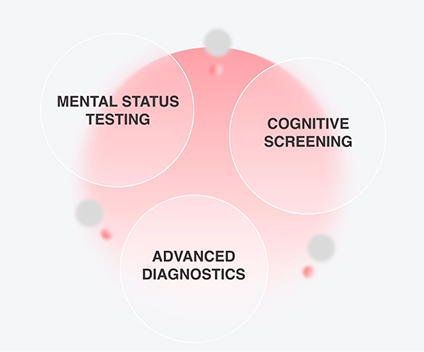
Diagnosis pathway
The diagnostic pathway follows a specialist-led, multi-step clinical process, though there is no formally codified national diagnostic protocol yet. The process typically starts at the primary care level, where a general practitioner (GP) identifies potential cognitive impairment based on patient or carer concerns. The GP performs basic clinical screening (e.g., Mini-Mental State Examination (MMSE) or Montreal Cognitive Assessment (MoCA)) and refers the patient to a specialist for further evaluation. The diagnosis is primarily coordinated by psychiatrists, neurologists, or geriatricians.
The diagnostic pathway follows a specialist-led, multi-step clinical process, though there is no formally codified national diagnostic protocol yet. The process typically starts at the primary care level, where a general practitioner (GP) identifies potential cognitive impairment based on patient or carer concerns. The GP performs basic clinical screening (e.g., Mini-Mental State Examination (MMSE) or Montreal Cognitive Assessment (MoCA)) and refers the patient to a specialist for further evaluation. The diagnosis is primarily coordinated by psychiatrists, neurologists, or geriatrician.
Wait times
According to Alzheimer Croatia, most people receive diagnosis in hospital settings like KBC Zagreb, Rijeka or Split, or at the University Psychiatric Hospital Vrapče. Informal feedback published by the association highlights that, because of limited specialists and inadequate awareness, people often wait between 3–6 months for specialist cognitive testing and imaging after referral.
Diagnosis cost
Most dementia-related diagnostic services, including consultations, cognitive assessments, and routine laboratory tests, are covered by the Croatian Health Insurance Fund (HZZO) when prescribed by a specialist. Public CT and MRI scans are covered, though patients face co-payments of EUR 15–30 if imaging occurs outside a hospital specialist referral pathway. Advanced procedures, such as lumbar punctures with cerebrospinal fluid biomarker analysis, are available in university hospital centres like KBC Zagreb, Rijeka, and Split. These research-setting tests require partial out-of-pocket payments ranging from EUR 150–250 outside standard reimbursement pathways.
In Croatia, most dementia-related diagnostic services are covered through the mandatory health insurance system administered by the Croatian Health Insurance Fund (HZZO) when prescribed by a neurologist or psychiatrist. Neurological consultations and cognitive assessments, including the MMSE and MoCA, are generally fully reimbursed, as are routine blood tests and laboratory investigations. CT and MRI scans are also covered within the public system, although patients may face co-payments of approximately EUR 15–30 in cases where imaging is not arranged through a hospital specialist referral pathway. More advanced diagnostic procedures, such as lumbar puncture with cerebrospinal fluid (CSF) biomarker analysis for β-amyloid and tau proteins, are available primarily in university hospital centres including KBC Zagreb, KBC Rijeka, and KBC Split. These tests are often performed in specialist or research settings and may require partial out-of-pocket payment when conducted outside standard reimbursement pathways, typically ranging from EUR 150–250.
Cognitive tests
Mini‑Mental State Examination (MMSE)
Cognitive assessment in Croatia is based on internationally recognized instruments used throughout Europe. The officially translated Croatian version of the Montreal Cognitive Assessment (MoCA-HR) supports routine screening for cognitive impairment, while more comprehensive assessments such as the Addenbrooke’s Cognitive Examination III (ACE-III) are used in specialist settings. Croatia’s participation in European dementia networks and research initiatives further reflects the alignment of its diagnostic practices with broader European standards for dementia assessment.
Imaging tests
Neuroimaging is a key component of dementia diagnosis in Croatia and is routinely used in specialist neurological and psychiatric assessments. Patients with suspected dementia are commonly evaluated in tertiary-care institutions such as University Hospital Centre Zagreb, University Hospital Centre Rijeka, University Hospital Centre Split, and the University Psychiatric Hospital Vrapče. CT and MRI are used to exclude alternative causes of cognitive decline, including cerebrovascular disease, tumours, and other structural abnormalities, while MRI can also identify patterns of brain atrophy associated with Alzheimer’s disease. More advanced imaging techniques, such as FDG-PET and amyloid PET, are available in specialised tertiary centres and are generally reserved for complex or diagnostically uncertain cases.
Genetic tests
Genetic testing is not routinely performed for all patients undergoing dementia assessment in Croatia but may be considered in selected cases, particularly when there is an early onset of symptoms, a strong family history of dementia, or suspicion of a hereditary neurodegenerative disorder. Patients requiring genetic evaluation are typically referred to specialist neurology or memory clinics within tertiary-care institutions such as University Hospital Centre Zagreb and the University Psychiatric Hospital Vrapče. Testing may include genes associated with familial Alzheimer’s disease, such as APP, PSEN1, and PSEN2, as well as other hereditary dementia syndromes when clinically indicated. Genetic counselling is generally recommended before and after testing to support patients and their families in understanding the implications of the results.
Biomarker tests
Biomarker testing is available in Croatia primarily through specialist and tertiary-care centres such as the University Hospital Centre Zagreb and the University Psychiatric Hospital Vrapče. While routine dementia diagnosis relies mainly on clinical assessment, cognitive testing, and neuroimaging, cerebrospinal fluid (CSF) biomarkers, including amyloid-beta (Aβ42), total tau, and phosphorylated tau, may be used in selected cases with diagnostic uncertainty. Advanced techniques such as amyloid PET imaging are also available but are not routinely used in standard dementia assessments.
Cognitive Tests
Cognitive Tests
Mini‑Mental State Examination (MMSE)
Cognitive assessment in Croatia is based on internationally recognized instruments used throughout Europe. The officially translated Croatian version of the Montreal Cognitive Assessment (MoCA-HR) supports routine screening for cognitive impairment, while more comprehensive assessments such as the Addenbrooke’s Cognitive Examination III (ACE-III) are used in specialist settings. Croatia’s participation in European dementia networks and research initiatives further reflects the alignment of its diagnostic practices with broader European standards for dementia assessment.
Imaging Tests
Imaging Tests
Neuroimaging is a key component of dementia diagnosis in Croatia and is routinely used in specialist neurological and psychiatric assessments. Patients with suspected dementia are commonly evaluated in tertiary-care institutions such as University Hospital Centre Zagreb, University Hospital Centre Rijeka, University Hospital Centre Split, and the University Psychiatric Hospital Vrapče. CT and MRI are used to exclude alternative causes of cognitive decline, including cerebrovascular disease, tumours, and other structural abnormalities, while MRI can also identify patterns of brain atrophy associated with Alzheimer’s disease. More advanced imaging techniques, such as FDG-PET and amyloid PET, are available in specialised tertiary centres and are generally reserved for complex or diagnostically uncertain cases.
Genetic Tests
Genetic Tests
Genetic testing is not routinely performed for all patients undergoing dementia assessment in Croatia but may be considered in selected cases, particularly when there is an early onset of symptoms, a strong family history of dementia, or suspicion of a hereditary neurodegenerative disorder. Patients requiring genetic evaluation are typically referred to specialist neurology or memory clinics within tertiary-care institutions such as University Hospital Centre Zagreb and the University Psychiatric Hospital Vrapče. Testing may include genes associated with familial Alzheimer’s disease, such as APP, PSEN1, and PSEN2, as well as other hereditary dementia syndromes when clinically indicated. Genetic counselling is generally recommended before and after testing to support patients and their families in understanding the implications of the results.
Biomarker Tests
Biomarker Tests
Biomarker testing is available in Croatia primarily through specialist and tertiary-care centres such as the University Hospital Centre Zagreb and the University Psychiatric Hospital Vrapče. While routine dementia diagnosis relies mainly on clinical assessment, cognitive testing, and neuroimaging, cerebrospinal fluid (CSF) biomarkers, including amyloid-beta (Aβ42), total tau, and phosphorylated tau, may be used in selected cases with diagnostic uncertainty. Advanced techniques such as amyloid PET imaging are also available but are not routinely used in standard dementia assessments.
Treatment & Care
Treatment & care
Show moreDementia care is anchored in university and regional psychiatric and neurology centres like KBC Zagreb, Split, Rijeka, and Hospital Vrapče. Approved symptomatic medications include donepezil, rivastigmine, and memantine, which are partially reimbursed by the HZZO. While public insurance covers specialist consultations and partial day hospital or palliative services, intensive long-term residential care in private nursing homes remains completely self-funded, costing up to $1,960 monthly. Informal family care remains the primary support mechanism, supplemented by crucial non-financial counselling, helpline services, and educational support from Alzheimer Croatia.
Specialized facilities and services
University Psychiatric Hospital Vrapče (Zagreb)
Clinical Hospital Center (KBC Zagreb)
Regional Psychiatric and Neurology Centers: KBC Rijeka, KBC Split
Psychiatric Hospital Sveti Ivan (Zagreb), Psychiatric Hospital Popovača, Lopača Psychiatric Hospital (Rijeka), facilities on Rab Island,
Teaching Institute for Public Health of Zagreb
Approved medication
| Generic Name | Trade Name | Used for |
|---|---|---|
| Donepezil | Aricept, Aricept ODT, Adlarity, Eranz, Memac, Alzepil, Davia, Donecept, Donep, Donepex, Donesyn, Dopezil, Yasnal, Memorit, Pezale, Redumas, Zolpezil, Namzaric* | Donepezil is indicated for the symptomatic treatment of mild to moderately severe Alzheimer’s dementia. |
| Rivastigmine | Exelon, Exelon Patch, Prometax, Rivastach, Nimvastid | Symptomatic treatment of mild to moderately severe Alzheimer’s dementia. Symptomatic treatment of mild to moderately severe dementia in patients with idiopathic Parkinson’s disease. |
| Memantine | Namenda, Namenda XR, Ebixa, Memary, Axura, Akatinol, Maruxa, Nemdatine, Namzaric* | Treatment of adult patients with moderate to severe Alzheimer’s disease. |
*Namzaric = combination of Donepezil and Memantine
Treatment cost
Dementia care costs vary based on public coverage from the HZZO. Symptomatic generic medicines like donepezil, rivastigmine, and memantine cost between $27 and $55 monthly. ATTs are not covered at all. Specialist consultations are covered, while day hospital and palliative services are fully or partially reimbursed. For intensive long-term support, costs rise substantially; residential care and specialised dementia units in private nursing homes are self-funded, costing $1,090 to $1,960 per month. Partial coverage for day hospital, residential, or palliative settings can leave families with additional expenses between $655 and $1,310 monthly.

The cost of dementia care in Croatia varies depending on the type of service and the level of public coverage available through the Croatian Health Insurance Fund (HZZO). Common symptomatic treatments for Alzheimer’s disease, including donepezil, rivastigmine, and memantine, are available as generic medicines and typically cost between $27 and $55 per month. ATTs are not covered like in rest of EU. Specialist consultations are generally covered under the national health insurance system, while day hospital services and certain palliative care services may be fully or partially reimbursed depending on the patient’s eligibility and care setting. For individuals requiring more intensive long-term support, costs can increase substantially. Residential care and specialised dementia units in private nursing homes are typically self-funded, with monthly costs ranging from approximately $1,090 to $1,960. In cases where day hospital, residential, or palliative services are only partially covered, patients and families may face additional expenses that can reach between $655 and $1,310 per month.
Caregiver support
Croatia provides financial support through social welfare benefits, including the Assistance and Care Allowance ($110–$195 monthly) and the Personal Disability Allowance ($160–$200 monthly) for advanced cases. Despite available community and home-care programmes, informal care remains the cornerstone of support, with family carers spending a median of 45 hours per week providing assistance. Additionally, Alzheimer Croatia provides vital non-financial support, offering counselling, information, helpline services, and educational and awareness programmes to assist individuals living with dementia and their families.
Croatia provides financial support for individuals living with dementia and their caregivers through several social welfare benefits. Family care partner may be eligible for the Assistance and Care Allowance, which provides monthly payments ranging from approximately $110 to $195 depending on the level of care required. In addition, individuals living with severe disabilities or advanced stages of Alzheimer’s disease may qualify for the Personal Disability Allowance, a separate benefit that typically ranges from about $160 to $200 per month. These programmes are intended to help offset the costs of daily care and support individuals who require substantial assistance with everyday activities.
People living with dementia in Croatia may access a range of community and residential support services, including home-care assistance programmes and long-term residential care. Informal caregiving remains the cornerstone of dementia support, with most family carers providing assistance on a daily basis and spending a median of approximately 45 hours per week caring for their relative.23 In addition to practical care services, counselling, information, and caregiver support are available through Alzheimer Croatia, which operates awareness programmes, educational activities, and helpline services for people living with dementia and their families.
Policy
Policy
Show moreCroatia currently lacks a national dementia plan or strategy, which limits care coordination and data collection. To address this, authorities are drafting a National Action Plan for Dementia spanning 2024 to 2026. Severe legal barriers exist because individuals with advanced dementia fall under full guardianship laws that remove legal capacity rather than offering supported decision-making. Furthermore, dementia is not consistently classified as a disability, causing welfare assistance delays. The country also lacks specific advance-directive legislation for end-of-life decisions. Culturally, cognitive decline is frequently dismissed as normal ageing. Strong family caregiving expectations and social stigma around institutional care present major ongoing challenges.
National dementia plan
There is no national dementia plan or strategy currently in Croatia.
Upcoming plans
The Croatian Ministry of Health, in cooperation with Alzheimer Croatia and the Croatian Alzheimer Alliance, is drafting a National Action Plan for Dementia (2024–2026) to improve early diagnosis, support for carers, public awareness, and de‑stigmatisation. This initiative follows years of advocacy by Alzheimer Croatia and other professional and civil society groups. The first proposal of the plan was expected to be completed by the end of 2024 and submitted for public consultation in 2025.
Policy gaps
Legal barriers
Advanced dementia patients face full guardianship laws that completely remove legal capacity rather than offering supported decision-making, complicating medical consent and property management. Furthermore, dementia is not consistently classified as a disability within social welfare law, requiring families to navigate multiple agencies and endure delays for formal disability certification to access allowances. Croatia also lacks specific advance-directive legislation for end-of-life decisions, leading to treatment uncertainty. Consequently, families frequently lack vital information regarding legal status, powers of attorney, or available benefits.
People living with advanced dementia often fall under full guardianship laws designed for general mental incapacity, which can fully remove an individual’s legal capacity instead of providing graded or supported decision‑making. This blanket approach limits autonomy for people living with dementia and complicates consent for medical treatment, clinical trials, and property management.
Dementia is not consistently classified as a disability within Croatia’s social‑welfare law, often forcing families to navigate multiple agencies to secure assistance. The Organisation for Economic Co-operation and Development (OECD) notes that while allowances exist (Assistance and Care Allowance and Personal Disability Allowance), eligibility requires formal disability certification, causing delays for cognitive conditions.
Croatia lacks specific advance‑directive legislation for medical or end‑of‑life decisions, leaving only informal arrangements between people living with dementia, families, and physicians. This can create uncertainty regarding treatment preferences once capacity is lost.
According to Alzheimer Croatia, families frequently lack information about legal status, powers of attorney, or benefits.
- https://www.hrw.org/news/2018/05/31/croatia-stalled-progress-people-disabilities
- https://ennhri.org/wp-content/uploads/2023/05/Croatia-Country-Report-CoE-NHRI-Rec-ENNHRI-Baseline.pdf
- https://www.oecd.org/en/publications/improving-long-term-care-in-croatia_9de55222-en.html
- https://www.croris.hr/crosbi/publikacija/prilog-knjiga/62686
- https://fimitic.org/cudpalegal-regulations-persons-disabilities-croatia/
Cultural barriers
A study documents inadequate structural and cultural support for carers, who rely primarily on family networks, while another one confirms that combating stigma and enhancing family career education remains central challenges. Broader dementia research highlights similar cultural patterns, viewing cognitive decline as normal aging, with strong family caregiving expectations and stigma around institutional care, as barriers in Southern European and collectivist societies.
Research
Research
Show moreDementia research is conducted across prominent academic institutions, including the University Psychiatric Hospital Vrapče, the University of Zagreb, the University of Rijeka, and the University of Osijek. Croatia lacks dedicated patient registries, though the Ministry of Health periodically publishes approved clinical trials. Diagnostic alignment with European networks reflects the country’s integration into broader European standards. Notably, researchers at the University Psychiatric Hospital Vrapče employ innovative methods by actively participating in European Union projects aimed at developing advanced retinal biomarkers for early dementia detection.
Selected academic institutions
Clinical trials and registries
There are no registries in the country.
The ministry of health periodically publishes a list of all clinical trials approved in Croatia.
Selected innovative methods
Croatian University Psychiatric Hospital Vrapče researchers participate in European Union (EU) projects developing retinal biomarkers for early dementia detection.
Support
Support
Show moreCroatia has no dedicated Alzheimer’s foundations or exclusive dementia media outlets, integrating public awareness into general NGO channels. Support is driven by associations like Alzheimer Croatia and the Croatian Alzheimer Alliance. Practical initiatives feature the Zagreb Dementia Services and Support network, providing an integrated pathway linking general practitioners, psychogeriatric wards, and day hospitals. Furthermore, family caregivers receive dedicated resource referrals and specialist consultations through the Advisory Centre for Psychogeriatrics at the Štampar Institute alongside helpline and educational networks managed by civil society groups.
Selected national associations, patient family associations, NGOs:
Selected initiatives
Alzheimer Croatia Caregiver & Family Support Network
Zagreb Dementia Services and Support
• Clinical and Care Network: An integrated pathway linking GPs, memory clinics, advisory centres, psychogeriatric wards, and specialized care facilities (day-hospitals and 24-hour homes) for people with dementia (PWD).
• Advisory Centre for Psychogeriatrics (Štampar Institute): Provides consultation and resource referrals specifically for family carers.
Dedicated media outlets
There are no media outlets exclusively devoted to Alzheimer’s disease or dementia.