

Cuba
Cuba’s public, primary care–led health system underpins a national dementia strategy that prioritizes early detection by family doctor–nurse teams, referral to provincial specialized centres (at least one per province), and specialist evaluations with neurocognitive testing, laboratory tests, and imaging as available. It also emphasizes carer education, rights awareness, and the development of memory clinics, day centres, and cognitive rehabilitation, though implementation has been uneven due to limited dedicated funding. A more even implementation of the national dementia strategy is needed across the whole country. The Cuban Section of Alzheimer’s (SCUAL) serves as the national association supporting carers and public awareness, while national research capacity includes advanced imaging and cerebrospinal fluid (CSF) biomarkers in clinical studies and a locally developed intranasal therapy (NeuralCIM/NeuroEPO) that has shown cognitive benefits and received accelerated approval in Cuba.
AD Rating
Diagnostic Pathway
Specialized Care
Caregiver Support
National Policies
Access to ATT-s
Highlights

Population
Median age
Health expenditure (% of GDP)
Diagnosis
Diagnosis
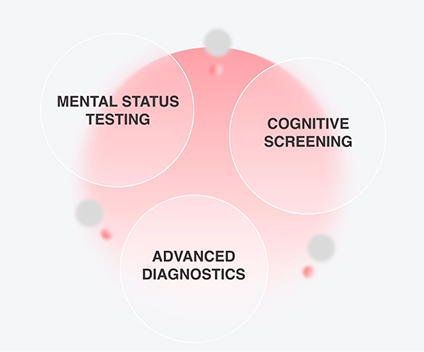
Show moreCuba’s dementia pathway is led by primary care, with specialist referral and provincial centres supporting diagnosis within a coordinated national framework. Cognitive screening is routine, while imaging access varies by resources. Genetic testing and biomarkers remain research-based. No public data on waiting times or diagnostic costs are available.
Diagnosis pathway
In Cuba, primary care teams lead initial dementia assessment and screening, referring complex cases to specialists. Provincial centres support diagnosis, while the national plan promotes registries, coordinated care, and ongoing follow-up.
Family doctor–nurse teams perform initial history, functional assessment, and cognitive screening. Cases with confirmed impairment or complexity are referred to neurologist, geriatrics, or psychiatrist and a visit to memory clinics and day centres. Specialist evaluation includes extended neurocognitive, laboratory testing, and imaging as available. Reports note that there is at least one specialized centre per province for early diagnosis and management.
The national dementia plan calls for a dementia registry, care planning, carer support, and shared ongoing follow‑up between primary and secondary care.
Wait times
There is no publicly available information on waiting times.
Cuba does not appear to publish a standard national indicator on the time it takes to get a diagnosis. However, Cuban public health literature identifies late diagnosis as a persistent barrier and frames dementia/cognitive impairment diagnosis as an ongoing challenge in routine care. The Cuban public health paper explicitly discusses that diagnosing cognitive impairment and dementia remains a major challenge and that late diagnosis is common (i.e., people arrive late to confirmation and support), framing it as a barrier to timely care.
Another Cuban primary care–focused article discusses dementia or Alzheimer’s disease as a growing national issue and addresses challenges around recognition and diagnosis in primary health care, which is a key determinant of how long it takes to get diagnosed.
Diagnosis cost
No pricing information is available.
No pricing information is available.
Cognitive tests
Cuba’s national strategy emphasizes early dementia detection in primary care through routine cognitive screening and functional assessment, supported by professional training, standardized workflows, and ongoing research to strengthen diagnostic capacity.
Imaging tests
Cuba uses CT/MRI in secondary dementia assessment where available, but access varies by province due to uneven implementation, resource constraints, and limited dedicated funding for specialized services.
Genetic tests
Genetic testing is not part of routine dementia diagnosis in Cuba, though studies using APOE genotyping show expected links with cognition and family history.
Biomarker tests
Cuban research uses CSF Aβ42 and advanced imaging (MRI, SPECT), indicating biomarker capacity in national centres, though not routine use in clinical practice.
Cognitive Tests
Cognitive Tests
Cuba’s national strategy emphasizes early dementia detection in primary care through routine cognitive screening and functional assessment, supported by professional training, standardized workflows, and ongoing research to strengthen diagnostic capacity.
Imaging Tests
Imaging Tests
Cuba uses CT/MRI in secondary dementia assessment where available, but access varies by province due to uneven implementation, resource constraints, and limited dedicated funding for specialized services.
Genetic Tests
Genetic Tests
Genetic testing is not part of routine dementia diagnosis in Cuba, though studies using APOE genotyping show expected links with cognition and family history.
Biomarker Tests
Biomarker Tests
Cuban research uses CSF Aβ42 and advanced imaging (MRI, SPECT), indicating biomarker capacity in national centres, though not routine use in clinical practice.
Treatment & Care
Treatment & care
Show moreCuba’s dementia care combines primary care-led pathways with provincial specialized centres supporting diagnosis and referrals, while advanced testing is concentrated in national institutes. Memory clinics, day services, and rehabilitation remain unevenly implemented. Caregiver support is prioritized through education and community-based approaches, but access varies by region, with limited funding and uneven rollout affecting availability.
Specialized facilities and services
Reports note at least one specialized dementia centre per province, supporting diagnosis through primary care and referrals. Advanced testing occurs in national institutes, while memory clinics, day centres, and rehabilitation services remain strategic goals with uneven implementation.
Reports indicate at least one specialized centre in each province to support early diagnosis and management of dementia, linked to the primary‑care pathway and specialist referral networks.
The Institute of Neurology and Neurosurgery (INN), Hospital Hermanos Ameijeiras, and Centro de Neurociencias de Cuba are cited as sites for advanced imaging, and CSF biomarker work (Aβ42) in Alzheimer’s disease clinical trials.
The national strategy outlines creation of memory clinics, day centres, and comprehensive rehabilitation and cognitive stimulation services to support diagnosis and ongoing care; these are strategic aims and may vary in implementation across provinces.
Approved medication
| Generic Name | Trade Name | Used for |
|---|---|---|
| Donepezil | Aricept, Aricept ODT, Adlarity, Eranz, Memac, Alzepil, Davia, Donecept, Donep, Donepex, Donesyn, Dopezil, Yasnal, Memorit, Pezale, Redumas, Zolpezil, Namzaric* | Donepezil is indicated for the symptomatic treatment of mild to moderately severe Alzheimer’s dementia. |
| Rivastigmine | Exelon, Exelon Patch, Prometax, Rivastach, Nimvastid | Symptomatic treatment of mild to moderately severe Alzheimer’s dementia. Symptomatic treatment of mild to moderately severe dementia in patients with idiopathic Parkinson’s disease. |
| Galantamine | Razadyne, Razadyne ER, Reminyl, Reminyl XL, Nivalin, Lycoremine, Galsya | Galantamine is indicated for the symptomatic treatment of mild to moderately severe dementia of the Alzheimer type. |
| Memantine | Namenda, Namenda XR, Ebixa, Memary, Axura, Akatinol, Maruxa, Nemdatine, Namzaric* | Treatment of adult patients with moderate to severe Alzheimer’s disease. |
*Namzaric = combination of Donepezil and Memantine
Treatment cost
No official cost data is publicly available.

No official cost data is publicly available.
Caregiver support
Cuba prioritizes caregiver support through education, awareness, and community services delivered via primary care and provincial centres. However, access and training remain uneven, with structured programs concentrated in Havana and broader support constrained by limited funding and inconsistent implementation.
Cuba’s strategy recognizes and prioritizes carer support through education, rights awareness, and proposed community and day services, delivered via primary care and provincial specialized centers. Practical access varies by province due to resource and roll‑out constraints, with national institutions serving as key hubs for care planning and carer engagement.
Structured carer curricula are concentrated in Havana and not uniform nationwide. Reports and interviews reference training sessions and outreach, with variable provincial coverage.
Professional summaries report at least one specialized center in each province for early diagnosis and management, which can serve as hubs for carer education and referral to services:
Alzheimer’s Disease International (ADI)’s professional report underscores that when national plans are underfunded or inconsistently implemented, carer supports (training, respite, social protection) often lag context relevant to Cuba’s noted constraints.
Policy
Policy
Show moreCuba’s 2016 National Intervention Strategy for Alzheimer’s Disease and Dementia Syndromes outlines a nationwide framework for dementia care, emphasizing early detection through primary care, province-level specialized centres, and community-based screening by family doctor–nurse teams. The strategy promotes professional training, caregiver support, public education, dementia-friendly environments, research, and strengthened data systems, aligned with WHO global targets. While early detection and workforce development have been partially implemented, caregiver education, day centres, memory clinics, and rehabilitation services remain unevenly rolled out. Funding limitations, variable provincial implementation, and gaps in registries and surveillance constrain comprehensive care. Sustaining multi-sector actions, enhancing equity, and scaling consistent, evidence-based interventions are essential to improve participation, independence, and outcomes for people living with dementia across Cuba.
National dementia plan
Cuba’s 2016 National Intervention Strategy for Alzheimer’s Disease and Dementia Syndromes sets out a nationwide vision for dementia care, centring on early detection through primary care and province-level specialized centres. Family doctor–nurse teams conduct community screenings and referrals, while national institutes provide advanced diagnostics. The strategy promotes professional training, caregiver support, and public education to protect rights and reduce stigma. Guidelines aim to improve quality of care across primary and secondary levels, foster dementia-friendly environments, advance research, and strengthen data systems. While early detection and workforce training have been partially implemented, caregiver education and support remain limited. Aligned with the WHO Global Action Plan, the strategy emphasizes inter-sectoral coordination, evidence-based practice, and health promotion to enhance participation, independence, and outcomes for people living with dementia.
Cuba’s National Intervention Strategy for Alzheimer Disease and Dementia Syndromes, adopted in 2016, outlines guidelines for primary and secondary care, rights education, professional development, research, health promotion, and an action plan focused on primary care and early detection.
While there is no evidence of a systematic implementation monitoring mechanism, there is some evidence on the implementation of parts of the strategy (early detection and primary care education) while partial or lack of other interventions (country wide carer support and education).
Main goals of Cuba’s National Strategy for Alzheimer’s Disease and Dementia
1. Establish and maintain a national plan/strategy
To create a sustained, nationwide framework to improve comprehensive care for people living with dementia and their families, coordinating intersectoral participation and resources.
2. Improve early detection and diagnosis across the country
To strengthen primary care to identify cognitive impairment early, ensure at least one specialized center per province for early diagnosis and management.
Community, door‑to‑door case ascertainment using 10/66 and DSM-IV criteria has been implemented and published from Cuban sites, demonstrating operational capacity for standardized detection and referral pathways within the family doctor–nurse model.
3. Enhance quality of care in primary and secondary levels
– Issue working guidelines for primary and secondary care, optimize treatment options, organize care pathways to improve outcomes and continuity of care.
4. Protect rights and reduce stigma
– Educate about the rights of people living with cognitive impairment; promote dementia-friendly environments and cities to reduce stigma and social exclusion.
5. Support and train caregivers and the health workforce
– Build competencies among health professionals, especially in primary care; provide carer education and support networks to improve home and community care.
This goal is partly implemented
6. Promote research, surveillance, and information systems
– Advance research on dementia epidemiology, care models, and interventions and improve information systems and indicators for monitoring and evaluation of the strategy
7. Emphasize prevention and health promotion
– Implement public health actions addressing modifiable risk factors and promoting brain health across the life course
8. Aligned with the World Health Organization (WHO) Global action plan on dementia (2017–2025)
– Update indicators, strengthen data systems, and incorporate cross‑cutting principles (e.g., gender equality), reflecting WHO’s seven global targets and public health approach
- https://pubmed.ncbi.nlm.nih.gov/27829648/
- https://www.alzint.org/u/Cuba-National-Dementia-Plan.pdf
- https://www.scielosp.org/pdf/medicc/2016.v18n4/9-13
- https://doaj.org/article/eee27b74505644639e7f6954cd468f65
- https://pubmed.ncbi.nlm.nih.gov/22143605/
- https://www.scielosp.org/article/medicc/2016.v18n4/9-13/en/
Upcoming plans
No info.
There is no information on new or planned policy changes regarding Alzheimer’s disease and dementia, rather Cuba is focused on the implementation rollout of their existing strategy.
Policy gaps
Legal barriers
Cuba has a nationally approved dementia strategy focused on strengthening primary care, multidisciplinary capacity, and coordination across the care pathway. However, implementation remains uneven, with significant regional disparities and gaps in standardized protocols, specialist services, and diagnostic infrastructure. Key governance challenges include inconsistent territorial rollout and limited capacity for systematic data collection and monitoring, which constrain effective nationwide execution.
Cuba’s approach to Alzheimer’s disease and dementia is anchored in a nationally approved intervention strategy that sets out how the system should respond across prevention, early detection, diagnosis, care and support. The policy direction is clear: strengthen primary care, build multidisciplinary capacity, and improve coordination and monitoring. The legal–governance constraints arise less from the absence of a strategy and more from the reality that implementation and system capacity are uneven, and that core elements (standardised pathways, registries/indicators, and consistent specialised services) still require further build‑out.
A central governance barrier is territorial consistency. Published descriptions of Cuba’s national strategy explicitly state that implementation “is not homogeneous across Cuba,” and that rollout still needed to reach central and eastern provinces. In practical terms, this creates a legal–administrative reality where access to the “strategy package” depends on where people live, an equity challenge that affects the availability of specialist assessment, follow‑up, and the supporting diagnostic infrastructure.
The strategy describes a shift toward more organised and comprehensive dementia care, but it is framed as a response to existing service gaps. The published account notes that at the time of writing, the primary and secondary care levels lacked sufficient protocols and interdisciplinary clinics, and that the strategy was designed to address those deficits. That is a classic implementation barrier: the formal policy exists, yet the service architecture needed to deliver it consistently is still being constructed and is not universal across settings.
Another governance barrier is the ability to measure what is happening. Cuban analysis of implementing the WHO global dementia action plan highlights the importance of systematically collecting a core set of dementia indicators through national information systems, and discusses Cuba’s situation in relation to this target. This supports the conclusion that strengthening routine surveillance and outcome tracking remains part of the policy agenda, precisely because existing monitoring is not yet robust enough to support performance management nationwide.
- https://mediccreview.org/cubas-strategy-for-alzheimer-disease-and-dementia-syndromes/
- https://scielosp.org/article/medicc/2016.v18n4/9-13/en/
- https://mediccreview.org/cubas-strategy-for-alzheimer-disease-and-dementia-syndromes/
- http://scielo.sld.cu/scielo.php?script=sci_arttext&pid=S1729-519X2019000300529
Cultural barriers
Cuba’s dementia strategy recognizes the need to strengthen caregiver support, rights education, and stigma reduction, but implementation remains uneven and underdeveloped across regions. Cultural perceptions that memory loss is a normal part of ageing continue to delay care-seeking and early diagnosis, particularly in smaller communities. At the same time, territorial disparities in funding and rollout mean that access to services, specialist care, and diagnostic infrastructure varies significantly depending on location, creating persistent equity challenges across the country.
Care partners support and rights protections
Strategic objectives include rights education and family support, signalling recognition that stigma reduction, care training, respite, and social protections need further development and consistent delivery across regions.
Many Cubans continue to view memory loss and confusion as natural components of ageing, not as medical symptoms requiring evaluation and treatment. This perception delays care-seeking and undercuts early diagnostic efforts emphasized in the Cuban Ministry of Public Health (MINSAP) strategic plan. In small towns, “tener la cabeza cansada” (“having a tired mind”) or “el viejito ya no recuerda” is interpreted as ageing, not disease.
Uneven funding and roll‑out across provinces
A central governance barrier is territorial consistency. Published descriptions of Cuba’s national strategy explicitly state that implementation “is not homogeneous across Cuba,” and that rollout still needed to reach central and eastern provinces. In practical terms, this creates a legal–administrative reality where access to the “strategy package” depends on where people live—an equity challenge that affects the availability of specialist assessment, follow‑up, and the supporting diagnostic infrastructure.
Research
Research
Show moreNeuralCIM (NeuroEPO plus) shows cognitive benefits in mild-to-moderate Alzheimer’s in Cuba. National centres offer advanced diagnostics, while population studies highlight dementia as a leading cause of disability. Research emphasizes culturally adapted care, workforce training, and social determinants over genetics, guiding evidence-based, equitable strategies across Cuba and the Caribbean.
Selected academic institutions
Clinical trials and registries

Selected innovative methods
NeuralCIM (NeuroEPO plus), an intranasal neuroprotective agent, improved cognition in mild-to-moderate Alzheimer’s in a Cuban phase 2–3 trial, receiving accelerated regulatory approval. National centres perform advanced diagnostics, including CSF Aβ42, MRI, and SPECT, supporting biomarker-based research. Population-based studies using 10/66 and DSM-IV protocols show dementia as a leading cause of disability, with hospital care dominating utilization. Regional initiatives advocate culturally adapted diagnostics, workforce training, data systems, and equity-focused policies. APOE genotyping indicates social determinants, not ancestry, largely drive dementia disparities in Cuban older adults.
NeuralCIM (NeuroEPO plus) is a recombinant human erythropoietin variant with low sialic acid content, designed to be neuroprotective without hematopoietic effects and administered intranasally. In a double‑blind, randomized phase 2–3 trial in mild‑to‑moderate Alzheimer’s disease clinical syndrome, NeuroEPO plus improved ADAS‑Cog11 scores at 48 weeks with a favorable safety profile. The Cuban regulator granted accelerated approval with sanitary register B-22-016-N07-C, while authors call for larger confirmatory studies.
Cuban Alzheimer’s disease trials have integrated CSF Aβ42 determination as a biological marker alongside advanced imaging (MRI and SPECT) performed at national centers such as the Institute of Neurology and Neurosurgery, Hospital Hermanos Ameijeiras, and the Centro de Neurociencias de Cuba. This reflects capacity for biomarker‑based research and more comprehensive diagnostic work‑ups within the Cuban ecosystem.
A study applied the 10/66 diagnostic protocol alongside DSM-IV in a large, door-to-door Cuban cohort to produce robust, comparable dementia prevalence estimates while simultaneously assessing multimorbidity with standardized criteria and laboratory markers. Its high-response, population-based design in a middle-income setting demonstrates feasibility and reveals dementia as the leading driver of disability and dependency in older adults, elevating it as a public health priority in Cuba.
Another study uniquely harmonizes population-based data from the Caribbean (10/66 in the Dominican Republic, Cuba, and Puerto Rico) with the United States Health and Retirement Study to directly compare dementia-attributable healthcare utilization across regions. It isolates incident versus ongoing dementia effects, showing utilization spikes concentrated in hospital care, especially at incident diagnosis, highlighting opportunities for stronger outpatient management in Caribbean settings.
A study presented a comprehensive, multidisciplinary roadmap to build a regional dementia action plan for Latin America, integrating epidemiology, clinical science, health systems, economics, and policy into a coordinated strategy. It emphasizes context-specific solutions, such as culturally adapted diagnostics, workforce training, data infrastructure, and equity-focused policies, to overcome regional barriers and accelerate translational impact.
A 2022 study jointly examined self-identified race and genetically measured ancestry in a large, community-based Cuban cohort, linking both to dementia diagnosis and cognitive performance using 10/66 and DSM-IV criteria with APOE genotyping. By finding no independent effect of race or African ancestry on dementia prevalence or cognition after adjusting for demographics and education, it reframes disparities toward social determinants rather than genetic ancestry in this LMIC context.
- https://alzres.biomedcentral.com/articles/10.1186/s13195-023-01356-w
- https://pubmed.ncbi.nlm.nih.gov/38093366/
- http://www.mtz.sld.cu/noticia/2023/02/27/ensayo-clinico-con-neuralcim%C2%AE-neuroepo-para-alzheimer-leve-o-moderado-comienza-en
- https://pubmed.ncbi.nlm.nih.gov/22143605/
- https://pubmed.ncbi.nlm.nih.gov/37840491/
- https://pubmed.ncbi.nlm.nih.gov/33634602/
- https://pubmed.ncbi.nlm.nih.gov/33649769/
Support
Support
Show moreCuba’s dementia initiatives focus on strengthening primary care, with physician training programs to improve early detection. The Centro de Alzheimer in Havana functions as a national hub for research, patient care, and family support, while public campaigns—including World Alzheimer’s Month—promote awareness nationwide. Although the country lacks dedicated dementia media, national outlets provide coverage of health campaigns, caregiver stories, and research updates, helping to inform the public and raise the profile of Alzheimer’s disease and related disorders. These combined efforts reflect a coordinated approach to improving detection, care, and community engagement despite limited specialized communication channels.
Selected national associations, patient family associations, NGOs:
Selected initiatives
Cuba advances dementia care through primary-care physician training to strengthen early detection. The Centro de Alzheimer in Havana serves as a national hub for care, research, and family support, while public campaigns like World Alzheimer’s Month raise awareness nationwide.
Primary care physician (PCP)
Centro de Alzheimer (CITED) – Center for Research on Longevity, Aging and Health
National reference center in Havana dedicated to Alzheimer’s disease care, research, and training; part of the public health system and a hub for people living with Alzheimer’s disease and family support activities.
Deprecated: trim(): Passing null to parameter #1 ($string) of type string is deprecated in /home/bcdafabe/public_html/wp-content/themes/bricks-child/functions.php on line 753
SCUAL Campaigns
Dedicated media outlets
There are no dedicated media outlets although the national outlets provide visibility into health campaigns, dementia awareness events, caregiver stories, and research updates.