

Dominican Republic
The Dominican Republic has a formal national dementia plan (2020–2025) and visible diagnostic capacity in urban centers, including routine cognitive screening (MMSE/MoCA), widespread access to CT/MRI, selective use of CSF analysis, and PET-CT availability in the capital, alongside expanding older-adult social programs coordinated by the government agency, Consejo Nacional de la Persona Envejeciente (CONAPE). Together, these elements provide a credible foundation for timely diagnosis and support in Santo Domingo and other large cities. However, services remain highly city-concentrated, participation in clinical trials is limited, and families frequently face accumulating out-of-pocket costs when care falls outside ARS networks or requires private pathways. As highlighted in regional assessments such as Iberoamérica Mayores, the decisive next phase is implementation at scale: extending caregiver support, community-based care, and equitable coverage beyond the capital so that the national plan translates from policy architecture into consistent, nationwide access.

AD Rating
Diagnostic Pathway
Specialized Care
Caregiver Support
National Policies
Access to ATT-s
Highlights

Population
Median age
Health expenditure (% of GDP)
Diagnosis
Diagnosis
Show moreDementia assessment in the Dominican Republic follows a relatively established pathway in major cities, with primary-care concerns leading to neurology or psychiatry referrals and comprehensive work-ups available through urban hospital networks. MMSE and MoCA are commonly used, while CT/MRI, EEG, and specialist CSF analysis can support diagnosis. There is no nationwide population screening programme, mandatory genetic testing, or systematic use of Alzheimer’s CSF or blood biomarkers. Imaging and specialist services are concentrated in Santo Domingo, creating geographic and logistical barriers elsewhere, while national waiting-time statistics are unavailable. SeNaSa and other ARS schemes generally cover contracted consultations and diagnostics, although copayments and plan limits remain. Families using private or out-of-network services, particularly outside urban centres, may therefore face substantially higher costs and delays.
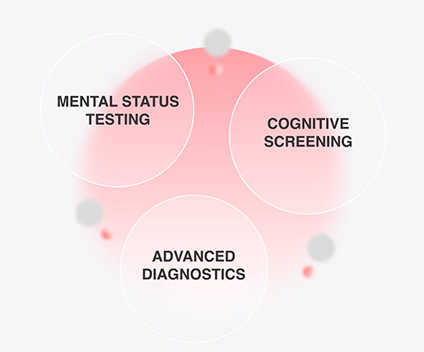
Diagnosis pathway
The Dominican Republic has relatively structured dementia assessment in Santo Domingo, where primary-care concerns can progress to specialist neurology or psychiatry services within established hospital networks. Major centres offer comprehensive diagnostic investigations, including cognitive screening, EEG, CSF analysis, and CT/MRI. However, pathways become less consistent outside major urban areas, where specialist availability and advanced diagnostics are limited, often causing delays and fragmented private referrals. The 2020–2025 National Dementia Response Plan aims to strengthen standardised access, earlier detection, and monitoring, although implementation remains concentrated in urban hubs.
In Santo Domingo and other large urban centers, the standard diagnostic pathway for suspected dementia is relatively well defined and closely resembles international practice. Individuals usually first present to primary care physicians or private general clinics with memory complaints, behavioral changes, or functional decline. When these “red flags” persist, referral is made to hospital-based neurology or psychiatry services, most often within large private or academic hospital networks such as Hospiten or long-established private institutions. These centers explicitly list standardized cognitive screening tools (MMSE, MoCA), neurophysiology (EEG), lumbar puncture with CSF analysis, and structural neuroimaging (CT/MRI) as part of routine cognitive work-ups, allowing for relatively comprehensive diagnostic assessment within a single institutional pathway.
Outside major metropolitan areas, the alternative pathway is more fragmented and slower. Specialist availability is thinner, and advanced diagnostics are often not locally accessible. As a result, families may remain in primary care for longer periods, rely on informal caregiving and community advice, or pursue piecemeal private consultations while arranging referral into city hospitals or private imaging providers in the capital. The Ministry of Health’s National Dementia Response Plan (2020–2025), referenced by Alzheimer’s Disease International, formally calls for standardized access, earlier detection, and system monitoring across the country. In practice, however, implementation remains concentrated in urban hubs, with limited evidence so far of fully integrated referral pathways in rural or semi-rural provinces.
Wait times
Although national dementia-specific waiting-time statistics are unavailable, access appears strongest in Santo Domingo, where private providers offer relatively accessible CT and MRI services. Outside major urban centres, specialist appointments and imaging may be harder to obtain, sometimes requiring travel to the capital. These disparities suggest that delays are shaped primarily by geography, affordability, insurance coverage, and patients’ ability to navigate services.
Publicly reported, dementia-specific national wait-time statistics are not available, which limits system-level benchmarking. Nonetheless, indirect indicators suggest a clear urban–rural gradient. In Santo Domingo, major imaging providers and diagnostic centers, including Clínica Abreu and other large diagnostic networks, advertise routine scheduling for CT and MRI and acceptance of multiple ARS plans. This implies that, at least in the capital, imaging appointments are generally obtainable without prolonged delays, particularly when patients are insured or willing to use private services.
By contrast, outside the capital and other large cities, access is more variable. Patients may face longer waits for specialist consultations and imaging, or need to travel to Santo Domingo to complete diagnostic work-ups. In these contexts, delays are less about formal queues and more about geographic access, affordability, and navigation capacity, factors that disproportionately affect lower-income households and older adults dependent on family support.
Diagnosis cost
Dementia diagnosis is financed through a combination of SeNaSa, other ARS insurance schemes, and out-of-pocket payments. Insurance generally covers contracted consultations and diagnostic imaging, but coverage limits, copayments, and tariffs vary between plans. Families using out-of-network or private services, or paying for tests not covered by insurance, must meet the full cost themselves. As a result, rural and privately funded households face greater financial barriers to timely diagnosis.
Dementia diagnosis in the Dominican Republic is financed through a mixed system combining social health insurance, including multiple Administradoras de Riesgos de Salud (ARS) schemes and the public insurer Seguro Nacional de Salud (SeNaSa) and out-of-pocket payments. Under SeNaSa and other ARS plans, in-network consultations and diagnostic imaging are generally covered subject to plan-specific limits, copayments, and negotiated tariffs. Complementary benefit tables indicate relatively strong coverage for inpatient services and contracted care, while outpatient diagnostics follow defined schedules and may still involve partial patient payment.
When families seek care outside ARS networks, use higher-end private providers, or require tests not fully covered under their plan, costs are borne out-of-pocket. Consequently, while insured urban residents can often access core diagnostic services with manageable copays, households in rural areas or those relying on purely private pathways face higher financial and logistical barriers to timely diagnosis.
Cognitive tests
There is no published population-wide dementia screening program in the Dominican Republic. Instead, the national dementia plan prioritizes awareness-raising and earlier case-finding within primary care rather than universal screening. In routine clinical practice, both public-affiliated and private clinics commonly rely on brief, standardized cognitive tools such as MMSE and MoCA as first-line screens, particularly in urban settings. This approach aligns with international guidance favoring targeted screening of symptomatic individuals rather than population-wide testing, and is consistent with pathways described by ADI’s and advertised clinical practice at Hospiten.
Imaging tests
Structural neuroimaging is widely available in major cities. CT and MRI are offered through large hospitals and private diagnostic networks, including Hospiten and other multi-site providers. Functional and molecular imaging capacity is more limited but does exist in the capital. PET-CT and nuclear medicine services are available at centers including Clínica Abreu and INCART. While these facilities primarily serve oncology patients, they are technically capable of neurological indications when clinically justified. Geographically, this capacity is highly concentrated in Santo Domingo. Patients from other regions typically need referral and travel to the capital, which adds time, cost, and logistical complexity. As a result, imaging-supported dementia diagnosis is substantially more accessible in urban centers than in peripheral provinces.
Genetic tests
There is no national guideline mandating genetic testing for Alzheimer’s disease or other dementias. Testing for APOE genotype or monogenic dementia panels, where available, is offered on a private, case-by-case basis and is not considered a routine component of diagnosis. This mirrors broader regional practice in Latin America, where genetic testing is generally reserved for early-onset cases, strong family histories, or research contexts rather than standard clinical pathways.
Biomarker tests
In tertiary level centers in Santo Domingo, lumbar puncture with CSF analysis can be performed when clinically indicated, typically within specialist neurology services such as those at Hospiten. However, there is no public evidence that standardized Alzheimer’s CSF panels (e.g., Aβ42, tau, p-tau) or blood-based biomarkers are used systematically nationwide. Their use appears limited to specialist centers and selected cases, rather than embedded as a routine diagnostic step across the health system.
Cognitive Tests
Cognitive Tests
There is no published population-wide dementia screening program in the Dominican Republic. Instead, the national dementia plan prioritizes awareness-raising and earlier case-finding within primary care rather than universal screening. In routine clinical practice, both public-affiliated and private clinics commonly rely on brief, standardized cognitive tools such as MMSE and MoCA as first-line screens, particularly in urban settings. This approach aligns with international guidance favoring targeted screening of symptomatic individuals rather than population-wide testing, and is consistent with pathways described by ADI’s and advertised clinical practice at Hospiten.
Imaging Tests
Imaging Tests
Structural neuroimaging is widely available in major cities. CT and MRI are offered through large hospitals and private diagnostic networks, including Hospiten and other multi-site providers. Functional and molecular imaging capacity is more limited but does exist in the capital. PET-CT and nuclear medicine services are available at centers including Clínica Abreu and INCART. While these facilities primarily serve oncology patients, they are technically capable of neurological indications when clinically justified. Geographically, this capacity is highly concentrated in Santo Domingo. Patients from other regions typically need referral and travel to the capital, which adds time, cost, and logistical complexity. As a result, imaging-supported dementia diagnosis is substantially more accessible in urban centers than in peripheral provinces.
Genetic Tests
Genetic Tests
There is no national guideline mandating genetic testing for Alzheimer’s disease or other dementias. Testing for APOE genotype or monogenic dementia panels, where available, is offered on a private, case-by-case basis and is not considered a routine component of diagnosis. This mirrors broader regional practice in Latin America, where genetic testing is generally reserved for early-onset cases, strong family histories, or research contexts rather than standard clinical pathways.
Biomarker Tests
Biomarker Tests
In tertiary level centers in Santo Domingo, lumbar puncture with CSF analysis can be performed when clinically indicated, typically within specialist neurology services such as those at Hospiten. However, there is no public evidence that standardized Alzheimer’s CSF panels (e.g., Aβ42, tau, p-tau) or blood-based biomarkers are used systematically nationwide. Their use appears limited to specialist centers and selected cases, rather than embedded as a routine diagnostic step across the health system.
Treatment & Care
Treatment & care
Show moreSpecialist dementia care in the Dominican Republic is concentrated in major cities, particularly Santo Domingo, through neurology, psychiatry, geriatrics, and internal medicine services. Hospiten and Clínica Abreu provide important specialist and diagnostic capacity. CONAPE complements medical care through day centres, residential support, home assistance, caregiver training, and respite services, although availability varies by location. SeNaSa and other ARS schemes provide partial coverage for medicines and follow-up, but copayments and private or out-of-network care can create recurring costs. With no universal dementia-specific caregiver allowance, families continue to shoulder substantial long-term care responsibilities, especially outside the capital.
Specialized facilities and services
Dementia care in the Dominican Republic relies on urban neurology, psychiatry, geriatrics, and internal medicine services rather than a national memory-clinic network. Hospiten and Clínica Abreu are important specialist providers, particularly in Santo Domingo. CONAPE offers day centres, residential support, and community services that can assist people with dementia and caregivers. However, coverage varies geographically, and dementia-specific palliative care, including advance planning and integrated caregiver support, remains largely undeveloped.
The Dominican Republic does not operate a nationwide, stand-alone memory clinic network. Instead, dementia care is delivered through neurology, psychiatry, geriatrics, and internal medicine services, heavily concentrated in Santo Domingo and other large cities. Private and mixed private–academic providers (Hospiten and Clínica Abreu, including its diagnostic units) anchor specialist assessment, follow-up, and access to advanced diagnostics. Nuclear medicine units in the capital expand the clinical envelope (primarily oncology-led but neurologically capable), reinforcing an urban hub-and-spoke reality rather than territorially even coverage.
For long-term and social care, the older-persons agency Consejo Nacional de la Persona Envejeciente (CONAPE) operates or backs Hogares de Día (day centers), residential support, and community programs. These services indirectly support people with dementia and caregivers through supervision, meals, basic health monitoring, and respite, though they are not dementia-specific everywhere and coverage varies by municipality. Palliative care exists in major urban hospitals, but dementia-specific palliative pathways (advance care planning, behavioral symptom management, caregiver counseling integrated with end-of-life care) are still emergent rather than standardized.
Approved medication
| Generic Name | Trade Name | Used for |
|---|---|---|
| Donepezil | Aricept, Aricept ODT, Adlarity, Eranz, Memac, Alzepil, Davia, Donecept, Donep, Donepex, Donesyn, Dopezil, Yasnal, Memorit, Pezale, Redumas, Zolpezil, Namzaric* | Donepezil is indicated for the symptomatic treatment of mild to moderately severe Alzheimer’s dementia. |
| Rivastigmine | Exelon, Exelon Patch, Prometax, Rivastach, Nimvastid | Symptomatic treatment of mild to moderately severe Alzheimer’s dementia. Symptomatic treatment of mild to moderately severe dementia in patients with idiopathic Parkinson’s disease. |
| Galantamine | Razadyne, Razadyne ER, Reminyl, Reminyl XL, Nivalin, Lycoremine, Galsya | Galantamine is indicated for the symptomatic treatment of mild to moderately severe dementia of the Alzheimer type. |
| Memantine | Namenda, Namenda XR, Ebixa, Memary, Axura, Akatinol, Maruxa, Nemdatine, Namzaric* | Treatment of adult patients with moderate to severe Alzheimer’s disease. |
*Namzaric = combination of Donepezil and Memantine
Treatment cost
Dementia medicines and follow-up are partly covered through SeNaSa and other ARS plans, subject to network restrictions and copayments. Additional expenses arise from branded drugs, private pharmacies, and out-of-network services, creating recurring costs for families.

Medication and outpatient follow-up costs are partially reimbursed under social health insurance (multiple ARS schemes, including the public insurer SeNaSa), subject to plan tier, network use, and copays. Formularies and complementary benefit matrices outline broad coverage categories rather than molecule-by-molecule entitlements; reimbursement flows through the ARS/PDSS schedule and contracted tariffs. In practice, families frequently incur copays or out-of-pocket expenses when opting for branded drugs, private pharmacies, or out-of-network providers, costs that can accumulate over time given the chronic nature of dementia treatment.
Caregiver support
CONAPE supports caregivers through older-person programmes offering home assistance, day centres, training, emergency support, and respite. National dementia policy recognises the need to expand these services, but no universal dementia-specific cash benefit exists. Consequently, families continue to absorb considerable caregiving responsibilities, particularly in regions outside Santo Domingo.
Caregiver support is policy-recognized through numerous programs, but uneven in reach. CONAPE runs or supports initiatives for older adults that include home-care assistance (hygiene/personal care in residential settings), day homes, emergency shelter options, and caregiver professionalization pilots. These interventions provide skills training, respite models, and social assistance, helping families manage daily care and reduce burnout. At the regional level, Iberoamérica Mayores documents and disseminates good practices that inform national approaches. The National Dementia Response Plan calls for expanded caregiver access and support, but dedicated cash benefits or universally guaranteed allowances for dementia caregivers are not yet in place. As a result, caregiver burden remains substantial, particularly outside the capital.
- https://www.conape.gob.do/servicios/higiene-y-cuidado-personal
- https://iberoamericamayores.org/2025/07/01/republica-dominicana-conape-impulsa-la-profesionalizacion-y-empleabilidad-de-personas-cuidadoras
- https://presidencia.gob.do/noticias/ministerio-de-salud-desarrolla-plan-de-respuesta-las-demencias-en-rd-para-mejorar-calidad
Policy
Policy
Show moreThe Dominican Republic has used its 2020–2025 National Dementia Response Plan to promote earlier diagnosis, coordinated care, equitable access, and system monitoring, while integrating dementia into broader ageing and NCD frameworks. Delivery remains concentrated in urban centres, with weaker specialist availability and support services elsewhere. Policy priorities include nationwide primary-care case-finding, caregiver and professional training, expanded day and respite services, and formalised palliative pathways. Ley 352-98 and CONAPE establish general protections for older persons, but dementia-specific safeguards remain limited. Stigma and delayed help-seeking continue to hinder timely care, underscoring the importance of sustained funding, primary-care engagement, and culturally adapted public education.
National dementia plan
The Dominican Republic’s 2020–2025 National Dementia Response Plan establishes priorities for early detection, standardised access, coordinated services, and system monitoring within broader ageing and NCD frameworks. Delivery remains uneven, with urban centres better equipped than rural areas. Persistent gaps include territorial specialist services, primary-care dementia training, biomarker access, and financial support for caregivers and long-term care. Strengthening nationwide case-finding, palliative pathways, respite provision, and clarity around insurance benefits would help translate the plan into more equitable care.
The Dominican Republic adopted a National Dementia Response Plan (2020–2025) that aligns with international guidance on early detection, standardized access, service coordination, and system monitoring. Strategically, the plan positions dementia within broader ageing and non-communicable disease frameworks rather than as a siloed condition, an approach that supports integration with primary care and social services.
Implementation, however, is asymmetric. Progress is most visible in urban centers, where private capacity, specialist density, and insurance navigation are strongest. Key policy gaps include:
• the absence of a territorial memory-clinic model
• limited routine use of biomarkers beyond specialist centers
• variable primary-care training in dementia recognition outside cities
• financing protections for long-term care and caregivers that lag behind clinical intent.
Looking ahead, policy priorities implied by current practice include: strengthening primary care case-finding and referral nationwide; formalizing dementia-specific palliative pathways; expanding day center and respite coverage beyond pilot geographies and clarifying benefit entitlements (medications, imaging, follow-up) to reduce out-of-pocket exposure. Achieving these would translate the plan’s strategic commitments into more equitable, nationwide delivery.
Upcoming plans
Rather than introducing a new strategy, the Dominican Republic is concentrating through 2025 on implementing its existing dementia framework. Priorities include scaling caregiver and professional training, developing community and respite services, and strengthening coordination with CONAPE. Extending models beyond Santo Domingo is intended to reduce territorial disparities, but limited specialist capacity remains a major barrier to nationwide implementation.
Through the remainder of 2025, the emphasis remains on implementing and consolidating the existing 2020–2025 framework rather than launching a successor strategy. Key near-term priorities include scaling caregiver and professional training, expanding “communities of care” and respite-oriented pilots, and strengthening intersectoral coordination, particularly with social protection and older-persons services supported by CONAPE. These efforts aim to move beyond episodic clinical care toward more continuous, community-anchored support. A parallel policy thread focuses on reducing territorial inequities. Ongoing initiatives, documented regionally by Iberoamérica Mayores, highlight attempts to adapt urban-centric models (training curricula, day-center concepts, caregiver education) for use outside Santo Domingo. The challenge through 2025 is less strategic design than delivery at scale, particularly in provinces with limited specialist presence.
Policy gaps
Legal barriers
Although Ley 352-98 and CONAPE provide a broader framework for older persons’ rights and social protection, the Dominican Republic has no dedicated dementia legislation. Important gaps remain around capacity and guardianship, driving fitness, discrimination, financial abuse, and clear institutional accountability for protecting people with dementia.
The Dominican Republic has a general legal framework for older persons, including Ley 352-98 and an institutional guardian in CONAPE that addresses rights, services, and social protection. However, there is no dementia-specific statute that clearly regulates issues such as decision-making capacity and guardianship standards, fitness to drive, workplace and service-access anti-discrimination protections tailored to cognitive impairment, or safeguards against financial abuse. Oversight and administrative coordination fall across multiple bodies, including the public administration domain on website of Ministerio de Administración Pública (MAP), which can dilute accountability for dementia-specific rights in practice.
Cultural barriers
The Dominican Republic has improved dementia awareness, yet stigma and delayed help-seeking remain significant, particularly beyond major cities. Normalising symptoms as ageing can postpone diagnosis and increase caregiver burden, despite national education and training initiatives.
Awareness has improved, but stigma and late help-seeking remain significant barriers, especially outside major cities. Dementia symptoms are still frequently normalized as “ageing,” delaying diagnosis and increasing caregiver burden. The national plan explicitly prioritizes community education, caregiver support, and professional training to counter these dynamics, a stance reinforced by ADI. Progress is visible in pilot programs and urban campaigns, yet sustained nationwide impact will depend on consistent funding, primary-care engagement, and culturally adapted messaging that reaches families before crises occur.
Research
Research
Show moreResearch participation in the Dominican Republic largely focuses on prevention, lifestyle interventions, and epidemiology, as no Alzheimer’s drug trials were recruiting domestically in late 2025. Infrastructure, biomarker limitations, and sponsor preferences restrict advanced trials and access to disease-modifying therapies. LatAm-FINGERS provides a key innovation pathway through harmonised interventions, standardised cognitive testing, and common data models. These efforts strengthen research capacity while supporting practical integration of cognitive assessment, vascular risk management, and improved monitoring into routine dementia prevention and care.
Selected academic institutions
Clinical trials and registries
As of late-2025, no Alzheimer’s disease drug trials are listed as recruiting in the Dominican Republic on ClinicalTrials.gov. Participation therefore skews toward prevention, lifestyle, and observational research, where regulatory and infrastructure demands are lower. Residents may enroll in regional prevention programs linked to LatAm-FINGERS, or contribute to observational efforts that include the DR, such as household-level dementia prevalence and risk-factor studies (e.g., CADAS). This pattern reflects structural constraints, limited trial infrastructure, imaging/biomarker standardization outside the capital, and sponsor preferences for larger markets, rather than a lack of clinical interest. For patients, it means access to cutting-edge disease-modifying therapies typically requires travel abroad, while domestic participation emphasizes risk reduction and epidemiology.
Selected innovative methods
Through LatAm-FINGERS, harmonised lifestyle interventions, cognitive batteries, and data models create a foundation for dementia prevention. Innovation remains practical, emphasising routine cognitive testing, vascular risk management, and improved data capture, with biomarker research still limited.
The most significant innovation lever is the DR’s participation in LatAm-FINGERS, which introduces harmonized lifestyle-intervention protocols, standardized cognitive batteries, and common data models across participating sites. This approach strengthens local research capacity, supports comparability with international cohorts, and creates a foundation for future prevention pathways in primary care. Beyond trials, innovation is incremental and system-focused: adapting standardized cognitive testing to routine clinics, integrating vascular risk management into dementia prevention, and improving data capture for monitoring and planning. While advanced biomarker-driven research remains limited, these steps are pragmatic and aligned with near-term policy goals.
Support
Support
Show moreDementia support increasingly emphasises community-based care, with pilot programmes testing home services, caregiver education, respite care, and coordination through existing social protection systems. Organisations including ADAS and CONAPE complement these efforts. However, limited geographic coverage and the absence of dementia-specific media mean public education remains dependent on periodic government updates, awareness campaigns, and association announcements.
Selected national associations, patient family associations, NGOs:
Selected initiatives
Community care pilots demonstrate how home assistance, respite services, caregiver training, and professionalised care can support the Dominican Republic’s move towards localised long-term care. While current coverage is limited and uneven, existing municipal and social protection systems offer viable delivery channels. Sustainable national expansion will depend on stable financing, standardised training and quality requirements, effective workforce supervision, and integration of community-based care across health insurance and social assistance frameworks.
Government-backed pilots such as “Comunidades de Cuidado” are designed as test beds for community-anchored long-term care, combining home-based assistance, day-care support, caregiver training, and emerging professionalization pathways for paid carers. Implemented with social protection actors and documented through regional ageing platforms like Iberoamérica Mayores, these pilots operationalize the national dementia plan’s strategic shift away from hospital-centric responses toward localized networks of care, with particular relevance for provinces outside Santo Domingo where specialist services are scarce.
Deprecated: trim(): Passing null to parameter #1 ($string) of type string is deprecated in /home/bcdafabe/public_html/wp-content/themes/bricks-child/functions.php on line 753
Their significance lies less in current scale, coverage remains limited and geographically uneven, and more in proof of concept. The pilots show that structured caregiver education, basic respite services, and coordinated community responses can be delivered through existing social protection and municipal channels, rather than requiring new medical institutions. They also generate practical lessons on workforce skills, supervision, and coordination between health and social services. The next policy challenge is scaling these models sustainably
Dedicated media outlets
There are no dementia-specific media outlets in the Dominican Republic. Information flows instead through official government communications (Presidencia de la República Dominicana and Ministry of Public Health updates), CONAPE channels, and the national association’s announcements. While this ensures authoritative messaging, it also means coverage is episodic, often tied to awareness days or policy announcements rather than continuous public education.