

Guatemala
Guatemala’s Alzheimer’s disease response is non-governmental organisation (NGO)-led and strongly urban-centred, with the Asociación Grupo Ermita Alzheimer de Guatemala serving as an anchor for public awareness, caregiver training, clinical evaluation, and structured day services in Guatemala City. Diagnostic capacity, particularly imaging access through Guatemalan Institute of Social Security contracts and private providers, is concentrated in major urban hubs, while rural and peri-urban areas face thinner specialist access and more fragmented care pathways. In the absence of a national dementia plan and with persistently high out-of-pocket health spending, families continue to shoulder most care navigation, diagnostic expenses, and long-term support, reinforcing geographic and socioeconomic inequities. Ongoing policy work on social protection and a national care system offers a potential pathway to improve coordination between health and social services, but meaningful impact will depend on whether dementia is explicitly recognised and operationalised within these reforms rather than remaining an indirect beneficiary.

AD Rating
Diagnostic Pathway
Specialized Care
Caregiver Support
National Policies
Access to ATT-s
Highlights

Population
Median age
Health expenditure (% of GDP)
Diagnosis
Diagnosis
Show moreGuatemala’s dementia diagnostic landscape is defined by a profound urban–rural and socioeconomic divide. In the capital, patients navigate a structured pathway through public, social security (IGSS), or private clinics, utilising MMSE/MoCA tools and relatively accessible neuroimaging. However, beyond metropolitan hubs, specialist scarcity and equipment outages force reliance on fragmented, informal care. While basic CT scans are available, advanced MRI, PET/CT, and genetic testing remain restricted to costly private or research sectors. Ultimately, the absence of national screening and high out-of-pocket expenses ensure that diagnostic timeliness depends less on clinical urgency than on a family’s geographic location and financial means.
Diagnosis pathway
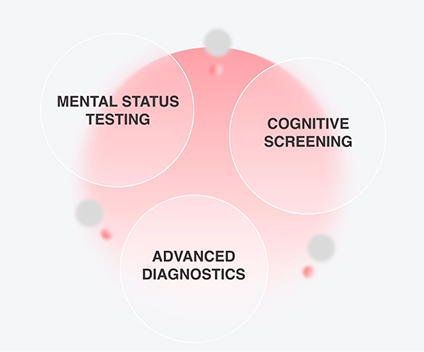
In Guatemala City, the diagnostic journey initiates in primary care via MSPAS, IGSS, or private practices. Persistent “red flags” trigger referrals to neurology or psychiatry for cognitive testing and neuroimaging. Civil society entities like Ermita supplement this by offering assessments and caregiver training. Conversely, outside metropolitan hubs, specialist scarcity and high out-of-pocket costs foster fragmented, informal pathways. Hence, rural families often endure prolonged delays, frequently securing partial diagnoses only after significant symptomatic progression, highlighting a stark urban–rural divide in clinical continuity and accessibility.
In Guatemala City and other large urban centres, the dementia diagnostic pathway typically begins in primary care, either within public Ministry of Public Health and Social Assistance (MSPAS) facilities and Guatemalan Institute of Social Security (IGSS)-affiliated clinics for formally employed populations, or private general practices. When cognitive, behavioural, or functional “red flags” persist, patients are usually referred onward to neurology or psychiatry services in public hospitals, IGSS’s contractor facilities, or private hospitals and specialist offices. At this level, evaluation commonly includes structured cognitive testing, collateral history from family members, and referral for brain imaging (computed tomography (CT) or magnetic resonance imaging (MRI)) to exclude secondary causes and support differential diagnosis.
Civil society actors play a visible complementary role in the capital. The national association Asociación Grupo Ermita Alzheimer de Guatemala (Ermita) operates a day centre and clinical evaluation pathway, providing cognitive assessments, caregiver counselling, and follow-up support. Ermita also partners with Galileo University to deliver caregiver education and professional training, strengthening awareness and referral capacity beyond formal clinical settings. While non-governmental organisation (NGO) pathways do not replace hospital-based diagnostics, they function as an important entry and navigation point, particularly for families uncertain about where to seek help.
Outside metropolitan areas, specialist availability is substantially thinner and care pathways are more informal. Families may remain in primary care for prolonged periods, consult general practitioners or psychologists in private offices, or delay specialist assessment altogether due to cost, travel distance, and time burdens. In a health system characterised by fragmentation across MSPAS, IGSS, and private providers, and high reliance on out-of-pocket payment, continuity of care is uneven. As a result, dementia is frequently identified later, after symptoms have significantly progressed, and diagnostic confirmation may be partial or episodic rather than pathway-based.
- https://globaledge.msu.edu/global-resources/resource/10737
- https://www.igssgt.org/
- https://observatorio-api.fm.usp.br/server/api/core/bitstreams/73156894-258d-414c-902e-9c52f47e6498/
- https://www.alzint.org/member/asociacion-ermita-alzheimer-de-guatemala/
- https://www.galileo.edu/facisa/carrera/diplomado-cuidado-adulto-mayor-enfasis-alzheimer-enfermedades-relacionadas/
- https://documents1.worldbank.org/curated/en/691171468283131455/pdf/893750BRI0P12300HFP0Guatemala0final.pdf
- https://www.illuminatenrhc.com/post/guatemala-s-healthcare-system-at-a-crossroads-by-isabella-centeno-solis
- https://www.ibanet.org/document?id=Healthcare-Survey-2025-Guatemala
Wait times
Guatemala lacks official dementia-specific wait-time data. While neuroimaging in the capital is relatively accessible, often scheduled within weeks through IGSS or private clinics, rural regions face severe disparities. Systemic issues like equipment outages and diverted public funding further compromise diagnostic timeliness, making geographical location and financial means the primary determinants of care.
Guatemala does not publish national, dementia-specific waiting-time statistics. In Guatemala City, access to CT and MRI is generally feasible: public-sector capacity is supplemented by IGSS tenders and contracts for imaging services, and the private sector offers relatively rapid scheduling for those who can pay. Consequently, waits for imaging in the capital are often measured in days to weeks rather than months, especially in private facilities. Outside the capital, waiting times and access are more variable. Patients may face longer queues for public imaging, limited local availability, or the need to travel to urban centres, introducing additional indirect costs and delays. These geographic disparities reinforce a pattern in which diagnostic timeliness depends less on clinical urgency than on location and the ability to navigate or finance care. Sometimes there are CT scanner outages, leaving urgent patients untreated, while government spending is directed toward military operations instead of essential healthcare.
Diagnosis cost
Guatemala’s healthcare combines public MSPAS, IGSS, and a dominant, out-of-pocket private sector. High personal costs for specialists and imaging create vast diagnostic inequalities, leaving families without insurance to shoulder the financial burden.
Guatemala’s health system combines public MSPAS services with IGSS for formally employed workers and their dependents, and a large private sector financed predominantly through out-of-pocket payments. World Bank financing profiles consistently show high out-of-pocket expenditure shares and a relatively modest public share compared with regional peers. In practice, families without IGSS coverage or private insurance bear most of the costs associated with dementia diagnosis, particularly specialist consultations and imaging. Even for IGSS beneficiaries, access may depend on contracted providers and geographic proximity. This financing structure makes early and comprehensive diagnosis uneven, reinforcing socioeconomic and geographic inequalities despite the presence of capable clinical and NGO actors in the capital.
Cognitive tests
There is no population-wide or systematic dementia screening programme published at the national level. In routine practice, cognitive screening in Guatemala follows regional clinical practice patterns in Latin America, where widely used tools include the Mini-Mental State Examination (MMSE) and the Montreal Cognitive Assessment (MoCA). MMSE and its adapted versions have been applied in Guatemalan populations, and both instruments are among the most commonly used cognitive screening tools across the region.
Imaging tests
CT and MRI services are available in Guatemala primarily through major public hospitals such as Hospital General San Juan de Dios and Hospital Roosevelt, as well as through the IGSS network, which supplements access through its own facilities and contracted providers. Imaging services, including CT, are documented within these hospitals, although MRI availability is more limited and may involve delays. Advanced imaging capacity, including PET/CT, is concentrated in specialised institutions such as INCAN in Guatemala City and is primarily used for oncology. As a result, access to advanced imaging remains centralised and uneven, shaped by institutional capacity and resource availability.
Genetic tests
Genetic testing for Alzheimer’s disease is not part of routine diagnostic practice in Guatemala. As in most Latin American settings, testing is generally limited to rare cases of suspected early-onset familial Alzheimer’s disease involving mutations in APP, PSEN1, or PSEN2. There is no evidence of systematic availability within the public or social security systems, and access is typically restricted to private or research pathways, often requiring out-of-pocket payment and, in some cases, international laboratory processing. Testing for risk alleles such as APOE is not routinely recommended in clinical practice, as it does not provide definitive diagnostic value.
Biomarker tests
Biomarker-based diagnosis of Alzheimer’s disease is not part of routine clinical practice in Guatemala. While cerebrospinal fluid (CSF) biomarkers and emerging blood-based markers are increasingly used in high-income settings, their availability in Guatemala is extremely limited due to infrastructure, cost, and lack of specialised laboratory capacity. As in other Latin American settings, access to biomarkers is largely restricted to research contexts or highly specialised private services, and most diagnoses rely on clinical assessment supported by basic imaging where available.
Cognitive Tests
Cognitive Tests
There is no population-wide or systematic dementia screening programme published at the national level. In routine practice, cognitive screening in Guatemala follows regional clinical practice patterns in Latin America, where widely used tools include the Mini-Mental State Examination (MMSE) and the Montreal Cognitive Assessment (MoCA). MMSE and its adapted versions have been applied in Guatemalan populations, and both instruments are among the most commonly used cognitive screening tools across the region.
Imaging Tests
Imaging Tests
CT and MRI services are available in Guatemala primarily through major public hospitals such as Hospital General San Juan de Dios and Hospital Roosevelt, as well as through the IGSS network, which supplements access through its own facilities and contracted providers. Imaging services, including CT, are documented within these hospitals, although MRI availability is more limited and may involve delays. Advanced imaging capacity, including PET/CT, is concentrated in specialised institutions such as INCAN in Guatemala City and is primarily used for oncology. As a result, access to advanced imaging remains centralised and uneven, shaped by institutional capacity and resource availability.
Genetic Tests
Genetic Tests
Genetic testing for Alzheimer’s disease is not part of routine diagnostic practice in Guatemala. As in most Latin American settings, testing is generally limited to rare cases of suspected early-onset familial Alzheimer’s disease involving mutations in APP, PSEN1, or PSEN2. There is no evidence of systematic availability within the public or social security systems, and access is typically restricted to private or research pathways, often requiring out-of-pocket payment and, in some cases, international laboratory processing. Testing for risk alleles such as APOE is not routinely recommended in clinical practice, as it does not provide definitive diagnostic value.
Biomarker Tests
Biomarker Tests
Biomarker-based diagnosis of Alzheimer’s disease is not part of routine clinical practice in Guatemala. While cerebrospinal fluid (CSF) biomarkers and emerging blood-based markers are increasingly used in high-income settings, their availability in Guatemala is extremely limited due to infrastructure, cost, and lack of specialised laboratory capacity. As in other Latin American settings, access to biomarkers is largely restricted to research contexts or highly specialised private services, and most diagnoses rely on clinical assessment supported by basic imaging where available.
Treatment & Care
Treatment & care
Show moreGuatemala lacks a national memory-clinic network, centralising specialised services in urban private sectors. While the NGO Ermita provides essential day-care and training, clinical integration with public systems remains weak. High out-of-pocket costs for medication and imaging, combined with a lack of dementia-specific state benefits, leave families and civil society to shoulder the primary financial and caregiving burden.
Specialized facilities and services
Guatemala lacks a national memory-clinic network, concentrating specialised dementia care within urban private and academic centres. These facilities offer neurology consultations and neuroimaging but remain poorly integrated with public primary care. The NGO Ermita serves as a vital reference hub, providing structured day-care, cognitive stimulation, and professional training through Galileo University. While international agencies are bolstering general palliative care, dementia-specific terminal protocols remain unsystematised, leaving late-stage management to families or general medical channels with minimal specialist input.
Guatemala does not operate a national memory-clinic network, nor does it have a formally articulated dementia service tier within the public health system. Instead, specialised dementia care is concentrated in urban private and academic settings, primarily in Guatemala City. These centres typically provide access to neurology and psychiatry consultations, neuroimaging (CT and MRI), and, where available, neuropsychological assessment. Services are delivered through a mix of private hospitals, specialist offices, and university-affiliated practices, resulting in uneven geographic coverage and limited integration with public primary care.
A central non-state actor is Ermita, which operates a structured dementia day centre in Guatemala City. The centre provides non-pharmacological interventions (cognitive stimulation, occupational and social activities), caregiver respite, and ongoing follow-up for people living with dementia. Ermita also plays a national leadership role in training and capacity building, delivering diploma-level caregiver and professional education in partnership with Galileo University. While Ermita does not substitute for hospital-based diagnostics, it functions as a reference hub for families seeking guidance, continuity, and psychosocial support.
Palliative care services are available mainly within urban hospitals and NGO-supported programmes, often focused on oncology or end-of-life care more broadly. The World Health Organization (WHO) and the International Agency for Research on Cancer (IARC) are working on building palliative care capacities in Guatemala, but mainly for cancer patients. Dementia-specific palliative pathways, addressing advanced cognitive decline, behavioural symptoms, caregiver burden, and ethical decision-making, are not yet systematised in public policy. As a result, late-stage dementia care is typically absorbed into general palliative or family-managed care, with limited specialist input.
Approved medication
| Generic Name | Trade Name | Used for |
|---|---|---|
| Donepezil | Aricept, Aricept ODT, Adlarity, Eranz, Memac, Alzepil, Davia, Donecept, Donep, Donepex, Donesyn, Dopezil, Yasnal, Memorit, Pezale, Redumas, Zolpezil, Namzaric* | Donepezil is indicated for the symptomatic treatment of mild to moderately severe Alzheimer’s dementia. Official National Product Information |
| Rivastigmine | Exelon, Exelon Patch, Prometax, Rivastach, Nimvastid | Symptomatic treatment of mild to moderately severe Alzheimer’s dementia. Symptomatic treatment of mild to moderately severe dementia in patients with idiopathic Parkinson’s disease. Official National Product Information |
| Galantamine | Razadyne, Razadyne ER, Reminyl, Reminyl XL, Nivalin, Lycoremine, Galsya | Galantamine is indicated for the symptomatic treatment of mild to moderately severe dementia of the Alzheimer type. Official National Product Information |
| Memantine | Namenda, Namenda XR, Ebixa, Memary, Axura, Akatinol, Maruxa, Nemdatine, Namzaric* | Treatment of adult patients with moderate to severe Alzheimer’s disease. Official National Product Information |
*Namzaric = combination of Donepezil and Memantine
Treatment cost
In Guatemala, dementia care is primarily an out-of-pocket expense. Families face a cumulative financial burden from medications, private imaging, and travel, as public IGSS coverage is often limited by geographic and administrative hurdles.

The cost of dementia treatment in Guatemala is predominantly out-of-pocket. Medications, follow-up visits, private imaging, and allied services are typically paid directly by families, unless covered through IGSS formularies, private insurance, or specific employer-linked contracts. Even where IGSS coverage exists, access may be constrained by contracted provider networks, geographic proximity, and administrative delays. Given Guatemala’s high out-of-pocket share of total health expenditure, dementia imposes a cumulative financial burden over time—not only through medication costs but also through transport, repeated consultations, and unpaid caregiving labour.
Caregiver support
Guatemala’s caregiver support is predominantly fuelled by civil society, with Ermita providing essential counselling, peer groups, and respite care. While the state offers a general monthly cash transfer for seniors (Q500), no dementia-specific allowances or disability benefits exist. Consequently, NGOs remain the primary lifeline for family education and psychosocial relief.
Caregiver support is one of the strongest elements of Guatemala’s dementia ecosystem, though it is driven largely by civil society rather than the state. Ermita provides caregiver education, counselling, peer support groups, and respite care through its day centre. These services help families manage behavioural symptoms, reduce caregiver stress, and maintain care at home for longer periods. At the state level, broader social-protection mechanisms for older persons are gradually evolving. These include a non-contributory cash transfer (Q500 per month) for some adults aged 65 and over, and ongoing work towards a national care system under the leadership of the Ministry of Social Development (MIDES). However, these measures are not dementia-specific, and there is currently no dedicated caregiver allowance, disability benefit, or dementia-linked cash support tied to diagnosis or caregiving intensity.
As a result, while caregiver needs are increasingly recognised in policy discourse, practical support remains fragmented, with NGOs like Ermita filling critical gaps in education, psychosocial assistance, and respite.
- https://www.instagram.com/ermita_alzheimer/
- https://gerontologia.org/portal/information/showInformation.php?idinfo=5231
- https://www.undp.org/es/guatemala/blog/la-proteccion-social-para-personas-adultas-mayores-en-guatemala
- https://www.facebook.com/AsociacionErmitaAlzheimerGuatemala/photos
- https://www.galileo.edu/facisa/historias-de-exito/promocion-de-la-salud-mental-y-prevencion-de-trastornos-alzheimer
Policy
Policy
Show moreGuatemala lacks a dedicated dementia strategy, leaving the condition subsumed under general ageing policies like the National Policy 2018–2032. While upcoming frameworks, such as the Mesa Estratégica de Cuidados, aim to formalise caregiving, dementia remains an unprioritised area. Furthermore, a legal “grey zone” regarding guardianship and persistent cultural stigma—where cognitive decline is often interpreted spiritually—forces families to rely on informal, inconsistent arrangements, disproportionately affecting vulnerable and indigenous populations.
National dementia plan
Guatemala lacks a dedicated national dementia strategy, leaving the condition prioritised only implicitly through general neurology and ageing policies. While the National Policy for Comprehensive Care of Older Persons 2018–2032 provides a broad framework for senior welfare, it lacks the specific financing, clinical pathways, and service standards required to address cognitive impairment systematically.
Guatemala has not issued a dementia-specific national plan or Alzheimer’s disease strategy. Dementia is not formally defined as a policy priority within the health sector, and there is no publicly articulated framework setting targets for early diagnosis, service development, workforce training, registries, or caregiver support. As a result, dementia is addressed implicitly, through general neurology, psychiatry, ageing, and disability provisions, rather than through a coordinated, condition-specific approach.
The main relevant policy instrument is the National Policy for Comprehensive Care of Older Persons 2018–2032, which establishes broad intersectoral objectives related to healthy ageing, access to health and social services, social inclusion, and protection from abuse and neglect. While this policy creates an enabling umbrella for older-persons care, it does not function as a dementia plan: it lacks operational dementia pathways, financing mechanisms, service standards, or monitoring indicators specific to cognitive impairment. Dementia therefore remains subsumed under general ageing and chronic-care agendas, with limited translation into concrete service expansion or accountability at the system level.
Upcoming plans
Current government workstreams, supported by the UNDP and MIDES, are shifting towards a National Social Protection System and a “Mesa Estratégica de Cuidados.” While these frameworks aim to formalise caregiving and address population ageing, dementia is not yet a prioritised condition within these developing agendas.
Current government workstreams point to a gradual shift towards a more integrated care agenda, though these initiatives are still under development. Policy discussions led by MIDES reference the construction of a National Social Protection System and a national care framework (Mesa Estratégica de Cuidados) aimed at coordinating responsibilities across health, social development, and labour sectors. These efforts are supported conceptually by international partners, including the United Nations Development Programme (UNDP), and emphasise unpaid care, gender impacts, and population ageing.
If operationalised with strong health–social coordination, these reforms could indirectly benefit dementia care by formalising caregiving roles, improving access to community-based services, and recognising long-term dependency as a policy issue rather than a private family burden. However, dementia is not currently identified as a priority condition within these workstreams.
Policy gaps
Legal barriers
Guatemala lacks dementia-specific legislation, leaving patients in a legal “grey zone” regarding capacity, guardianship, and exploitation protections. While the Law for the Protection of Older Persons offers general rights, the absence of enforceable, condition-specific safeguards forces families to rely on inconsistent informal arrangements, disproportionately impacting lower-income households and increasing systemic vulnerability.
Guatemala lacks dementia-specific legislation that would translate general older-persons protections into enforceable rights and safeguards for people with cognitive impairment. There is no dedicated legal framework governing capacity and supported decision-making, guardianship standards, driving fitness, or protection against discrimination and financial exploitation linked to dementia. In practice, families and clinicians operate in a legal grey zone, relying on informal arrangements or ad hoc court decisions that are often slow, inconsistent, and inaccessible, particularly for lower-income households. The absence of clear statutory guidance weakens protection at precisely the point when individuals become most vulnerable. Enforcement gaps further compound this problem. While rights for older adults exist in principle and Law for the Protection of Older Persons, oversight mechanisms and legal remedies are limited, leaving many people with dementia dependent on family advocacy rather than institutional protection. This effectively shifts responsibility from the state to households and deepens inequalities based on income, education, and access to legal support, reinforcing a system where vulnerability increases as cognitive capacity declines.
- https://ecursos.segeplan.gob.gt/CAPP/documentos/84/POLITICA%20PERSONAS%20ADULTAS%20MAYORES%2520%20VERSION%20FINAL%20DICIEMBRE%202.pdf
- https://consensomontevideo.cepal.org/es/instrumento/ley-de-proteccion-de-las-personas-de-la-tercera-edad-decreto-80-96
- https://www.gerontologia.org/guatemala-derechos-de-las-personas-adultas-mayores
Cultural barriers
Low public awareness and persistent stigma shape Guatemala’s dementia landscape. Within diverse Maya communities, cultural interpretations of cognitive decline as spiritual or natural ageing often delay medical consultation, leaving families to navigate advanced symptoms in isolation.
This stigma often results in late diagnoses and underreporting, with families seeking help only when symptoms become severe. Public awareness campaigns by NGOs have increased understanding, but a consistent, state-funded communication strategy promoting brain health and reducing stigma is still limited.
Research
Research
Show moreGuatemala innovates through telemedicine, private imaging contracts, and AI-driven voice biomarkers to enhance early detection and access in resource-limited settings.
Selected academic institutions
Clinical trials and registries
A review of ClinicalTrials.gov indicates that no Alzheimer’s disease drug trials are currently recruiting in Guatemala. There is no national registry or regulatory agency.
Selected innovative methods
Guatemala’s dementia innovation emphasises service delivery over laboratory breakthroughs. The IGSS has expanded telemedicine and private imaging contracts to increase flexibility for insured patients. Notably, a collaborative pilot between Ermita, Galileo University, and a US biotech firm utilises AI-driven voice biomarkers to detect early cognitive shifts, offering a low-cost, non-invasive screening alternative for resource-constrained settings.
Innovation in Guatemala’s dementia ecosystem is more visible in service delivery and system organisation than in laboratory or biomarker development. Within the public system, the IGSS has expanded the use of telemedicine and contractual arrangements for advanced imaging (MRI and PET), aiming to improve scheduling flexibility and extend access for insured populations despite limited in-house capacity.
A line of innovation in Guatemala involves a collaborative pilot between a US-based biotech company, Ermita, and Galileo University, focused on the use of voice-based digital biomarkers for earlier detection of dementia. The project applies artificial intelligence and ambient-listening technology to analyse speech patterns associated with cognitive and behavioural change, aiming to identify risk signals before clinical symptoms are clearly manifest. Drawing on real-world patient populations supported by Ermita and academic oversight from Universidad Galileo, the initiative represents a shift toward low-cost, non-invasive screening tools that could be particularly relevant in resource-constrained settings, complementing traditional diagnostics and strengthening early-care planning.
Support
Support
Show moreGuatemala bridges state gaps through civil society innovations, such as Ermita’s day centres and Galileo University’s specialised diplomas. While AI voice biomarkers and PAHO-led self-care programmes modernise localised support, the lack of dedicated dementia media restricts these advancements to professional circles, leaving broader public awareness fragmented.
Selected national associations, patient family associations, NGOs:
Selected initiatives
Ermita’s structured day-centre model professionalises dementia care through non-pharmacological therapies and respite, bolstered by specialised diplomas from Galileo University. Internationally, Volunteer HQ fosters intergenerational solidarity through extensive home-visitation programmes, while PAHO/WHO initiatives such as “Take Control of Your Health” empower Guatemalan seniors to manage chronic comorbidities. These community-led innovations, ranging from AI voice biomarkers to standardised self-care training, partially bridge the gap in state infrastructure. Together, they shift the focus towards holistic, localised support, enhancing quality of life for patients and caregivers while navigating a resource-constrained public health landscape.
International Volunteers HQ's home-visitation program
Take Control of Your Health
Lastly, at the community level, Ermita’s structured day centre model represents a significant service innovation. By combining non-pharmacological therapies, caregiver respite, and follow-up within a standardised daily programme, the model professionalises dementia support outside hospitals. Its linkage with Galileo University through formal diplomas further strengthens this approach by building a trained cadre of caregivers and professionals, partially compensating for gaps in public long-term care infrastructure.
Deprecated: trim(): Passing null to parameter #1 ($string) of type string is deprecated in /home/bcdafabe/public_html/wp-content/themes/bricks-child/functions.php on line 753
- https://www.alzint.org/member/asociacion-ermita-alzheimer-de-guatemala/
- https://www.galileo.edu/facisa/carrera/diplomado-cuidado-adulto-mayor-enfasis-alzheimer-enfermedades-relacionadas/
- https://www.facebook.com/AsociacionErmitaAlzheimerGuatemala/posts/universidad-galileo-y-asociaci%C3%B3n-grupo-ermita-alzheimer-de-guatemala-pone-a-sus-/4556660091094832/
- https://borgenproject.org/guatemalas-elderly-population/
- https://www.paho.org/en/news/9-11-2018-senior-citizens-guatemala-take-control-their-health
Dedicated media outlets
Guatemala does not have media outlets dedicated specifically to Alzheimer’s disease or dementia. Information dissemination occurs through NGO communications (notably Ermita), university channels, hospital outreach, and PAHO/WHO country platforms. While these channels are effective within professional and advocacy circles, the absence of dedicated, sustained media coverage limits wider public engagement and contributes to uneven awareness across regions and socio-economic groups.