Holy See
The Holy See represents a highly unusual case for dementia assessment. Its 882-person resident population is too small and demographically atypical for conventional national prevalence, incidence or mortality estimates to be meaningful, and no Vatican-specific dementia epidemiological data or national dementia strategy exist. Nevertheless, healthcare access is considerably stronger than these missing indicators might suggest. The Directorate of Health and Hygiene operates an unusually broad multidisciplinary Polyclinic offering internal medicine, neurology, geriatrics, psychiatry, psychology, laboratory services and basic diagnostic imaging, while FAS provides healthcare coverage and mechanisms for accessing contracted external hospitals and specialists. The decisive advantage is Vatican City’s integration with Rome’s healthcare infrastructure. Advanced dementia assessment, MRI/CT, biomarkers, memory-clinic services and tertiary hospital treatment can be obtained externally, including through major centres such as the Gemelli Memory Clinic. Consequently, Vatican City should not be treated as a microstate with genuinely limited access merely because advanced technologies are absent inside its 0.44 km² territory. Its main weaknesses are instead the absence of dementia-specific policy, formal caregiver programmes, domestic long-term dementia infrastructure and routine anti-amyloid access. The Holy See nevertheless has an increasingly visible international role in discussions of healthy ageing, brain health, caregiving and the dignity of older people.

AD Rating
Diagnostic Pathway
Specialized Care
Caregiver Support
National Policies
Access to ATT-s
Highlights

Population
Median age
Health expenditure (% of GDP)
Diagnosis
Diagnosis
Show moreThe Holy See provides dementia diagnosis through general Vatican healthcare and referral to Italian specialists rather than a dedicated pathway. The Polyclinic offers relevant medical specialties and basic diagnostics, while Rome provides advanced neuropsychological assessment, CT, MRI, selected PET imaging, genetic testing, and CSF or blood biomarkers not documented as locally available. Italian guidelines inform external specialist care. No Vatican-specific waiting-time data exist; local consultation pressures are likely limited, but advanced-service waits depend on Italian providers. FAS can substantially support eligible patients’ contracted or authorised external diagnostic costs, although reimbursement depends on applicable rules and provider status.
Diagnosis pathway
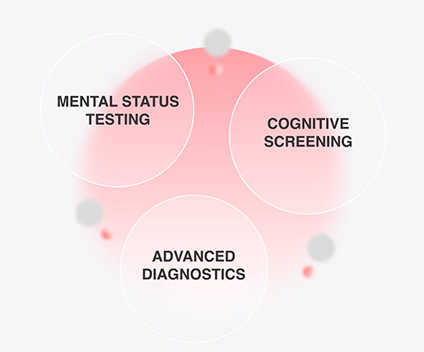
Dementia assessment in the Holy See begins within its general outpatient health system rather than a specialised pathway. The Polyclinic provides relevant medical specialties and diagnostic services, while FAS arrangements support referral to external Italian facilities for advanced assessment. Proximity to Rome provides access to specialist memory clinics, including Gemelli’s integrated dementia pathway.
The Holy See does not operate a separate dementia diagnostic pathway or dedicated memory clinic. A resident or eligible FAS beneficiary with memory complaints would most plausibly enter care through the Directorate of Health and Hygiene Polyclinic, which provides general internal medicine as well as neurology, geriatrics, psychiatry, psychotherapy, laboratory testing and diagnostic imaging. The Directorate reported 19 internists and 48 specialists across its major specialties, giving this extremely small population unusually strong access to outpatient medical expertise.
A patient requiring more extensive dementia assessment can then be referred to external Italian hospitals or specialists. This is an integral feature rather than an exceptional workaround. FAS regulations explicitly provide for hospitalization and treatment at contracted hospitals, clinics and other healthcare facilities and also provide reimbursement mechanisms for non-contracted care.
For dementia specifically, proximity to Rome provides access to a much larger specialist network. A particularly relevant example is the Memory Clinic at Fondazione Policlinico Universitario Agostino Gemelli IRCCS, which provides an integrated pathway for patients with suspected dementia and preferential access to neuropsychogeriatric assessment.
- https://vaticanstate.va/en/news/704-an-interview-with-professor-andrea-arcangeli-director-of-the-directorate-of-health-and-hygiene.html
- https://www.ulsa.va/it/pubblicazioni/bollettini/bollettino-29/testi-aggiornati/regolamento-del-fondo-assistenza-sanitaria.html
- https://www.policlinicogemelli.it/en/operational-units/shoulder-surgery/
- https://www.policlinicogemelli.it/en/doctors/prof-camillo-marra
Wait times
The Vatican publishes no dementia-specific waiting-time statistics. Its small population and relatively large medical workforce suggest limited pressure on local consultations, although advanced dementia assessment relies on Italian services, where capacity varies and some specialist centres operate only intermittently.
No Vatican-specific dementia waiting-time statistics are published. Given the extremely small population and the relatively large medical workforce available through the Directorate of Health and Hygiene, ordinary primary and specialist consultations within the Vatican are unlikely to resemble waiting-list pressures seen in large national health systems. However, waiting periods for advanced investigations or specialized dementia services depend on the external Italian facility used. Italian dementia services themselves vary substantially in capacity. National surveys have identified hundreds of Centres for Cognitive Disorders and Dementias (CDCDs), but some operate only on limited days. An ISS survey found that about one quarter of participating centres were open only one day per week.
Diagnosis cost
FAS provides healthcare coverage for eligible Vatican personnel and beneficiaries through contracted providers and partial reimbursement of non-contracted treatment. Extensive dementia assessment may consequently avoid full private costs, although individual coverage depends on applicable FAS conditions and authorisation.
For eligible Vatican personnel and beneficiaries, healthcare costs are principally managed through FAS rather than through a conventional national universal-health-insurance system. Vatican employment regulations explicitly provide FAS healthcare protections, while the Fund maintains arrangements with healthcare professionals and treatment facilities. FAS regulations allow hospitalization in contracted hospitals and clinics and provide a contribution toward treatment obtained from non-contracted professionals or facilities, generally benchmarked against what direct contracted care would have cost. Consequently, a covered patient could potentially receive an extensive dementia work-up without bearing the full market cost personally, although individual reimbursement depends on FAS rules, authorization and provider status.
Cognitive tests
No Vatican-specific dementia testing protocol has been published. Cognitive assessment would therefore follow specialist clinical practice, either through Vatican neurologists, geriatricians and psychiatrists or through Italian dementia centres. Assessment would ordinarily involve brief cognitive screening followed, when necessary, by comprehensive neuropsychological evaluation. Italian national guidelines cover the diagnosis and management of both dementia and mild cognitive impairment and provide the relevant clinical framework for external specialist care.
Imaging tests
The Vatican Polyclinic provides diagnostic imaging, including conventional radiology and ultrasound, but there is no evidence that Vatican City operates its own CT, MRI or PET facility. Patients requiring structural brain imaging can therefore be referred to Rome’s extensive hospital and diagnostic network. CT and MRI are routinely available in Italian tertiary hospitals, while FDG-PET and amyloid PET are accessible at selected specialist and research centres.
Genetic tests
There is no evidence of routine dementia genetic testing within Vatican City itself. APOE genotyping and testing for rare familial Alzheimer’s mutations would therefore require an appropriately equipped Italian genetics or neurological centre. As elsewhere in Europe, genetic testing would mainly be relevant to unusual early-onset or strongly familial cases rather than routine late-onset dementia.
Biomarker tests
There is no evidence that CSF amyloid/tau testing, plasma Alzheimer biomarkers, amyloid PET or tau PET are performed within Vatican City’s own healthcare facilities. This does not mean that Vatican residents lack access. Rome contains major academic and specialist centres capable of advanced dementia investigation. Where clinically indicated, a Vatican’s FAS patient could therefore be referred externally for CSF or imaging biomarkers. Advanced biomarker tests are often missing locally, but patients can access them in Rome through Vatican-linked networks like the Bambino Gesù Children’s Hospital and partner Catholic medical institutions that handle complex diagnostics, cell therapies, and rare disease research.
- https://fchampalimaud.org/news/champalimaud-foundation-and-bambino-gesu-paediatric-hospital-sign-agreement-accelerate
- https://www.vaticannews.va/en/vatican-city/news/2023-09/vatican-cardinal-parolin-agreement-healthcare-institutions-italy.html
- https://metab.ern-net.eu/hcp/ospedale-pediatrico-bambino-gesu/
Cognitive Tests
Cognitive Tests
No Vatican-specific dementia testing protocol has been published. Cognitive assessment would therefore follow specialist clinical practice, either through Vatican neurologists, geriatricians and psychiatrists or through Italian dementia centres. Assessment would ordinarily involve brief cognitive screening followed, when necessary, by comprehensive neuropsychological evaluation. Italian national guidelines cover the diagnosis and management of both dementia and mild cognitive impairment and provide the relevant clinical framework for external specialist care.
Imaging Tests
Imaging Tests
The Vatican Polyclinic provides diagnostic imaging, including conventional radiology and ultrasound, but there is no evidence that Vatican City operates its own CT, MRI or PET facility. Patients requiring structural brain imaging can therefore be referred to Rome’s extensive hospital and diagnostic network. CT and MRI are routinely available in Italian tertiary hospitals, while FDG-PET and amyloid PET are accessible at selected specialist and research centres.
Genetic Tests
Genetic Tests
There is no evidence of routine dementia genetic testing within Vatican City itself. APOE genotyping and testing for rare familial Alzheimer’s mutations would therefore require an appropriately equipped Italian genetics or neurological centre. As elsewhere in Europe, genetic testing would mainly be relevant to unusual early-onset or strongly familial cases rather than routine late-onset dementia.
Biomarker Tests
Biomarker Tests
There is no evidence that CSF amyloid/tau testing, plasma Alzheimer biomarkers, amyloid PET or tau PET are performed within Vatican City’s own healthcare facilities. This does not mean that Vatican residents lack access. Rome contains major academic and specialist centres capable of advanced dementia investigation. Where clinically indicated, a Vatican’s FAS patient could therefore be referred externally for CSF or imaging biomarkers. Advanced biomarker tests are often missing locally, but patients can access them in Rome through Vatican-linked networks like the Bambino Gesù Children’s Hospital and partner Catholic medical institutions that handle complex diagnostics, cell therapies, and rare disease research.
- https://fchampalimaud.org/news/champalimaud-foundation-and-bambino-gesu-paediatric-hospital-sign-agreement-accelerate
- https://www.vaticannews.va/en/vatican-city/news/2023-09/vatican-cardinal-parolin-agreement-healthcare-institutions-italy.html
- https://metab.ern-net.eu/hcp/ospedale-pediatrico-bambino-gesu/
Treatment & Care
Treatment & care
Show moreThe Holy See combines broad domestic healthcare with access to Rome’s extensive dementia network. Its Polyclinic supports initial multidisciplinary assessment, while advanced diagnosis and specialist care can be referred to Italian services, including Gemelli’s Memory Clinic. FAS substantially covers eligible beneficiaries’ dementia-related medical care through Vatican, contracted, and authorised external providers, although some personal costs may remain. Long-term provision is less comprehensive, with no identified dementia-specific residential entitlement, caregiver payment, or formal respite programme, despite historical discretionary support for prolonged nursing care. No dedicated Vatican caregiver programme exists, so families, religious communities, institutional networks, and Italian services may provide support. Broader Holy See initiatives emphasise older people’s dignity, continued participation, and protection from isolation, reflecting an institutional approach to ageing extending beyond clinical healthcare.
Specialized facilities and services
The Holy See’s Polyclinic provides broad multidisciplinary expertise relevant to initial dementia assessment, including neurology, geriatrics, psychiatry, laboratory medicine, imaging, and management of comorbidities. No dedicated memory clinic, dementia ward, day centre, or specialised residential facility has been identified within Vatican City, so advanced assessment and care rely on nearby Italian services. Rome’s network of Centres for Cognitive Disorders and Dementias provides specialist diagnosis, treatment, monitoring, and access to wider dementia services. Gemelli’s nearby Memory Clinic is a particularly relevant referral option, offering coordinated neuropsychogeriatric assessment within a multidisciplinary hospital environment supported by advanced imaging, laboratory medicine, and specialist expertise.
The Vatican’s greatest strength is the unusually broad range of healthcare services available relative to its very small population. The Directorate of Health and Hygiene operates a Polyclinic within Vatican City that provides access to a wide range of medical specialties relevant to the assessment and management of older people and patients with cognitive disorders. These include internal medicine, neurology, geriatrics, psychiatry, psychotherapy, physiotherapy, cardiology, endocrinology, laboratory medicine and diagnostic imaging, alongside numerous other specialist services. This means that many of the components required for an initial dementia assessment, including neurological evaluation, assessment of comorbidities, laboratory investigations and imaging, can potentially be coordinated within the Vatican healthcare system itself. The availability of geriatric, neurological and psychiatric expertise is particularly important because dementia diagnosis frequently requires differentiation from depression, delirium, medication effects and other neurological or age-related conditions.
Nevertheless, no dedicated memory clinic, cognitive disorders centre, dementia ward, dementia-specific day centre or specialized residential dementia facility has been identified within Vatican City. Given the country’s exceptionally small resident population, establishing a comprehensive standalone dementia infrastructure would be neither clinically nor economically comparable to what would be expected from a larger national healthcare system. Instead, the Vatican effectively operates within the much larger healthcare ecosystem of Rome. Patients requiring more complex neurological investigation, multidisciplinary dementia assessment, advanced biomarker testing, hospitalization or long-term specialist services can therefore be referred to Italian institutions located only a short distance outside Vatican territory.
Rome provides particularly strong tertiary-level dementia capacity. Italy maintains a nationwide network of Centres for Cognitive Disorders and Dementias (CDCDs), which constitute the principal specialist structures for dementia diagnosis, treatment and follow-up. These centres generally bring together neurologists, geriatricians and other professionals and can provide detailed neuropsychological assessment, differential diagnosis, pharmacological management and monitoring. The Italian National Institute of Health (ISS) also maintains a national mapping system covering CDCDs, dementia day centres and residential facilities, meaning that Vatican residents and eligible personnel are geographically surrounded by a comparatively dense network of specialized services.
One of the most relevant nearby institutions is the Memory Clinic at Fondazione Policlinico Universitario Agostino Gemelli IRCCS, located in Rome only a few kilometres from Vatican City. The clinic combines expertise in neurology, geriatrics and cognitive disorders and was specifically developed to establish coordinated and preferential diagnostic and therapeutic pathways for people with suspected cognitive impairment and dementia. Its location makes it a particularly plausible tertiary referral option when diagnostic needs exceed the capabilities of the Vatican Polyclinic. Gemelli’s broader hospital infrastructure also provides access to advanced neuroimaging, laboratory medicine and multiple specialist disciplines, allowing cognitive symptoms to be investigated within a comprehensive multidisciplinary setting.
Approved medication
| Generic Name | Trade Name | Used for |
|---|---|---|
| Donepezil | Aricept, Aricept ODT, Adlarity, Eranz, Memac, Alzepil, Davia, Donecept, Donep, Donepex, Donesyn, Dopezil, Yasnal, Memorit, Pezale, Redumas, Zolpezil, Namzaric* | Donepezil is indicated for the symptomatic treatment of mild to moderately severe Alzheimer’s dementia. |
| Rivastigmine | Exelon, Exelon Patch, Prometax, Rivastach, Nimvastid | Symptomatic treatment of mild to moderately severe Alzheimer’s dementia. Symptomatic treatment of mild to moderately severe dementia in patients with idiopathic Parkinson’s disease. |
| Galantamine | Razadyne, Razadyne ER, Reminyl, Reminyl XL, Nivalin, Lycoremine, Galsya | Galantamine is indicated for the symptomatic treatment of mild to moderately severe dementia of the Alzheimer type. |
| Memantine | Namenda, Namenda XR, Ebixa, Memary, Axura, Akatinol, Maruxa, Nemdatine, Namzaric* | Treatment of adult patients with moderate to severe Alzheimer’s disease. |
*Namzaric = combination of Donepezil and Memantine
Treatment cost
FAS provides eligible Vatican beneficiaries with substantial medical coverage for dementia, including care through Vatican facilities, contracted providers, and authorised external services in Rome. Non-contracted treatment may also be partly reimbursed, although limits can result in out-of-pocket costs. Long-term dementia care is less comprehensively protected: no dedicated dementia allowance, guaranteed residential-care benefit, caregiver payment, or formal respite programme was identified. Earlier FAS provisions permitted discretionary contributions towards prolonged institutional or nursing care for chronic conditions, demonstrating some recognition of long-term support needs. However, this does not amount to an automatic entitlement comparable to a comprehensive national long-term-care insurance scheme.

Medical treatment for eligible beneficiaries is substantially protected through the FAS. The FAS is not a universal insurance scheme for every Vatican resident. Rather, it finances healthcare for eligible ecclesiastical, religious and lay personnel serving, or retired from, the Roman Curia, the Governorate of Vatican City State and other qualifying institutions administered by the Holy See. Coverage can also be extended to certain eligible family members. Importantly for dementia, the FAS Statute explicitly covers medical and surgical assistance for illness, including chronic and terminal conditions, meaning that dementia is not excluded simply because it is progressive or chronic.
For eligible beneficiaries, care can be delivered through both direct and indirect assistance. Direct care is provided through the Vatican Directorate of Health and Hygiene’s own facilities or through physicians, clinics and hospitals contracted with the FAS. When a required service cannot be performed within the Vatican Polyclinic, the FAS can therefore authorize treatment at an external contracted provider. This arrangement is particularly relevant to dementia because more complex neurological assessments, hospital treatment and other specialist procedures may need to be obtained in Rome rather than within Vatican City itself. Hospital admissions generally require prior FAS authorization, although special procedures exist for urgent hospitalization.
Beneficiaries are also permitted to obtain treatment from non-contracted physicians, diagnostic centres, nursing homes and hospitals under the FAS’s indirect-assistance mechanism. In these cases, patients generally pay the provider and subsequently receive a contribution or reimbursement from the Fund, subject to authorization, the applicable FAS tariff and reimbursement ceilings. Consequently, the system provides considerable freedom to obtain specialist dementia-related care outside the Vatican network, although it does not necessarily eliminate out-of-pocket expenditure when a non-contracted provider charges more than the reimbursable amount.
Long-term dementia care is less comprehensively defined than medical treatment. The current FAS Statute establishes broad coverage for chronic illness and also permits economic contributions for supplementary services, but it does not establish a clearly defined, dementia-specific entitlement comparable to a national long-term-care insurance programme. In the publicly available Vatican framework, there is no identifiable statutory dementia care allowance, guaranteed dementia residential-care benefit, dedicated caregiver payment or formal national dementia respite-care programme. The distinction is important because the costs generated by advanced dementia often shift away from medical diagnosis and treatment toward continuous supervision, personal care, residential accommodation and support for family caregivers.
There is, however, evidence that the Vatican system has historically recognized the financial problem created by chronic conditions requiring prolonged care. An earlier FAS statute explicitly provided that, for chronic illnesses involving long-term hospitalization, the FAS governing body could authorize contributions toward institutional or nursing care, depending on available financial resources. This is significant because it demonstrates that long-term nursing needs can fall within the broader concept of assistance, but the wording describes a discretionary contribution rather than an automatic entitlement to comprehensive long-term care.
- https://www.vatican.va/roman_curia/fas/documents/regolamento-fas.pdf
- https://www.fas.va/content/fas/it/servizi-procedure/carta-servizi/assistenza-diretta.html
- https://www.fas.va/content/fas/it/norme-e-regolamenti/regolamento.html
- https://www.fas.va/content/fas/it/norme-e-regolamenti/statuto.html
- https://www.vatican.va/roman_curia/secretariat_state/documents/rc_seg-st_19941107_sodano-fondo-assistenza-sanitaria_it.html
Caregiver support
The Holy See lacks a dedicated dementia caregiver programme, with support potentially coming from families, religious communities, institutional networks, and neighbouring Italian services. Its broader approach strongly emphasises older people’s dignity, inclusion, and continued participation in community and Church life. In 2026, pastoral-care discussions, the World Day for Grandparents and the Elderly, and dialogues on ageing and vitality reinforced this focus, highlighting older people’s contributions while promoting protection against isolation, exclusion, and social marginalisation.
There is no dedicated Vatican dementia caregiver programme comparable with those operated by national Alzheimer associations. This is partly explained by the state’s tiny and institutionally unusual population. Informal support may come from relatives, religious communities and institutional structures, while professional dementia counselling and caregiver programmes can be accessed through neighbouring Italian organizations and services.
The Holy See nevertheless places considerable institutional emphasis on the dignity and inclusion of older people. In June 2026, the Dicastery for the Laity, Family and Life convened experts specifically to consider the pastoral care of older people. In a letter for the meeting, Pope Leo XIV described old age as a complex stage of life that remains rich in possibilities and emphasized that older people continue to constitute a significant presence within the Church. The message also stressed their capacity to contribute to community and ecclesial life through experience, wisdom and voluntary activity.
This approach was reinforced by Pope Leo XIV’s message for the Sixth World Day for Grandparents and the Elderly, published on 15 June 2026 and celebrated on 26 July under the theme “I will never forget you”. The initiative places particular emphasis on preventing older people from being forgotten or socially marginalized and reflects the Holy See’s broader view that advanced age should not lead to exclusion from family, community or Church life.
The Vatican’s 2026 activities also included discussion of “aging and vitality” within the Borgo Laudato Si’ Dialogues, further demonstrating that ageing is receiving attention at an institutional level beyond purely clinical healthcare.
Policy
Policy
Show moreVatican City manages dementia through general healthcare, social-support structures, and access to Italian specialists rather than a dedicated strategy or legal framework. The Holy See is increasingly active internationally on brain health, caregiving, healthy ageing, and older people’s dignity, but this has not translated into a domestic dementia plan. FAS coverage remains eligibility-based, with no specific guarantees for supported decision-making, caregiver support, respite, or long-term residential care. Cross-border arrangements facilitate certain Italian services without creating universal entitlements. Geographical barriers are minimal, while stigma, fear of dependency, and misconceptions about ageing may affect help-seeking. Conversely, religious and communal networks may reduce isolation and reinforce social inclusion.
National dementia plan
Rather than treating dementia as a separate national policy area, Vatican City manages it through its general health and social-support framework. The Directorate of Health and Hygiene oversees healthcare, public health, occupational health, and emergency assistance, while its mandate to cooperate with foreign and international healthcare institutions supports access to specialist services beyond Vatican territory.
Vatican City does not have a dedicated national dementia strategy, dementia action plan or dementia-specific public-health programme. There is no identifiable Vatican equivalent of the national dementia plans adopted by many European states, nor a formal policy setting targets for early diagnosis, dementia-specific service development, caregiver support, professional training, epidemiological surveillance or research. Dementia therefore appears to be managed within the Vatican’s broader healthcare and social-support structures rather than as a distinct national policy area.
Instead, Vatican health policy is organized around maintaining a comparatively comprehensive internal healthcare service while allowing specialist needs to be met through relationships with external providers. Under Vatican law, the Directorate of Health and Hygiene is responsible for healthcare, public health and hygiene, occupational health protection and related health functions within the state. The Governorate itself has statutory responsibility for the protection of health, public health and public hygiene.
Importantly, the Directorate’s responsibilities extend beyond services physically provided within Vatican territory. Its regulations explicitly assign it responsibility for maintaining relations with international and foreign healthcare institutions and bodies, alongside implementing the health guidelines and directives established by the Vatican’s governing authorities. The Directorate provides medical care, public-health services and emergency assistance.
- https://www.vaticanstate.va/en/directorates/directorate-of-health-and-hygiene.html
- https://vaticanstate.va/en/state-and-government/structure-of-the-government/governatorate.html
- https://www.vaticanstate.va/en/news/704-an-interview-with-professor-andrea-arcangeli-director-of-the-directorate-of-health-and-hygiene.html
Upcoming plans
While no dedicated dementia plan is currently being developed, the Holy See is increasingly engaging with issues closely related to dementia. The 2025 Memory symposium addressed population ageing, brain health, family caregiving, dementia support, healthcare access, and healthy longevity with participants from more than 20 countries. The subsequent Vatican City Declaration established broader commitments to brain health, caregiver recognition, age-discrimination prevention, and the dignity of older people. However, this activity reflects the Holy See’s international advocacy role rather than emerging domestic dementia policy. Vatican City continues to address dementia through general healthcare provision and access to Italian specialist services.
No Vatican dementia strategy is currently known to be under development. There is, however, evidence of growing Holy See engagement with healthy ageing, caregiving and brain health, suggesting that issues closely connected with dementia are receiving increasing institutional attention even without being incorporated into a formal national plan. A particularly important example was “The Memory: A Symposium Addressing the Opportunities and Challenges of an Aging Global Population,” held in Vatican City on 9-10 May 2025. Organized by the Pontifical Academy for Life and partners including AARP and the Età Grande Foundation, the meeting brought together experts and representatives from more than 20 countries, including scientists, healthcare professionals, international organizations and civil-society groups. Discussions covered brain health, family caregiving, healthcare access, healthy longevity, age discrimination and the particular challenges created by population ageing in developing countries. Dementia was directly relevant: sessions considered how societies could better support family caregivers of people living with dementia and how neurological and lifestyle interventions could help preserve brain health.
The symposium was also significant because it produced the Vatican City Declaration of the Pontifical Academy for Life, AARP and the Muslim Council of Elders, turning the discussions into a broader set of international commitments. These included promoting brain-health strategies, recognizing and strengthening the role of family caregivers, supporting healthier and longer lives, combating age discrimination and protecting the rights and dignity of older people. The initiative therefore represents more than a general pastoral discussion of ageing: it demonstrates an emerging Vatican interest in several policy areas directly relevant to dementia prevention and care. Nevertheless, these activities are primarily international, ethical and advocacy-oriented rather than a Vatican domestic dementia policy. There is currently no indication that the symposium or declaration will lead to a Vatican dementia action plan, national dementia targets or a dedicated domestic programme. It is better understood as evidence that the Holy See is increasingly active in shaping the international discussion on brain health, caregiving and healthy ageing, while Vatican City’s own dementia needs continue to be addressed through its general healthcare system and access to Italian services.
Policy gaps
Legal barriers
Vatican healthcare coverage is status-based, with FAS eligibility depending on factors such as institutional employment, retirement, residence, and family relationships. No dedicated dementia legislation establishes specific rights for long-term care, caregivers, supported decision-making, respite, or residential services, leaving these needs within broader healthcare, welfare, and legal frameworks. Cross-border care may require coordination between Vatican authorities, FAS, and Italian providers. The Holy See-Italy Social Security Convention provides an established mechanism for coordinating certain benefits between jurisdictions, but does not guarantee comprehensive Italian dementia or long-term-care entitlements for all Vatican beneficiaries.
The principal structural issue is that Vatican healthcare coverage is status- and eligibility-based rather than a conventional territorial universal-health system. The FAS primarily covers ecclesiastical, religious and lay personnel employed by or retired from the Roman Curia, the Governorate and other qualifying Holy See institutions. Coverage can extend to eligible family members, while Vatican residents without another basis for coverage may also be admitted to the FAS under specified conditions. The right to assistance generally begins with enrolment and can cease when the underlying eligibility conditions are no longer satisfied. This creates a more complex entitlement structure than in a conventional universal system: access and financing can depend on a person’s employment, residence, pension, family relationship or other institutional status. The Vatican nevertheless has a formal health authority, the Directorate of Health and Hygiene, responsible under Vatican law for protecting individual and public health.
There is also no dedicated Vatican dementia legislation establishing a comprehensive framework for dementia-specific long-term care, caregiver rights, supported decision-making, service standards or guaranteed respite and residential care. Dementia-related needs must instead be accommodated through general Vatican healthcare, welfare and legal arrangements. This becomes particularly relevant as dementia progresses from a predominantly medical condition to one involving questions of decision-making capacity, representation, continuous supervision and long-term social care. Cross-border treatment can add another administrative layer because a patient may interact simultaneously with the Vatican Directorate, FAS and Italian hospitals or specialists. However, this is mitigated by a formal Holy See-Italy Social Security Convention, signed in 2000 and brought into force following ratification in 2003, which establishes mechanisms for coordinating specified social-security rights and institutions between the two jurisdictions. FAS itself is designated as a competent Vatican institution for certain healthcare benefits connected with occupational accidents and diseases. The agreement therefore demonstrates an established framework for Vatican-Italian coordination, although it should not be interpreted as creating a general Italian entitlement to dementia or long-term care for every Vatican beneficiary.
- https://www.fas.va/content/fas/it/norme-e-regolamenti/statuto.html
- https://www.fas.va/content/fas/it/norme-e-regolamenti/regolamento.html
- https://www.vaticanstate.va/it/direzioni/direzione-di-sanita-e-igiene.html
- https://press.vatican.va/content/salastampa/it/bollettino/pubblico/2003/10/15/0508/01603.html
- https://www.vatican.va/roman_curia/secretariat_state/2000/documents/rc_seg-st_20000616_s-ap-italia-previdenza_it.html
Cultural barriers
Vatican City faces few geographical barriers to dementia care because of its small territory and access to Rome. Individual barriers may include stigma, fear of lost independence, and misconceptions about cognitive ageing, although specific evidence is unavailable. Religious and communal networks may help reduce isolation, supported by the Holy See’s emphasis on older people’s dignity, inclusion, and continuing social contribution.
The population-level barriers common in larger countries have limited relevance in Vatican City, given its extremely small territory, concentrated population and immediate access to healthcare services in Rome. Potential barriers are therefore more individual, including dementia stigma, interpreting cognitive decline as normal ageing, fear of losing independence and reluctance to disclose cognitive difficulties. These may be particularly relevant to older people who remain professionally or institutionally active, although there is no Vatican-specific evidence showing that such attitudes are especially prevalent. Conversely, the Vatican’s religious, institutional and communal environment may provide unusually strong protection against some consequences of dementia, particularly social isolation. Clergy and members of religious communities may have access to established communal networks, while the Holy See increasingly emphasizes that ageing and declining functional capacity should not diminish a person’s dignity or social value. In June 2026, Pope Leo XIV described old age as a stage of life that remains “rich in possibilities” and called for greater respect, gratitude and esteem toward older people, emphasizing their continuing contribution through experience, wisdom and service to their communities.
Research
Research
Show moreRather than maintaining dedicated dementia research and tertiary infrastructure, the Vatican relies on multidisciplinary domestic healthcare and extensive links with Italy. No national dementia registry exists, but residents may access eligible Italian research opportunities within a network of hundreds of dementia centres. Initial assessment can draw on the Polyclinic’s neurological, geriatric, psychiatric, psychological, medical, and laboratory expertise, while Rome provides advanced imaging, biomarkers, and complex specialist care. This cross-border model is particularly efficient for the Vatican’s exceptionally small population, although services are not organised into a formal dementia pathway. The Holy See also contributes internationally through the 2025 Memory symposium, which connected brain health with prevention, caregiving, longevity, healthcare access, and social inclusion, demonstrating an advocacy role extending considerably beyond its domestic dementia infrastructure.
Selected academic institutions
Clinical trials and registries
There is likewise no national Vatican dementia registry, nor would such a registry have much epidemiological value with fewer than 1,000 residents. Vatican residents could potentially participate in eligible clinical research conducted by Italian centres. Italy has a substantial network of dementia centres: the latest ISS material describes 586 active CDCDs identified nationally
Selected innovative methods
The Vatican’s dementia-related innovation combines multidisciplinary internal healthcare, efficient cross-border referral, and international advocacy. Its Polyclinic provides neurological, geriatric, psychiatric, psychological, medical, and laboratory expertise for initial assessment and follow-up, while Rome supplies advanced imaging, biomarker testing, and tertiary neurological care without requiring duplicated infrastructure. Although these services are not organised into a dedicated memory clinic, they provide a strong foundation for coordinated dementia assessment. The 2025 Memory symposium further demonstrated the Holy See’s international role by connecting brain health with caregiving, prevention, healthy longevity, healthcare access, and social participation. Together, these approaches highlight a distinctive microstate model based on specialist integration, external healthcare partnerships, and international engagement rather than standalone dementia infrastructure.
Cross-border specialist care: One of the most distinctive features of the Vatican healthcare model is its ability to combine substantial internal outpatient capacity with referral to Italy for highly specialized or resource-intensive care. The Directorate of Health and Hygiene is formally responsible for maintaining relations with foreign and international healthcare institutions, providing an institutional basis for this approach. For a state with fewer than 1,000 residents, this is particularly efficient: rather than duplicating expensive tertiary infrastructure, including advanced CT, MRI and PET imaging, specialist dementia units and complex hospital services, the Vatican can maintain routine and specialist outpatient care internally while drawing on Rome’s extensive hospital network when necessary. This model is particularly well suited to dementia, where initial assessment and follow-up can occur locally but advanced imaging, biomarker testing or complex neurological evaluation may require tertiary facilities.
Integrated multidisciplinary Polyclinic: Despite the state’s extremely small size, the Vatican Polyclinic provides access to a remarkably broad range of specialties. For dementia care, the coexistence of neurological, geriatric, psychiatric, psychological, internal-medicine and laboratory expertise creates potentially favourable conditions for a multidisciplinary approach to cognitive decline. Such integration is valuable because dementia assessment often requires consideration of neurological disease alongside psychiatric symptoms, medication effects, cardiovascular and metabolic risk factors and other conditions that can cause or exacerbate cognitive impairment. The principal limitation is that this capacity has not been organized into a dedicated memory clinic or formal dementia pathway; nevertheless, the breadth of the Directorate’s services provides a strong clinical foundation from which suspected dementia can be investigated and referrals coordinated. The Directorate itself describes its mandate as encompassing medical assistance, public health, prevention and emergency care.
The Memory Symposium: The Vatican has also taken an unusually visible role in the international discussion surrounding ageing and brain health. In May 2025, The Memory: A Symposium Addressing the Opportunities and Challenges of an Aging Global Population brought international experts to Vatican City to discuss the implications of global population ageing. The collaboration with AARP placed issues such as brain health, caregiving, healthy longevity, healthcare access, financial security and age-friendly communities within a broader ethical and social discussion about ageing. This is significant for dementia policy because it moves beyond treatment alone and recognizes the interconnected importance of prevention, caregiver support, social participation and maintaining cognitive health throughout later life. Although the symposium did not establish a Vatican dementia programme, it demonstrates the Holy See’s capacity to act as a convening and advocacy platform for international healthy-ageing policy, a role considerably larger than would normally be expected from a state of its population size.
- https://www.vaticanstate.va/en/news/704-an-interview-with-professor-andrea-arcangeli-director-of-the-directorate-of-health-and-hygiene.html
- https://vaticanstate.va/en/directorates/directorate-of-health-and-hygiene.html
- https://www.vaticanstate.va/en/news/704-an-interview-with-professor-andrea-arcangeli-director-of-the-directorate-of-health-and-hygiene.html
- https://www.aarpinternational.org/events/vatican-symposium-2025
Support
Support
Show moreAlthough not based in Vatican City, Fondazione Età Grande is closely connected to Holy See initiatives addressing ageing, inclusion, and intergenerational solidarity. Its activities include the 2024 Caress and the Smile gathering and participation in the 2025 Memory symposium, linking its work to brain health, dementia prevention, and caregiver support. No specialised dementia media exists within the Vatican, although Vatican News, L’Osservatore Romano, and Vatican Media periodically cover Alzheimer’s disease, caregiving, ageing, disability, and related ethical and pastoral issues.
Selected national associations, patient family associations, NGOs:
Selected initiatives
Fondazione Età Grande is an Italian organisation with close Holy See links promoting older people’s rights, health, participation, and social inclusion. Its 2024 Caress and the Smile event encouraged intergenerational solidarity, while its partnership in the 2025 Memory symposium supported international discussion of brain health, caregiving, healthy longevity, and other issues relevant to dementia prevention and caregiver support.
The Caress and the Smile
In April 2024, it organized “The Caress and the Smile” in the Vatican's Paul VI Hall, bringing approximately 6,000 older people, grandparents and grandchildren together with Pope Francis to promote intergenerational solidarity and the social value of older people.
Deprecated: trim(): Passing null to parameter #1 ($string) of type string is deprecated in /home/bcdafabe/public_html/wp-content/themes/bricks-child/functions.php on line 753
The Memory Symposium
- https://fondazioneetagrande.org/chi-siamo/statuto-e-organi/
- https://www.vaticannews.va/en/vatican-city/news/2024-04/grandparents-and-grandchildren-to-gather-with-pope-francis.html
- https://www.vatican.va/content/francesco/en/speeches/2024/april/documents/20240427-incontro-nonni-nipoti.html
- https://www.aarpinternational.org/events/vatican-symposium-2025
Dedicated media outlets
There is no media outlet dedicated specifically to Alzheimer’s disease or dementia in Vatican City. Vatican News, L’Osservatore Romano and Vatican Media periodically cover Alzheimer’s disease, ageing, caregiving, disability, medical ethics and initiatives involving older people. Their role is principally educational, pastoral and journalistic rather than that of a dedicated dementia information service.