Iceland
Iceland addresses Alzheimer’s disease through a robust, publicly funded healthcare system supported by a National Dementia Action Plan. Specialist diagnostic evaluations and advanced care — including the clinical integration of cerebrospinal fluid (CSF) biomarkers and neuroimaging — are anchored by the Memory Clinic (Minnismóttaka) at Landspítali University Hospital in Reykjavík. In the community, Alzheimer Iceland (Alzheimersamtökin) provides vital post-diagnostic support, operating dedicated day centers, a nationwide network of Alzheimer Cafés (Alzheimerkaffi), and early-intervention initiatives like the Seiglan program. Internationally, the country makes major scientific contributions to the field; groundbreaking research led by deCODE Genetics and long-term cohort studies like AGES-Reykjavik have identified pivotal genetic risk variants and novel blood-based biomarkers, helping shape global precision medicine for neurodegenerative care.

AD Rating
Diagnostic Pathway
Specialized Care
Caregiver Support
National Policies
Access to ATT-s
Highlights

Population
Median age
Health expenditure (% of GDP)
Diagnosis
Diagnosis
Show moreIceland has no publicly available, standardised national diagnostic pathway or official waiting-time targets for Alzheimer’s disease. Assessment generally begins with a GP, with further evaluation provided through Landspítali’s Memory Clinic in Reykjavík and a smaller specialist service in Akureyri. Specialist work-up may include cognitive and neuropsychological assessment, blood tests, CT or MRI, CSF biomarkers and PET where clinically indicated. Published Memory Clinic studies report use of the MMSE and IQCODE alongside comprehensive neuropsychological assessment, although no national guidance specifies routine cognitive screening tools. Diagnostic costs are largely publicly funded, with subsidised co-payments subject to a monthly ceiling. Genetic testing is available through specialist services but is not routine. CSF amyloid-β42, total tau and phosphorylated tau are integrated into specialist assessment, while amyloid PET is available for selected cases. Blood biomarkers remain primarily a research area and are not routinely implemented nationwide.
Diagnosis pathway
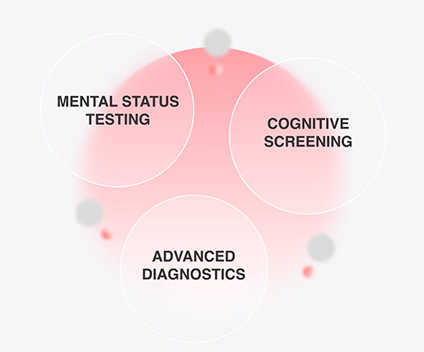
Iceland lacks a publicly available, standardised national diagnostic pathway for Alzheimer’s disease, with assessment instead organised through primary care and specialised memory services. The process typically begins with a GP assessment, followed by referral where further evaluation is required. The Memory Clinic at Landspítali in Landakot is the country’s main specialised centre, supported by a smaller service in Akureyri. Specialist assessment may include cognitive and neuropsychological testing, blood tests and CT or MRI, while cerebrospinal fluid analysis, PET or electroencephalography may be used when clinically indicated.
In Iceland, there is no publicly available, standardised national diagnostic protocol for Alzheimer’s disease presented as a single care pathway. Instead, the diagnostic process is organised through primary care and specialised memory services. Individuals with suspected cognitive impairment are expected to first consult their general practitioner (GP), who performs the initial clinical assessment and determines whether referral to a specialist is required.
If further evaluation is needed, patients are typically referred to the Memory Clinic at Landspítali in Landakot, which serves as the main specialised centre for the diagnosis of dementia and memory disorders in Iceland, alongside a smaller service in Akureyri., Specialist assessment may include a detailed medical history, cognitive testing, blood tests, neuropsychological assessment, and neuroimaging, such as computed tomography (CT) or magnetic resonance imaging (MRI), depending on the clinical presentation. Additional investigations, including electroencephalography, cerebrospinal fluid analysis, or positron emission tomography (PET), may be used when considered clinically necessary.
Wait times
No official, publicly available waiting-time targets or average waiting times for GP referral, Memory Clinic assessment, neuropsychological evaluation, or neuroimaging have been identified for Iceland.
Diagnosis cost
Iceland’s publicly financed healthcare system covers most Alzheimer’s diagnostic costs, with patients paying subsidised co-payments for GP and specialist consultations, imaging and other outpatient investigations. A national monthly co-payment ceiling limits out-of-pocket spending, after which covered healthcare services require only a small additional payment for the remainder of the month.
In Iceland, the diagnosis of Alzheimer’s disease is largely funded through the publicly financed healthcare system. Patients are required to make co-payments for GP and specialist consultations rather than paying the full cost. These co-payments also apply to many outpatient diagnostic services, including imaging and other investigations commonly used in the diagnostic assessment of Alzheimer’s disease, although the majority of the cost is subsidised by the public health system. Healthcare expenses are subject to a national co-payment ceiling, meaning that once an individual reaches the maximum monthly out-of-pocket limit, additional covered healthcare services require only a much smaller payment for the remainder of that month.
Cognitive tests
Iceland has a specialist Memory Clinic at Landspítali, the National University Hospital, which provides assessment for patients with suspected cognitive impairment and dementia. Published studies from the Icelandic Memory Clinic show that patients enrolled from the clinic were assessed using the Mini-Mental State Examination (MMSE) and the Informant Questionnaire on Cognitive Decline in the Elderly (IQCODE), followed by standard clinical and comprehensive neuropsychological assessment. There is no official Icelandic clinical guideline specifying which cognitive screening tests are routinely used in everyday practice.
Imaging tests
CT and MRI are available through Landspítali and are accessible for the diagnostic evaluation of dementia. The radiology department provides CT, MRI and PET/CT services, with referrals from primary care or specialist clinics. PET imaging, including PET/CT, is also available at Landspítali.
Genetic tests
Genetic testing for Alzheimer’s disease is available through specialist clinical genetics services but is not performed routinely.
Biomarker tests
CSF biomarkers are available and are integrated into specialist diagnostic assessment. Studies from the Icelandic Memory Clinic demonstrate routine measurement of CSF amyloid-β42, total tau and phosphorylated tau, together with additional research biomarkers such as neurofilament light chain (NfL), GFAP and YKL-40. Lumbar puncture is offered as part of the diagnostic work-up when clinically indicated. Amyloid PET is also available through Landspítali for selected cases. Blood biomarkers are an active area of research, but there is no evidence that plasma Alzheimer’s disease biomarkers are yet routinely implemented in clinical practice across Iceland.
Cognitive Tests
Cognitive Tests
Iceland has a specialist Memory Clinic at Landspítali, the National University Hospital, which provides assessment for patients with suspected cognitive impairment and dementia. Published studies from the Icelandic Memory Clinic show that patients enrolled from the clinic were assessed using the Mini-Mental State Examination (MMSE) and the Informant Questionnaire on Cognitive Decline in the Elderly (IQCODE), followed by standard clinical and comprehensive neuropsychological assessment. There is no official Icelandic clinical guideline specifying which cognitive screening tests are routinely used in everyday practice.
Imaging Tests
Imaging Tests
CT and MRI are available through Landspítali and are accessible for the diagnostic evaluation of dementia. The radiology department provides CT, MRI and PET/CT services, with referrals from primary care or specialist clinics. PET imaging, including PET/CT, is also available at Landspítali.
Genetic Tests
Genetic Tests
Genetic testing for Alzheimer’s disease is available through specialist clinical genetics services but is not performed routinely.
Biomarker Tests
Biomarker Tests
CSF biomarkers are available and are integrated into specialist diagnostic assessment. Studies from the Icelandic Memory Clinic demonstrate routine measurement of CSF amyloid-β42, total tau and phosphorylated tau, together with additional research biomarkers such as neurofilament light chain (NfL), GFAP and YKL-40. Lumbar puncture is offered as part of the diagnostic work-up when clinically indicated. Amyloid PET is also available through Landspítali for selected cases. Blood biomarkers are an active area of research, but there is no evidence that plasma Alzheimer’s disease biomarkers are yet routinely implemented in clinical practice across Iceland.
Treatment & Care
Treatment & care
Show moreIceland’s dementia care system combines centralised specialist services with publicly funded treatment and community-based support. Landspítali’s Memory Clinic in Reykjavík is the main national referral centre, alongside a smaller specialist service at Akureyri Hospital. Community provision includes dementia-specific day care, home care and respite services, with specialised programmes concentrated in the capital region, including the Icelandic Alzheimer’s Association’s Fríðuhús and Drafnarhús centres. Alzheimer’s treatment and approved medicines are publicly subsidised, with regulated co-payments and annual out-of-pocket ceilings. Informal caregivers may also receive financial support through the Spouse and Carer Benefit, complemented by the Association’s counselling, education, psychological services and support groups.
Specialized facilities and services
Iceland’s dementia care system is centred on the Memory Clinic at Landspítali University Hospital in Reykjavík, the main national referral centre for diagnosis, multidisciplinary assessment and follow-up, alongside a smaller specialist service at Akureyri Hospital. Community services include dementia-specific day care, home care and respite support, although specialised programmes are concentrated in the capital region. The Icelandic Alzheimer’s Association operates Fríðuhús and Drafnarhús, providing individualised day programmes focused on independence, social engagement and caregiver support. Palliative care is integrated into the national health system through hospital, community and hospice services.
Iceland has a well-developed and centralised dementia care system. The country’s main specialist service is the Memory Clinic (Minnismóttaka) at the Department of Geriatrics, Landspítali University Hospital in Reykjavík, which has served as the national referral centre for dementia diagnosis, multidisciplinary assessment and follow-up. A smaller specialist memory service is also available at Akureyri Hospital in northern Iceland.
Iceland provides a range of dementia-specific community services, although most specialised programmes are located in the capital region. Dementia-specific day care is concentrated in the Reykjavík metropolitan area, where several specialised day centres operate, while municipalities across Iceland provide more general community centres, home care and respite services for older adults.
The Icelandic Alzheimer’s Association operates two specialised dementia day centres, Fríðuhús and Drafnarhús, which provide individualised day programmes aimed at reducing social isolation, maintaining functional independence, and supporting family caregivers. Activities include exercise, music, crafts, cooking, outdoor walks, reading groups, and day trips, while similar specialised day centres are available throughout Iceland’s municipalities.
Iceland has a palliative care system integrated into the national health service rather than dementia-specific palliative facilities. Specialist palliative care is available through hospital teams, community services and hospice care, including the national hospice in Reykjavík, and is accessible through referral pathways across the country.
Approved medication
| Generic Name | Trade Name | Used for |
|---|---|---|
| Donepezil | Aricept, Aricept ODT, Adlarity, Eranz, Memac, Alzepil, Davia, Donecept, Donep, Donepex, Donesyn, Dopezil, Yasnal, Memorit, Pezale, Redumas, Zolpezil, Namzaric* | Donepezil is indicated for the symptomatic treatment of mild to moderately severe Alzheimer’s dementia. |
| Rivastigmine | Exelon, Exelon Patch, Prometax, Rivastach, Nimvastid | Symptomatic treatment of mild to moderately severe Alzheimer’s dementia. Symptomatic treatment of mild to moderately severe dementia in patients with idiopathic Parkinson’s disease. |
| Galantamine | Razadyne, Razadyne ER, Reminyl, Reminyl XL, Nivalin, Lycoremine, Galsya | Galantamine is indicated for the symptomatic treatment of mild to moderately severe dementia of the Alzheimer type. |
| Memantine | Namenda, Namenda XR, Ebixa, Memary, Axura, Akatinol, Maruxa, Nemdatine, Namzaric* | Treatment of adult patients with moderate to severe Alzheimer’s disease. |
| Lecanemab | Leqembi | Lecanemab is indicated for the treatment of mild cognitive impairment and mild dementia due to Alzheimer’s disease in adult patients that are apolipoprotein E ε4 (ApoE ε4) heterozygotes or non-carriers. |
| Donanemab | Kisunla | Donanemab is indicated for the treatment of mild cognitive impairment and mild dementia due to Alzheimer’s disease (AD) in adult patients that are apolipoprotein Eε4 (ApoE ε4) heterozygotes or non-carriers. |
*Namzaric = combination of Donepezil and Memantine
Treatment cost
Iceland’s publicly financed healthcare system covers most Alzheimer’s treatment costs, including consultations, specialist care and approved medicines. Patients pay regulated co-payments under the national reimbursement system, with an annual out-of-pocket ceiling limiting their overall contribution. Medicines must be included in the national reimbursement scheme or approved through a medicine certificate to qualify for coverage, while non-covered medicines and private services may incur additional costs.

In Iceland, the financial responsibility for treating Alzheimer’s disease is primarily borne by the state through the publicly funded healthcare system, administered by Iceland Health (Sjúkratryggingar Íslands). Consultations, specialist care, and approved Alzheimer’s medicines are publicly subsidised. Prescription medicines are covered only if they are included in the national reimbursement scheme or approved through a medicine certificate, with patients paying regulated copayments under the national medicine co-payment system until the annual out-of-pocket ceiling is reached. Families therefore bear only a limited share of treatment costs through these statutory copayments, although they may incur additional expenses for non-covered or private services.
Caregiver support
Iceland provides caregiver support mainly through general social insurance rather than dementia-specific schemes. The Spouse and Carer Benefit (Maka- og umönnunargreiðslur) offers financial support to eligible individuals who reduce or cease employment to provide care for a qualifying household member, including people with Alzheimer’s disease who meet income and cohabitation requirements. The Icelandic Alzheimer’s Association provides complementary counselling, psychological services, education, support groups and a free nationwide advice line, but no direct financial assistance.
Iceland provides financial and practical support for informal caregivers, including those caring for people with Alzheimer’s disease, through its general social insurance system rather than dementia-specific schemes. The principal financial support is the Spouse and Carer Benefit (Maka- og umönnunargreiðslur), administered by the Social Insurance Administration (Tryggingastofnun). The benefit is available to individuals who reduce or cease employment to provide care for a spouse or another adult household member receiving an old-age pension, disability pension, or rehabilitation benefits. Eligibility depends on loss of income, cohabitation with the care recipient, and income thresholds; it is not specific to Alzheimer’s disease, but people with Alzheimer’s disease may qualify if they meet the underlying eligibility criteria.
The Icelandic Alzheimer’s Association provides education, counselling, psychological services, caregiver support groups, and advocacy for people with dementia and their families. The organisation also operates a free nationwide counselling service and advice telephone line for people with dementia and their relatives. While these services provide substantial educational and psychosocial support, they do not provide direct financial assistance to caregivers.
Policy
Policy
Show moreIceland’s National Dementia Action Plan (2020–2025) established a coordinated framework covering prevention, timely diagnosis, person-centred care, caregiver support, legal protection, research and workforce development. No successor plan has been publicly announced, although dementia-related initiatives continue within the existing framework. Iceland ranks among Europe’s stronger countries for protecting the rights of people living with dementia, according to the European Dementia Monitor 2023, while gaps remain in dementia-inclusive services and participation in European research. Recent policy discussions favour more individualised decision-making, including case-by-case assessment of driving ability. There is no documented evidence of widespread dementia-related stigma.
National dementia plan
Iceland adopted its National Dementia Action Plan (2020–2025) in May 2020, following a 2017 parliamentary resolution calling for a coordinated national approach to dementia. Covering all forms of dementia, including Alzheimer’s disease, the plan seeks to improve service quality, accessibility and coordination while promoting earlier diagnosis and greater public awareness. Its 48 actions span six priorities: autonomy and legal protection; prevention and risk reduction; timely diagnosis and post-diagnostic support; rehabilitation and caregiver support; coordinated, person-centred care; and research, workforce education and data collection.
Iceland adopted a National Dementia Action Plan (2020–2025) in May 2020, following a parliamentary resolution in 2017 that called for a coordinated national approach to dementia care. The strategy aims to improve the quality, accessibility, and coordination of services for people living with dementia and their families while promoting earlier diagnosis, greater public awareness, and a more dementia-inclusive society. It applies to all forms of dementia, including Alzheimer’s disease.
The Action Plan sets out 48 actions across six priority areas: strengthening patient autonomy and legal protections; promoting prevention and risk reduction; improving timely diagnosis and post-diagnostic support; enhancing rehabilitation, independence, and support for family carers; ensuring coordinated, person-centred services that meet changing needs across the course of the disease; and expanding research, workforce education, and national data collection. The strategy also emphasizes multidisciplinary collaboration across health and social care, improved care pathways, and the development of evidence-based services to ensure consistent, high-quality dementia care nationwide.
Upcoming plans
Iceland has not publicly announced a successor to its 2020–2025 National Dementia Action Plan, although dementia-related initiatives continue to be implemented within the existing policy framework.
Iceland has not publicly announced a successor to its 2020–2025 National Dementia Action Plan, although dementia-related initiatives continue to be implemented within the existing policy framework.
Policy gaps
Legal barriers
Iceland provides relatively strong legal protections for people with dementia, although research participation and inclusive services require further development. Proposed driving reforms favour individual assessments over automatic restrictions, reflecting more person-centred decision-making.
The European Dementia Monitor 2023 ranks Iceland among the stronger European countries for recognising the legal rights of people living with dementia, reflecting its compliance with Alzheimer Europe’s recommendations on legal protections. However, the Monitor also identifies areas requiring further development, including broader participation in European dementia research initiatives and continued expansion of dementia-inclusive services. More recently, policy discussions have highlighted the need to refine legislation affecting people with neurodegenerative diseases—for example, replacing an automatic prohibition on driving following diagnosis with individual assessments of driving ability, reflecting a shift towards more person-centred and rights-based decision-making.
Cultural barriers
Compared with many countries, there is no documented evidence of widespread dementia-related stigma in Iceland.
Research
Research
Show moreIceland has a strong infrastructure for Alzheimer’s research and clinical trials, supported by centralised national health registers and established regulatory oversight. Clinical trials require authorisation from the Icelandic Medicines Agency and approval by the National Bioethics Committee, and are registered through the European Union’s Clinical Trials Information System and ClinicalTrials.gov. Iceland’s research strengths include deCODE Genetics’ influential discoveries in Alzheimer’s risk and protection, the longitudinal AGES-Reykjavik Study, and biomarker research at the University of Iceland and Landspítali. Together, these resources support research into disease mechanisms, early diagnosis, precision medicine and dementia risk.
Selected academic institutions
Clinical trials and registries
Clinical trials must be authorised by the Icelandic Medicines Agency (Lyfjastofnun) and approved by the National Bioethics Committee (Vísindasiðanefnd) to ensure participant safety and ethical compliance., Health and diagnostic data in Iceland are systematically recorded through centralised national health registers (heilbrigðisskrár) overseen by the Directorate of Health (Embætti landlæknis).
Just like EU member states, trials conducted in Iceland are registered through the European Union’s Clinical Trials Information System (CTIS). Patients and families can search this public portal — or international databases like ClinicalTrials.gov — to find actively recruiting interventional studies operating in the country.
Selected innovative methods
Iceland has made significant contributions to Alzheimer’s research through genetic discovery, biomarker development and longitudinal population studies. deCODE Genetics identified the risk-associated TREM2 R47H variant and protective APP A673T variant, advancing understanding of microglial dysfunction and amyloid biology and informing therapeutic research. The AGES-Reykjavik Study is a major longitudinal resource combining genetics, brain imaging, cognitive assessments and biological markers to identify dementia risk decades before symptoms emerge. Researchers at the University of Iceland and Landspítali also investigate blood and CSF biomarkers, neuroinflammation and lipid metabolism, supporting earlier diagnosis, precision medicine and risk-reduction strategies.
Iceland’s most influential contribution to Alzheimer’s research is the discovery of genetic variants that either increase or decrease disease risk. Researchers at deCODE Genetics identified the rare TREM2 R47H variant, which substantially increases the risk of late-onset Alzheimer’s disease, establishing microglial dysfunction as a key mechanism in neurodegeneration. They also discovered the APP A673T mutation, a rare protective variant that reduces amyloid-β production and protects against Alzheimer’s disease and age-related cognitive decline. These findings have had a major impact on the development of anti-amyloid therapies and precision medicine approaches.
Icelandic researchers are international leaders in identifying blood-based biomarkers for Alzheimer’s disease. Using samples from the AGES-Reykjavik Study, investigators have combined high-throughput proteomics with long-term clinical follow-up to identify hundreds of circulating proteins associated with future Alzheimer’s disease, including protein signatures that differ according to APOE ε4 carrier status. These studies aim to develop minimally invasive blood tests for early diagnosis and identify new therapeutic targets.
The University of Iceland and Landspítali National University Hospital conduct translational research on cerebrospinal fluid (CSF) biomarkers, neuroinflammation, and lipid metabolism in Alzheimer’s disease. Researchers have evaluated biomarkers such as neurofilament light (NFL), GFAP, YKL-40, S100B, and ceramides to improve early diagnosis and better understand disease mechanisms before dementia develops. These studies support the implementation of biomarker-guided diagnosis in clinical practice.
Through the AGES-Reykjavik Study, Iceland has created one of the world’s most comprehensive longitudinal cohorts for studying brain aging and dementia. Researchers combine genetics, MRI, cardiovascular risk factors, epigenetic aging measures, and cognitive assessments to identify predictors of Alzheimer’s disease decades before symptoms appear. Recent work has shown that accelerated biological aging, measured using DNA methylation markers, is associated with brain atrophy and increased dementia risk, supporting precision prevention strategies aimed at modifying risk across the lifespan.
- https://www.nature.com/articles/nature11283
- https://www.nejm.org/doi/full/10.1056/NEJMoa1211103
- https://www.nature.com/articles/s43587-024-00693-1
- https://pmc.ncbi.nlm.nih.gov/articles/PMC7404927
- https://iris.landsbokasafn.is/en/publications/changes-in-dna-methylation-based-aging-predicts-brain-damage-and-
Support
Support
Show moreNo dementia-specific foundations or dedicated independent dementia news outlets were identified in Iceland. The Icelandic Alzheimer’s Association is a key provider of community and information services, operating a national network of Alzheimer Cafés (Alzheimerkaffi) and Seiglan (“Resilience”), an early post-diagnostic programme supporting people with mild cognitive impairment or early-stage dementia. Its active news section also provides updates on dementia research, events, education and awareness campaigns.
Selected national associations, patient family associations, NGOs:
Selected initiatives
Iceland has established a national network of Alzheimer Cafés (Alzheimerkaffi), bringing expert talks, discussion, music and social interaction to people living with dementia and their families across Reykjavík and communities nationwide. The Icelandic Alzheimer’s Association also runs Seiglan (“Resilience”), an early post-diagnostic programme for people with mild cognitive impairment or early-stage dementia. Its monthly cognitive, physical and social activities are tailored to participants’ interests and goals, helping maintain independence and activity while bridging the gap between diagnosis and eligibility for specialised day care.
Alzheimer Cafés
Resilience initiative
Dedicated media outlets
Iceland does not have a dedicated independent Alzheimer’s or dementia news outlet, but Alzheimersamtökin (Alzheimer Iceland) maintains an active news section with updates on dementia, research, events, education, and awareness campaigns.