

Iran
Iran is steadily building a workable Alzheimer’s disease care pathway with significant improvements since the late 2010s. Its university-led memory clinics have begun to standardise assessment and referral, while Tehran Alzheimer’s disease registry enables long-term service planning. At the same time, the Ministry of Health and Medical Education has introduced Farsi self-care guides and caregiver training to encourage earlier diagnosis and better support. Care is increasingly delivered through academic clinics using validated tools, while the Iran Dementia & Alzheimer’s Association (IDAA) provides caregiver education, day services, and a helpline. Still, the progress is uneven, with advanced services concentrated in major cities and limited financing for long-term home care. The legal framework also lags behind, lacking a dementia-specific mental-health law and consistent protections, which continues to limit nationwide coverage and patient rights.

AD Rating
Diagnostic Pathway
Specialized Care
Caregiver Support
National Policies
Access to ATT-s
Highlights

Population
Median age
Health expenditure (% of GDP)
Diagnosis
Diagnosis
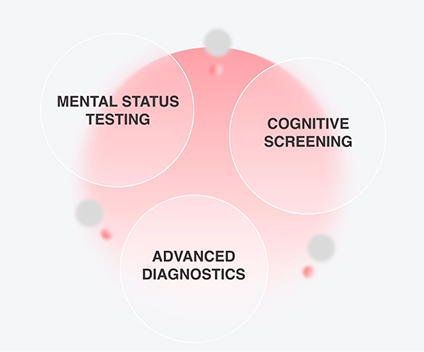
Show moreIn Iran, memory concerns are first assessed by general practitioners or internists, who review medical history, conduct cognitive screenings, and rule out reversible causes. Suspected cases are referred to neurologists or geriatric psychiatry clinics, often at university hospitals, for detailed cognitive testing and imaging, with CSF biomarkers considered in complex cases.
Primary-care cognitive screening uses tools like Mini-Cog, MMSE, AD8-Farsi, MoCA-Basic, and RUDAS, while ACE-III, Mini-ACE, Clock-Drawing, computerised batteries, and the “M-Check” app allow deeper or culturally fairer assessments. Imaging relies on CT and MRI, with PET scans reserved for research or advanced diagnostics, mostly in urban centers.
Genetic testing (APOE ε4, familial mutations) and biomarker assessments are largely confined to research or high-risk cases. Public insurance covers most services, while private care offers faster access at higher out-of-pocket costs. Non-governmental support through IDAA helps with screening, day programs, and caregiver guidance.
Diagnosis pathway
In Iran, memory impairment is initially assessed by a GP or internist, who gathers patient and family history, conducts cognitive screenings, reviews medications, and rules out reversible causes. Suspected cases are referred to neurologists or geriatric psychiatry clinics, often at university hospitals, for detailed cognitive testing and imaging. Tertiary centers may use CSF biomarkers like Aβ42/40, t-tau, and p-tau, while research explores additional markers. Many patients bypass primary care for faster specialist or private clinic access, often at higher out-of-pocket costs. IDAA supplements services with screening, day programs, and caregiver support.
In the public healthcare system of Iran, the standard diagnostic pathway for memory impairment is initiated by a general practitioner (GP) or an internist. A clinical history of the person and close relatives is compiled, and cognitive screenings are conducted. Current medications are reviewed to rule out drug-induced cognitive side effects, and evaluations are performed for underlying conditions that mimic dementia prior to the ordering of baseline laboratory tests. If Alzheimer’s disease or dementia is suspected, the GP refers the patient to a neurologist or geriatric psychiatry clinic, often in a university hospital, where a specialist conducts a more sensitive cognitive test and arranges imaging. When the diagnosis is still uncertain, tertiary centres may consider the use of cerebrospinal fluid (CSF) biomarkers including Aβ42/40, total tau (t-tau), and phosphorylated tau (p-tau). Some research also investigates other potential biomarkers, like Nerve Growth Factor (NGF) and different protein ratios, to improve diagnostic accuracy, especially in differentiating Alzheimer’s disease from other conditions like cerebral amyloid angiopathy (CAA). However, this pathway is not always strictly followed in reality. Many people choose to have specialist appointments at hospital clinics, or choose a private clinic for faster appointments, which reduces wait time but increases the out-of-pocket costs. Families can also go to private neurology and psychiatry offices or the Iran Dementia & Alzheimer’s Association (IDAA) network for screening, day services, and caregiver guidance, before or alongside public hospitals. In general, Iran has a clinic-first model enhanced with additional non-government services through IDAA.
Wait times
Recent Iranian research highlights significant wait times in urban clinics. In Tabriz (2018-2019), specialist visits averaged 141 minutes in public and 156 minutes in private facilities. Despite comparable consultation lengths, long queues persist, even with prior booking. A 2023 BMC Health Services Research meta-analysis identified “responsiveness” as the weakest outpatient quality dimension, recommending workforce and process improvements. Overall, larger cities report moderate-to-low wait times, with private offices often easier to schedule but not always quicker upon arrival.
Recent Iranian studies show that waiting time remains substantial in major urban centres. For example, a 2018–2019 survey in Tabriz public and private clinics reported mean on-site waiting times for a specialist visit to be around 141 minutes in public facilities and 156 minutes in private facilities. Despite similar consultation lengths in both sectors, evidence shows that queues can be long even when booking ahead. A national systematic meta-analysis conducted by BMC Health Services Research in 2023 further flagged “responsiveness” (timeliness/waiting) as the weakest dimension of outpatient quality, recommending workforce and process fixes. In general, the most recent BMC Health Services Research study from 2023 suggests that waiting time is moderate-to-low in bigger cities, with private offices being often easier to schedule but not always faster once you arrive.
Diagnosis cost
In Iran, public health insurers cover most people, typically paying 70% for outpatient care, with inpatients responsible for 3-6% copays under the Health Transformation Plan. Private clinics offer faster access but higher out-of-pocket costs, including extra charges for tests and services.
Most people in Iran are covered by public health insurers such as the Iranian Health Insurance Organization (IHIO) and the Social Security Organization (SSO). For outpatient care, the standard rule is that insurance covers about 70% while inpatients pay a 30% coinsurance at the point of service. For inpatient care in public hospitals, the Health Transformation Plan cut patient copays from roughly 10% to 6% in cities and to 3% in rural areas in its first year. Some tests done outside of a hospital stay, like blood work, CTs, or MRIs, can have up to 25% higher patient share in copays than the basic fee for a doctor visit, so people sometimes pay more when those tests are ordered. If one skips the public referral route and goes straight to private clinics or imaging centres, they usually get appointments faster, but they also face higher out-of-pocket bills because private tariffs are higher and providers can add extra charges – called “balance billing”.
- https://bmcpublichealth.biomedcentral.com/articles/10.1186/s12889-024-19998-2
- https://pmc.ncbi.nlm.nih.gov/articles/PMC10854021/
- https://www.emro.who.int/emhj-volume-26-2020/volume-26-issue-9/an-analysis-of-financial-protection-before-and-after-the-iranian-health-transformation-plan.html
- https://pmc.ncbi.nlm.nih.gov/articles/PMC7336437/
- https://equityhealthj.biomedcentral.com/articles/10.1186/s12939-020-01224-1
Cognitive tests
At the primary-care level, Cognitive screens such as the Mini-Cog and Mini-Mental State Examination (MMSE) are used, often alongside an informant tool, AD8-Farsi , which has been implemented in Iranian primary-care settings to differentiate mild cognitive impairment from aging. For communities with lower literacy, clinicians increasingly use Persian versions of Montreal Cognitive Assessment (MoCA)-Basic and Rowland Universal Dementia Assessment Scale (RUDAS), both adapted for cultural and education bias. For example, RUDAS was specifically designed to be more culturally fair and less influenced by factors like education and language diversity than the original MoCA. While the RUDAS is considered to have less educational bias, some tasks still show bias, while a MoCA version specifically designed to reduce this bias exists. A simple self-assessment app (“M-Check”) has also been launched in Persian as an adjunct to clinic-based screening. A recent study from 2024 suggests that MoCA is most commonly used as the main quick test in Iranian clinics, as it is more accurate than MMSE at spotting very early problems like mild cognitive impairment. Clock-Drawing Test is sometimes preferred, as it quickly reveals planning and visual-spatial skills. ACE-III (or the shorter Mini-ACE) is also used to look in more depth and help tell normal aging from different types of dementia. Iranian clinics have also developed the Persian version of telephone screening (TICS-M) and computerised memory batteries, reflecting a push to broaden access and standardize measurement across settings.
- https://pubmed.ncbi.nlm.nih.gov/28859488/
- https://karger.com/dee/article/11/1/51/103059/Psychometric-Properties-of-the-Persian-Montreal
- https://pubmed.ncbi.nlm.nih.gov/36241985/
- https://bcn.iums.ac.ir/article-1-1663-en.pdf
- https://www.dementia.org.au/professionals/assessment-and-diagnosis-dementia/rowland-universal-dementia-assessment-scale-rudas
- https://bcn.iums.ac.ir/article-1-1663-en.pdf
- https://pmc.ncbi.nlm.nih.gov/articles/PMC11095008/
- https://pmc.ncbi.nlm.nih.gov/articles/PMC10768643
Imaging tests
To detect memory problems, doctors mainly use computed tomography (CT) and magnetic resonance imaging (MRI) scans: CT helps rule out strokes, tumours, or bleeding, while MRI gives a more detailed look for patterns linked to dementia. Since the Health Transformation Plan from 2014 public hospitals, especially in provincial capitals and big cities, have added scanners and expanded services, so getting a CT/MRI is predominantly accessible in urban areas and big cities. It should also be mentioned that private centres are often quicker but more expensive. At the same time, there is a gap in capacity and equal access to technology. While studies show that the number of CT/MRI units tripled from 2014 to 2023, they were clustered first in bigger referral hospitals, leaving people from smaller or remote areas with longer waits or necessity to travel to other bigger cities. More advanced scans like positron emission tomography (PET), which can help in differentiating between Alzheimer’s disease and other types of dementia (such as frontotemporal dementia or dementia with Lewy bodies), but are not used as routine for memory problems. They are available for special purposes in university hospitals, but are more commonly used for cancer diagnosis. In practice, most people living with early dementia symptoms or memory complaints will first have a CT to rule out strokes, tumours, or bleeding and then an MRI for a closer look at brain changes. Finally, PET is reserved for situations that require a more in-depth investigation.
Genetic tests
Genetic testing for Alzheimer’s disease in Iran is available but not routine in diagnosis. University hospitals and private genetics laboratories can test the APOE gene, especially the “ε4” variant, which raises lifetime risk. In the Iranian clinical context, data regarding APOE alleles is frequently published, yet such testing remains primarily confined to research initiatives or specialised cases. Beyond APOE, gene testing for familial Alzheimer’s disease is available in Iran at university hospitals and some private genetics laboratories, usually when there is strong family history or very early symptoms. Genetic testing for mutations in the PSEN1, PSEN2, and APP genes is a precise diagnostic method for identifying early-onset familial Alzheimer’s disease. .
Biomarker tests
Research into biomarkers for dementia and Alzheimer’s disease in Iran remains emerging and largely confined to academic centres. For example, a 2024 Iranian study published in Caspian Journal of Neurological Sciences examined cerebrospinal fluid (CSF) core biomarkers, including Aβ42, total tau (t-tau) and phosphorylated tau (p-tau), and assessed their diagnostic utility for Alzheimer’s disease in an Iranian clinical sample. A broader 2018 review from Iran detailed the conceptual and technical criteria for Alzheimer’s disease biomarkers and highlighted the country’s growing interest in CSF, plasma, and imaging markers, although it noted infrastructural and cost barriers. More recently, a longitudinal Iranian-based study published in Scientific Reports in 2024 investigated CSF soluble TREM2 (sTREM2) and neuroimaging biomarkers in Alzheimer’s disease, reflecting advanced translational research activity at centres such as Iran University of Medical Sciences and Tehran University of Medical Sciences. Despite these advances, the routine clinical use of CSF biomarkers, blood-based panels, or advanced neuroimaging (such as PET-amyloid/tau) is still very limited in Iran. Families seeking dementia-specific biomarker services often need referral abroad, and national diagnostic pathways currently do not include biomarker testing as standard practice.
Cognitive Tests
Cognitive Tests
At the primary-care level, Cognitive screens such as the Mini-Cog and Mini-Mental State Examination (MMSE) are used, often alongside an informant tool, AD8-Farsi , which has been implemented in Iranian primary-care settings to differentiate mild cognitive impairment from aging. For communities with lower literacy, clinicians increasingly use Persian versions of Montreal Cognitive Assessment (MoCA)-Basic and Rowland Universal Dementia Assessment Scale (RUDAS), both adapted for cultural and education bias. For example, RUDAS was specifically designed to be more culturally fair and less influenced by factors like education and language diversity than the original MoCA. While the RUDAS is considered to have less educational bias, some tasks still show bias, while a MoCA version specifically designed to reduce this bias exists. A simple self-assessment app (“M-Check”) has also been launched in Persian as an adjunct to clinic-based screening. A recent study from 2024 suggests that MoCA is most commonly used as the main quick test in Iranian clinics, as it is more accurate than MMSE at spotting very early problems like mild cognitive impairment. Clock-Drawing Test is sometimes preferred, as it quickly reveals planning and visual-spatial skills. ACE-III (or the shorter Mini-ACE) is also used to look in more depth and help tell normal aging from different types of dementia. Iranian clinics have also developed the Persian version of telephone screening (TICS-M) and computerised memory batteries, reflecting a push to broaden access and standardize measurement across settings.
- https://pubmed.ncbi.nlm.nih.gov/28859488/
- https://karger.com/dee/article/11/1/51/103059/Psychometric-Properties-of-the-Persian-Montreal
- https://pubmed.ncbi.nlm.nih.gov/36241985/
- https://bcn.iums.ac.ir/article-1-1663-en.pdf
- https://www.dementia.org.au/professionals/assessment-and-diagnosis-dementia/rowland-universal-dementia-assessment-scale-rudas
- https://bcn.iums.ac.ir/article-1-1663-en.pdf
- https://pmc.ncbi.nlm.nih.gov/articles/PMC11095008/
- https://pmc.ncbi.nlm.nih.gov/articles/PMC10768643
Imaging Tests
Imaging Tests
To detect memory problems, doctors mainly use computed tomography (CT) and magnetic resonance imaging (MRI) scans: CT helps rule out strokes, tumours, or bleeding, while MRI gives a more detailed look for patterns linked to dementia. Since the Health Transformation Plan from 2014 public hospitals, especially in provincial capitals and big cities, have added scanners and expanded services, so getting a CT/MRI is predominantly accessible in urban areas and big cities. It should also be mentioned that private centres are often quicker but more expensive. At the same time, there is a gap in capacity and equal access to technology. While studies show that the number of CT/MRI units tripled from 2014 to 2023, they were clustered first in bigger referral hospitals, leaving people from smaller or remote areas with longer waits or necessity to travel to other bigger cities. More advanced scans like positron emission tomography (PET), which can help in differentiating between Alzheimer’s disease and other types of dementia (such as frontotemporal dementia or dementia with Lewy bodies), but are not used as routine for memory problems. They are available for special purposes in university hospitals, but are more commonly used for cancer diagnosis. In practice, most people living with early dementia symptoms or memory complaints will first have a CT to rule out strokes, tumours, or bleeding and then an MRI for a closer look at brain changes. Finally, PET is reserved for situations that require a more in-depth investigation.
Genetic Tests
Genetic Tests
Genetic testing for Alzheimer’s disease in Iran is available but not routine in diagnosis. University hospitals and private genetics laboratories can test the APOE gene, especially the “ε4” variant, which raises lifetime risk. In the Iranian clinical context, data regarding APOE alleles is frequently published, yet such testing remains primarily confined to research initiatives or specialised cases. Beyond APOE, gene testing for familial Alzheimer’s disease is available in Iran at university hospitals and some private genetics laboratories, usually when there is strong family history or very early symptoms. Genetic testing for mutations in the PSEN1, PSEN2, and APP genes is a precise diagnostic method for identifying early-onset familial Alzheimer’s disease. .
Biomarker Tests
Biomarker Tests
Research into biomarkers for dementia and Alzheimer’s disease in Iran remains emerging and largely confined to academic centres. For example, a 2024 Iranian study published in Caspian Journal of Neurological Sciences examined cerebrospinal fluid (CSF) core biomarkers, including Aβ42, total tau (t-tau) and phosphorylated tau (p-tau), and assessed their diagnostic utility for Alzheimer’s disease in an Iranian clinical sample. A broader 2018 review from Iran detailed the conceptual and technical criteria for Alzheimer’s disease biomarkers and highlighted the country’s growing interest in CSF, plasma, and imaging markers, although it noted infrastructural and cost barriers. More recently, a longitudinal Iranian-based study published in Scientific Reports in 2024 investigated CSF soluble TREM2 (sTREM2) and neuroimaging biomarkers in Alzheimer’s disease, reflecting advanced translational research activity at centres such as Iran University of Medical Sciences and Tehran University of Medical Sciences. Despite these advances, the routine clinical use of CSF biomarkers, blood-based panels, or advanced neuroimaging (such as PET-amyloid/tau) is still very limited in Iran. Families seeking dementia-specific biomarker services often need referral abroad, and national diagnostic pathways currently do not include biomarker testing as standard practice.
Treatment & Care
Treatment & care
Show moreIran’s dementia care is concentrated in Tehran and major cities, with memory clinics, university outpatient services, and NGO day centers. Key institutions like Roozbeh Hospital and Iran University of Medical Sciences provide assessment, imaging, and family support. Alzheimer’s medications are publicly insured, though follow-ups, rehabilitation, and private pharmacy costs add out-of-pocket expenses. Families, mainly women, bear most caregiving responsibilities, while IDAA and WHO-backed programs offer training, counseling, day services, and support to reduce burden and address stigma. Palliative care remains limited and mostly oncology-focused.
Specialized facilities and services
Iran’s dementia care is centered in Tehran and major provincial cities, with memory clinics, NGO day centers, and university-affiliated outpatient services. Key institutions include TUMS and Iran University of Medical Sciences clinics, providing assessment, imaging, and family support. The nationwide Memory Clinics Initiative (since 2020) standardizes early detection, while palliative care remains limited and oncology-focused.
Iran’s dementia care infrastructure includes memory clinics for diagnosis, non-governmental organisation (NGO)-run day centres, and university-affiliated outpatient services. Most of them are concentrated in Tehran and a few large provincial capitals. Some of the most notable institutions are Roozbeh Hospital at Tehran University of Medical Sciences (TUMS), which is the country’s oldest teaching psychiatry hospital and home to the Memory & Behavioural Neurology, as well as the clinics under Iran University of Medical Sciences’ School of Behavioural Sciences & Mental Health, where outpatient cognitive assessment, imaging referrals and family counselling are organised within academic settings. Since 2017, Iran has piloted the Memory Clinics in Iran (MCI) Initiative TUMS with the Ministry of Health and Medical Education’s support to standardize early detection and clinical pathways. Although it has been spread nation-wide since 2020, the implementation remains concentrated in major centres. Palliative care in Iran remains underdeveloped and largely oncology-focused, concentrated mostly in urban areas. There are both geographical and capacity limits when it comes to structured services tailored to non-cancer conditions such as dementia.
Approved medication
| Generic Name | Trade Name | Used for |
|---|---|---|
| Donepezil | Aricept, Aricept ODT, Adlarity, Eranz, Memac, Alzepil, Davia, Donecept, Donep, Donepex, Donesyn, Dopezil, Yasnal, Memorit, Pezale, Redumas, Zolpezil, Namzaric* | Donepezil is indicated for the symptomatic treatment of mild to moderately severe Alzheimer’s dementia. Official National Product Information |
| Rivastigmine | Exelon, Exelon Patch, Prometax, Rivastach, Nimvastid | Symptomatic treatment of mild to moderately severe Alzheimer’s dementia. Symptomatic treatment of mild to moderately severe dementia in patients with idiopathic Parkinson’s disease. Official National Product Information |
| Galantamine | Razadyne, Razadyne ER, Reminyl, Reminyl XL, Nivalin, Lycoremine, Galsya | Galantamine is indicated for the symptomatic treatment of mild to moderately severe dementia of the Alzheimer type. Official National Product Information |
| Memantine | Namenda, Namenda XR, Ebixa, Memary, Axura, Akatinol, Maruxa, Nemdatine, Namzaric* | Treatment of adult patients with moderate to severe Alzheimer’s disease. Official National Product Information |
*Namzaric = combination of Donepezil and Memantine
Treatment cost
Iran’s Alzheimer’s disease treatment uses donepezil, rivastigmine, galantamine, and memantine, covered by public insurance. Out-of-pocket costs arise from follow-ups, rehabilitation, and private pharmacy visits, while access to occupational and physical therapy remains limited by financing and household expenses.

In Iran, Alzheimer’s disease care relies on four standard medicines: donepezil, rivastigmine (including the patch), galantamine, and memantine. These drugs are in routine clinical use and appear in national insurer claims and policy lists. Although covered by national insurance, the entire treatment can also require additional costs. Monthly Alzheimer’s disease medicines plus repeat follow-ups and sometimes rehabilitation tend to produce a larger annual out-of-pocket expense even under Iran’s standard 30% coinsurance rule. While Alzheimer’s disease drugs are typically reimbursed in the public pathway with the applicable outpatient copay, going to private pharmacies is more expensive because of the balance-billing and higher tariffs. Rehabilitation services are available in public hospitals and clinics, but coverage and uptake are uneven and often constrained by financing gaps and household costs.
Caregiver support
Iran lacks dedicated long-term care insurance, leaving families responsible for daily dementia support. Informal caregiving, mainly by women, carries a high burden. IDAA provides helplines, training, counseling, day services, and coordinates provincial groups, while WHO-supported programs enhance provider skills and reduce stigma.
There is no dedicated long-term care insurance in Iran, and public health insurance generally does not finance in-home assistance or respite care as standard benefits. As a result, families carry the costs of most day-to-day support, and formal respite options remain limited or uninsured- IDAA acts as the central pillar of non-state support, coordinating a federation of provincial groups and providing a helpline, caregiver support groups, counselling, training, and day services that help and improve care quality. World Health Organization (WHO) and other partners have also supported national training-of-trainers initiatives to upskill providers and address stigma, but these complement rather than replace financial coverage for long-term care. Informal caregiving within the family is a cultural norm in Iran, while the majority of care partners of people living with dementia are women who have access to little structured support and financing.
- https://pdfs.semanticscholar.org/fc51/06f57845b6831020bfe8ebf2e30912cea773.pdf
- https://pmc.ncbi.nlm.nih.gov/articles/PMC4980340/
- https://www.emro.who.int/iran/news/who-supports-training-of-trainers-workshop-on-dementia-and-alzheimers-disease-for-the-islamic-republic-of-iran.html
- https://pmc.ncbi.nlm.nih.gov/articles/PMC10775867/
- https://bmjopen.bmj.com/content/12/12/e065547
Policy
Policy
Show moreIran’s 2021 National Dementia Plan targets awareness, risk reduction, access via university memory clinics, and workforce training. Key initiatives include the MCI program, 2023 self-care packages, and national training-of-trainers. Implementation is limited by specialist shortages, fragmented governance, costly diagnostics, and stigma.
Policy gaps include no Mental Health Act, scattered dementia protections, and reliance on unpaid family care (primarily women), compounded by stigma and limited home-care services.
National dementia plan
Iran’s National Dementia Plan, drafted by ADI and IDAA with MoHME in 2021, aims to raise awareness, reduce risk, improve access through university-based memory clinics, and strengthen workforce capacity via training programs. Key initiatives include the MCI Initiative (2017 pilot, nationwide since 2020), Persian self-care packages for patients and caregivers (2023), and a 40-hour national “training-of-trainers” program. Implementation remains partial due to limited specialist capacity, fragmented governance, costly diagnostics, inadequate infrastructure, and cultural stigma, which together hinder coordinated dementia care and policy uptake across the country.
Alzheimer’s Disease International (ADI) and the IDAA have drafted a National Dementia Plan in 2021 with the Ministry of Health and Medical Education (MoHME) circulating it to universities.
Core objectives :
● Rising public awareness and risk reduction across the life course on the national level.
● Improving service quality and access via university-anchored memory clinics and standardised pathways.
● Strengthen system management and workforce through national training-of-trainers and caregiver training programs.
Implementation milestones:
● MCI Initiative was established in 2017, first as a pilot project at TUMS, and later on implemented nation-wide since the 2020s as a national capacity-building and service-standardisation program for dementia. In plain terms, it trains doctors and allied clinicians to recognize memory problems earlier, gives them shared tools and protocols to assess people the same way everywhere, and helps set up or strengthen memory clinics inside university and affiliated hospitals so patients can be screened, diagnosed, counselled, and referred along a clear pathway.
● Self-care packages in Persian for people with Alzheimer’s disease and carers was launched in 2023 by Ministry of Health and Medical Education (MoHME) with WHO, TUMS and the SWO.
● A national 40-hour “training-of-trainers” programme on dementia and caregiver skills was organised in October under WHO-MoHME partnership.
However, the National Dementia Plan is not fully implemented because dementia remains overshadowed by higher-priority health issues, and the system faces fragmented governance, limited specialist capacity, costly diagnostics, and inadequate infrastructure, all of which hinder coordinated action. Studies also show that poor inter-agency coordination, weak geriatric service systems, and cultural stigma contribute to delayed policy development and limited uptake of dementia-specific programs.
- https://www.alzint.org/member/iran-dementia-alzheimers-association-idaa/
- https://www.facebook.com/alzdisint/photos/after-5-years-of-work-from-our-member-iran-dementia-alzheimers-association-idaa-/4562990150421308/
- https://www.emro.who.int/iran/news/iranian-launch-of-self-care-training-packages-for-people-with-alzheimers-disease-and-autism.html
- https://pmc.ncbi.nlm.nih.gov/articles/PMC9682202/
- https://www.emro.who.int/iran/news/who-supports-training-of-trainers-workshop-on-dementia-and-alzheimers-disease-for-the-islamic-republic-of-iran.html
- https://www.joghr.org/api/v1/articles/12275-the-project-of-memory-clinics-in-iran-mci-initiative.pdf
- https://www.emro.who.int/iran/news/who-supports-training-of-trainers-workshop-on-dementia-and-alzheimers-disease-for-the-islamic-republic-of-iran.html
- https://www.emro.who.int/iran/news/who-supports-training-of-trainers-workshop-on-dementia-and-alzheimers-disease-for-the-islamic-republic-of-iran.html
- https://journals.plos.org/plosone/article?id=10.1371%2Fjournal.pone.0315034
- https://www.nature.com/articles/s44400-025-00009-z
- https://bmjopen.bmj.com/content/12/12/e065547
Upcoming plans
In March 2023, Ministry of Health and Medical Education (MoHME) and Welfare Organization officials announced a national cognitive disorders screening plan for ages 60–75, indicating policy interest in earlier detection.
Policy gaps
Legal barriers
Iran lacks a dedicated Mental Health Act, and dementia protections are dispersed across health, disability, and civil laws. Under the Civil Code’s interdiction, courts can appoint guardians for adults deemed incapable, affecting property, medical consent, and civil acts. The 2018 Disability Rights Law improves general access but offers no dementia-specific capacity standards, advance directives, or guaranteed long-term care.
Iran does not have a Mental Health Act protections relevant to dementia are scattered across health regulations, disability law, and the Civil Code. Under the Civil Code’s doctrine of hajr (interdiction), a court can find an adult legally incapable and appoint a guardian to manage the person’s affairs, which is an older framework drafted long before today’s dementia-rights ideas like supported decision-making or least-restrictive alternatives. In practice, hajr can affect property management, medical consent, and other civil acts once imposed. Key Civil Code provisions explicitly provide for guardianship of “insane” or “immature” adults and set out the appointment procedure, reflecting a categorical, status-based approach rather than task-specific capacity assessments. Alongside this, Iran’s Law to Protect the Rights of Persons with Disabilities from 2018 strengthens access and accommodation generally, but it does not create a dementia-specific rights regime with detailed capacity standards, advance directives, or automatic long-term-care entitlements.
- https://pmc.ncbi.nlm.nih.gov/articles/PMC5618927/
- https://islamiclaw.blog/2017/12/22/legal-incapacity-and-the-concept-of-hajr-under-iranian-law-an-analysis-of-civil-code-in-relation-to-mental-health/
- https://faolex.fao.org/docs/pdf/ira206827.pdf
- https://iranhumanrights.org/2020/01/english-translation-irans-law-to-protect-the-rights-of-the-disabled/
Cultural barriers
In Iran, dementia care is strongly influenced by cultural norms: early memory issues are often seen as “normal aging,” stigma deters disclosure, and families, primarily women, provide most care, leading to high gendered caregiver burden. Limited home-care access reinforces reliance on unpaid family support.
In Iran, cultural factors strongly shape dementia care: many families initially interpret early memory problems as “normal aging,” delaying help-seeking and contributing to low formal diagnosis rates. At the same time, stigma, including fear of others’ judgment, discourages disclosure and service use, especially outside big cities. Care is expected to occur within the family, with women carrying most of the hands-on work. Gendered strain can be defined as psychological, emotional, and physical distress experienced by individuals due to societal pressures and expectations to conform to traditional, rigid gender roles. Even when families want help, they report barriers to home care, such as privacy and trust concerns, as well as uneven access to services, reinforcing reliance on unpaid care and postponing professional input.
Research
Research
Show moreIran is advancing Alzheimer’s disease detection and research through culturally adapted cognitive tests (Iran-SIT, PIMIS, MoCA-Basic, RUDAS) and remote screening tools (M-Check, P-TICS-M) that improve early diagnosis and access. Standardized MRI protocols, CSF assays, and pilot blood biomarkers enhance diagnostic precision, while APOE ε4 studies confirm genetic risk. Together, these initiatives strengthen early detection, support fair assessment across populations, and build local capacity for research and clinical care.
Selected academic institutions
Clinical trials and registries
The primary authority overseeing and regulating clinical trials is the Iran Food and Drug Administration (IFDA) under the Ministry of Health and Medical Education. IFDA houses a Clinical Trials Centre and serves as the national clinical trials regulator. Any official interventional trial, including Alzheimer’s disease therapeutics, must be registered in the Iranian Registry of Clinical Trials (IRCT). IRCT registration is legally required by MoHME decree and widely enforced through journal policies. The IRCT is publicly searchable and its records are mirrored via the WHO ICTRP search portal as well. Ethical oversight is provided by the National Committee for Ethics in Biomedical Research and university Research Ethics Committees, which approve national guidelines and supervise human-subjects protections for trials conducted in Iran.
Moreover, Alzheimer’s Registry in Tehran was established in 2018 with early cross-sectional results published in November 2022 and referenced again in the 2025 MENA review.
- https://www.oatext.com/pdf/CRT-6-319.pdf
- https://www.oatext.com/pdf/CRT-6-319.pdf
- https://www.jimc.ir/journal/authors.note
- https://www.who.int/tools/clinical-trials-registry-platform/the-ictrp-search-portal
- https://pmc.ncbi.nlm.nih.gov/articles/PMC6642447/
- https://pmc.ncbi.nlm.nih.gov/articles/PMC9682202/
- https://www.nature.com/articles/s44400-025-00009-z

Selected innovative methods
Iran has made significant strides in advancing early detection and research for Alzheimer’s disease. At TUMS, culturally adapted tools like Iran-SIT, PIMIS, and localised MoCA-Basic and RUDAS enable fairer, low-bias cognitive assessments. Remote screening tools, including the M-Check app and P-TICS-M telephone interview, extend access beyond major cities, improving triage and clinic efficiency.
Imaging and biomarker research is also expanding: standardized 3-Tesla MRI protocols, large cognitive-imaging datasets, and cerebrospinal fluid assays (Aβ42/40, total tau, phospho-tau) support precise diagnosis, while pilot plasma biomarkers aim to reduce invasiveness and cost. Genetic studies confirm that the APOE ε4 allele significantly increases Alzheimer’s disease risk in Iran, aligning with global findings. Collectively, these initiatives strengthen early detection, improve diagnostic accuracy across diverse populations, and establish local capacity for research and clinical care, laying the foundation for broader biomarker integration and personalised approaches in the Iranian healthcare system.
At Tehran University of Medical Sciences, adapted and validated the Iran Smell Identification Test (Iran-SIT). By using familiar, culturally relevant odours, their team turned olfactory testing into a quick, low-cost, non-invasive tool that helps clinicians spot early Alzheimer’s disease signals when standard memory screens are borderline, while also giving researchers a reproducible sensory marker that can be tracked over time or paired with imaging.
To reach people outside major cities and reduce delays, teams at Shiraz University of Medical Sciences have built and validated “M-Check”, a self-administered Persian mobile app for at-home cognitive self-checks. Similarly, researchers linked to Nayshabur Longitudinal Study on Ageing, have validated the Persian Telephone Interview for Cognitive Status-modified (P-TICS-M). Together, these tools give clinicians standardised remote screening options and help families decide when an in-person evaluation is needed, improving triage and freeing scarce clinic time for higher-risk cases.
At TUMS developed the Persian Illustrated Memory Impairment Screen (PIMIS) and localised MoCA-Basic and RUDAS tests into Persian. These instruments rely more on pictures and verbally delivered, education-neutral tasks, reducing bias against people with limited schooling. The result is fairer diagnosis across diverse education backgrounds, fewer false positives/negatives, and cleaner phenotyping for clinical studies.
Researchers from the Iranian Brain Imaging Database at TUMS in coordination with the National Brain Mapping Laboratory in Tehran, have standardised 3-Tesla MRI protocols (structural, diffusion, resting-state) and assembled large, quality-controlled imaging-plus-cognition datasets. Harmonised acquisition and processing allow hospitals and research groups to compare scans reliably, support machine-learning models for differential diagnosis, and track disease progression, improving everyday clinical interpretation.
Moreover, multidisciplinary teams at TUMS, Iran University of Medical Sciences, Shahid Beheshti University of Medical Sciences, and other tertiary centres have integrated cerebrospinal fluid assays (Aβ42/40, total-tau, phospho-tau) into selected clinical cases when symptoms and MRI leave uncertainty. In parallel, they are piloting blood-based biomarkers such as plasma p-tau and Aβ42/40 to create a less invasive, lower-cost pathway. This two-track approach anchors diagnoses in biology while building local assay expertise and reference values that can support wider clinical adoption.
One control study from Guilan province, Iran, examined the association between Apolipoprotein E (ApoE) polymorphisms and Alzheimer’s disease by comparing 70 people living with Alzheimer’s disease with 100 controls using ARMS-PCR genotyping. The results showed significant differences in genotype distribution between groups: the ε3ε3 genotype was much more common in controls, while ε3ε4 and ε4ε4 were markedly higher among people living with Alzheimer’s disease. Individuals carrying ε4 alleles had a substantially increased risk of Alzheimer’s disease, with odds ratios of 5.32 for ε3ε4 and 12.15 for ε4ε4, and the ε4 allele itself strongly associated with Alzheimer’s disease risk (OR 5.63). The study concludes that ApoE ε4 is a major genetic risk factor for Alzheimer’s disease in the Iranian population, consistent with international findings.
- https://pubmed.ncbi.nlm.nih.gov/31945302/
- https://iranpress.com/content/18491/iranian%C2%A0researchers-develop-olfactory-test-diagnose-alzheimer
- https://pmc.ncbi.nlm.nih.gov/articles/PMC9759784/
- https://pmc.ncbi.nlm.nih.gov/articles/PMC10768643/
- https://brieflands.com/articles/ans-92617
- https://pubmed.ncbi.nlm.nih.gov/40779687/
- https://pubmed.ncbi.nlm.nih.gov/40779687/
- https://pmc.ncbi.nlm.nih.gov/articles/PMC8114860/
- https://www.researchgate.net/publication/347364507_Plasma_p_tau_181_levels_is_associated_with_white_matter_microstructural_changes_in_across_the_Alzheimer%27s_disease_stages
- https://www.nature.com/articles/s41598-024-66211-w
- https://pmc.ncbi.nlm.nih.gov/articles/PMC5937002/
Support
Support
Show moreIran has advanced several initiatives to support older adults and dementia awareness. In 2025, the SWO, with UNFPA and national partners, launched an Age-Friendly Environment program to improve accessibility in services and urban spaces. During the 2017 West Iran earthquake, IDAA coordinated an NGO coalition advocating for older people and those with dementia. WHO guidelines further support home-based dementia care, enhancing training for families and community workers. IDAA also drives nationwide public engagement, leading awareness campaigns, publications, and social media efforts, including World Alzheimer’s Month, although no dedicated dementia-specific media outlets exist.
Selected national associations, patient family associations, NGOs:
Selected initiatives
In January 2025, Iran’s SWO, with UNFPA and partners, launched an Age-Friendly Environment initiative to make services and urban spaces more accessible for older adults, complementing dementia awareness. IDAA’s NGO coalition during the 2017 earthquake highlighted advocacy for older people, while WHO guidelines support home-based dementia care, training families and community workers.
Age-Friendly Environment initiative
Addressing Dementia in Humanitarian Response
Deprecated: trim(): Passing null to parameter #1 ($string) of type string is deprecated in /home/bcdafabe/public_html/wp-content/themes/bricks-child/functions.php on line 753
Home-health-care guidelines
Dedicated media outlets
IDAA runs the main public-facing hub, including publications and social media, and coordinates nationwide awareness activities, including World Alzheimer’s Month programming posted online. No specific media outlets dedicated to dementia or Alzheimer’s disease exclusively were identified through publicly available sources.