Ireland
Ireland guides its Alzheimer’s disease care through the National Dementia Strategy and the Health Service Executive (HSE) Dementia Model of Care, which support a nationwide network of specialised memory clinics. Diagnostic evaluations and approved pharmacological treatments are largely integrated into the public healthcare system, while residential care is subsidised through the Fair Deal scheme. On the diagnostic front, Ireland is rapidly advancing precision medicine; notably, Tallaght University Hospital recently launched the National Alzheimer’s Biomarker Programme to clinically validate predictive blood tests, alongside the rollout of a new National Dementia Registry to track outcomes and improve long-term service delivery. In the community, The Alzheimer Society of Ireland and initiatives like the nationwide Understand Together campaign lead efforts to challenge social stigma, expand dementia-inclusive programs, and operate local Alzheimer Cafés. Meanwhile, Ireland’s research sector, anchored by institutions such as Trinity College Dublin, continues to make substantial international contributions, driving key breakthroughs in understanding how systemic neuroinflammation accelerates disease progression.

AD Rating
Diagnostic Pathway
Specialized Care
Caregiver Support
National Policies
Access to ATT-s
Highlights

Population
Median age
Health expenditure (% of GDP)
Diagnosis
Diagnosis
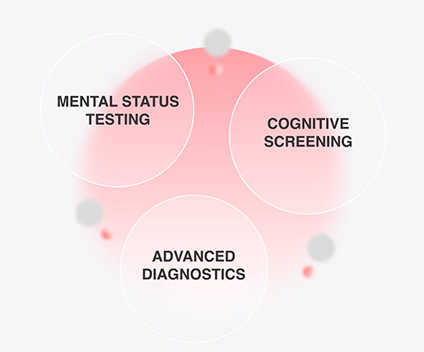
Show moreIreland has a well-defined Alzheimer’s diagnostic pathway beginning in primary care, where GPs assess medical history, physical health, medications, reversible causes and cognition before referring suspected cases to specialists or one of 25 memory clinics nationwide. Specialist assessment typically includes cognitive and neuropsychological testing, laboratory investigations and CT or MRI, with PET or CSF biomarkers used where further diagnostic clarification is required. MMSE and MoCA are commonly used screening tools, while MRI is preferred for structural imaging. CSF Aβ42, Aβ40, p-tau181 and t-tau are established specialist biomarkers, whereas blood biomarkers such as p-tau217 and GFAP remain under development through national validation programmes. Genetic testing is reserved for specific clinical scenarios. Diagnosis is largely publicly funded, although private care can incur additional costs. Regional access remains uneven, with reported waits ranging from several months to 14 months, while the HSE aims for 80% of referrals to receive assessment and diagnosis within three months.
Diagnosis pathway
Alzheimer’s assessment in Ireland typically starts in primary care, where GPs investigate cognitive symptoms, exclude reversible causes, and conduct brief cognitive testing. Patients with suspected dementia are generally referred to specialists or one of 25 memory clinics. Specialist diagnosis combines detailed cognitive assessment, laboratory testing, and structural neuroimaging with CT or MRI. Depending on clinical complexity, neuropsychological testing, CSF biomarker analysis, or PET imaging may provide further evidence to establish or clarify the diagnosis.
In Ireland, there is a well-defined diagnostic pathway for Alzheimer’s disease. The pathway begins in primary care, where individuals experiencing memory problems or cognitive decline are advised to consult their general practitioner (GP). During the initial assessment, the GP takes a medical history, performs a physical examination, reviews medications, orders blood tests to exclude reversible causes of cognitive impairment, and carries out brief cognitive assessments using standard pen-and-paper tests. If Alzheimer’s disease or another form of dementia is suspected, the GP refers the patient to a specialist or a dedicated memory assessment service for further evaluation.
Specialist assessment is usually undertaken in one of Ireland’s memory clinics, of which there are currently 25 nationwide. Most memory clinics require referral from a GP, although one clinic accepts self-referrals. Depending on the patient’s presentation, assessment may be conducted by a geriatrician, neurologist, psychiatrist, or multidisciplinary memory clinic team. The diagnostic work-up typically includes comprehensive cognitive testing, detailed neuropsychological assessment where appropriate, laboratory investigations, and brain imaging with computed tomography (CT) or magnetic resonance imaging (MRI). Additional investigations, including lumbar puncture for cerebrospinal fluid (CSF) biomarkers or positron emission tomography (PET), may be performed when required to clarify the diagnosis.
Wait times
Ireland has experienced substantial regional variation in dementia diagnostic waits, reaching 14 months in some areas. The HSE targets assessment and diagnosis within three months for 80% of referrals.
Ireland does not publish national waiting time targets or routinely report average waiting times specifically for Alzheimer’s disease diagnostic services. Waiting times for diagnostic services in Ireland have historically experienced significant regional variability, leading to waiting lists ranging from several months up to 14 months in high-demand regions. To address these delays, the Health Service Executive (HSE set a key national performance target within its Model of Care aiming for 80% of referred patients to receive a formal assessment and diagnosis within three months of initial referral.
Diagnosis cost
Alzheimer’s diagnosis in Ireland is largely publicly funded, with the government covering most specialist consultations and diagnostic investigations. Medical Card holders receive free GP and specialist consultations and publicly funded diagnostic tests, while GP Visit Card holders receive free GP consultations. Those without either card may pay GP fees set by individual practices. Patients who choose private specialists or diagnostic imaging, often to avoid waiting times, generally pay the costs themselves unless covered by private health insurance.
Overall, the financial cost of diagnosing Alzheimer’s disease in Ireland is relatively limited for persons with AD using the public healthcare system. The government covers the majority of specialist and diagnostic costs, while patients may only incur out-of-pocket expenses for GP consultations if they are not eligible for a Medical Card or GP Visit Card, or for private healthcare if they choose to use it. The Irish government, through the Health Service Executive (HSE), funds most of the costs of specialist consultations and diagnostic investigations carried out in the public healthcare system. People who hold a Medical Card are entitled to free GP visits, specialist consultations and publicly funded diagnostic tests related to Alzheimer’s disease. Those with a GP Visit Card receive free GP consultations, but other services may still be subject to charges depending on their eligibility. Patients who do not qualify for a Medical Card or GP Visit Card must pay for GP consultations out of pocket, with fees set by individual practices. However, specialist consultations and diagnostic investigations provided through the public hospital system are largely funded by the government following referral. Patients who choose to access private specialists or private diagnostic imaging to avoid waiting times must pay these costs themselves unless they have voluntary private health insurance, which may reimburse part or all of the expenses depending on their policy.
- https://www.hse.ie/mental-health/issues/alzheimers-disease-symptoms/azheimers-disease-diagnosis
- https://healthservice.hse.ie/staff/information-healthcare-workers/gp-diagnostics
- https://www2.healthservice.hse.ie/organisation/national-pppgs/hse-national-assessment-guidelines-for-medical-card-and-gp-visit-card
- https://healthconnect.ie/learn-more/medical-and-gp-visit-card
- https://www.gov.uk/guidance/healthcare-in-ireland
Cognitive tests
Brief screening in Irish practice commonly includes the Mini-Mental State Examination (MMSE) and the Montreal Cognitive Assessment (MoCA), and specialist services may add fuller neuropsychological assessment. HSE guidance on suspected dementia in hospital refers to formal cognitive testing such as MMSE or MoCA, while Irish memory clinics also provide specialist neuropsychology services. For local validation, the MMSE has been translated and validated in bilingual older patients in Ireland, and locally derived Irish norms improved its screening accuracy; there are also reliability data for both MMSE and MoCA from a representative Irish older-adult sample.
- https://assets.hse.ie/media/documents/Diagnostic_Pathway_for_Suspected_Dementia_on_Acute_Hospital_Wards.pdf
- https://www.researchgate.net/publication/282909487_Comparison_of_Irish_and_English_Versions_of_the_MMSE_in_Bilingual_Older_Patients_in_Ireland
- https://research-portal.uea.ac.uk/files-asset/37313027/eugms2014.pdf?f=webp&w=640
Imaging tests
CT, MRI and PET are used in the assessment of Alzheimer’s disease in Ireland. The HSE states that brain imaging may include CT, MRI or PET to exclude other causes of cognitive impairment and identify changes consistent with Alzheimer’s disease. CT and MRI are widely available, and GPs have direct access to community CT and MRI services through approved providers. PET imaging is available only through specialist services and is not included in the HSE GP community diagnostics programme. Irish consensus guidance recommends MRI as the preferred structural imaging modality, with CT used when MRI is unavailable or contraindicated. Fluorodeoxyglucose (FDG)-PET and amyloid PET are reserved for selected patients with atypical presentations or persistent diagnostic uncertainty following standard clinical assessment, while tau-PET is not currently available clinically in Ireland.
- https://www2.hse.ie/conditions/alzheimers-disease/diagnosis
- https://about.hse.ie/api/v2/download-file/healthcare_professional_publications/GP-Circular---NCO-35-2023---GP-Access-to-community-_FeChg0b.pdf
- https://pmc.ncbi.nlm.nih.gov/articles/PMC4876894
- https://imj.ie/wp-content/uploads/2024/12/Guidance-on-Imaging-as-part-of-the-Assessment-of-a-Person-with-suspected-Cognitive-Impairment-or-Dementia.pdf
- https://imj.ie/wp-content/uploads/2025/01/The-Use-of-Biomarkers-in-Diagnosing-Alzheimers-Disease.pdf
Genetic tests
Diagnostic genetic testing for Alzheimer’s disease in Ireland is reserved for specific clinical scenarios and is accessed via specialist neurology or geriatric referrals to clinical genetics services.
Biomarker tests
CSF biomarkers are the most established biological tests in Ireland. An Irish working group recommends CSF Aβ42, Aβ40, p-tau181 and t-tau as first-line biomarker testing in specialist clinics when a biological diagnosis is being pursued, and says CSF is more accessible and scalable than PET. Tallaght University Hospital’s neurochemistry service also describes CSF biomarkers as supportive diagnostic markers for Alzheimer’s disease in people with early cognitive impairment, with specimens sent nationally to its laboratory. Blood biomarkers are newer and still emerging: the HSE reported in February 2026 that p-tau217 and GFAP blood tests were not yet clinically available, although TUH expected p-tau217 to enter specialist memory services later in 2026. By June 2026, TUH had launched a National Alzheimer’s Biomarker Programme to validate blood testing, so blood biomarkers in Ireland should still be viewed as developing rather than routine.
- https://imj.ie/wp-content/uploads/2025/01/The-Use-of-Biomarkers-in-Diagnosing-Alzheimers-Disease.pdf
- https://www.tuh.ie/Departments/Age-Related-Healthcare/CSF-Biomarkers-Factsheet.pdf
- https://healthservice.hse.ie/staff/news/our-health-service/new-research-identifies-predictors-of-clinical-progression-in-alzheimers-disease/
- https://tuh.ie/News/Launch-of-National-Alzheimer%E2%80%99s-Biomarker-Programme.html?
Cognitive Tests
Cognitive Tests
Brief screening in Irish practice commonly includes the Mini-Mental State Examination (MMSE) and the Montreal Cognitive Assessment (MoCA), and specialist services may add fuller neuropsychological assessment. HSE guidance on suspected dementia in hospital refers to formal cognitive testing such as MMSE or MoCA, while Irish memory clinics also provide specialist neuropsychology services. For local validation, the MMSE has been translated and validated in bilingual older patients in Ireland, and locally derived Irish norms improved its screening accuracy; there are also reliability data for both MMSE and MoCA from a representative Irish older-adult sample.
- https://assets.hse.ie/media/documents/Diagnostic_Pathway_for_Suspected_Dementia_on_Acute_Hospital_Wards.pdf
- https://www.researchgate.net/publication/282909487_Comparison_of_Irish_and_English_Versions_of_the_MMSE_in_Bilingual_Older_Patients_in_Ireland
- https://research-portal.uea.ac.uk/files-asset/37313027/eugms2014.pdf?f=webp&w=640
Imaging Tests
Imaging Tests
CT, MRI and PET are used in the assessment of Alzheimer’s disease in Ireland. The HSE states that brain imaging may include CT, MRI or PET to exclude other causes of cognitive impairment and identify changes consistent with Alzheimer’s disease. CT and MRI are widely available, and GPs have direct access to community CT and MRI services through approved providers. PET imaging is available only through specialist services and is not included in the HSE GP community diagnostics programme. Irish consensus guidance recommends MRI as the preferred structural imaging modality, with CT used when MRI is unavailable or contraindicated. Fluorodeoxyglucose (FDG)-PET and amyloid PET are reserved for selected patients with atypical presentations or persistent diagnostic uncertainty following standard clinical assessment, while tau-PET is not currently available clinically in Ireland.
- https://www2.hse.ie/conditions/alzheimers-disease/diagnosis
- https://about.hse.ie/api/v2/download-file/healthcare_professional_publications/GP-Circular---NCO-35-2023---GP-Access-to-community-_FeChg0b.pdf
- https://pmc.ncbi.nlm.nih.gov/articles/PMC4876894
- https://imj.ie/wp-content/uploads/2024/12/Guidance-on-Imaging-as-part-of-the-Assessment-of-a-Person-with-suspected-Cognitive-Impairment-or-Dementia.pdf
- https://imj.ie/wp-content/uploads/2025/01/The-Use-of-Biomarkers-in-Diagnosing-Alzheimers-Disease.pdf
Genetic Tests
Genetic Tests
Diagnostic genetic testing for Alzheimer’s disease in Ireland is reserved for specific clinical scenarios and is accessed via specialist neurology or geriatric referrals to clinical genetics services.
- https://www2.hse.ie/conditions/alzheimers-disease/diagnosis
- https://about.hse.ie/api/v2/download-file/healthcare_professional_publications/GP-Circular---NCO-35-2023---GP-Access-to-community-_FeChg0b.pdf
- https://pmc.ncbi.nlm.nih.gov/articles/PMC4876894
- https://imj.ie/wp-content/uploads/2024/12/Guidance-on-Imaging-as-part-of-the-Assessment-of-a-Person-with-suspected-Cognitive-Impairment-or-Dementia.pdf
- https://imj.ie/wp-content/uploads/2025/01/The-Use-of-Biomarkers-in-Diagnosing-Alzheimers-Disease.pdf
Biomarker Tests
Biomarker Tests
CSF biomarkers are the most established biological tests in Ireland. An Irish working group recommends CSF Aβ42, Aβ40, p-tau181 and t-tau as first-line biomarker testing in specialist clinics when a biological diagnosis is being pursued, and says CSF is more accessible and scalable than PET. Tallaght University Hospital’s neurochemistry service also describes CSF biomarkers as supportive diagnostic markers for Alzheimer’s disease in people with early cognitive impairment, with specimens sent nationally to its laboratory. Blood biomarkers are newer and still emerging: the HSE reported in February 2026 that p-tau217 and GFAP blood tests were not yet clinically available, although TUH expected p-tau217 to enter specialist memory services later in 2026. By June 2026, TUH had launched a National Alzheimer’s Biomarker Programme to validate blood testing, so blood biomarkers in Ireland should still be viewed as developing rather than routine.
- https://imj.ie/wp-content/uploads/2025/01/The-Use-of-Biomarkers-in-Diagnosing-Alzheimers-Disease.pdf
- https://www.tuh.ie/Departments/Age-Related-Healthcare/CSF-Biomarkers-Factsheet.pdf
- https://healthservice.hse.ie/staff/news/our-health-service/new-research-identifies-predictors-of-clinical-progression-in-alzheimers-disease/
- https://tuh.ie/News/Launch-of-National-Alzheimer%E2%80%99s-Biomarker-Programme.html?
Treatment & Care
Treatment & care
Show moreIreland has nationwide memory clinics and community dementia services, including 63 mapped dementia day-care centres, although rural access remains uneven. Almost 50 specialist palliative care services support people with advanced dementia.The HSE publicly funds most Alzheimer’s treatment. Medical Card holders receive consultations and medicines free of charge, while the Drugs Payment Scheme caps household spending on approved medicines at €80 monthly.Caregivers may access Carer’s Allowance, Carer’s Benefit and the Carer’s Support Grant, while the Fair Deal scheme supports residential care. The Alzheimer Society of Ireland and Family Carers Ireland provide counselling, education, respite guidance and advocacy.
Specialized facilities and services
Specialist dementia provision in Ireland includes memory clinics across all HSE regions, delivering multidisciplinary diagnosis and post-diagnostic care. The HSE and Alzheimer Society of Ireland complement these services through dementia advisers, Alzheimer Cafés, home support, respite, technology resources, and numerous dementia-specific day centres, though geographical disparities persist. Nationwide palliative provision includes hospital teams, specialist community services, hospices, and home care. Although designed for broader palliative needs, national dementia policy supports access for people with advanced dementia and promotes individualised end-of-life care.
Ireland has an extensive network of specialist memory clinics operating under the HSE Dementia Model of Care, providing multidisciplinary assessment, diagnosis and post-diagnostic support. Memory clinics are located across all HSE health regions, including Dublin, Cork, Galway, Limerick, Waterford, Sligo, Letterkenny, Kilkenny, Wexford and many other counties, with a national directory listing dozens of services.
The HSE and the Alzheimer Society of Ireland provide dementia advisers, memory technology resource rooms, Alzheimer Cafés, home support, respite services and more than 50 dementia-specific day centres distributed across the country. A national mapping exercise identified 63 dementia-specific day-care services, although their capacity and frequency of operation vary, and geographical inequalities remain. Around 18% of people with dementia live more than 15 km from their nearest dementia day centre, indicating that access is generally good but remains more limited in some rural areas
Ireland has a comprehensive nationwide palliative care system delivered through the HSE, voluntary hospices and specialist community teams. Specialist palliative care is available in every region through hospital-based teams, community specialist palliative care services, inpatient hospices and home-based care, with the HSE listing almost 50 specialist palliative care services nationwide. Although these services are not dementia-specific, national dementia policy promotes palliative and end-of-life care for people with advanced dementia, with care delivered through community teams, nursing homes, hospitals and hospices according to individual needs.
Approved medication
| Generic Name | Trade Name | Used for |
|---|---|---|
| Donepezil | Aricept, Aricept ODT, Adlarity, Eranz, Memac, Alzepil, Davia, Donecept, Donep, Donepex, Donesyn, Dopezil, Yasnal, Memorit, Pezale, Redumas, Zolpezil, Namzaric* | Donepezil is indicated for the symptomatic treatment of mild to moderately severe Alzheimer’s dementia. |
| Rivastigmine | Exelon, Exelon Patch, Prometax, Rivastach, Nimvastid | Symptomatic treatment of mild to moderately severe Alzheimer’s dementia. Symptomatic treatment of mild to moderately severe dementia in patients with idiopathic Parkinson’s disease. |
| Galantamine | Razadyne, Razadyne ER, Reminyl, Reminyl XL, Nivalin, Lycoremine, Galsya | Galantamine is indicated for the symptomatic treatment of mild to moderately severe dementia of the Alzheimer type. |
| Memantine | Namenda, Namenda XR, Ebixa, Memary, Axura, Akatinol, Maruxa, Nemdatine, Namzaric* | Treatment of adult patients with moderate to severe Alzheimer’s disease. |
| Lecanemab | Leqembi | Lecanemab is indicated for the treatment of mild cognitive impairment and mild dementia due to Alzheimer’s disease in adult patients that are apolipoprotein E ε4 (ApoE ε4) heterozygotes or non-carriers. |
| Donanemab | Kisunla | Donanemab is indicated for the treatment of mild cognitive impairment and mild dementia due to Alzheimer’s disease (AD) in adult patients that are apolipoprotein Eε4 (ApoE ε4) heterozygotes or non-carriers. |
*Namzaric = combination of Donepezil and Memantine
Treatment cost
Ireland’s public healthcare system, administered by the HSE, covers most Alzheimer’s treatment costs, including GP and specialist consultations and approved medicines. Medical Card holders receive consultations and prescriptions free of charge, subject to applicable Drugs Payment Scheme (DPS) charges. Those without a Medical Card may face costs for GP visits and medicines, but the DPS caps household spending on approved medicines at €80 per month, with the HSE covering eligible costs above this threshold.

In Ireland, the cost of Alzheimer’s disease treatment is primarily borne by the HSE through the public healthcare system. GP and specialist consultations, and approved Alzheimer’s disease medicines are publicly funded, although the extent of patient payment depends on eligibility. People who hold a Medical Card receive consultations and prescribed medicines free of charge, subject only to the Drugs Payment Scheme (DPS) prescription charge where applicable. People without a Medical Card may pay for GP visits and medicines, but under the Drugs Payment Scheme, the amount any household pays for approved medicines is capped at €80 per month (2025), with the HSE covering additional eligible medicine costs.
Caregiver support
Ireland provides a range of caregiver support measures, although none is specific to Alzheimer’s disease. Eligible full-time caregivers may receive Carer’s Allowance, Carer’s Benefit and the annual Carer’s Support Grant, subject to care and other eligibility criteria. The Nursing Homes Support Scheme (Fair Deal) provides financial assistance towards permanent residential care based on assessed income and assets, while tax relief may be available for eligible private homecare costs. The Alzheimer Society of Ireland and Family Carers Ireland complement statutory support through dementia advisers, education, counselling, support groups, helplines, benefits advice, respite guidance and advocacy. Although these organisations generally do not provide direct financial assistance, they help families navigate health and social care services and access available statutory support.
While there is no Alzheimer’s disease-specific caregiver allowance, eligible full-time caregivers may receive Carer’s Allowance (means-tested), Carer’s Benefit (insurance-based for those leaving employment to provide care), and the Carer’s Support Grant, an annual payment available to eligible full-time caregivers. These schemes are available regardless of the underlying condition, provided the person with Alzheimer’s disease requires full-time care and the eligibility criteria are met.
For those requiring permanent residential care, the Nursing Homes Support Scheme—also known as the Fair Deal scheme—provides financial assistance by covering the balance of long-term care costs after the patient contributes based on their assessed income and assets. Furthermore, families paying out-of-pocket for private homecare can claim state tax relief on these expenses to make caregiving more manageable.
In addition to government support, The Alzheimer Society of Ireland and Family Carers Ireland provide dementia advisers, carer education, support groups, counselling, helplines, benefits advice, respite information, and advocacy. These organisations do not generally provide direct financial payments but play a central role in helping caregivers access statutory support, navigate health and social care services, and develop caregiving skills.
- https://www.gov.ie/en/department-of-social-protection/services/carers-allowance
- https://www.gov.ie/en/department-of-social-protection/services/carers-support-grant
- https://www.gov.ie/en/department-of-social-protection/publications/operational-guidelines-carers-allowance
- https://www.citizensinformation.ie/en/health/health-services/health-services-for-older-people/home-support-service
- https://www.citizensinformation.ie/en/health/health-services/health-services-for-older-people/fair-deal-scheme
- https://alzheimer.ie/get-support/services-in-my-county/
- https://familycarers.ie/carer-supports/get-support/
Policy
Policy
Show moreIreland’s National Dementia Strategy, published in 2014, aims to promote person-centred, integrated care through priorities including timely diagnosis, post-diagnostic and caregiver support, dementia-friendly communities, workforce training, public awareness, research and service planning. No replacement strategy has been formally announced. Despite this policy framework, the 2023 Experience of Dementia in Ireland report highlights uneven access to diagnosis, home care, respite and post-diagnostic services, driven by workforce shortages, funding constraints and rising demand. Persistent stigma, discrimination and limited awareness also contribute to social exclusion, while gaps in dementia-inclusive and culturally appropriate services may discourage people from seeking support.
National dementia plan
Ireland’s National Dementia Strategy, published in 2014, aims to help people with dementia live well through person-centred, integrated care and support. Its priorities include timely diagnosis and post-diagnostic support, integrated health and social care, family caregiver support, dementia-friendly communities, workforce training, public awareness, research and improved service planning.
Ireland published its National Dementia Strategy in 2014. The strategy aims to enable people living with dementia to live well for as long as possible through person-centred, integrated care and support. Its core priorities include raising public awareness, promoting timely diagnosis and post-diagnostic support, improving integrated health and social care, supporting family carers, developing dementia-friendly communities, strengthening workforce education and training, and enhancing research, information systems, and service planning.
Upcoming plans
No new national dementia strategy has been formally announced to replace the 2014 strategy.
Policy gaps
Legal barriers
Despite a strong national policy framework, Ireland continues to face significant gaps in dementia service delivery. The 2023 Experience of Dementia in Ireland report highlights uneven access to timely diagnosis, home care, respite, day services and post-diagnostic support, driven by funding constraints, workforce shortages and rising demand. In some areas, shortages of home-care staff have created waiting lists or limited service availability, restricting people’s ability to live independently and contributing to regional inequalities in care.
The Experience of Dementia in Ireland (2023) report highlights that significant institutional barriers remain despite these policy commitments. Participants reported persistent difficulties accessing timely diagnosis, home care, respite services, day care, and post-diagnostic support, with service availability varying across the country. The report identifies inadequate funding, workforce shortages, and increasing demand as major constraints, noting that although investment has increased, it has not kept pace with the growing number of people living with dementia. A shortage of home care staff has resulted in waiting lists and, in some areas, an inability to provide home support services, limiting people’s ability to remain living independently in their communities. These implementation gaps demonstrate that, while Ireland has a strong policy framework, inequitable access to dementia services continues to affect the quality of care experienced by people living with Alzheimer’s disease and their families.
Cultural barriers
The 2023 Experience of Dementia in Ireland report identifies persistent stigma, limited awareness and discrimination as barriers to social inclusion and community participation. It also highlights gaps in dementia-inclusive services and limited culturally appropriate support for minority ethnic communities, suggesting that misconceptions about dementia may discourage people from seeking help.
The Experience of Dementia in Ireland (2023) report found that stigma, lack of awareness, and discrimination continue to negatively affect the lives of people living with dementia and their care partners, contributing to social exclusion and reducing participation in community life. Respondents also highlighted that some community organisations and services are not sufficiently dementia-inclusive, while people from minority ethnic communities reported that culturally appropriate dementia services were often unavailable. These findings suggest that misconceptions surrounding dementia continue to discourage inclusion and may reduce willingness to seek support.
Research
Research
Show moreIreland is strengthening its dementia research and clinical-trial infrastructure through the National Dementia Registry, commenced in May 2025 to standardise data on diagnosis, care and outcomes and support research, service planning and policy development. The HPRA and NREC oversee clinical trials, while Dementia Trials Ireland coordinates multicentre dementia trials and recruitment. Research strengths include Trinity College Dublin’s work on systemic inflammation and neuroinflammation, alongside studies identifying plasma p-tau217 and GFAP as potential predictors of faster cognitive and functional decline. These developments support improved understanding of disease progression and the evaluation of emerging treatments.
Selected academic institutions
Clinical trials and registries
In May 2025, Ireland announced the commencement of its National Dementia Registry, a key initiative under the National Dementia Strategy and HSE Model of Care. The Registry will collect standardised data on dementia diagnosis, care, and outcomes to improve service planning, quality of care, research, and future policy development.
The Health Products Regulatory Authority (HPRA) and the National Research Ethics Committees (NREC) are responsible for approving and overseeing all clinical trials to ensure scientific rigor and participant safety., Dementia Trials Ireland is a national clinical trials network dedicated to Alzheimer’s disease and other dementias. It coordinates multicenter dementia clinical trials and supports recruitment and trial infrastructure.
Selected innovative methods
Ireland’s Alzheimer’s research examines neuroinflammation and biomarkers of disease progression. Trinity College Dublin researchers linked systemic inflammation to increased neuroinflammation and cognitive decline, highlighting a potential therapeutic target. Research using NILVAD data also identified plasma p-tau217 and GFAP as predictors of faster cognitive and functional deterioration, potentially informing selection for emerging disease-modifying therapies.
Researchers at Trinity College Dublin have made important contributions to understanding how systemic inflammation accelerates Alzheimer’s disease progression. Their work demonstrated that inflammatory events outside the brain amplify neuroinflammation through IL-1β-mediated activation of astrocytes, leading to neuronal dysfunction and worsening cognitive decline. This research provides a mechanistic basis for targeting neuroinflammation as a disease-modifying strategy rather than treating amyloid pathology alone.
A major current focus in Ireland is identifying blood biomarkers that predict how quickly Alzheimer’s disease will progress. Researchers at the Tallaght Institute of Memory and Cognition and Trinity College Dublin analysed participants from the multinational NILVAD study and found that plasma phosphorylated tau (p-tau217) and glial fibrillary acidic protein (GFAP) predict faster cognitive and functional decline. These biomarkers may help identify patients most likely to benefit from emerging disease-modifying therapies.
Support
Support
Show moreIreland has a growing network of dementia-friendly initiatives, including Alzheimer and Dementia Cafés, community programmes and national awareness campaigns. The Alzheimer Society of Ireland and Engaging Dementia provide cafés and community resources focused on education, peer support and social connection, with Alzheimer Café Donnybrook, established in 2011, being Ireland’s first. The Understand Together campaign promotes dementia literacy, challenges stigma and encourages inclusion. Ireland has no dedicated independent dementia news outlet, but the Alzheimer Society of Ireland maintains an active news and media section covering dementia news, campaigns, research and awareness activities.
Selected national associations, patient family associations, NGOs:
Selected initiatives
Ireland supports people with dementia through extensive community initiatives combining education, social engagement, peer support, and inclusion. The Alzheimer Society of Ireland provides cafés, day centres, technology resources, activity clubs, and dementia-friendly programmes nationwide. Alzheimer Café Donnybrook pioneered the café model, while Engaging Dementia supports additional face-to-face and virtual cafés centred on information, support, and community connection. The Understand Together campaign complements these services by improving dementia literacy, challenging stereotypes, and encouraging more inclusive communities across Ireland.
Memory Cafés
Alzheimer Café Donnybrook
Dementia Café
The Understand Together campaign
Dedicated media outlets
Ireland does not have a dedicated independent Alzheimer’s disease or dementia news outlet, but The Alzheimer Society of Ireland maintains an active news and media section with dementia news, campaigns, press releases, and awareness content.