

Italy
Italy has made dementia and Alzheimer’s disease a recognised public health priority, with a National Dementia Plan (Piano Nazionale Demenze) guiding regional memory clinics (Centri per i Disturbi Cognitivi e le Demenze – CDCD) and community-based services. Alongside the government’s efforts, national associations like Federazione Alzheimer Italia and AIMA (Associazione Italiana Malattia di Alzheimer) play a central role in supporting families, raising awareness, and advocating for patients.

AD Rating
Diagnostic Pathway
Specialized Care
Caregiver Support
National Policies
Access to ATT-s
Highlights

Population
Median age
Health expenditure (% of GDP)
Diagnosis
Diagnosis
Show moreIn Italy, dementia assessment begins in primary care with history-taking, brief cognitive tests (10-CS, 6CIT, Mini-Cog), and basic exams to rule out reversible causes. Suspected cases are referred to specialist diagnostic centres (CDCDs) for neuropsychological testing, imaging (MRI/CT), and biomarkers if needed to confirm subtypes. Rapidly progressive cases receive urgent neurological referral. Mild cognitive impairment is closely monitored. After diagnosis, a personalised care plan (PAI) is developed with patient and family input, supported by multidisciplinary teams, while GPs continue ongoing care. The public healthcare system (SSN) covers most diagnostic and treatment costs, with nominal copayments.
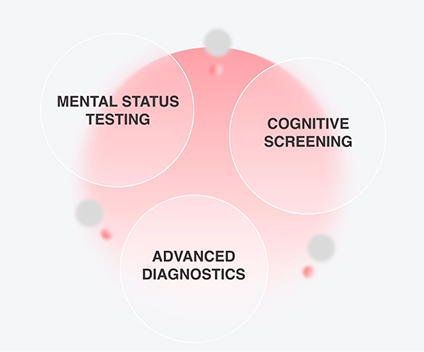
Diagnosis pathway
In Italy, dementia assessment starts in primary care with history-taking, cognitive screening, and basic tests to rule out reversible causes. GPs refer suspected cases to specialist diagnostic centres (CDCDs) for comprehensive evaluations, including neuropsychological testing, imaging, and, when needed, biomarkers to determine subtype. Urgent neurological referrals occur for rapidly progressive cases. Mild cognitive impairment is assessed through detailed testing and monitored over time. Following diagnosis, a personalised care plan (PAI) is created with patient and family involvement. Multidisciplinary support continues via specialist centres, while GPs provide ongoing monitoring and care for evolving patient needs.
1. Initial Assessment in Non-Specialist Settings General Practitioner
The pathway begins when cognitive decline is suspected. The first step is an initial assessment, typically conducted by a General Practitioner (GP). This involves taking a detailed history, which includes discussing cognitive, behavioural, and psychological symptoms with both the individual and, if possible, someone who knows them well, like a family member. If cognitive decline is still suspected, a physical exam is conducted, and blood and urine tests are ordered to rule out reversible causes. A validated, brief cognitive screening tool is used to assess cognitive function, with recommended instruments including the Mini-Cog and the General Practitioner Assessment of Cognition (GPCOG). Finally, a brain computed tomography (CT) and/or magnetic resonance imaging (MRI) may be prescribed to exclude other secondary causes of cognitive decline.
2. Referral to Specialist Services
If reversible causes have been ruled out and dementia is still suspected, the person is referred to a specialist diagnostic service known as a Centre for Cognitive Disorders and Dementias (CDCD). A referral to a neurological service is made for suspected rapidly progressive dementia to test for conditions like Creutzfeldt–Jakob disease.
3. Diagnosis in Specialist Settings (CDCDs)
At the CDCD, specialists conduct a comprehensive evaluation to confirm a diagnosis and, if possible, determine the specific dementia subtype. An in-depth assessment with a battery of validated neuropsychological tests is an essential part of the diagnostic process. If Alzheimer’s disease is suspected, this must include a test of verbal episodic memory. Structural imaging (MRI or CT) is also offered to assist with subtype diagnosis unless the condition is already well-established.
4. Advanced Diagnostics for Uncertain Cases
Further diagnostic tests are only considered if the diagnosis is uncertain and knowing the specific subtype would change the patient’s management plan. For suspected Alzheimer’s disease, if uncertainty exists, ¹⁸F-FDG PET scans or cerebrospinal fluid (CSF) analysis for Tau and amyloid proteins may be used. For suspected Dementia with Lewy Bodies, ¹²³I-FP-CIT SPECT is the recommended test. For suspected Frontotemporal Dementia, ¹⁸F-FDG PET or perfusion SPECT is used. For suspected Vascular Dementia, an MRI is recommended.
5. Diagnosis and Management of Mild Cognitive Impairment
When mild cognitive impairment is suspected, the diagnostic process at a specialist centre includes a comprehensive neuropsychological assessment with specific tests for episodic memory. People living with mild cognitive impairment are then offered regular neuropsychological assessments over time to monitor for any changes in their cognitive function. Biomarkers are not recommended for diagnosing mild cognitive impairment.
6. Post-Diagnostic Planning and Support
Once a diagnosis of dementia or mild cognitive impairment is made, a structured support plan is put in place. A single named health or social care professional is assigned to be responsible for the person’s Personalised Care Plan (PAI). This plan is developed with the individual and their family and outlines needs, available services, and a schedule for reviews. After diagnosis, the person and their care partners must have continued access to the specialist multidisciplinary services offered by the CDCDs. GPs also continue to assess for emerging needs during visits with people living with dementia and their carers.
Wait times
A 2014-2015 survey of Italy’s CDCDs found 76.5% offered first visits within three months. Notably, Southern regions reported shorter waits than the better-resourced North, where longer delays were more common.
A survey of Italy’s centres for Cognitive Disorders and Dementias (CCDDs) conducted between February 2014 and December 2015 and published in 2021, revealed that 76.5% of these centres report a waiting time of three months or less for a first visit. The same survey also found paradoxical regional disparity. While Southern Italy is generally considered to have fewer healthcare resources, it reports shorter wait times for an initial specialist appointment, with only 15.0% of centres having waits longer than three months. In contrast, the more affluent and better-equipped Northern regions report that 30.4% of their CCDDs have wait times exceeding a three-month period.
Diagnosis cost
Italy’s universal public healthcare system, the SSN, covers Alzheimer’s diagnosis, treatments, hospital care, and specialist visits. Patients may pay a nominal “ticket” or copayments, with regional variations, while most costs are fully reimbursed by the SSN.
Italy operates a universal public healthcare system, National Health Service (Servizio Sanitario Nazionale, SSN), which provides healthcare services to all Italian citizens and legal residents. Coverage includes diagnostic tests, treatments, hospital stays, and surgeries.
Alzheimer’s disease Care Coverage:
After referral from a GP, most Alzheimer’s disease treatments, including diagnosis and care, are covered by the SSN. While patients might need to pay a nominal fee (referred to as a “ticket”), most medical costs are borne by the system.
If certain treatments are only partially covered or require upfront payment (e.g., some medications or specialised tests), reimbursement may be available depending on regional policies.
Procedures and specialist visits can be prescribed either by a GP or by a specialist. Fees for visits range from EUR 12.91 (USD 17.91) for a follow-up visit to EUR 20.66 (USD 28.65) for first encounters. People also make copayments for each prescribed procedure up to a ceiling determined by law — currently EUR 36.15 (USD 50.14).
Cognitive tests
Cognitive tests used in the initial assessment for dementia or mild cognitive impairment diagnosis in Italy are:
● 10-point cognitive screener (10-CS)
● 6-item cognitive impairment test (6CIT)
● 6-item screener (6-IS)
● Memory Impairment Screen (MIS)
● Mini-Cog
● Test Your Memory (TYM)
● General Practitioner Assessment of Cognition (GPCOG).
Imaging tests
Routine Imaging: Structural imaging (MRI or CT) is strongly recommended as a standard part of the diagnostic process. Its main purpose is to rule out reversible causes (like tumors or fluid on the brain) and to help with the initial subtype diagnosis.
Specialised Imaging (Not Routine): More advanced tests, such as FDG PET scans, 123I-FP-CIT SPECT scans (for Lewy bodies), or CSF biomarker analysis, are only recommended in specific situations. The guideline explicitly states these “further diagnostic tests” should only be considered if the diagnosis is uncertain after the initial assessment, and if confirming the specific subtype would actually change the patient’s management plan.
Genetic tests
Italian clinical consensus and guidelines strongly advise against using APOE genotyping as a routine diagnostic tool. This is because its predictive value for an individual is low, and the results can cause unnecessary distress. APOE genotyping is primarily used in research settings.
Biomarker tests
Biomarker testing is mostly used in cases where a diagnosis is uncertain and Alzheimer’s disease is suspected. In these cases, the recommended first-line test is 18F‑FDG PET. If 18F‑FDG PET is not available, use of perfusion SPECT is recommended.
As an alternative diagnostic pathway, it is recommended to perform a CSF testing for total tau, phosphorylated tau at threonine 181 (p‑tau181), and either the amyloid‑β 1–42 to 1–40 ratio (Aβ1–42/Aβ1–40) or amyloid‑β 1–42 (Aβ1–42) alone.
In case of diagnosis for mild cognitive impairment, CSF analysis biomarkers are not recommended.
Cognitive Tests
Cognitive Tests
Cognitive tests used in the initial assessment for dementia or mild cognitive impairment diagnosis in Italy are:
● 10-point cognitive screener (10-CS)
● 6-item cognitive impairment test (6CIT)
● 6-item screener (6-IS)
● Memory Impairment Screen (MIS)
● Mini-Cog
● Test Your Memory (TYM)
● General Practitioner Assessment of Cognition (GPCOG).
Imaging Tests
Imaging Tests
Routine Imaging: Structural imaging (MRI or CT) is strongly recommended as a standard part of the diagnostic process. Its main purpose is to rule out reversible causes (like tumors or fluid on the brain) and to help with the initial subtype diagnosis.
Specialised Imaging (Not Routine): More advanced tests, such as FDG PET scans, 123I-FP-CIT SPECT scans (for Lewy bodies), or CSF biomarker analysis, are only recommended in specific situations. The guideline explicitly states these “further diagnostic tests” should only be considered if the diagnosis is uncertain after the initial assessment, and if confirming the specific subtype would actually change the patient’s management plan.
Genetic Tests
Genetic Tests
Italian clinical consensus and guidelines strongly advise against using APOE genotyping as a routine diagnostic tool. This is because its predictive value for an individual is low, and the results can cause unnecessary distress. APOE genotyping is primarily used in research settings.
Biomarker Tests
Biomarker Tests
Biomarker testing is mostly used in cases where a diagnosis is uncertain and Alzheimer’s disease is suspected. In these cases, the recommended first-line test is 18F‑FDG PET. If 18F‑FDG PET is not available, use of perfusion SPECT is recommended.
As an alternative diagnostic pathway, it is recommended to perform a CSF testing for total tau, phosphorylated tau at threonine 181 (p‑tau181), and either the amyloid‑β 1–42 to 1–40 ratio (Aβ1–42/Aβ1–40) or amyloid‑β 1–42 (Aβ1–42) alone.
In case of diagnosis for mild cognitive impairment, CSF analysis biomarkers are not recommended.
Treatment & Care
Treatment & care
Show moreItaly provides extensive dementia care through 533 main CDCDs and 163 satellite centres, 459 Day centres, and 1,677 residential facilities. Annual Alzheimer’s costs exceed €1.8 billion, with €3,779 per patient in NHS expenses. Caregiver support includes the €531 Attendance Allowance, home care (ADI), Day centres, workplace protections under Law 104/1992, and services from non-profits like Federazione Alzheimer Italia.
Specialized facilities and services
Italy has 533 main centres for Cognitive Disorders and Dementia (CDCDs) plus 163 satellite CDCDs. Additionally, there are 459 Day centres/Integrated Day centres and 1,677 residential healthcare facilities providing care for people living with dementia.
Approved medication
| Generic Name | Trade Name | Used for |
|---|---|---|
| Donepezil | Aricept, Aricept ODT, Adlarity, Eranz, Memac, Alzepil, Davia, Donecept, Donep, Donepex, Donesyn, Dopezil, Yasnal, Memorit, Pezale, Redumas, Zolpezil, Namzaric* | Donepezil is indicated for the symptomatic treatment of mild to moderately severe Alzheimer’s dementia. Official National Product Information |
| Rivastigmine | Exelon, Exelon Patch, Prometax, Rivastach, Nimvastid | Symptomatic treatment of mild to moderately severe Alzheimer’s dementia. Symptomatic treatment of mild to moderately severe dementia in patients with idiopathic Parkinson’s disease. Official National Product Information |
| Galantamine | Razadyne, Razadyne ER, Reminyl, Reminyl XL, Nivalin, Lycoremine, Galsya | Galantamine is indicated for the symptomatic treatment of mild to moderately severe dementia of the Alzheimer type. Official National Product Information |
| Memantine | Namenda, Namenda XR, Ebixa, Memary, Axura, Akatinol, Maruxa, Nemdatine, Namzaric* | Treatment of adult patients with moderate to severe Alzheimer’s disease. Official National Product Information |
| Lecanemab | Leqembi | Lecanemab is indicated for the treatment of mild cognitive impairment and mild dementia due to Alzheimer’s disease in adult patients that are apolipoprotein E ε4 (ApoE ε4) heterozygotes or non-carriers. Official National Product Information |
| Donanemab | Kisunla | Donanemab is indicated for the treatment of mild cognitive impairment and mild dementia due to Alzheimer’s disease (AD) in adult patients that are apolipoprotein Eε4 (ApoE ε4) heterozygotes or non-carriers. Official National Product Information |
*Namzaric = combination of Donepezil and Memantine
Treatment cost
A 2017 study estimated Italy’s annual Alzheimer’s burden at over €1.8 billion, including €3,779 per patient in direct NHS healthcare costs and €240 million in social security “Attendance Allowance” payments for individuals needing ongoing assistance.

A 2017 study provides a comprehensive look at the costs borne by the Italian state, estimating the total annual burden of Alzheimer’s disease to be over €1.8 billion. This figure is derived from two primary components: direct healthcare costs and social security costs.
Direct Healthcare Costs: The analysis, based on real-world data from the National Health Service (NHS), calculates the average annual direct healthcare cost per patient to be €3,779. This figure includes all resources managed by the NHS, such as hospital admissions, specialist consultations, diagnostic tests, and prescribed medications. It represents the direct cost to the public health system for managing the disease.
Social Security Costs: The study also quantifies a significant societal cost through the social security system. It estimates that €240 million is paid out annually for the “Attendance Allowance” (AA), a form of disability compensation provided to individuals who require ongoing assistance.
Caregiver support
In Italy, financial support for people with dementia primarily comes through the Attendance Allowance (Indennità di Accompagnamento), a non-means-tested monthly payment of about €531 in 2025 for those fully dependent. Practical support includes Day Care centres (Centri Diurni) offering therapeutic activities and respite, and Home Care Assistance (Assistenza Domiciliare Integrata, ADI), providing coordinated medical, nursing, and rehabilitative care at home, fully funded by the SSN after evaluation. Caregivers benefit from workplace protections under Law 104/1992, including paid leave, flexible work location, and exemption from night work. Non-profit organisations like Federazione Alzheimer Italia provide social, psychological, and legal counseling, complementing state services with emotional and practical support for patients and families.
Financial Support:
The primary form of direct financial aid is the Attendance Allowance (Indennità di Accompagnamento). This is a non-means-tested monthly payment made to individuals who are certified as being 100% dependent and in need of continuous assistance paid directly to the person with dementia, but it is intended to help the family cover caregiving costs. For 2025, the payment is approximately €531 per month.
Practical Support and Respite Care:
Practical support services are delivered by the National Health Service (SSN) at the regional level, so availability can vary. The main forms are:
Day Care centres (Centri Diurni): These specialised centres provide therapeutic and social activities for people living with dementia during the day, offering caregivers essential respite.
Home Care Assistance (Assistenza Domiciliare Integrata – ADI): This service provides professional medical, nursing, and rehabilitative care directly in the person’s home. Home care services are included in the national benefits package and thus are entirely paid by the SSN, upon a preliminary multidisciplinary evaluation of the person’s health and social condition. Home care is divided into “scheduled home care” (Assistenza Domiciliare, AD) that provides medical, nursing and/or rehabilitation health services limited to the episode of illness in progress, and “integrated home care” (Assistenza Domiciliare Integrata, ADI) that consists of an integrated set of health and social treatments, delivered in a coordinated and continuous manner.
Workplace Rights for Caregivers:
A cornerstone of support for working caregivers is Law 104 (Legge 104/1992). If a care partner is an employee and their family member is certified as having a severe disability, the law grants them:
Three days of paid leave per month to provide care.
The right to choose a work location closer to their home, if one is available.
The right to refuse night work.
Informational and psychosocial Support:
Non-profit organisations are vital for providing emotional and practical guidance. The main organisation in Italy is Federazione Alzheimer Italia. They offer (amongst other things):
Social Counseling.
Psychological Counseling.
Legal Advice.
- https://www.inps.it/it/it/dettaglio-approfondimento.schede-informative.indennit-di-accompagnamento-agli-invalidi-civili.html
- https://eurohealthobservatory.who.int/monitors/health-systems-monitor/countries-hspm/section-detail/italy-2023/provision-of-services/long-term-care/
- https://www.un.org/development/desa/disabilities/wp-content/uploads/sites/15/2019/11/Italy_Law-104-92-Framework-Law-for-assistance-social-integration-and-rights-of-the-handicapped.pdf
- https://www.alzheimer.it/pronto-alzheimer-e-consulenze/
Policy
Policy
Show moreItaly’s National Dementia Plan, updated since 2014, promotes awareness, early diagnosis, integrated care, research, and caregiver support. The Permanent Table on Dementia oversees implementation. Upcoming initiatives include the 2024-2026 Fund for Alzheimer’s and Dementia and nationwide clinical guidelines. Policy gaps remain in culturally competent care for migrants and consistent application of legal frameworks, including support administration and advance directives (DAT).
National dementia plan
Italy’s National Dementia Plan, developed by the Ministry of Health and ISS and continually updated since 2014, aims to raise awareness, promote early diagnosis, and support research. It establishes integrated health and social care networks, optimises service delivery, monitors quality, and ensures appropriate use of treatments and interventions. The plan emphasises caregiver support, stigma reduction, and social inclusion. Since 2020, the Permanent Table on Dementia, including regional authorities, scientific societies, patient associations, and AIFA, oversees multidisciplinary implementation and monitoring of the plan.
National Dementia Plan (2014, continually renewed and updated) is developed by the Ministry of Health and Higher Institute of Health ISS. The plan is structured around several key objectives:
1. Increase awareness and understanding of dementia, focusing on prevention, early diagnosis, treatment, and supporting scientific research to improve the care and quality of life of people living with dementia and their carers; also organise and implement epidemiological and monitoring activities in order to better plan and support dementia care.
2. Create an integrated network of health and social services, ensuring high-quality care from diagnosis to disease management, with shared care pathways.
3. Improve the ability of the National Health Service to deliver and monitor services through identification and implementation of strategies pursuing the rationalisation and appropriateness of available resources in order to improve the delivery and monitoring of the services provided; also to improve quality of care delivered at home, within residential facilities and promote the appropriate use of pharmacological treatments, technologies and psychosocial interventions.
4. Raise awareness to reduce stigma and support caregivers through training, information, and services and their social integration.
Permanent Table on Dementia (first time formalised in 2020 with the Directorial Decree of National Dementia Fund)
Led by the Ministry of Health and ISS, with participation from the regions, scientific societies, patient/family associations, AIFA, and other stakeholders, this group ensures a comprehensive, multidisciplinary approach to monitoring and implementing the National Dementia Plan.
Upcoming plans
Italy’s Fund for Alzheimer’s and Dementia, renewed for 2024-2026, provides financial support for National Dementia Plan initiatives. The 2024 national clinical practice guideline for dementia and MCI will be implemented nationwide, standardising diagnosis, treatment, and non-pharmacological interventions.
Renewal and Implementation of the Fund for Alzheimer’s and Dementia (2024-2026)
A major upcoming policy is the continued implementation of the Fund for Alzheimer’s and Dementia, which has been renewed for the 2024-2026 period. This fund is crucial as it provides the financial backing to enact the strategies outlined in the National Dementia Plan. The focus will be on rolling out projects across Italian regions that target key areas of need.
A landmark development is the creation of Italy’s first national clinical practice guideline for dementia and Mild Cognitive Impairment. Published in 2024, the upcoming policy focus will be on the nationwide implementation of these guidelines. This is a significant step towards standardising diagnosis, treatment, and care across the country. The guideline emphasises a multi-faceted approach, including the integration of new diagnostic tools and non-pharmacological interventions.
Policy gaps
Legal barriers
Italy’s “amministrazione di sostegno” aims to support people with diminished capacity but is applied inconsistently, often limiting autonomy. Advance directives (DAT) are legally recognised, yet practical implementation and public awareness remain limited, leaving many without early decision-making support.
Italy’s legal framework for legal capacity and guardianship has been identified as a significant barrier. The primary legal instrument is the “amministrazione di sostegno” (support administration), which is intended to be a flexible measure to support individuals with diminished capacity.
However, in practice, it is often applied inconsistently across the country. There is a policy gap in providing clear, national guidelines and adequate training for judges and legal practitioners on how to tailor these support measures to the specific and fluctuating needs of a person with dementia. As a result, the process can be overly restrictive, stripping individuals of their autonomy rather than supporting it.
Furthermore, while advance directives (Disposizioni Anticipate di Trattamento – DAT) are legal in Italy, there is a policy gap in their practical implementation for people living with dementia. There is a lack of widespread public information campaigns and structured support for discussing and formalising these directives in the early stages of the disease, meaning many people lose the capacity to make these decisions before they even consider it.
Cultural barriers
A survey of 343 Italian CCDDs shows migrants are referred for cognitive disorders, highlighting the need for cross-cultural assessment tools, interpreter use, and culturally competent healthcare training.
Based on a nationwide survey of 343 Italian memory clinics (centres for Cognitive Disorders and Dementia (CCDDs)), a relevant number of migrants are being referred to these services due to cognitive disorders. CCDDs do not seem adequately prepared to deliver diversity‐sensitive care and support. There is a need to develop and disseminate cross‐cultural cognitive assessment tools, clarify the role and activity of interpreters and cultural mediators, and train healthcare professionals in how to provide culturally competent care.
Research
Research
Show moreResearchers at the University of Bari “Aldo Moro” have developed an AI-based method using MRI to detect Alzheimer’s disease up to six years before symptoms, achieving 85% accuracy and potentially reducing reliance on invasive, costly PET scans.
Selected academic institutions
Clinical trials and registries
Higher Institute of Health (Istituto Superiore di Sanità) – The ISS provides scientific research and health advice to the Ministry of Health. It plays an important role in the development of national health policies for Alzheimer’s disease and supports research into its causes and treatment.
National Fund for Alzheimer’s and Other Dementias (“Fondo Alzheimer e altre demenze”) – Approved December 2021, with ~€15 million over three years. It supports eight main activities including: guidelines, updating the national dementia plan, conducting surveys, promoting prevention strategies, training, creation of a National Electronic Record for Dementia, etc. This plays a registry-/surveillance-type role in addition to policy and research enabling.
Italian DIAfN Network (“Italian Network for Autosomal Dominant Alzheimer’s Disease and Frontotemporal Lobar Degeneration”) – This network was created to harmonise and coordinate Italian clinical & research centres studying genetic forms of Alzheimer’s disease (autosomal dominant) and frontotemporal lobar degeneration. It includes standardised protocols, genetic testing and counselling, a registry of cases, and aims to facilitate participation in clinical trials.
IP-DIAN Centro Alzheimer – This project is about establishing an Italian network of clinical centres that recruit and study familial/autosomal-dominant Alzheimer’s disease and frontotemporal lobar degeneration cases. It includes a national biobank for blood and CSF, protocols for imaging, genetics, etc.
Selected innovative methods
Researchers at University of Bari “Aldo Moro” developed an AI-based MRI method detecting Alzheimer’s up to six years early with 85% accuracy, potentially reducing invasive PET scans.
Researchers at the University of Bari ‘Aldo Moro’ have developed an innovative AI-based method for the early diagnosis of Alzheimer’s disease. This new approach, which utilises MRI, has demonstrated the ability to identify the disease with 85% accuracy up to six years before the onset of symptoms. This technology also has the potential to reduce the need for more invasive and expensive diagnostic procedures, such as PET scans.
Support
Support
Show moreItaly advances dementia care through the Piano Nazionale Demenze, which establishes national guidelines for diagnosis, integrated care networks, workforce training, and regional implementation, supported financially by the Fondo per l’Alzheimer e le demenze. Complementing policy, dedicated media, including Federazione Alzheimer Italia’s Notiziario and SOS Alzheimer Magazine, disseminate research updates, care guidance, and patient and caregiver perspectives, promoting awareness and engagement across the country.
Selected national associations, patient family associations, NGOs:
Selected initiatives
Italy’s Piano Nazionale Demenze (National Dementia Plan), first issued in 2014, guides diagnosis, care networks, training, and funding, while the Fondo per l’Alzheimer e le demenze provides multi-million euro support for regional implementation and service strengthening.
National Dementia Plan
National Dementia Fund
Dedicated media outlets
“Notiziario” Federazione Alzheimer Italia – A magazine by the national Alzheimer Federation. It offers updates from scientific research, in-depth articles on prevention, care, and assistance in Italy and worldwide, plus testimonies from family members, and book reviews. It’s distributed in print and has PDF downloads.
SOS Alzheimer Magazine – A quarterly magazine published by the non-profit association SOS Alzheimer. It covers all kinds of dementia and Alzheimer’s disease: diagnostic, therapeutic, social support, legal, institutional aspects. It is dedicated solely to these topics.