Lebanon
Lebanon boasts well developed healthcare infrastructure, but private providers tend to dominate service provision. Paradoxically, in a country which has an oversupply of medical specialists and significant diagnostic imaging capacities, most Lebanese citizens cannot access the necessary healthcare services needed to determine the presence of dementia, with estimates that only 40% of all dementia cases in the country are formally diagnosed. With the backdrop of the Lebanese liquidity crisis, dementia treatment and care has become unaffordable for most citizens, particularly due to rising out-of-pocket costs. The Lebanese government intends to make healthcare universally accessible, while working on a plan to manage dementia nationally — to be adopted by 2030, some developments towards a plan, but progress stalled. However, time is of the essence, and the Lebanese government needs to act fast in improving access to dementia diagnostic services, treatment and care, especially once its rate of aging is considered.

AD Rating
Diagnostic Pathway
Specialized Care
Caregiver Support
National Policies
Access to ATT-s
Highlights

Population
Median age
Health expenditure (% of GDP)
Diagnosis
Diagnosis
Show moreLebanon has the highest dementia prevalence in the Middle East and North Africa (around 9–11% among adults over 65), yet it does not have a national dementia screening program. Diagnosis generally follows a standard clinical pathway, starting in primary care and continuing through referral to neurological or psychiatric specialists, with access to cognitive testing and advanced imaging. However, most diagnostic services are concentrated in private facilities in Beirut.
Access to diagnosis is strongly shaped by cost. Only about 40% of people living with dementia have health insurance, and while insured patients may receive partial reimbursement, uninsured individuals face high out-of-pocket expenses for consultations, specialist care, and imaging. Since the liquidity crisis, rising costs and reduced access have led to delayed or missed diagnoses, with many families prioritizing physical health needs over cognitive symptoms.
Diagnosis pathway
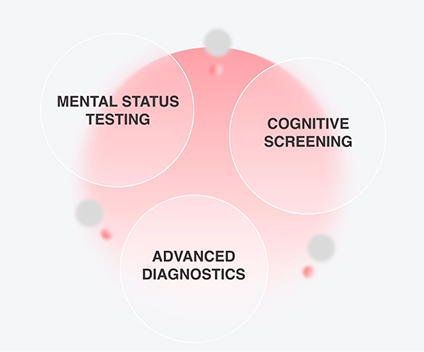
Lebanon has one of the highest dementia prevalence rates in the Middle East and North Africa (around 9–11% among adults over 65), yet there is no national dementia screening program. Diagnosis typically begins in primary care, but access has worsened since the liquidity crisis due to physician shortages, increased demand, and rising costs. Private primary care visits cost around 100$, which limits access for many.
Patients are referred to neurological or psychiatric specialists, where long wait times and high out-of-pocket costs further restrict access, as most specialists work in the private sector. Although advanced imaging (CT, MRI, PET) is available, it is often inaccessible due to cost and delays, even in public hospitals. CSF testing, blood-based biomarkers, and genetic testing are not part of routine care. With only about 40% of patients covered by health insurance, many dementia cases remain undiagnosed, as families often prioritize physical health needs over cognitive symptoms.
Dementia is more prevalent among Lebanese older adults in comparison to other Middle Eastern and North African countries, with the country ranking first in terms of prevalence within the region (10.8% of older adults). A cross-sectional study (2013) found that around 9% of individuals older than 65 are living with dementia in Lebanon, exceeding worldwide averages. Despite its prevalence, there is no national dementia screening program. Screening for dementia in Lebanon is also challenging because of high illiteracy rates among people.
A formal pathway for diagnosing Alzheimer’s disease and related dementias is available in Lebanon, and, in theory, it mirrors those in developed economies. When experiencing symptoms of dementia, one usually schedules a consultation with a primary care physician. Since the onset of the Lebanese liquidity crisis, waiting times for primary care have risen markedly, reflecting increased demand across the population. The healthcare system faces mounting pressure from both host and displaced communities, which has impacted timely access for Lebanese citizens. Moreover, a growing shortage of primary physicians presents another obstacle for appropriate service delivery. In the private sector, consultations with primary care physicians can cost around 100 USD — being quite expensive for many Lebanese — but waiting times tend to be lower and the level of service provision is generally higher.
Afterwards, people are referred to neurological or psychiatric specialists. However, considering that the prevalence of mental illnesses and neuropsychiatric disorders in Lebanon is high relative to the region, waiting times can be significant. As most specialists are employed in private institutions, a majority of Lebanese citizens without coverage from the National Social Security Fund (NSSF), other cooperative funds or private insurers cannot afford specialist visits, due to high out-of-pocket costs.
Paradoxically, while Lebanon has vast diagnostic imaging capacities, they remain out of reach for most citizens due to their costs. Moreover, while most public hospitals also offer diagnostic imaging services — including magnetic resonance imaging (MRI), computed tomography (CT) and positron emission tomography (PET) scanning — waiting times are high and can cause large delays in diagnosing Alzheimer’s disease and related dementias.
There is little evidence of widespread use of cerebrospinal fluid (CSF) testing or blood-based biomarkers or genetic testing in diagnosing Alzheimer’s disease in Lebanon, and these investigations are generally not considered a part of the standard diagnostic pathway for these diseases.
Considering the rise in medical costs since the onslaught of the Lebanese liquidity crisis, most dementia cases go undiagnosed in Lebanon. A study estimates that only 40% of people living with dementia in Lebanon have health insurance, making access to appropriate care difficult. Moreover, because of limited financial resources, families tend to prioritise physical health issues over cognitive symptoms, resulting in missed diagnoses and exclusion from research studies.
- https://pmc.ncbi.nlm.nih.gov/articles/PMC11745875/
- http://www.andersgade.dk/2014AAIC_Copenhagen_WWW/ref/abs_Rune-Nielsen_Improving%20detection%20of%20dementia%20in%20an%20Arabic%20speaking%20population%20with%20low%20education.pdf
- https://pmc.ncbi.nlm.nih.gov/articles/PMC11429949/
- https://www.worldsupporter.org/en/blog/how-does-healthcare-work-lebanon-and-what-travel-insurance-health-insurance-or-expat-insurance
- https://www.nature.com/articles/s44400-025-00009-z
Wait times
There is no official data on waiting times for dementia diagnosis in Lebanon, but delays are common across the public healthcare system. Access to primary care and specialist services is often slow due to overcrowding and resource constraints, while diagnostic imaging in public hospitals involves long waits. In contrast, wait times in the private sector are minimal but access is limited by high out-of-pocket costs.
While there is no official data on waiting times for accessing diagnostic services for Alzheimer’s disease, anecdotal evidence points towards significant wait times at every step of the diagnostic pathway, particularly in the overstretched public healthcare system. Primary care physicians are difficult to access across Lebanon, with overcrowding and long waiting times a regular occurrence in public healthcare institutions. Most specialists are employed in the private healthcare sector, and even though there is an oversupply of specialists, many Lebanese are finding it increasingly difficult to afford consultations with them, due to the liquidity crisis. When it comes to diagnostic imaging services, wait times in the private sector are negligible, but their out-of-pocket costs are significant. On the other hand, in the public sector, waiting times for accessing diagnostic imaging can be significant, while radiation doses administered to patients are at above average levels, due to poor maintenance of equipment.
Diagnosis cost
Dementia diagnosis in Lebanon is largely dependent on a family’s ability to pay and is unaffordable for many households. Only around 40% of people living with dementia have health insurance. Private primary care consultations can cost about 100$, and specialist visits and diagnostic imaging add substantial out-of-pocket costs. Since the liquidity crisis, rising expenses have further limited access to timely diagnosis.
The timely diagnosis of Alzheimer’s disease and related dementias is dependent on the financial ability of a household, and prohibitively expensive for most Lebanese citizens. A study estimates that only 40% of people living with dementia in Lebanon have health insurance, making access to appropriate diagnostic services, treatment and care difficult.
There is little information on the costs of specific diagnostic services in Lebanon. In the private sector, consultations with primary care physicians can cost around 100 USD. Likewise, a consultation with a neurological or psychiatric specialist can be prohibitively expensive for most Lebanese citizens — especially if a MRI, CT or PET scan is required — due to rising out-of-pocket costs.
Cognitive tests
Lebanon does not currently have a national dementia screening program in place. Instead, initial screening typically occurs when an individual or their family raises concerns with a primary healthcare provider. In Lebanon, cognitive screening tests which are either used or validated for use include the following:
(1) Lebanese adaptation of the Mini – Mental State Examination (MMSE)
(2) Lebanese adaptation of the 10/66 Dementia Research Group Protocol
(3) Montreal Cognitive Assessment (MoCA)
(4) Local version of the Rowland Universal Dementia Assessment Scale (RUDAS)
(5) Local version of the Informant Questionnaire on Cognitive Decline in the Elderly (IQCODE)
(6) Trail Making Test (TMT)
(7) Modified Wisconsin Card Sorting Test (M – WCST)
More comprehensive neuropsychological batteries which are used or validated for use include:
(1) Repeatable Battery for the Assessment of Neuropsychological Status (RBANS)
(2) Wechsler Adult Intelligence Scale – IV (WAIS – IV)
While Lebanon has developed strong adaptations of the MMSE, the majority of adapted assessments fail to meet the guidelines established by the International Test Commission and the American Educational Research Association. Key issues include the use of non-standardised or poorly adapted measures, a lack of clarity regarding test versions, failure to cite relevant validation studies and inadequate documentation of test administration protocols.
Imaging tests
Diagnostic imaging services are readily available and are part of the formal diagnostic process for Alzheimer’s disease in Lebanon, with the country having the highest rate of CT, PET and MRI scanners in the region, standing at 37.28 (2018), 2.2 (2016) and 8.29 (2014) per million people, respectively. However, geographic and financial barriers to accessing these services are significant for many Lebanese citizens, because most are based in private hospitals, which tend to be concentrated in the capital Beirut. For uninsured Lebanese citizens, diagnostic imaging services are prohibitively expensive, especially if they have no access to foreign currency. Those with coverage from the NSSF and other cooperative funds usually get most of their diagnostic imaging service costs reimbursed, usually around 80%, but the amount depends on the hospital.
Genetic tests
Genetic testing — such as apolipoprotein E (APOE) genotype tests — is not offered as a clinical service within either the public or private healthcare systems. However, multiple research studies have been conducted on the prevalence of APOE genotypes in the Lebanese population, meaning that such tests are available in tertiary teaching hospitals within Lebanon.
Biomarker tests
There is little evidence of widespread use of CSF testing or blood-based biomarkers in diagnosing Alzheimer’s disease in Lebanon, and these investigations are generally not considered a part of the standard diagnostic pathway for these diseases. Yet, the Ministry of Public Health (MOPH) lists CSF testing as a laboratory service offered in public health institutions.
Cognitive Tests
Cognitive Tests
Lebanon does not currently have a national dementia screening program in place. Instead, initial screening typically occurs when an individual or their family raises concerns with a primary healthcare provider. In Lebanon, cognitive screening tests which are either used or validated for use include the following:
(1) Lebanese adaptation of the Mini – Mental State Examination (MMSE)
(2) Lebanese adaptation of the 10/66 Dementia Research Group Protocol
(3) Montreal Cognitive Assessment (MoCA)
(4) Local version of the Rowland Universal Dementia Assessment Scale (RUDAS)
(5) Local version of the Informant Questionnaire on Cognitive Decline in the Elderly (IQCODE)
(6) Trail Making Test (TMT)
(7) Modified Wisconsin Card Sorting Test (M – WCST)
More comprehensive neuropsychological batteries which are used or validated for use include:
(1) Repeatable Battery for the Assessment of Neuropsychological Status (RBANS)
(2) Wechsler Adult Intelligence Scale – IV (WAIS – IV)
While Lebanon has developed strong adaptations of the MMSE, the majority of adapted assessments fail to meet the guidelines established by the International Test Commission and the American Educational Research Association. Key issues include the use of non-standardised or poorly adapted measures, a lack of clarity regarding test versions, failure to cite relevant validation studies and inadequate documentation of test administration protocols.
Imaging Tests
Imaging Tests
Diagnostic imaging services are readily available and are part of the formal diagnostic process for Alzheimer’s disease in Lebanon, with the country having the highest rate of CT, PET and MRI scanners in the region, standing at 37.28 (2018), 2.2 (2016) and 8.29 (2014) per million people, respectively. However, geographic and financial barriers to accessing these services are significant for many Lebanese citizens, because most are based in private hospitals, which tend to be concentrated in the capital Beirut. For uninsured Lebanese citizens, diagnostic imaging services are prohibitively expensive, especially if they have no access to foreign currency. Those with coverage from the NSSF and other cooperative funds usually get most of their diagnostic imaging service costs reimbursed, usually around 80%, but the amount depends on the hospital.
Genetic Tests
Genetic Tests
Genetic testing — such as apolipoprotein E (APOE) genotype tests — is not offered as a clinical service within either the public or private healthcare systems. However, multiple research studies have been conducted on the prevalence of APOE genotypes in the Lebanese population, meaning that such tests are available in tertiary teaching hospitals within Lebanon.
Biomarker Tests
Biomarker Tests
There is little evidence of widespread use of CSF testing or blood-based biomarkers in diagnosing Alzheimer’s disease in Lebanon, and these investigations are generally not considered a part of the standard diagnostic pathway for these diseases. Yet, the Ministry of Public Health (MOPH) lists CSF testing as a laboratory service offered in public health institutions.
Treatment & Care
Treatment & care
Show moreTreatment and care for Alzheimer’s disease in Lebanon are available but highly fragmented and largely dependent on the private healthcare sector. Services are concentrated in Beirut, costly, and difficult to access for uninsured households, while public facilities face overcrowding and long waits. Due to the liquidity crisis, rising out-of-pocket costs have further limited access to treatment, long-term care, and caregiver support.
Specialized facilities and services
Dementia care in Lebanon is highly fragmented and largely concentrated in the private health sector, with major access gaps due to cost and geographic concentration in Beirut. Public hospitals face overcrowding and long wait times, while private facilities, accounting for around 90% of hospital beds and 70% of physicians, remain financially inaccessible for most citizens. Specialized dementia care and research are mainly provided by tertiary hospitals such as American University of Beirut Medical Center, Saint George University Medical Center, Hôtel-Dieu de France, and Dar Al Ajaza Al Islamia Hospital. Palliative care services are mostly private, hospital-based, unreimbursed, and concentrated in Beirut, with limited home-based support provided by NGOs such as SANAD, Balsam, SAWA, and PASSION. Long-term care capacity is extremely limited, nursing homes serve less than 1.4% of older adults, and increasingly unaffordable. Non-residential memory care options are scarce, with Alzheimer’s Association Lebanon operating the Minerva Adult Care Centre in Beirut.
The quality of healthcare infrastructure varies significantly across Lebanon. Even prior to the Lebanese liquidity crisis, the healthcare system in Lebanon was characterised by fragmentation, with little coordination between public and private healthcare providers participating within it. While overcrowding and long waiting times are common in public healthcare facilities, private healthcare facilities — which account for 90% of hospital beds and 70% of physicians — form a “medical bubble”, meaning that demand for their services is significantly lower than their supply.
The majority of specialised hospitals that cater to people living with dementia are concentrated in the private healthcare sector. Their services are unaffordable for most Lebanese citizens, meaning that dementia often goes untreated in the country. Some of the most prominent hospitals catering to people living with dementia, or involved in dementia research, include:
(1) American University of Beirut Medical Center (AUBMC) is the premier tertiary hospital in Lebanon. It boasts modern healthcare facilities and is prominently involved in dementia research, treatment and care. Its Department of Geriatric Psychiatry is an academic medical practice, dedicated to providing innovative treatment and care for older adults with late life mental disorders, including Alzheimer’s disease.
(2) Saint George University Medical Center (SGUMC) is one of the most prominent tertiary hospitals in Lebanon. It was seriously damaged in the Beirut explosion (2020), and, only recently, it reopened fully, featuring modern facilities. Its Department of Neurology — featuring researchers affiliated with Saint George University (SGU), a Lebanese Christian institution — stands at the forefront of dementia research in Lebanon.
(3) Hôtel – Dieu de France (HDF) is one of the three leading Lebanese hospitals. Affiliated with the Francophone Université Saint – Joseph de Beyrouth (USJB), the hospital features a prominent Neurology Department, which provides medical care for adult living with neurological disorders.
(4) Dar Al Ajaza Al Islamia Hospital (DAIH) is one of the oldest hospitals specializing in geriatric psychiatry, being considered a pioneering institution in that field.
Hospital – based palliative care services are primarily located in the capital city Beirut and operate within private healthcare facilities. Hospital-based services are not reimbursed, therefore limiting access to palliative care to the population. Political and economic instability, inadequate policies and insufficient reimbursement, shortage of trained expertise and essential medicines, and inconsistent health education are some of the challenges that Lebanon faces in developing palliative care. A number of organizations provide affordable home-based palliative care services, including for advanced dementia, but their reach beyond Beirut is limited. These include SANAD, Balsam, SAWA and PASSION.
When it comes to long term care facilities and nursing homes, their services — demand for which significantly exceeds supply — are becoming increasingly unaffordable for most Lebanese citizens. In 2012, Lebanon housed a total of 49 long term care nursing homes that housed around 4,180 residents — less than 1.4% of the total number of older adults in Lebanon. Facilities include Beit Rafqa, Age Optimum, La Maison de Nounou and Oasis de Vie — which are non-profit organizations (NGOs) specializing in the provision of dementia care — and organizations affiliated with large tertiary hospitals, such as Foyer Saint Georges.
When it comes to non-residential care, Alzheimer’s Association Lebanon (AAL) operates the Minerva Adult Care centre in Beirut, which specialises in offering memory care services to Lebanese with Alzheimer’s disease.
Approved medication
| Generic Name | Trade Name | Used for |
|---|---|---|
| Donepezil | Aricept, Aricept ODT, Adlarity, Eranz, Memac, Alzepil, Davia, Donecept, Donep, Donepex, Donesyn, Dopezil, Yasnal, Memorit, Pezale, Redumas, Zolpezil, Namzaric* | Donepezil is indicated for the symptomatic treatment of mild to moderately severe Alzheimer’s dementia. |
| Rivastigmine | Exelon, Exelon Patch, Prometax, Rivastach, Nimvastid | Symptomatic treatment of mild to moderately severe Alzheimer’s dementia. Symptomatic treatment of mild to moderately severe dementia in patients with idiopathic Parkinson’s disease. |
| Memantine | Namenda, Namenda XR, Ebixa, Memary, Axura, Akatinol, Maruxa, Nemdatine, Namzaric* | Treatment of adult patients with moderate to severe Alzheimer’s disease. |
*Namzaric = combination of Donepezil and Memantine
Treatment cost
The cost of Alzheimer’s medications in Lebanon varies by drug, dosage, and brand and is regulated through the Ministry of Public Health’s National Drug Database. Common treatments such as donepezil, rivastigmine, and memantine are available but expensive, with prices reaching several million Lebanese pounds per month depending on dosage. A pharmacist margin of up to 23% is added on top of listed prices, further increasing out-of-pocket costs for patients and their families.

When it comes to the costs of drugs used to treat Alzheimer’s disease, they vary by drug type, brand and dosage. The Ministry of Public Health (MOPH) maintains a Lebanese National Drug Database, where one can access information about the prices of a given drug. Prices of donepezil vary between LBP 1,034,759 for a 5-milligram dose to LBP 3,776,197 for a 10-milligram dose. Prices of rivastigmine vary between LBP 684,019 for a 1.5 milligram dose to LBP 842,589 for a 10-milligram dose, while the prices of memantine vary between LBP 1,057,156 for a 10-milligram dose to LBP 4,004,651 for a 20-milligram dose. A pharmacist margin of (maximum) 23.08% applies on top of the prices displayed.
Caregiver support
Caregiver support in Lebanon is limited and largely reliant on families and non-governmental organisations. Around 41% of family caregivers report severe burden, driven by financial strain and lack of formal assistance, while caregivers in rural areas face additional barriers due to scarce services. Migrant domestic workers support care in approximately 25% of households, but do not replace family caregiving. Formal support is mainly provided by NGOs, led by Alzheimer’s Association Lebanon, which offers caregiver education, support groups, and a free hotline. Broader ageing organisations, including HelpAge International (through local partners such as Amel Association and the Center for Studies on Aging) and Kibarouna, provide indirect support. State involvement remains minimal, with no dedicated financial allowances or structured care schemes for dementia caregivers.
There are few formal resources to support families and carers of people living with dementia in Lebanon, with 41% percent of family carers reporting severe burden, aggravated by financial strain and lack of assistance, while rural carers face additional obstacles due to scarce services and economic distress. Reliance on migrant domestic workers supplements family care in roughly 25% of households, but does not replace it entirely.
Dementia caregiver support in Lebanon primarily comes from Alzheimer’s Association Lebanon (AAL), which offers group support meetings, a free hotline for people living with dementia and families, and educational programs for caregivers. Other NGOs, including HelpAge International — through local partners like Amel Association, Center for Studies on Aging — and Kibarouna, provide broader elderly support that indirectly benefits carers. State involvement is negligible, with no specific financial allowances or care schemes for carers. Any minimal assistance comes from social protection programs, which are difficult to access.
Policy
Policy
Show moreDespite these references, implementation remains limited. Legal frameworks rely on court-appointed guardianship rather than supported decision-making, leaving many families without clear legal authority or protections. Dementia is also highly stigmatized and often viewed as a normal part of ageing, which delays diagnosis, discourages help-seeking, and increases the burden on families, who remain the primary caregivers with minimal formal support.
National dementia plan
Since 2017, Lebanon has pursued universal health coverage through Ministry of Public Health reforms and participation in the Universal Health Coverage Partnership, later formalised in the Lebanese National Health Strategy – Vision 2030. A bill to introduce universal health coverage was proposed in 2023 but was withdrawn after gaps were identified, and no dedicated dementia policy emerged from this process.
Dementia is instead addressed within broader national strategies. The National Mental Health Strategy (2024–2030) recognises dementia as a public health issue and includes the development of a national dementia action plan as a strategic objective. The National Strategy for Older People (2020–2030) also includes dementia-relevant measures, such as mental health promotion, long-term and palliative care development, caregiver support, and quality standards for Alzheimer’s care services.
Since 2017, the Ministry of Public Health in Lebanon is committed to achieving universal healthcare coverage. Its commitment began with an ambitious reform program, and was followed up by joining the Universal Health Coverage Partnership, through which Lebanon received funds meant to enhance access to primary healthcare provision. Commitments towards universal healthcare coverage were institutionalised in 2023, with the Lebanese National Health Strategy — Vision 2030. Later in 2023, Lebanese parliamentarians brought forward a bill which would have introduced universal health coverage. However, the bill was withdrawn from parliamentary procedure after a number of gaps were identified, with little progress made on the matter since.
When it comes to national strategic documents which are directly relevant to people living with dementia, two explicitly mention dementia as a public health issue in Lebanon, and propose some limited or vague measures to address it. They include:
(1) The National Mental Health Strategy For Lebanon (2024 to 2030), which notes the vulnerability of Lebanese citizens, and their susceptibility to developing mental health conditions, such as dementia, and facing stigmatization. Most notably, one of its strategic objectives is the development of a national action plan for the public health response to dementia.
(2) Another document which makes explicit references to the issue of dementia is the National Strategy for Older People in Lebanon (2020 to 2030), one of its axes being the promotion of physical and mental health of older people. It includes provisions relevant to dementia, such as promoting mental health, developing long term and palliative care, and supporting carers. It even calls for developing quality standards for institutions that provide services for people living with Alzheimer’s disease.
Upcoming plans
The National Mental Health Strategy envisages the development of a number of sub-strategies focused on the mental health of children, adolescents, and youth. However, it also sets the development of a national action plan for people living with dementia as a strategic objective, to ensure that actions protecting and promoting the mental health of this vulnerable group are as responsive and effective as possible.
Policy gaps
Legal barriers
Lebanese law manages dementia-related legal capacity through guardianship or notarized proxies, but court processes are slow, complex, and costly. This leaves many families relying on informal decisions, with limited safeguards and no modern supported decision-making framework.
People living with dementia, their families and care partners face a number of legal barriers. Lebanese law addresses legal capacity through court-appointed guardians for those with medically confirmed mental incapacity, or through proactively designated trusted individuals via notarised documents. However, the court process is often too complex, slow, and expensive for most families, leaving many in legal limbo with informal decision-making and limited safeguards. The current framework relies on incapacity and substituted decision-making, rather than a more modern supported decision-making approach.
Cultural barriers
In Lebanon, dementia is widely misunderstood and stigmatized, often seen as normal aging. This leads to delayed diagnosis, social exclusion, and families hiding the condition due to shame, discouraging them from seeking external support or care.
Dementia is a poorly understood and highly stigmatised condition in Lebanon, A prevalent cultural view is that significant memory loss is a normal and unavoidable part of aging, which leads to a fatalistic acceptance of symptoms and delays in seeking medical help. People living with dementia are perceived as “helpless and dependent,” a view that fosters social exclusion and diminishes the personhood of the individual. This stigma directly impacts family behaviour. The fear of social judgment and the feeling of shame can lead families to hide the condition or to feel guilty about seeking external help, as it can be perceived as an abdication of familial duty.
Research
Research
Show moreAlzheimer’s and dementia research in Lebanon is concentrated in academic medical centres, notably the American University of Beirut, Lebanese University, Saint George University, and Université Saint-Joseph de Beyrouth. Research activity has focused on population-based cohorts, validation of cognitive tools, and genetic risk factors rather than clinical trials. Recent work highlights innovative approaches to risk identification, including studies exploring genetic and environmental interactions (such as APOE4 and TREM2) as a basis for earlier detection and prevention.
Selected academic institutions
Clinical trials and registries
The regulatory authority for all clinical research is the Lebanese Ministry of Public Health (MoPH). Lebanon has a highly organised, online national database for clinical trials (LBCTR): https://lbctr.moph.gov.lb/LBCTR/LBCTR/Index
The LBCTR is officially recognised as a primary registry of the WHO’s International Clinical Trials Registry Platform.
Selected innovative methods
A review on genetic and environmental risk factors of Alzheimer’s disease in Lebanon, highlighted important modifiable and non-modifiable risk factors of the disease including genetics, age, cardiovascular diseases, smoking etc. They proposed a hypothetical genetic synergy model between APOE4 and TREM2 genes, which constitute a potential early diagnostic tool that helps reduce the risk of Alzheimer’s disease, based on preventative measures decades before cognitive decline.
Support
Support
Show moreDementia support in Lebanon is largely provided by civil society, reflecting high prevalence and limited state involvement. Alzheimer’s Association Lebanon leads awareness campaigns, operates a dementia hotline, runs caregiver support groups, and manages the Minerva Adult Care Day centre in Beirut. Additional support comes from organisations such as Kibarouna and Taawon Lebanon, which provide ageing, awareness, and psychosocial services that indirectly support people living with dementia and their families.
Selected national associations, patient family associations, NGOs:
Selected initiatives
Dementia initiatives in Lebanon are led primarily by civil society organisations, addressing gaps in formal care and the emotional and social burden on families. Alzheimer’s Association Lebanon runs national awareness campaigns for World Alzheimer’s Month, operates a 24/7 dementia hotline, provides caregiver support groups, and manages the Minerva Adult Care day centre in Beirut. Kibarouna supports older adults nationwide and regularly hosts Alzheimer’s awareness events with basic cognitive screening. Taawon Lebanon delivers elderly care programs in Palestinian refugee camps, indirectly supporting people living with dementia through medical and psychosocial services.
Kibarouna
Taawon Lebanon
Alzheimer’s Association Lebanon (AAL)
AAL
Minerva Adult Care centre
Weekly support group meetings
Conferences, training
- https://www.kibarouna.org/Health.html
- https://www.facebook.com/AlzheimersAssociationLebanon/photos
- Available at +961 76 030 083
Dedicated media outlets
Lebanon does not have a media outlet dedicated to news about dementia. However, public awareness campaigns in the media on the matter are common, with a majority of them contrived by the AAL. Every September, in commemoration of World Alzheimer’s Day, AAL works on raising public awareness of dementia, with its President, Georges Karam, MD, participating in national radio and television programs on the matter. In addition, social media channels of the AAL, such as their Facebook page, are quite active, with posts meant to raise awareness of Alzheimer’s disease and related dementias being quite common.