North Macedonia
The country currently operates without a dedicated national dementia strategy, leaving specialised facilities scarce and the challenge of daily care predominantly in the hands of unsupported family members. To bridge this crucial gap in post-diagnostic care, researchers introduced the NOMAD program, a pioneering randomised trial that deploys mobile, interprofessional teams to deliver personalised, home-based interventions and carer psychoeducation. Alongside these clinical advancements, the Institute for Alzheimer’s Disease and Neuroscience drives civil society efforts to challenge cultural stigma and advocate for national policy reform, utilising creative public engagement initiatives like the Alzheimer Matinee to foster social inclusion for families of people living with dementia.

AD Rating
Diagnostic Pathway
Specialized Care
Caregiver Support
National Policies
Access to ATT-s
Highlights

Population
Median age
Health expenditure (% of GDP)
Diagnosis
Diagnosis
Show moreNorth Macedonia follows a national Alzheimer’s diagnostic guideline established in 2013, with assessment primarily financed through compulsory Social Health Insurance. Diagnosis combines documented progressive memory decline, standardised cognitive testing using tools such as MMSE and CERAD, and structural neuroimaging. MRI is preferred, while CT helps exclude alternative conditions. Imaging capacity remains geographically uneven, with MRI concentrated in Skopje and CT more widely distributed, alongside two national PET scanners. PET and CSF biomarkers may provide supportive evidence, but biomarker use remains outside routine clinical practice. Genetic testing is similarly not routinely included, while national data on diagnostic waiting times are unavailable.
Diagnosis pathway
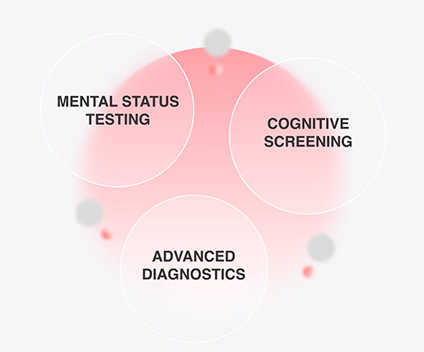
North Macedonia has followed a national evidence-based Alzheimer’s diagnostic protocol since 2013. Assessment requires documented progressive memory decline, standardised cognitive testing with instruments such as MMSE and CERAD, and structural neuroimaging. MRI is preferred, while CT excludes alternative conditions, with CSF biomarkers and PET providing supportive evidence when available.
The diagnosis pathway for Alzheimer’s disease in North Macedonia is officially guided by the Guideline for the Practice of Evidence-Based Medicine in Alzheimer’s Disease, a formalised national protocol issued by the Ministry of Health in 2013. According to this mandated document, clinicians must base their diagnosis on a clearly documented, gradual deterioration of memory over a period of at least six months. To ensure diagnostic consistency, the protocol explicitly requires the use of standardised cognitive screening instruments, such as the Mini-Mental State Examination (MMSE) and the Consortium to Establish a Registry for Alzheimer’s Disease (CERAD) battery. Following the cognitive assessment, the guideline dictates that structural neuroimaging is essential; magnetic resonance imaging is the preferred method to visualize medial temporal lobe atrophy, while computed tomography is utilised to rule out other medical conditions. The protocol also establishes the supportive role of advanced diagnostics, acknowledging cerebrospinal fluid (CSF) biomarkers and positron emission tomography (PET) scans as valuable evidence when available.
Wait times
Published data on waiting times for Alzheimer’s disease diagnosis in North Macedonia are not available.
Diagnosis cost
In North Macedonia, the diagnosis of Alzheimer’s disease is primarily financed through the compulsory Social Health Insurance (SHI) system, administered by the Health Insurance Fund (HIF).
Cognitive tests
Clinicians use established cognitive tools, particularly the Mini-Mental State Examination (MMSE), as part of the initial diagnostic evaluation.
Imaging tests
North Macedonia has access to structural neuroimaging, including computed tomography (CT) and magnetic resonance imaging (MRI), although national imaging capacity is limited compared with neighbouring countries and the European Union average. MRI services are concentrated in the capital, Skopje, with several regions lacking MRI scanners, while CT scanners are more widely distributed across clinical and general hospitals. Since 2017, North Macedonia has had two positron emission tomography (PET) scanners (including PET/CT), one in the public sector and one in the private sector.
Genetic tests
Genetic testing does not form part of the routine diagnostic pathway for Alzheimer’s disease in North Macedonia.
Biomarker tests
The use of Alzheimer’s disease biomarkers is still developing in North Macedonia and has not yet become part of routine clinical practice.
Cognitive Tests
Cognitive Tests
Clinicians use established cognitive tools, particularly the Mini-Mental State Examination (MMSE), as part of the initial diagnostic evaluation.
Imaging Tests
Imaging Tests
North Macedonia has access to structural neuroimaging, including computed tomography (CT) and magnetic resonance imaging (MRI), although national imaging capacity is limited compared with neighbouring countries and the European Union average. MRI services are concentrated in the capital, Skopje, with several regions lacking MRI scanners, while CT scanners are more widely distributed across clinical and general hospitals. Since 2017, North Macedonia has had two positron emission tomography (PET) scanners (including PET/CT), one in the public sector and one in the private sector.
Genetic Tests
Genetic Tests
Genetic testing does not form part of the routine diagnostic pathway for Alzheimer’s disease in North Macedonia.
Biomarker Tests
Biomarker Tests
The use of Alzheimer’s disease biomarkers is still developing in North Macedonia and has not yet become part of routine clinical practice.
Treatment & Care
Treatment & care
Show moreSpecialised dementia care in North Macedonia is scarce, with no dedicated memory clinics, multidisciplinary referral centres, or nationwide day-care network. Diagnosis and management are concentrated in Skopje, while general disability centres provide broader community support, and specialist palliative provision remains limited. The HIF covers eligible healthcare and subsidises Alzheimer’s medicines on the national positive list. Informal caregivers receive no dedicated financial benefit or routine post-diagnostic support, although individuals with functional impairments may qualify for a general care allowance. The NOMAD programme addressed these gaps through personalised care plans, professional home visits, and caregiver psychoeducation, demonstrating improved caregiver outcomes and providing a potential model for future dementia support.
Specialized facilities and services
Dementia-specific services in North Macedonia are scarce, with no dedicated memory clinics, multidisciplinary referral centres, or national day-care network. Specialist diagnosis and management are concentrated in Skopje, while general disability centres provide broader community support. Geriatric and palliative care is primarily delivered through the specialised “13 Noemvri” hospital.
North Macedonia has very limited specialised dementia services. There are no dedicated memory clinics or specialised multidisciplinary dementia referral centres providing comprehensive assessment and ongoing management. Clinical diagnosis and medical management are handled by specialists at the state level, particularly through the Department of Cognitive Neurology and Neurodegenerative Diseases at the University Clinic of Neurology, as well as the University Clinic of Psychiatry in Skopje. North Macedonia has no nationwide network of dementia-specific day care centres for people living with Alzheimer’s disease. Community support is instead provided through general social care services and disability day centres, which are distributed across many municipalities. These centres offer daytime care, rehabilitation, counselling and family support but are designed primarily for people living with disabilities rather than dementia-specific care.
Specialist palliative care services are also limited. The country’s main specialised provider is the Specialised Hospital for Geriatric and Palliative Medicine “13 Noemvri” in Skopje, which offers inpatient geriatric and palliative care as well as home-based palliative services.
Approved medication
| Generic Name | Trade Name | Used for |
|---|---|---|
| Donepezil | Aricept, Aricept ODT, Adlarity, Eranz, Memac, Alzepil, Davia, Donecept, Donep, Donepex, Donesyn, Dopezil, Yasnal, Memorit, Pezale, Redumas, Zolpezil, Namzaric* | Donepezil is indicated for the symptomatic treatment of mild to moderately severe Alzheimer’s dementia. |
| Memantine | Namenda, Namenda XR, Ebixa, Memary, Axura, Akatinol, Maruxa, Nemdatine, Namzaric* | Treatment of adult patients with moderate to severe Alzheimer’s disease. |
*Namzaric = combination of Donepezil and Memantine
Treatment cost
The HIF covers eligible healthcare and rehabilitation services, while prescribed Alzheimer’s medicines are subsidised when included on the national positive list.

The national Health Insurance Fund (HIF) is responsible for covering medicine and therapy costs for eligible insured citizens. Through a basic benefits package, the HIF finances primary care, outpatient specialist visits, inpatient care, and rehabilitative services. Prescribed pharmaceutical treatments for chronic conditions, including Alzheimer’s disease, are subsidised by the government provided the specific medications are included on the country’s official positive list of covered drugs.
Caregiver support
Informal dementia caregivers in North Macedonia receive no dedicated financial benefit or routine post-diagnostic support. A general allowance supports individuals requiring assistance based on functional impairment rather than diagnosis. The NOMAD programme addressed these gaps through personalised care plans, home visits by dementia nurses and social workers, and caregiver psychoeducation, demonstrating improved caregiver outcomes.
North Macedonia does not have financial support specifically for care partners of people living with Alzheimer’s disease. There is no national caregiver allowance, paid family caregiving programme, or dementia-specific benefit for informal carers. Dementia care remains largely family-based, and post-diagnostic support services such as caregiver education, respite care, and support groups are generally unavailable through the public health system.
North Macedonia does provide a general social care benefit for assistance and care by another person (надоместок за помош и нега од друго лице). This monthly allowance is available to individuals who require assistance with activities of daily living following assessment by a specialist medical commission. The benefit is intended for the person requiring care rather than the care partner, and eligibility is based on functional impairment rather than a diagnosis of Alzheimer’s disease.
A recent randomised controlled trial evaluating the North Macedonia Interprofessional Dementia Care (NOMAD) programme found that the country currently offers no routine post-diagnostic support for people living with dementia or their family care partners beyond pharmacological treatment. The intervention introduced personalised care plans, home visits by dementia nurses and social workers, and caregiver psychoeducation, demonstrating improved caregiver outcomes.
- https://iris.who.int/server/api/core/bitstreams/caa115d0-3bb6-4f87-9386-6b9e1078b28c/content
- https://www.mtsp.gov.mk/mk-MK/socijalna-i-detska-zastita/prava-na-paricna-pomos-od-socijalna-zastita
- https://www.mtsp.gov.mk/mk-MK/socijalna-i-detska-zastita/cesto-postavuvani-prasanja-od-oblasta-na-socijalnata-zastita
Policy
Policy
Show moreNorth Macedonia has no national dementia strategy, dedicated legal framework, or formally announced future plan. Dementia is addressed through general health and mental-health systems, with limited post-diagnostic support. Stigma may further discourage professional help-seeking, reinforce dementia as a private family responsibility, and increase pressures on informal caregivers.
National dementia plan
North Macedonia currently does not have a dedicated national strategy or action plan for Alzheimer’s disease or dementia.
Upcoming plans
No official upcoming strategy has been formally announced by the government.
Policy gaps
Legal barriers
North Macedonia does not have a national dementia or Alzheimer’s disease strategy, and dementia is addressed primarily within the general health and mental health system rather than through a dedicated policy framework. Consequently, there are no dementia-specific legal provisions governing issues such as early diagnosis, supported decision-making, advance care planning, driving, or long-term dementia care.
Cultural barriers
In North Macedonia, stigma and limited post-diagnostic support may reinforce dementia as a private family issue, discourage professional help-seeking, and contribute to poorer caregiver quality of life.
The North Macedonia Interprofessional Dementia Care (NOMAD) study found that there is no routine post-diagnostic support for people living with dementia or their family care partners, and previous research from North Macedonia identified lack of support as one of the strongest predictors of caregiver quality of life, alongside high caregiver challenges and depression. In this context, stigma may discourage families from seeking help while reinforcing the perception that dementia is a private family issue rather than a medical condition requiring professional support.
Research
Research
Show moreNorth Macedonia combines regulated clinical research with studies of Alzheimer’s risk factors and innovative care delivery. MALMED oversees clinical trials, while international databases provide the main route for identifying recruiting studies. Research associates APOE ε4 with approximately threefold greater Alzheimer’s risk alongside modifiable vascular factors. The NOMAD trial introduced multidisciplinary home-based dementia care, demonstrating reduced caregiver depression, fewer neuropsychiatric symptoms, and lower healthcare utilisation, highlighting the potential of structured non-pharmacological support in resource-limited settings.
Selected academic institutions
Clinical trials and registries
The Macedonian Agency for Medicines and Medical Devices (MALMED), in coordination with the Ministry of Health, is the primary regulatory body responsible for authorising and overseeing the quality and safety of clinical trials. North Macedonia does not maintain a highly visible, dedicated online portal for patients to find clinical trials. Because the country collaborates with European research networks, patients and researchers typically rely on major international databases like ClinicalTrials.gov to find any actively recruiting interventional studies.
Selected innovative methods
North Macedonia’s dementia research addresses genetic and vascular risk factors alongside innovative care delivery. APOE ε4 has been associated with approximately threefold greater Alzheimer’s risk, while the NOMAD trial demonstrated that multidisciplinary home-based support can reduce caregiver depression, neuropsychiatric symptoms, and healthcare utilisation in resource-limited settings.
One of North Macedonia’s most important research areas is investigating the genetic and vascular risk factors associated with Alzheimer’s disease. Researchers have examined the role of the apolipoprotein E (APOE) ε4 allele, the strongest known genetic risk factor for sporadic Alzheimer’s disease, together with hypertension, diabetes, and dyslipidemia. Their findings showed that carrying the APOE ε4 allele increased the risk of developing Alzheimer’s disease by approximately threefold in the Macedonian population, emphasising the combined influence of genetic susceptibility and modifiable vascular risk factors on disease onset.
Another contribution is the North Macedonia Interprofessional Dementia Care (NOMAD) program. NOMAD is the country’s first randomised trial of a home-based, multidisciplinary dementia care model, where mobile teams provide personalised care plans, caregiver education, and psychosocial support following diagnosis. The study demonstrated reductions in caregivers’ depressive symptoms, fewer neuropsychiatric symptoms in people living with dementia, and decreased use of healthcare services, showing that structured non-pharmacological interventions can substantially improve dementia care in low-resource settings.
Support
Support
Show moreNorth Macedonia has no dedicated Alzheimer’s foundations or dementia media outlets. IAN addresses these gaps through reminiscence events, public campaigns, caregiver education, media engagement, and advocacy, promoting social inclusion, challenging stigma, disseminating information, and supporting a National Dementia Strategy.
Selected national associations, patient family associations, NGOs:
Selected initiatives
IAN uses Alzheimer Matinee, media campaigns, caregiver education, and public engagement to raise dementia awareness, challenge stigma, promote social inclusion, and advocate for a National Dementia Strategy.
Alzheimer Matinee
Dedicated media outlets
North Macedonia does not have a dedicated Alzheimer’s disease news outlet or dementia-focused media publication. Most Alzheimer-specific updates come from the Institute for Alzheimer’s Disease and Neuroscience through its website, social media, public campaigns, and interviews.