

Pakistan
Pakistan’s contribution to global Alzheimer’s disease research is anchored by the ENIGMA-PAK study, a strategic collaboration leveraging the population’s high rates of consanguinity to uncover the genomic architecture of the disease. This scientific innovation contrasts with a care landscape reliant on civil society: with no dementia-related national strategy, Alzheimer’s Pakistan not only operates the country’s only day care center in Lahore but also fills critical service gaps by running weekly memory clinics and leading the nationwide Dementia Friends awareness movement.

AD Rating
Diagnostic Pathway
Specialized Care
Caregiver Support
National Policies
Access to ATT-s
Highlights

Population
Median age
Health expenditure (% of GDP)
Diagnosis
Diagnosis
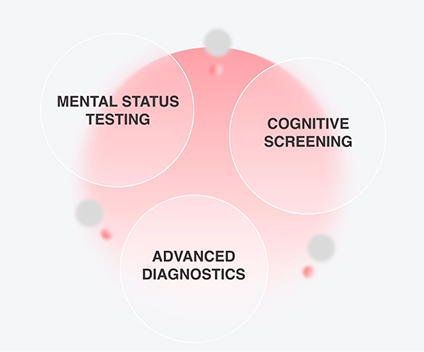
Show moreDementia entry pathways begin with family or primary care recognition of functional decline. GPs conduct basic cognitive screenings and blood tests to rule out reversible causes , referring suspected cases to specialists for structured assessments. Hospital cognitive testing utilises validated Urdu versions of the MMSE, MoCA, or the 6-CIT for illiterate populations. Structural imaging via CT and MRI is available through private urban networks , but advanced molecular imaging like PET is not routine. Advanced biomarker tracking and genetic tests remain limited and expensive. All diagnostic costs are paid entirely out of pocket.
Diagnosis pathway
Most people in Pakistan enter the diagnostic pathway after family or primary-care recognition of memory or functional decline. National guidelines suggest primary-care physicians perform history-taking, including collateral history from caregivers, basic cognitive screening, and blood tests to exclude reversible causes. When screening suggests Alzheimer’s disease, people are usually referred to a specialist for structured cognitive assessment, neuropsychological testing when available, and brain imaging, such as non-contrast computed tomography or magnetic resonance imaging, to identify cerebrovascular disease or atypical causes. Specialists follow national recommendations adapted from international guidance for staging, differential diagnosis and management.
Most people in Pakistan enter the diagnostic pathway after family or primary-care recognition of memory or functional decline. National guidelines suggest primary-care physicians perform history-taking (including collateral history from caregivers), basic cognitive screening, and blood tests to exclude reversible causes (B12, TSH, CBC, glucose, electrolytes). When screening suggests Alzheimer’s disease, people are usually referred to a specialist (neurologist, geriatrician or psychiatrist) for structured cognitive assessment, neuropsychological testing when available, and brain imaging (non-contrast computer tomography (CT) or magnetic resonance imaging (MRI)) to identify cerebrovascular disease or atypical causes; specialists follow national recommendations adapted from international guidance for staging, differential diagnosis and management.
Wait times
Reliable, country-wide wait-time data are scarce. Published analyses and reviews report substantial delays to diagnosis driven by low public awareness, limited specialist coverage outside urban centres, and very limited neurology training.
Diagnosis cost
In Pakistan, the financial expenses of diagnosing Alzheimer’s disease are mainly borne out-of-pocket by patients and their families because the healthcare system relies heavily on private payments and limited public funding.
Cognitive tests
Routine clinical cognitive testing is done in hospitals and memory clinics using standard paper tests (Mini-Mental State Examination (MMSE) and Montreal Cognitive Assessment (MoCA)) are commonly used); the MMSE has been translated and validated in Urdu for Pakistani populations, with education-adjusted cutoffs recommended. In segments of population with high illiteracy, specialists may also use the 6-item Cognitive Impairment Test (6-CIT), which can be more culturally and educationally appropriate for the local population.
- https://www.jcpsp.pk/article-detail/pthe-growing-dementia-burden-in-pakistan-prioritising-prevention-and-early-detectionorp
- https://openneurologyjournal.com/VOLUME/9/PAGE/53
- https://www.researchgate.net/publication/287807247_Choosing_a_Reliable_Cognitive_Test_for_Community_Screening_of_Dementia_in_Pakistan
Imaging tests
Structural imaging via CT and MRI is mostly accessible in urban centers through private diagnostic networks like Islamabad Diagnostic Centre and Chughtai Lab. Advanced molecular imaging (e.g., positron emission tomography (PET)) is not part of routine clinical care in Pakistan. For example, FDG-PET is provided by the Shaukat Khanum Memorial Cancer Hospital, Institute of Nuclear Medicine and Oncology (INMOL) in Lahore, and Pakistan Kidney and Liver Institute (PKLI)., INMOL in Lahore also lists the 11C-Pittsburgh Compound-B (PiB) PET/CT Scan in its service directory.
Genetic tests
Genetic testing for Alzheimer’s disease risk, specifically apolipoprotein E (APOE) genotyping, is available but confined strictly to high-end private laboratories.
Biomarker tests
Cerebrospinal fluid (CSF) analysis is not in routine widespread clinical use in Pakistan, while testing for specific Alzheimer’s disease markers (Aβ42, Tau) is generally outsourced by tertiary centers like Aga Khan University Hospital to international reference labs, which increases costs and turnaround times.
Cognitive Tests
Cognitive Tests
Routine clinical cognitive testing is done in hospitals and memory clinics using standard paper tests (Mini-Mental State Examination (MMSE) and Montreal Cognitive Assessment (MoCA)) are commonly used); the MMSE has been translated and validated in Urdu for Pakistani populations, with education-adjusted cutoffs recommended. In segments of population with high illiteracy, specialists may also use the 6-item Cognitive Impairment Test (6-CIT), which can be more culturally and educationally appropriate for the local population.
- https://www.jcpsp.pk/article-detail/pthe-growing-dementia-burden-in-pakistan-prioritising-prevention-and-early-detectionorp
- https://openneurologyjournal.com/VOLUME/9/PAGE/53
- https://www.researchgate.net/publication/287807247_Choosing_a_Reliable_Cognitive_Test_for_Community_Screening_of_Dementia_in_Pakistan
Imaging Tests
Imaging Tests
Structural imaging via CT and MRI is mostly accessible in urban centers through private diagnostic networks like Islamabad Diagnostic Centre and Chughtai Lab. Advanced molecular imaging (e.g., positron emission tomography (PET)) is not part of routine clinical care in Pakistan. For example, FDG-PET is provided by the Shaukat Khanum Memorial Cancer Hospital, Institute of Nuclear Medicine and Oncology (INMOL) in Lahore, and Pakistan Kidney and Liver Institute (PKLI)., INMOL in Lahore also lists the 11C-Pittsburgh Compound-B (PiB) PET/CT Scan in its service directory.
Genetic Tests
Genetic Tests
Genetic testing for Alzheimer’s disease risk, specifically apolipoprotein E (APOE) genotyping, is available but confined strictly to high-end private laboratories.
Biomarker Tests
Biomarker Tests
Cerebrospinal fluid (CSF) analysis is not in routine widespread clinical use in Pakistan, while testing for specific Alzheimer’s disease markers (Aβ42, Tau) is generally outsourced by tertiary centers like Aga Khan University Hospital to international reference labs, which increases costs and turnaround times.
Treatment & Care
Treatment & care
Show moreSpecialised memory clinics are sparse and limited to major urban hubs like Lahore and Karachi, leaving rural areas dependent on general neurology departments that lack multidisciplinary teams. Alzheimer’s Pakistan operates the nation’s sole day care facility. Government residential homes exclude severe dementia patients, driving families toward basic charitable shelters or expensive private care. Approved drugs include donepezil, rivastigmine, galantamine, and memantine. While the Sehat Sahulat Programme covers inpatient care, all ongoing outpatient medications, therapies, and long-term home care must be funded out of pocket by families.
Specialized facilities and services
Specialised memory clinics are concentrated in major urban centres, leaving the rest of Pakistan underserved. In Lahore, Alzheimer’s Pakistan runs a day care centre offering memory screenings, and public teaching hospitals provide diagnostic services. Karachi relies on high-end private institutions like Aga Khan University Hospital for advanced care. Outside these cities, patients face general outpatient departments lacking multidisciplinary teams. Community infrastructure is minimal, and public residential facilities exclude severe dementia patients, forcing reliance on mass charitable shelters or expensive private homes. Palliative care is nearly non-existent.
Specialised memory clinics are geographically concentrated in major urban centres like Lahore, Karachi, and Islamabad, leaving the vast majority of the country underserved. In Lahore, Alzheimer’s Pakistan operates a dedicated Dementia Day Care Centre that hosts weekly memory screening and counseling sessions to integrate clinical guidance with social support, while public teaching hospitals like Mayo Hospital (housing the Dementia Research Center) and Services Hospital offer diagnostic services within their psychiatry and neurology departments. Karachi relies heavily on high-end private institutions such as Aga Khan University Hospital’s Mind and Brain Service Line, which provides advanced neuroimaging and multidisciplinary care with costs. Outside these metropolises, in secondary cities like Multan, Faisalabad, and Quetta, people are restricted to general neurology outpatient departments (OPDs) at facilities like Nishtar Hospital or Bolan Medical Complex, which lack the specialized time and multidisciplinary teams required for comprehensive dementia management.
Community support infrastructure is minimal, with Alzheimer’s Pakistan in Lahore operating the country’s only Day Care Club, offering critical door-to-door transport and a social care model on a free or cost-sharing basis. For residential needs, a systemic barrier exists: government-run Aafiyat homes explicitly exclude older adults living with severe illness, effectively barring people living with dementia and Alzheimer’s disease. This forces families to choose between charitable shelters like Edhi Homes, which function as mass shelters rather than specialized care facilities, or expensive private luxury homes.
Palliative care for dementia remains virtually non-existent and is frequently conflated with oncology services. St. Joseph’s Hospice in Rawalpindi stands out as a rare exception, providing free inpatient care for people living with chronic, incurable conditions, including advanced neurological deficits, regardless of religion or income. In Karachi, Bait-ul-Sukoon primarily focuses on cancer but extends palliative support to those with life-limiting illnesses.
Approved medication
| Generic Name | Trade Name | Used for |
|---|---|---|
| Donepezil | Aricept, Aricept ODT, Adlarity, Eranz, Memac, Alzepil, Davia, Donecept, Donep, Donepex, Donesyn, Dopezil, Yasnal, Memorit, Pezale, Redumas, Zolpezil, Namzaric* | Donepezil is indicated for the symptomatic treatment of mild to moderately severe Alzheimer’s dementia. |
| Rivastigmine | Exelon, Exelon Patch, Prometax, Rivastach, Nimvastid | Symptomatic treatment of mild to moderately severe Alzheimer’s dementia. Symptomatic treatment of mild to moderately severe dementia in patients with idiopathic Parkinson’s disease. |
| Galantamine | Razadyne, Razadyne ER, Reminyl, Reminyl XL, Nivalin, Lycoremine, Galsya | Galantamine is indicated for the symptomatic treatment of mild to moderately severe dementia of the Alzheimer type. |
| Memantine | Namenda, Namenda XR, Ebixa, Memary, Axura, Akatinol, Maruxa, Nemdatine, Namzaric* | Treatment of adult patients with moderate to severe Alzheimer’s disease. |
*Namzaric = combination of Donepezil and Memantine
Treatment cost
Pakistan’s public insurance and public programmes do not routinely pay for ongoing outpatient Alzheimer’s disease medicines, home-based long-term care or day-to-day dementia therapy. The Sehat Sahulat Program (SSP)—a government-led social health insurance initiative—offers free coverage for inpatient care, surgeries at empaneled hospitals for eligible households identified through federal and provincial databases at no direct cost to the user., SSP has expanded across provinces and enrolled tens of millions of families, enabling hospitalization and associated diagnostic costs without out-of-pocket payments within coverage limits. However, SSP does not remove the family’s responsibility for outpatient medicine/therapy.

- https://www.frontiersin.org/journals/dementia/articles/10.3389/frdem.2023.1241927/full
- https://pide.org.pk/research/utilization-challenges-of-public-health-insurance-initiatives-evidences-from-sehat-sahulat-program-ssp-in-pakistan
- https://www.mdpi.com/1660-4601/19/12/6998
- https://www.researchgate.net/publication/374123687_Reviewing_the_Sehat_Sahulat_Program
Caregiver support
State provision specifically for Alzheimer’s disease carers in Pakistan is minimal: there is no national carer stipend or dementia-specific social benefit, though general elderly and social-security measures exist and can indirectly help older people. Provincial initiatives are evolving, such as a Punjab Senior Citizens Welfare Bill proposed in 2025 that mentions financial aid and free healthcare for seniors, but these do not yet create a dedicated carer allowance for dementia care. Most direct carer support comes from non-governmental organisations and the private sector. Alzheimer’s Pakistan offers carer training, counselling, a helpline, support groups and some day-care services across a few branches.
State provision specifically for Alzheimer’s disease carers in Pakistan is minimal: there is no national carer stipend or dementia-specific social benefit, though general elderly and social-security measures (EOBI/pensions, provincial senior-citizen laws) exist and can indirectly help older people. Provincial initiatives are evolving (e.g., a Punjab Senior Citizens Welfare Bill proposed in 2025 that mentions financial aid and free healthcare for seniors), but these do not yet create a dedicated carer allowance for dementia care. Most direct carer support comes from non-governmental organisations (NGOs) and the private sector. Alzheimer’s Pakistan — the main national NGO — offers carer training, counselling, a helpline, support groups and some day-care services across a few branches.
Policy
Policy
Show morePakistan completely lacks an official national strategy or plan for Alzheimer’s disease and dementia, and no upcoming strategies are planned. Legal protections are highly fragmented because mental health legislation devolved to a provincial level following the federal Mental Health Ordinance 2001, resulting in uneven care standards and a lack of nationwide capacity assessments. Culturally, low public awareness causes families to misattribute cognitive decline to normal ageing or spiritual issues. This reinforces a pervasive social stigma and leaves dementia treated as a private family burden rather than a public health priority.
National dementia plan
Pakistan does not currently have an official national Alzheimer’s disease or dementia strategy adopted.
Upcoming plans
No national strategies have been announced in Pakistan, and there is currently no indication of any officially planned or forthcoming strategy.
Policy gaps
Legal barriers
Pakistan’s national mental-health and disability legal framework is fragmented and dated, which directly affects people with Alzheimer’s disease or dementia. The federal Mental Health Ordinance 2001 provides a general framework for care of “mentally disordered persons”, but after devolution the detail and implementation of mental-health law became provincial, producing uneven protections across provinces (e.g., Punjab amendments, Sindh Mental Health Ordinance).10, This fragmentation means there is no clear, nationwide legislative recognition of dementia-specific needs (diagnosis safeguards, long-term care standards, capacity assessments), which leaves families and clinicians with variable legal backing for care decisions and protection from abuse.
Cultural barriers
Cultural beliefs and low public awareness about dementia in Pakistan fuel stigma that compounds legal gaps. Multiple studies and reviews of Pakistan’s dementia landscape report that families commonly interpret cognitive decline as “normal ageing,” spiritual causes, or shameful dependency., Low diagnostic rates, sparse specialist services concentrated in a few urban centres, and limited NGO reach reinforce the perception that dementia is a private or family problem rather than a medical and social one requiring public policy.10
Research
Research
Show moreDementia research is centred at institutions like the Aga Khan University, King Edward Medical University, and the Dow University of Health Sciences. There are no active clinical trials for dementia medications under the Drug Regulatory Authority of Pakistan, nor is there a comprehensive national registry. Innovative research is led by the genomic ENIGMA-PAK study leveraging population consanguinity. Other local advancements include fMRI deep-learning classification frameworks , screening indigenous medicinal plants , developing an Urdu speech emotion corpus for early cognitive detection AI , and culturally adapting Montessori care models.
Selected academic institutions
Clinical trials and registries
The regulatory authority for all clinical trials in Pakistan is the Drug Regulatory Authority of Pakistan (DRAP). All official trials must be approved by them. However, there are currently no Alzheimer’s disease-specific clinical trials being conducted in Pakistan.
Pakistan does not have a national public registry with broad population coverage. However, one study reported data from a dementia registry at a neurology clinic where patients attending neurology consultations were enrolled and demographic/clinical data were systematically recorded as part of research.
Selected innovative methods
The ENIGMA-PAK study is a major research pillar collaborating internationally to leverage high population consanguinity to uncover the genomic architecture of Alzheimer’s disease. Additionally, researchers at Lahore College for Women University are developing a deep learning framework to accurately classify the disease using fMRI data. University of Karachi researchers are validating indigenous medicinal plants for inhibitory activity. Other Lahore universities are training AI models using an Urdu speech corpus to detect early cognitive decline , while the MIRACLE project is culturally adapting Montessori-based interventions.
One of the most significant pillars of modern Alzheimer’s disease research in Pakistan is the ENIGMA-PAK (Enhancing Neuroimaging Genetics Through Meta Analysis in Pakistan) study. This initiative represents a strategic collaboration between international entities, such as Stanford University, and local centers of excellence like the Aga Khan University (AKU). The study is uniquely designed to leverage the demographic feature of consanguinity to uncover the genomic architecture of Alzheimer’s disease.
Researchers at Lahore College for Women University are working on an integrated CNN-LSTM deep learning framework that autonomously analyzes functional magnetic resonance imaging (fMRI) data to classify Alzheimer’s disease and Mild Cognitive Impairment with high accuracy.
Researchers at the University of Karachi are working on validating indigenous medicinal plants like Quercus infectoria (Oak Galls) and maintaining a Molecular Bank to screen novel natural compounds for Acetylcholinesterase inhibitory activity.
Researchers at several universities in Lahore are working on the Urdu Speech Emotion Corpus (UrduSEC) to train artificial intelligence (AI) models that detect early signs of cognitive decline by analyzing acoustic and linguistic patterns specific to native Urdu speakers.
Researchers leading the MIRACLE project are working on culturally adapting Montessori-based interventions for dementia care in Pakistan, focusing on tasks relevant to local daily life to improve people living with dementia engagement and reduce agitation.
Support
Support
Show moreDementia support is primarily driven by civil society, specifically through the Pakistan Science Foundation and Alzheimer’s Pakistan. Since state-provided caregiver allowances or dedicated dementia social benefits are minimal , Alzheimer’s Pakistan bridges the gap by offering caregiver training, helpline services, support groups, and counselling. Their primary community initiative is the Dementia Friends Movement, which delivers educational awareness sessions to local neighbourhoods and university students to foster grassroots community support. No dedicated, standalone dementia media outlets exist, leaving information dissemination reliant on the NGO’s website.
Selected national associations, patient family associations, NGOs:
Selected initiatives
Dementia Friends Movement: Dementia Friends Movement is an initiative by Alzheimer’s Pakistan that adapts the global Dementia Friends programme to the local context, inviting community members to attend short information sessions to learn about dementia and take simple actions to support neighbours and relatives living with memory loss. Volunteers can also become Dementia Friends Champions who run awareness sessions in their own communities.
Dementia Friends :Alzheimer’s Pakistan has also organised Dementia Friends sessions at educational institutions, such as one for Mass Communication students in Lahore, where young people were briefed on dementia and encouraged to spread understanding and community support. Participants received certificates to motivate ongoing involvement.
Dedicated media outlets
There are no major dedicated media outlets in Pakistan solely focused on Alzheimer’s disease or other dementias. Alzheimer’s Pakistan shares updates and blog posts on their own website about caregiving, service developments, and community activities.