

Panama
Panama’s mixed system uses brief primary care screening with specialist referral. Structural bottlenecks might lead to prolonged waits, especially for neurology and neurodiagnostics, pushing many individuals to access private facilities with neuroimaging and consultations for dementia assessment and diagnosis. Public pathways typically cover authorised diagnostics and essential Alzheimer’s disease medicines with minimal copays. Private care improves speed and comfort but raises out‑of‑pocket costs. Carer support and non-profit organisations, such as AFAPADEA, collaborate with the Ministry of Health in driving dementia awareness initiatives. Panama’s growing research capacity, led by institutions such as the Gorgas Institute and the University of Panama is beginning to explore blood‑based biomarkers for Alzheimer’s disease, while community programs supported by Pan American Health Organisation (PAHO) and the Ministry of Health are expanding dementia awareness and carer support.

AD Rating
Diagnostic Pathway
Specialized Care
Caregiver Support
National Policies
Access to ATT-s
Highlights

Population
Median age
Health expenditure (% of GDP)
Diagnosis
Diagnosis
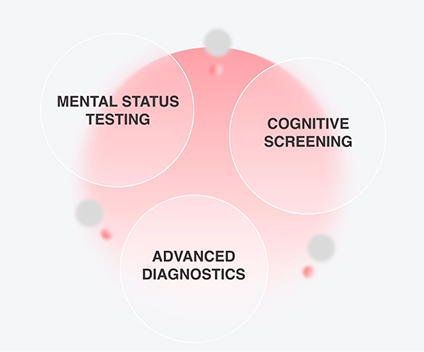
Show moreDementia detection can begin in primary care using brief screening tools such as Mini-Cog, with suspected cases referred to specialists (neurology, geriatrics, psychiatry) for further assessment. Specialist evaluation may include cognitive testing such as MMSE or MoCA, laboratory tests, and other assessments depending on available resources. Genetic tests and biomarkers are not part of routine clinical practice and are mainly used in research settings. Waiting times for specialist consultations and diagnostic testing can be long, particularly in the public system, while consultations and authorised services in the public health system are generally covered with minimal copayments, although detailed public cost data is not available.
Diagnosis pathway
The Ministry of Health (MINSA) mental health normative resolution references the use of brief cognitive screening in primary care (e.g., Mini-Cog) for Alzheimer’s disease and other dementias, signalling first-line detection at the primary level before referral. Suspected cases are referred to specialist services (neurologist, geriatrician, psychiatrist) for a comprehensive work-up. Hospital protocols exist for inpatient diagnostic evaluation of dementia.
Wait times
While there is no official information available, a review highlighting the 2023 Alzheimer’s Association International Conference flags structural barriers to timely dementia assessment and referral, which implies prolonged times to diagnosis in many countries without dedicated pathways or plans. Regional context shows long waits for neurology access and neurodiagnostic testing in public systems across many low and middle‑income settings; for example, a multi‑country survey reports substantial waits for neurodiagnostic in public sectors versus private.
Diagnosis cost
MINSA does not publish a specific, itemized cost schedule for dementia diagnosis (consults, neuropsychology, CT, MRI, or CSF testing) on its public site. In the public system, authorised imaging and specialist care are covered with minimal copays.
Cognitive tests
Primary care screening includes MINSA’s Guide for Integrated Care of Older Adults specifying using screening tests to detect, not diagnose, dementia; it explicitly lists Mini-Cog and other brief tools for first-line tamizaje in primary care before referral. Specialists, such as neurologists, geriatricians, psychiatrists, visit include expanded neuropsychological testing translated to the local language (e.g.,Mini-Mental State Examination (MMSE)/Mini-Examen Cognoscitivo, Montreal Cognitive Assessment (MoCA), Addenbrooke’s Cognitive Examination-style domain tests as available), alongside laboratory and imaging tests, per specialist protocols and resource availability.
Imaging tests
Panama’s National Mental Health Plan (Plan Nacional de Salud Mental 2016–2025), issued by the Ministerio de Salud (MINSA), integrates cognitive health and dementia within the country’s broader mental‑health and primary‑care network. It focuses on early detection and specialist referral from primary care, but does not outline imaging‑based diagnostic protocols (e.g., magnetic resonance imaging (MRI), amyloid/tau positron emission tomography (PET)).
Genetic tests
In Panama, the main Alzheimer’s disease-related genetic testing used in research is apolipoprotein E (APOE) genotyping, while monogenic panels (PSEN1/PSEN2/APP) and broader dementia panels are generally accessed via research and send-out laboratories. Clinical testing of this type is not yet available in the country.
Biomarker tests
NDICASAT-AIP’s Panama Aging Research Initiative has published on serum protein panels distinguishing Alzheimer’s disease and mild cognitive impairment from controls in elderly Panamanians, showing the feasibility of blood-based biomarker screening locally. The study demonstrated that multi‑analyte serum protein panels can reliably differentiate Alzheimer’s disease and mild cognitive impairment from controls among older Panamanians, showing the feasibility of blood‑based biomarker screening in a Latin American cohort.
Cerebrospinal fluid (CSF)–blood concordance in Hispanic cohorts including Panama report a classification using CSF amyloid/tau indices and correlations with systemic markers, reflecting access to CSF biomarker testing within research collaborations.
Panama possesses validated local expertise and infrastructure for biomarker‑based dementia research, providing a foundation for scalable blood‑based diagnostic programs that could complement future national cognitive‑health strategies once integrated into clinical and policy frameworks.
Cognitive Tests
Cognitive Tests
Primary care screening includes MINSA’s Guide for Integrated Care of Older Adults specifying using screening tests to detect, not diagnose, dementia; it explicitly lists Mini-Cog and other brief tools for first-line tamizaje in primary care before referral. Specialists, such as neurologists, geriatricians, psychiatrists, visit include expanded neuropsychological testing translated to the local language (e.g.,Mini-Mental State Examination (MMSE)/Mini-Examen Cognoscitivo, Montreal Cognitive Assessment (MoCA), Addenbrooke’s Cognitive Examination-style domain tests as available), alongside laboratory and imaging tests, per specialist protocols and resource availability.
Imaging Tests
Imaging Tests
Panama’s National Mental Health Plan (Plan Nacional de Salud Mental 2016–2025), issued by the Ministerio de Salud (MINSA), integrates cognitive health and dementia within the country’s broader mental‑health and primary‑care network. It focuses on early detection and specialist referral from primary care, but does not outline imaging‑based diagnostic protocols (e.g., magnetic resonance imaging (MRI), amyloid/tau positron emission tomography (PET)).
Genetic Tests
Genetic Tests
In Panama, the main Alzheimer’s disease-related genetic testing used in research is apolipoprotein E (APOE) genotyping, while monogenic panels (PSEN1/PSEN2/APP) and broader dementia panels are generally accessed via research and send-out laboratories. Clinical testing of this type is not yet available in the country.
Biomarker Tests
Biomarker Tests
NDICASAT-AIP’s Panama Aging Research Initiative has published on serum protein panels distinguishing Alzheimer’s disease and mild cognitive impairment from controls in elderly Panamanians, showing the feasibility of blood-based biomarker screening locally. The study demonstrated that multi‑analyte serum protein panels can reliably differentiate Alzheimer’s disease and mild cognitive impairment from controls among older Panamanians, showing the feasibility of blood‑based biomarker screening in a Latin American cohort.
Cerebrospinal fluid (CSF)–blood concordance in Hispanic cohorts including Panama report a classification using CSF amyloid/tau indices and correlations with systemic markers, reflecting access to CSF biomarker testing within research collaborations.
Panama possesses validated local expertise and infrastructure for biomarker‑based dementia research, providing a foundation for scalable blood‑based diagnostic programs that could complement future national cognitive‑health strategies once integrated into clinical and policy frameworks.
Treatment & Care
Treatment & care
Show moreDementia care in Panama is delivered mainly through major public hospitals in Panama City, supported by private neurology and imaging services that may provide faster access to diagnostics. In the public health system, specialist visits, diagnostics, and essential medicines are generally covered with minimal copayments, although detailed pricing information is not publicly available. Caregiver support is mainly provided through the civil-society organisation AFAPADEA, which offers guidance, awareness activities, and connections to services for families.
Specialized facilities and services
Dementia diagnosis and care are provided through major public hospitals which offer neurology, geriatrics, imaging, and diagnostic services. INDICASAT-AIP’s Neuroscience Centre serves as a key research hub conducting neuropsychological and biomarker studies. Private hospital networks provide neurology consultations, neuropsychology, and imaging (MRI/CT), often used for faster diagnostic access. AFAPADEA, a national Alzheimer’s association, supports families and connects them with specialists and care resources.
Complejo Hospitalario Dr. Arnulfo Arias Madrid (Caja de Seguro Social, Panama City) is the largest public hospital complex; outpatient geriatrics and neurology services are core referral points for cognitive disorders and were the recruitment base for Panama’s main aging and dementia cohort (PARI).
Instituto de Investigaciones Científicas y Servicios de Alta Tecnología (INDICASAT-AIP), Centro de Neurociencias (Panama City), The institute leads the Panama Ageing Research Initiative – Health Disparities (PARI-HD), conducting neuropsychological assessment and biomarker studies (serum/CSF) and acts as a research hub.
Hospital Santo Tomás (Panama City) is a national referral hospital with neurology and imaging; a common public-sector specialist access point for complex diagnostics (CT/MRI). MINSA service portfolio confirms diagnostic support (imaging, labs) across levels.
Private hospital imaging and neurology networks exist and provide neurology consults, neuropsychology, and MRI/CT. The private pathway is typically used for faster access to structural imaging during dementia workups.
Asociación de Apoyo a los Familiares de Pacientes con Alzheimer y Otras Enfermedades Demenciales (AFAPADEA) is an Alzheimer’s Disease International (ADI) member association in Panama City offering family support, awareness, and connection to specialists and services. It is useful as a civil-society gateway to care and resources.
Approved medication
| Generic Name | Trade Name | Used for |
|---|---|---|
| Donepezil | Aricept, Aricept ODT, Adlarity, Eranz, Memac, Alzepil, Davia, Donecept, Donep, Donepex, Donesyn, Dopezil, Yasnal, Memorit, Pezale, Redumas, Zolpezil, Namzaric* | Donepezil is indicated for the symptomatic treatment of mild to moderately severe Alzheimer’s dementia. |
| Memantine | Namenda, Namenda XR, Ebixa, Memary, Axura, Akatinol, Maruxa, Nemdatine, Namzaric* | Treatment of adult patients with moderate to severe Alzheimer’s disease. |
*Namzaric = combination of Donepezil and Memantine
Treatment cost
In the public pathway, specialist visits and essential medicines are typically covered with minimal copays when properly referred. MINSA service portfolio confirms diagnostic support is provided across levels, however, it does not make its pricing publicly available.
Government communications indicate memantine is used in Panama’s system for moderate to severe Alzheimer’s disease. Prices vary by brand and availability; public coverage might lower out-of-pocket costs.

Caregiver support
Asociación de Apoyo a los Familiares de Pacientes con Alzheimer y Otras Enfermedades Demenciales (AFAPADEA) provides family support, guidance, awareness activities, and connections to local services. It is Panama’s ADI member association and a primary civil-society gateway for caregiver assistance.
MINSA communications for World Alzheimer’s Day emphasise informing and supporting families and the general public, reflecting ongoing government-backed awareness and engagement around care needs.
Policy
Policy
Show morePanama currently does not have a national dementia plan, and responsibilities for health services are divided between the Ministry of Health (MINSA) and the Social Security Fund (CSS), which can create differences in access, benefits, and referral pathways. Caregiver rights and financial support are not defined within a dedicated dementia framework, and coordination and capacity gaps may delay access from screening to specialist diagnosis and follow-up. Rural and Indigenous populations face additional barriers, including lower awareness of dementia, fewer specialists, and longer referral pathways to urban hospitals. Regional evidence also suggests cultural stigma and limited understanding of dementia, with beliefs such as spiritual punishment or witchcraft and strong expectations of family caregiving potentially delaying engagement with formal healthcare services.
National dementia plan
Panama does not have an approved, comprehensive National Dementia Plan.
Upcoming plans
Panama has signals of upcoming or in‑development strategies related to dementia. A 2024 PLOS Mental Health review notes Panama among countries “with plans currently under development” toward a National Dementia Plan, aligning with WHO’s Global Action Plan timeline to 2025. In fact, the validation workshop for Panama’s upcoming Strategic Health Plan for Dementia, led by the Ministry of Health and PAHO, is a key move toward creating the country’s first national dementia plan.
ADI’s latest policy reporting also describes continued advocacy and planning momentum, including training and family‑support initiatives under its global campaigns, while WHO’s Panama country profile references work toward a new 10‑year National Health Policy by 2025 that could host dementia action.
Policy gaps
Legal barriers
Panama does not yet have a dedicated national dementia plan, leaving limited unified standards for diagnosis, care coordination, and caregiver support. Responsibilities are split between the Ministry of Health (MINSA) and the Social Security Fund (CSS), creating differences in eligibility, benefits, and referral pathways. Caregiver rights and financial supports are not formally defined in a national framework, and system coordination and capacity gaps can delay access from screening to specialist care. Indigenous and rural populations face additional barriers, including lower awareness of dementia, limited availability of specialist services, and longer referral pathways from remote areas to urban hospitals, which can further delay diagnosis and care.
Panama lacks a dedicated national dementia plan, leaving no unified standards for early diagnosis, coordinated care, caregiver support, or financing protections.
Fragmented responsibilities between the Ministry of Health (MINSA) (uninsured/remote populations) and the Social Security Fund (CSS) (contributors) create uneven eligibility, benefits, and referral rules, complicating timely pathways from screening to diagnosis. Still, there are strides forward. For example, the Executive Decree No. 290, of 9 July 2019, provided for effective and sustainable coordination of integral health services between MINSA and the CSS. The purpose of the decree was to implement and regulate all that is necessary for coordination within the framework of a national policy, with the support of the National Consultation on Development, the High-level Commission, and other key stakeholders in the health sector. Given the continuous inclusion of ADI members there is optimism regarding the development of the National Dementia Plan.
Caregiver entitlements (leave, respite, training, cash supports) are not codified in a national dementia framework, leaving families reliant on civil society and ad‑hoc initiatives.
Equity and access are constrained by financing design and fragmentation, with ongoing efforts aimed at reducing financial hardship but gaps remaining in practice.
System capacity and pathway bottlenecks (e.g., coordination, data, outpatient capacity) impede practical access from screening to specialist diagnostics and follow-up.
Urban–rural and indigenous disparities limit awareness and access to specialists and diagnostics, with longer, more complex referral pathways outside major cities.
- https://www.alzint.org/what-we-do/policy/
- https://www.paho.org/sites/default/files/2020-09/MentalHealth-profile-2020%20Panama_Country_Report_Final.pdf
- https://hia.paho.org/en/country-profiles/panama
- https://www.paho.org/en/topics/health-services
- https://www.who.int/about/accountability/results/who-results-report-2024-2025/country-profile/2024/panama
- https://www.paho.org/en/news/26-2-2024-paho-support-panama-implements-productive-management-methodology-health-services-and
- https://hia.paho.org/en/country-profiles/panama
Cultural barriers
Regional studies in Latin America report persistent stigma and limited understanding of dementia, which can delay help-seeking and diagnosis. Beliefs that dementia may be linked to spiritual punishment or witchcraft (“brujería”), together with strong cultural expectations that families should manage care at home, can contribute to stigma and reduced engagement with formal healthcare services.
While there are no studies specifically focused on Panama alone addressing cultural stigma or barriers to dementia care, several regional and Latin American studies (which include Central American cultural contexts closely aligned with Panama) document the same cultural dynamics involving widespread stigma, lack of disease understanding, and cultural expectations of family caregiving. Another study looking at the Latin American cultures describes how beliefs such as dementia being a punishment from God or witchcraft (“brujería”) contribute to stigma and delay care, perceptions culturally mirrored in Panamanian and broader Latin communities.
Research
Research
Show moreDementia research in Panama is led mainly by national scientific institutes, hospitals, and university partners involved in ageing and cognitive health studies. Current research focuses on population ageing cohorts, biomarker validation, and community-based cognitive research, with additional projects exploring interventions for older adults and remote cognitive assessment tools.
Selected academic institutions
Clinical trials and registries
Center for Clinical Trials and Translational Medicine.
Selected innovative methods
Research initiatives include the Panama Ageing Research Initiative (PARI) and its PARI-HD cohort, which study ageing, cognition, and dementia risk in community populations, including biomarker validation studies. Additional research evaluates combined cognitive and physical programs for older adults and explores the feasibility of remote neuropsychological assessment tools for cognitive testing.
The Panama Ageing Research Initiative (PARI) involves ongoing national cohorts on ageing, cognition, and dementia risk, with community outreach and recruitment, providing local evidence and engagement channels that can be leveraged for stigma reduction and awareness.
PARI-HD cohort expansions and biomarker validation includes community-based prospective studies to validate blood-based biomarker profiles for MCI/AD and track cognitive change, building on the original PARI hospital cohort.
There is also Intervention research in older adults with evaluations of combined cognitive and physical programs to improve cognition and well-being in Panamanian older adults.
A study develops and tests a remote neuropsychological assessment tool to evaluate how effectively cognitive testing can be conducted among older adults in Panama via telehealth.
Support
Support
Show moreSupport in Panama is provided mainly through AFAPADEA, a national association that offers guidance, awareness activities, and connections to services for families affected by dementia. Regional initiatives such as the PAHO/ADI “Time to Act on Dementia” campaign and PAHO caregiver training programs (iSupport and mhGAP) contribute to awareness and caregiver support. Dementia topics also appear occasionally in mainstream media and radio programs, although there is no dedicated dementia-specific media outlet in the country.
Selected national associations, patient family associations, NGOs:
Selected initiatives
Regional initiatives active in Panama include the PAHO/ADI “Time to Act on Dementia” campaign, which promotes public awareness and stigma reduction through media and community outreach. Additional support comes from PAHO caregiver resources and training programs such as iSupport and mhGAP-linked guidance, aimed at strengthening caregiver support and primary care capacity.
Time to Act on Dementia
iSupport
- https://www.paho.org/en/news/4-9-2024-paho-and-alzheimers-disease-international-join-forces-end-stigma-around-dementia
- https://www.paho.org/en/campaigns/time-to-act-on-dementia
- https://www.facebook.com/people/Dementia-Friends-Panama/61556803484562/&sa=D&source=docs&ust=1772194091969125&usg=AOvVaw0TCyBOWY51tuRzZ1IHxbBY
- https://www.paho.org/en/topics/dementia
Dedicated media outlets
Mainstream outlets featuring dementia segments include TVN’s “Gente que inspira” which profiled AFAPADEA and family caregiving around Alzheimer’s disease, indicating coverage via general news/lifestyle programming rather than a dedicated outlet. YouTube videos produced in Panama can also be found online as Contenido Exclusivo-El Peso Invisible del Alzheimer and La Vida de Colores- FM Nacional Panama.