

Portugal
Portugal addresses Alzheimer’s disease through a combination of its Health Strategy for Dementia and robust community integration, notably establishing the Informal Caregiver Statute to formally recognize family support. This framework is strengthened by the Museums for Inclusion in Dementia network, which unites major cultural institutions to combat social isolation. Parallel to these social efforts, the scientific sector is advancing novel therapeutics, with researchers in Portugal developing pioneering diagnostic radiopharmaceuticals and neuroprotective strategies.

AD Rating
Diagnostic Pathway
Specialized Care
Caregiver Support
National Policies
Access to ATT-s
Highlights

Population
Median age
Health expenditure (% of GDP)
Diagnosis
Diagnosis
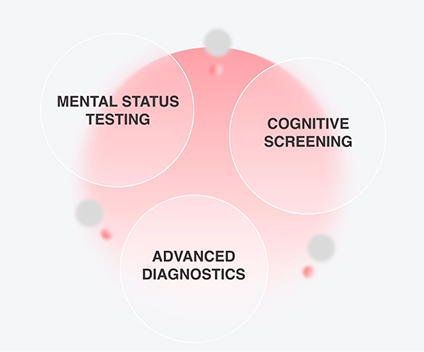
Show moreIn Portugal, dementia diagnosis follows the national framework DGS Norm 053/2011. Patients first visit primary care, where GPs rule out reversible causes and perform cognitive tests before referring via the CTH system to neurology, psychiatry, or memory clinics. Secondary assessment includes multidisciplinary evaluations, MRI, and, when needed, CSF biomarkers for amyloid and tau, though reimbursement limits may require private or research-based testing. Cognitive assessments typically use MMSE, MoCA, ADAS-Cog, and CDT. CT, MRI, and FDG-PET are available, while early-onset genetic testing is done at INSA and select hospital labs. The SNS covers most consultations and diagnostics, though mid-2025 data show many waiting times exceeded legal limits.
Diagnosis pathway
In Portugal, dementia diagnosis follows DGS Norm 053/2011. Patients are brought to primary care for cognitive or behavioural concerns. GPs exclude reversible conditions and conduct cognitive tests, then refer via the CTH system to hospital neurology, psychiatry, or memory clinics. Secondary assessment involves multidisciplinary evaluations, neurological exams, and MRI for structural changes. For uncertain cases, Advanced CSF biomarkers for amyloid and tau are available but face public reimbursement limits, often requiring private care or research participation.
Portugal has a standardised, national framework for diagnosing dementia and Alzheimer’s disease, the Standard on Diagnostic and Therapeutic Approach to Patients with Cognitive Impairment or Dementia (DGS Norm 053/2011). This was first established in 2011, with the latest update in 2023.1 Patients typically present to primary care often brought by a family member noting repetitive questioning, disorientation in familiar environments, or subtle changes in personality. The general practitioner (GP) initiates the process by excluding reversible causes of cognitive decline through mandatory blood panels (e.g., thyroid function, B12) and performing cognitive screening. If these initial assessments confirm cognitive deficits, the GP issues a referral via the Consulta a Tempo e Horas (CTH) platform to a hospital Neurology or Psychiatry specialty, ideally directing the patient to a specialized Memory Clinic.
Upon reaching secondary care, the definitive diagnosis relies on a multidisciplinary evaluation that includes a detailed neurological examination and structural neuroimaging, typically Magnetic Resonance Imaging (MRI), to identify hippocampal atrophy and rule out vascular pathology. For inconclusive cases, advanced biomarkers such as Cerebrospinal Fluid (CSF) analysis for amyloid and tau proteins are available but face significant reimbursement barriers in the public system, often requiring patients to resort to the private sector or research protocols.
Wait times
Portuguese law sets maximum waiting times for specialists: 30 days for urgent and 120 days for standard referrals, with imaging within 90 days. Despite this, mid-2025 data show over half of consultations exceeded TMRG limits, with almost one million users still waiting for their first hospital appointment.
Waiting times for initial hospital specialist consultations in general significantly exceed the maximum time established by the Portuguese government (Tempos Máximos de Resposta Garantidos, TMRG). A first hospital specialist consultation, including neurology or geriatrics, is required to take place within 30 days when classified as very high priority and within 120 days for normal priority referrals. Diagnostic examinations, including Magnetic Resonance Imaging (MRI), Computed Tomography (CT), and nuclear medicine exams, are subject to a maximum guaranteed waiting time of 90 days from clinical indication. Nevertheless, data from the first half of 2025 show that TMRG limits were exceeded in 51.6% of all specialty consultations, with nearly one million users awaiting a first hospital specialist appointment.
Diagnosis cost
Under recent legislation, the SNS fully funds consultations and key diagnostic exams, including cognitive testing, CT scans, and MRIs, for the majority of patients in Portugal.
The Portuguese National Health Service (SNS) covers the full cost of GP and specialist visits, as well as essential complementary diagnostic tools such as cognitive tests, CT scans, and MRIs, with no direct copayments for consultations or exams for most patients under recent legislation.
Cognitive tests
Cognitive screening and monitoring for Alzheimer’s in Portugal commonly use MMSE, MoCA, ADAS-Cog, and CDT assessments.
- https://psicologiaeeducacao.ubi.pt/Ficheiros/ArtigosOnLine/2020N1/V3N1%20-%2010.pdf
- https://alzheimerportugal.org/exames-utilizados-no-diagnostico-de-demencia
- https://openurl.ebsco.com/openurl?sid=ebsco:plink:scholar&id=ebsco:gcd:128294193&crl=c
- https://www.uc.pt/en/fpce/psyassessmentlab/tests/cognitive-screening/mmse
- https://academic.oup.com/acn/article-abstract/28/4/375/5131
Imaging tests
CT and MRI are available at the primary care level in Portugal, while FDG-PET functional imaging is provided at leading nuclear medicine centres, including Porto’s Oncology Institute and Coimbra University Hospital.
Genetic tests
In Portugal’s public sector, genetic testing for early-onset familial Alzheimer’s is limited to reference centres like INSA, with hospital genetics departments in Coimbra and Porto also offering molecular diagnostic capabilities for APP, PSEN1, and PSEN2.
Biomarker tests
CSF testing (Aβ42, total tau, p-tau) in Portugal is primarily conducted in specialized neurology departments at tertiary hospitals to confirm Alzheimer’s disease. Research institutions are increasingly exploring blood-based biomarkers as a less invasive alternative.
Cognitive Tests
Cognitive Tests
Cognitive screening and monitoring for Alzheimer’s in Portugal commonly use MMSE, MoCA, ADAS-Cog, and CDT assessments.
- https://psicologiaeeducacao.ubi.pt/Ficheiros/ArtigosOnLine/2020N1/V3N1%20-%2010.pdf
- https://alzheimerportugal.org/exames-utilizados-no-diagnostico-de-demencia
- https://openurl.ebsco.com/openurl?sid=ebsco:plink:scholar&id=ebsco:gcd:128294193&crl=c
- https://www.uc.pt/en/fpce/psyassessmentlab/tests/cognitive-screening/mmse
- https://academic.oup.com/acn/article-abstract/28/4/375/5131
Imaging Tests
Imaging Tests
CT and MRI are available at the primary care level in Portugal, while FDG-PET functional imaging is provided at leading nuclear medicine centres, including Porto’s Oncology Institute and Coimbra University Hospital.
Genetic Tests
Genetic Tests
In Portugal’s public sector, genetic testing for early-onset familial Alzheimer’s is limited to reference centres like INSA, with hospital genetics departments in Coimbra and Porto also offering molecular diagnostic capabilities for APP, PSEN1, and PSEN2.
Biomarker Tests
Biomarker Tests
CSF testing (Aβ42, total tau, p-tau) in Portugal is primarily conducted in specialized neurology departments at tertiary hospitals to confirm Alzheimer’s disease. Research institutions are increasingly exploring blood-based biomarkers as a less invasive alternative.
Treatment & Care
Treatment & care
Show moreIn Portugal, memory clinics and specialized day centres are mostly concentrated in Lisbon, Porto, and Coimbra, leaving rural areas reliant on mobile teams due to RNCCI backlogs. While SNS covers most medical care, families shoulder costs for non-SNS therapies and informal care. Informal caregivers receive allowances, tax benefits, and RNCCI services, with additional support from NGOs like Alzheimer Portugal and Santa Casa da Misericórdia.
Specialized facilities and services
Memory clinics and specialized day centres in Portugal are largely limited to urban hubs such as Lisbon, Porto, and Coimbra. Outside these areas, long-term care and palliative services are scarce, with rural regions depending on local innovations like mobile support teams due to RNCCI backlogs and uneven palliative care distribution.
Specialized memory clinics are overwhelmingly concentrated in the major metropolitan hubs of Lisbon, Porto, and Coimbra, where they function within university hospitals like Santa Maria or São João.
For ongoing support, specialised Day Centres are rare and primarily located in coastal urban centres, exemplified by Alzheimer Portugal’s facilities in Lisbon and Matosinhos. The National Network of Integrated Continuous Care (RNCCI), which theoretically provides specialized long-term care, is currently saturated with a national waiting list exceeding 10,000 individuals, making access in regions like the Alentejo practically non-existent. Consequently, rural areas often depend on ad-hoc municipal innovations, such as the mobile dementia support teams in Mogadouro that travel to patients’ homes, rather than a structured national network.
Portuguese health regulator (Entidade Reguladora da Saúde, ERS) found that the nationwide distribution of specialized palliative care units is highly uneven, with most capacity concentrated in Lisbon and Vale do Tejo and little or no provision in regions like Centro and Algarve.
Approved medication
| Generic Name | Trade Name | Used for |
|---|---|---|
| Donepezil | Aricept, Aricept ODT, Adlarity, Eranz, Memac, Alzepil, Davia, Donecept, Donep, Donepex, Donesyn, Dopezil, Yasnal, Memorit, Pezale, Redumas, Zolpezil, Namzaric* | Donepezil is indicated for the symptomatic treatment of mild to moderately severe Alzheimer’s dementia. Official National Product Information |
| Rivastigmine | Exelon, Exelon Patch, Prometax, Rivastach, Nimvastid | Symptomatic treatment of mild to moderately severe Alzheimer’s dementia. Symptomatic treatment of mild to moderately severe dementia in patients with idiopathic Parkinson’s disease. Official National Product Information |
| Galantamine | Razadyne, Razadyne ER, Reminyl, Reminyl XL, Nivalin, Lycoremine, Galsya | Galantamine is indicated for the symptomatic treatment of mild to moderately severe dementia of the Alzheimer type. Official National Product Information |
| Memantine | Namenda, Namenda XR, Ebixa, Memary, Axura, Akatinol, Maruxa, Nemdatine, Namzaric* | Treatment of adult patients with moderate to severe Alzheimer’s disease. Official National Product Information |
| Lecanemab | Leqembi | Lecanemab is indicated for the treatment of mild cognitive impairment and mild dementia due to Alzheimer’s disease in adult patients that are apolipoprotein E ε4 (ApoE ε4) heterozygotes or non-carriers. Official National Product Information |
| Donanemab | Kisunla | Donanemab is indicated for the treatment of mild cognitive impairment and mild dementia due to Alzheimer’s disease (AD) in adult patients that are apolipoprotein Eε4 (ApoE ε4) heterozygotes or non-carriers. Official National Product Information |
*Namzaric = combination of Donepezil and Memantine
Treatment cost
Alzheimer’s care in Portugal is largely covered by the SNS, including consultations and medical treatments under Infarmed’s rules. However, families bear most costs for non-SNS therapies and informal care, which represent the majority of total Alzheimer’s-related expenses, roughly €1.8 billion of €2 billion. Like in other EU countries, ATTs are not covered.

he direct medical treatment costs of Alzheimer’s disease are largely publicly funded, with Alzheimer’s disease pharmacological treatment reimbursed under Infarmed’s “comparticipação” rules (patients may pay only a partial share depending on the reimbursement tier), and treatment delivered within SNS structures covered by the state. However, non-SNS therapy (e.g., private cognitive/occupational therapy) is typically paid out-of-pocket. Also, ATTs are not covered. There are no copayments for treatment-related consultations and many prescribed exams within primary care under the Decreto-Lei 96/2020, though patient shares still apply to medications and to services not covered by this exemption. Overall, while drugs and SNS-based treatments are mostly covered, families bear a significant direct financial burden, especially for non-medical and informal care, which account for the majority of Alzheimer’s disease-related costs in Portugal (estimated ~€1.8 billions of ~€2 billions total, with informal care dominating).
- https://www.infarmed.pt/web/infarmed/regimes-excecionais-de-comparticipacao
- https://www.infarmed.pt/web/infarmed/alzheimer
- https://diariodarepublica.pt/dr/detalhe/decreto-lei/96-2020-147533138
- https://researchportal.ulisboa.pt/pt/publications/custo-e-carga-da-doen%C3%A7a-de-alzheimer-nos-idosos-em-portugal/
Caregiver support
Informal caregivers in Portugal are supported under the Estatuto do Cuidador Informal, receiving allowances, tax benefits, and RNCCI-provided home and day services. NGOs, including Alzheimer Portugal, and non-profits like Santa Casa da Misericórdia offer training, helplines, and specialized dementia care programs.
Portugal provides formal recognition and financial support for informal caregivers of people living with Alzheimer’s disease through the legal status of the informal caregiver (Estatuto do Cuidador Informal). Once recognised, caregivers may qualify for the monthly allowance for the main informal caregiver (Subsídio de Apoio ao Cuidador Informal Principal), granted by the national social security service (Segurança Social). Additional support includes home-care services, day centres, and respite care delivered through the national network of long-term integrated care (Rede Nacional de Cuidados Continuados Integrados – RNCCI). Some care-related expenses can also be partially deducted from income tax.
Alongside state programmes, Non-Governmental Organizations (NGOs) offer further assistance. Alzheimer Portugal provides a helpline, caregiver training, support groups, and dementia-specific day centres. Non-profit social institutions, including Santa Casa da Misericórdia supply home support, day services, and residential care.
- https://www.gov.pt/guias/cuidador-informal
- https://www2.gov.pt/servicos/requerer-o-subsidio-de-apoio-ao-cuidador-informal-principal
- https://www.seg-social.pt/ptss/pssd/menu/familia/deficiencia-incapacidade/subsidio-apoio-cuidador-informal-principal
- https://www.seg-social.pt/ptss/pssd/menu/familia/deficiencia-incapacidade/rede-nacional-cuidados-continuados-integrados
- https://www2.gov.pt/en-GB/guias/cuidador-informal/rede-nacional-de-cuidados-continuados-integrados-rncci
- https://eco.sapo.pt/descodificador/descodificador-que-despesas-posso-abater-ao-irs-e-quanto-posso-descontar-saiba-tudo-em-11-respostas/07-encargos-com-lares-de-idosos-dao-beneficio/
- https://alzheimerportugal.org/respostaseapoios https://scml.pt/en/social-welfare/elderly-people/
Policy
Policy
Show morePortugal’s Health Strategy for Dementia promotes prevention, early diagnosis, professional and caregiver training, public awareness, and coordinated regional care. Despite this, institutional and legal gaps persist, with bureaucratic barriers limiting caregiver support, while cultural beliefs normalize dementia and place disproportionate caregiving burdens on women, delaying diagnosis and reducing patient resources.
National dementia plan
The Health Strategy for Dementia in Portugal promotes prevention, early diagnosis, and continuous support for people with dementia. It emphasizes professional and caregiver training, public awareness, and regional implementation to ensure consistent, coordinated, and person-focused care nationwide.
Portugal has a national dementia strategy called the Health Strategy for Dementia. The strategy focuses on improving prevention, early detection and timely, accurate diagnosis of dementia across the country. It aims to ensure that people living with dementia receive continuous, equitable and person-centred care throughout all stages of the disease, strengthening the role of primary care and guaranteeing access to specialised assessments, appropriate pharmacological treatments and non-pharmacological interventions.
It also prioritises the development of integrated care pathways linking health, social and community services. Emphasis is placed on improving public awareness, reducing stigma, enhancing training for professionals and informal caregivers, and ensuring families have adequate support and guidance. The strategy calls for regional implementation plans so that services can be adapted to local needs and ensure more consistent and coordinated dementia care nationwide.
Upcoming plans
There are currently no new publicly announced national dementia strategies in Portugal.
There are currently no publicly announced new national dementia strategies forthcoming in Portugal.
Policy gaps
Legal barriers
Institutional support in Portugal largely ignores people with dementia, treating it as a private issue. The Estatuto do Cuidador Informal is criticized for bureaucracy, leaving most applicants without subsidies or respite care.
Institutional support structures fail to validate the reality of people living with dementia, effectively deeming the condition a private rather than public concern. The Estatuto do Cuidador Informal has been widely criticised by advocacy groups as a “handful of nothing” (mão cheia de nada), plagued by excessive bureaucracy that has left the vast majority of applicants without access to subsidies or respite care (with only 222 subsidies granted in early phases despite thousands of applications).
Cultural barriers
In Portugal, dementia is often perceived as a normal part of aging, delaying diagnosis and limiting access to effective treatments. Women, especially daughters and wives, bear the bulk of caregiving duties, facing financial hardship and burnout that negatively impact both their well-being and patient care.
Research indicates a widespread belief (up to 80% in some global surveys applicable to the Portuguese context) that dementia is a “normal part of ageing” rather than a distinct medical condition. This normalisation is a double-edged sword. If memory loss and confusion are considered inevitable for the elderly, then seeking medical help is seen as futile. This cultural belief delays diagnosis and prevents access to therapies that could improve quality of life.
The burden of care in Portugal is profoundly gendered, falling disproportionately on women (daughters and wives). The cultural ideal of the “Superwoman” leaves most of the responsibility on daughters to look after their parents. This gendered burden forces female caregivers into economic precariousness and burnout, which in turn limits the resources available to the patient.
Research
Research
Show morePortuguese research on Alzheimer’s spans multiple fronts, including synaptic-protecting peptides, gut-driven neuroinflammation, AI-based smartwatches for daily support, and population-specific genomics to identify rare protective genetic variants.
Selected academic institutions
Clinical trials and registries
The National Ethics Committee for Clinical Research (CEIC) oversees and grants ethical approvals for clinical trials in Portugal
Selected innovative methods
Portuguese researchers are pursuing diverse innovative Alzheimer’s approaches: iMM explores peptides preserving synaptic function; CNC examines gut-to-brain neuroinflammation; Fraunhofer Portugal AICOS develops AI-enabled smartwatches for patient independence; Coimbra and Van Andel Institute focus on genomics to uncover rare protective genetic variants.
Researchers at the Instituto de Medicina Molecular (iMM) are working on a “synaptic armor” peptide (TAT-TrkB) that prevents the destruction of vital neuronal receptors, aiming to preserve brain communication even in the presence of Alzheimer’s disease toxins.
Researchers at the Center for Neuroscience and Cell Biology (CNC) are working on the “gut-first” hypothesis, demonstrating how environmental toxins (like BMAA) trigger mitochondrial dysfunction in the gut that subsequently drives neuroinflammation in the brain.
Researchers at Fraunhofer Portugal AICOS are working on the AUTONOMOUS project, developing smartwatch-based artificial intelligence (AI) that learns a patient’s specific routines to provide real-time prompts that assist with daily tasks and independence.
Researchers at the Van Andel Institute and University of Coimbra are working on a genomic study of the Portuguese population to identify rare, population-specific genetic variants that may confer natural protection against the disease.
- https://www.cell.com/molecular-therapy-family/molecular-therapy/fulltext/S1525-0016(24)00544-6
- https://gut.bmj.com/content/72/1/73.abstract https://cnc.uc.pt/en/research-group/gut-brain-axis
- https://www.aicos.fraunhofer.pt/en/news/archive/2024/autonomous-co-design.html
- https://www.vai.org/article/in-portugal-a-search-for-the-genetic-roots-of-alzheimers-disease/
Support
Support
Show morePortugal offers limited dementia-focused cultural initiatives through the MID network, linking twelve museums and organizations to improve social engagement and quality of life. Alzheimer Portugal supports this with online resources for patients, caregivers, families, and professionals, covering care, diagnosis, research, and rights.
Selected national associations, patient family associations, NGOs:
Selected initiatives
In Portugal, there are museum offerings dedicated to people with dementia and their caregivers but they are limited. The MID network in Portugal brings together twelve institutions, including Alzheimer Portugal, MAAT, and the Calouste Gulbenkian Museum, to develop dementia-friendly cultural experiences, train museum teams, and raise public awareness, ultimately enhancing dignity, social engagement, and quality of life for people living with dementia and their caregivers.
Museums for Inclusion in Dementia (MID)
Dedicated media outlets
Alzheimer Portugal’s website includes sections tailored for people living with dementia, caregivers, families, as well as professionals — offering articles on diagnosis, care tips, social rights, research, and support services.