

Puerto Rico
Puerto Rico confronts a significant public health challenge with Alzheimer’s disease, driven by a rapidly aging population and a prevalence rate estimated to be 33% higher than the United States (U.S.) mainland. This crisis unfolds within a healthcare system strained by a fundamental inequity in federal funding, leading to significant resource constraints and underreporting of cases. The island’s response is shaped by strong cultural norms like familismo, which encourages family-based care but can also delay formal diagnosis. Despite these barriers, Puerto Rico has been proactive in establishing successive national strategies, including an upcoming 2026-2030 plan, to improve integrated care, early detection, and caregiver support. This policy framework is complemented by a robust research ecosystem, featuring culturally adapted diagnostic tools and major initiatives like the Puerto Rico Alzheimer’s Disease Initiative (PRADI) that aim to address the unique genetic and social landscape of the disease on the island.

AD Rating
Diagnostic Pathway
Specialized Care
Caregiver Support
National Policies
Access to ATT-s
Highlights

Population
Median age
Health expenditure (% of GDP)
Diagnosis
Diagnosis
Show moreIn Puerto Rico, dementia diagnosis starts with primary care physicians using MMSE and MoCA, with referrals to neurologists or geriatricians for confirmation. Diagnostic delays often stem from primary care challenges. Advanced imaging, biomarkers, and genetic testing are reserved for complex or research cases. Specialist visits cost $15-$50, comprehensive evaluations up to $234, and lab/imaging co-pays (30-60%) can create substantial long-term household expenses, highlighting the financial burden of ongoing dementia care.
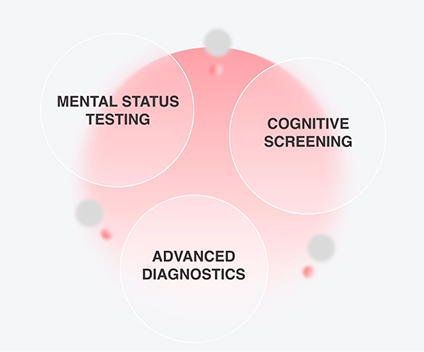
Diagnosis pathway
In Puerto Rico, dementia diagnosis begins with primary care physicians using screening tools like MMSE and MoCA. Positive cases are referred to neurologists or geriatricians for confirmation, though “diagnostic hesitancy” can delay early detection. High rates of diabetes and hypertension increase Alzheimer’s disease risk. Advanced imaging (MRI, CT, PET) and biomarkers are secondary tools, used to rule out other causes, assess brain changes, or confirm complex or early-onset cases, while routine diagnosis relies primarily on clinical evaluation.
In Puerto Rico, the diagnostic pathway for dementia and Alzheimer’s disease is a clinical process that begins at the primary care level. The primary care physician (PCP) serves as the crucial first point of contact, where initial concerns are addressed using validated screening tools like the Mini-Mental State Examination (MMSE) and the Montreal Cognitive Assessment (MoCA). Following a positive screen and initial evaluation, people are often referred to a specialist, such as a neurologist or geriatrician, for a comprehensive assessment and confirmation of the diagnosis. However, this pathway can be hampered by “diagnostic hesitancy” among PCPs, where confidence and training levels impact their ability to make an early diagnosis, potentially causing delays in care. Moreover, high rates of diabetes and high blood pressure among the Puerto Rican population may contribute to the higher risk of Alzheimer’s disease. , ,
Regarding advanced testing, the available sources indicate that magnetic resonance imaging (MRI), computed tomography (CT), positron emission tomography (PET) scans, and biomarker tests are not regularly performed as a first-line diagnostic tool for everyone. Instead, they serve important but secondary roles. MRI and CT scans are used to support a clinical diagnosis by ruling out other potential causes of cognitive decline, such as strokes or tumours, and to identify brain atrophy. Highly specialised tests, like PET scans and cerebrospinal fluid (CSF) or blood biomarkers, are generally reserved for more complex situations, such as diagnosing atypical presentations, confirming early-onset cases, or for use in research settings. The standard diagnostic approach remains centred on clinical evaluation, with these advanced technologies used to supplement and confirm the findings in specific circumstances.
Wait times
Diagnostic delays in Puerto Rico mainly arise from primary care challenges, though exact wait times are unknown.
While there are no precise statistics on waiting times, the available research strongly indicates that there are delays in the diagnostic pathway in Puerto Rico, stemming from challenges at the primary care level.
Diagnosis cost
Specialist visits in Puerto Rico typically cost $15-$50, while comprehensive dementia evaluations can reach $234. Hospital stays range $0-$50 per night with insurance, but lab and imaging co-pays (30-60%) add up, creating significant long-term household expenses.
Co-payments for a visit to a specialist typically range from $15 to $50 USD. However, a more comprehensive evaluation, often necessary for diagnosing and managing a complex condition like dementia, can cost as much as $234 for a single 40-minute visit. For those with insurance, hospitalisation fees may range from $0 to $50 per night, but costs for ancillary services like laboratory and radiology tests can be significant, with people often responsible for 30% to 60% of the total charge. These routine costs, while small individually, accumulate over the long course of the disease, contributing to a steady drain on household finances.
Cognitive tests
Puerto Ricans over 55 years of age, with suspected diagnosis of cognitive impairment or early Alzheimer’s disease are cognitively tested by using Mini-Mental State Examination (MMSE) and Montreal Cognitive Assessment (MoCA).
Imaging tests
Neuroimaging techniques like MRI and CT scans play a supportive role in the diagnostic process. They are not used to definitively diagnose Alzheimer’s disease but are crucial for differential diagnosis—ruling out other conditions that can cause cognitive symptoms.
Genetic tests
Significant genetic research is being conducted in Puerto Rico, primarily through large-scale, NIH-funded initiatives. This research is not for routine clinical diagnosis but aims to understand the unique genetic risk factors within the admixed Puerto Rican population to inform future treatments.
Biomarker tests
The use of CSF biomarkers is prioritised for specific clinical situations, rather than being used as a routine screening method for all.
Cognitive Tests
Cognitive Tests
Puerto Ricans over 55 years of age, with suspected diagnosis of cognitive impairment or early Alzheimer’s disease are cognitively tested by using Mini-Mental State Examination (MMSE) and Montreal Cognitive Assessment (MoCA).
Imaging Tests
Imaging Tests
Neuroimaging techniques like MRI and CT scans play a supportive role in the diagnostic process. They are not used to definitively diagnose Alzheimer’s disease but are crucial for differential diagnosis—ruling out other conditions that can cause cognitive symptoms.
Genetic Tests
Genetic Tests
Significant genetic research is being conducted in Puerto Rico, primarily through large-scale, NIH-funded initiatives. This research is not for routine clinical diagnosis but aims to understand the unique genetic risk factors within the admixed Puerto Rican population to inform future treatments.
Biomarker Tests
Biomarker Tests
The use of CSF biomarkers is prioritised for specific clinical situations, rather than being used as a routine screening method for all.
Treatment & Care
Treatment & care
Show morePuerto Rico’s dementia care infrastructure includes specialised facilities and services: the Department of Health Alzheimer’s registry, OPPEA’s protections for older adults, the Alzheimer’s Prevention Clinic & Research Center for early evaluation, and private care providers like Insignia Senior Living and Hogar La Victoria. Despite near-universal Medicare coverage, per-capita spending is 146% lower than the U.S. mainland, even with higher dementia prevalence. Caregiver support is structured through Law 22’s volunteer registry and the 2026-2030 Strategic Plan, complemented by NGOs providing psychosocial, educational, and financial assistance, though funding gaps limit implementation.
Specialized facilities and services
Puerto Rico has several dementia-related institutions: the Department of Health maintains an Alzheimer’s registry (Law 237, 1999); OPPEA protects older adults’ rights, including those with dementia; the Alzheimer’s Prevention Clinic & Research Center offers early evaluation and risk-reduction strategies; Insignia Senior Living provides memory-care programs in select facilities; and Hogar La Victoria specializes in Alzheimer’s, Parkinson’s, and dementia care.
Registry of Alzheimer’s Disease cases within the Department of Health – created by Law 237 of 1999. Oficina de la Procuradora de las Personas de Edad Avanzada (OPPEA) – serves as the primary government entity tasked with guaranteeing the rights and protecting the physical, mental, and social security of all older adults, including the vulnerable population living with dementia. Alzheimer’s Prevention Clinic & Research Centre of Puerto Rico – the clinic offers comprehensive evaluation and management for people with no symptoms of memory loss and a family history of Alzheimer’s disease (age 30+). They aim to address modifiable risk factors to delay the onset of cognitive decline. Insignia Senior Living – owns and operates private live-in communities in Puerto Rico and Panama; they have a program dedicated to people living with memory problems called “Seasons” which is offered at some of their facilities. Hogar La Victoria – Private care centre for the elderly in San Juan; they specialize in conditions such as Alzheimer’s disease, Parkinson’s disease, and Dementia.
Approved medication
| Generic Name | Trade Name | Used for |
|---|---|---|
| Donepezil | Aricept, Aricept ODT, Adlarity, Eranz, Memac, Alzepil, Davia, Donecept, Donep, Donepex, Donesyn, Dopezil, Yasnal, Memorit, Pezale, Redumas, Zolpezil, Namzaric* | Donepezil is indicated for the symptomatic treatment of mild to moderately severe Alzheimer’s dementia. Official National Product Information |
| Galantamine | Razadyne, Razadyne ER, Reminyl, Reminyl XL, Nivalin, Lycoremine, Galsya | Galantamine is indicated for the symptomatic treatment of mild to moderately severe dementia of the Alzheimer type. Official National Product Information |
| Memantine | Namenda, Namenda XR, Ebixa, Memary, Axura, Akatinol, Maruxa, Nemdatine, Namzaric* | Treatment of adult patients with moderate to severe Alzheimer’s disease. Official National Product Information |
| Rivastigmine | Exelon, Exelon Patch, Prometax, Rivastach, Nimvastid | Symptomatic treatment of mild to moderately severe Alzheimer’s dementia. Symptomatic treatment of mild to moderately severe dementia in patients with idiopathic Parkinson’s disease. Official National Product Information |
| Lecanemab | Leqembi | Lecanemab is indicated for the treatment of mild cognitive impairment and mild dementia due to Alzheimer’s disease in adult patients that are apolipoprotein E ε4 (ApoE ε4) heterozygotes or non-carriers. |
| Donanemab | Kisunla | Donanemab is indicated for the treatment of mild cognitive impairment and mild dementia due to Alzheimer’s disease (AD) in adult patients that are apolipoprotein Eε4 (ApoE ε4) heterozygotes or non-carriers. |
*Namzaric = combination of Donepezil and Memantine
Treatment cost
In Puerto Rico, dementia-related healthcare use is under-studied. Medicare covers most adults 65+, yet care quality is lower than the U.S. mainland. Despite 33% higher dementia prevalence, per-capita Medicare spending is 146% lower than the national average.

There is relatively limited evidence regarding dementia attributable healthcare utilisation in developing countries, such as Puerto Rico. Medical care is estimated to account for over a quarter of the societal cost of dementia. Adults aged 65 and over in the U.S. (including Puerto Rico) have near-universal insurance coverage through Medicare, although prior literature has documented generally worse quality of healthcare experienced by Medicare enrolees in Puerto Rico compared to their U.S. mainland counterparts. Despite having a 33% higher prevalence of Alzheimer’s disease and other related dementias among its Medicare fee-for-service beneficiaries compared to the U.S. national average, the Medicare Payments-per-Capita (PpC) for this population in Puerto Rico are 146% lower than on the U.S. mainland.
Caregiver support
Puerto Rico’s Law 22 (2018) established a volunteer registry through OPPEA to assist Alzheimer’s patients and their caregivers. The Strategic Plan 2026-2030 includes caregiver support, though funding is limited. Government programs provide practical aid, while NGOs focus on psychosocial support, education, and financial help for low-income families.
Law 22 of 2018, the “Ley del Registro de Voluntarios para Cuidado de Pacientes de Alzheimer en Puerto Rico”, administered by OPPEA, created a registry of trained volunteers to provide assistance to people and, critically, to “offer help to their family members and care partners”.
The newly launched Strategic Plan 2026-2030 has a pillar specifically dedicated to supporting carers of people living with Alzheimer’s disease, however, the Secretary of Health has said that there is a lack of funding to support the plan.
Government programs focus heavily on providing practical, tangible support—respite hours, medical supplies, and in-home help. In contrast, the non-governmental organisation (NGO) sector places a strong emphasis on addressing the psychosocial needs of caregivers through support groups, therapy, and education, while some also offer financial assistance to low-income families. ,
- https://bvirtualogp.pr.gov/ogp/Bvirtual/leyesreferencia/PDF/Registros/22-2018.pdf
- https://www.elnuevodia.com/noticias/locales/notas/encaminan-plan-estrategico-para-enfrentar-la-prevalencia-de-alzheimer-va-a-aumentar-significativamente/
- https://states.aarp.org/puerto-rico/recursos-cuidar
- https://alzheimerpr.com/grupos-de-apoyo/
- https://defrentepr.com/programa-de-ayuda
Policy
Policy
Show morePuerto Rico’s national dementia strategy began with the 2018-2025 Dementia Action Plan, promoting awareness, diagnosis, care quality, caregiver support, and research. The 2026-2030 Strategic Plan, launched September 2025, emphasises risk reduction, early detection, preventing avoidable hospitalisations, and caregiver support. Chronic federal underfunding, high prevalence, language barriers, low dementia literacy, and strong “familismo” norms limit timely diagnosis, service use, and increase burden on unpaid caregivers.
National dementia plan
Puerto Rico’s first national strategy, the 2018-2025 Dementia Action Plan, aimed to raise awareness, improve diagnosis and care, support caregivers, and foster research through coordinated public and community efforts.
Puerto Rico’s first national strategy was the Dementia Action Plan for Puerto Rico 2018-2025. This plan established a formal public health response to the rising prevalence of Alzheimer’s disease and related dementias in the island’s aging population. Its primary goals were to improve public awareness, ensure timely diagnosis, enhance care quality, provide robust support for carers, and promote research. The strategy aimed to create a more supportive, dementia-friendly society through coordinated efforts across government and community sectors.
Upcoming plans
Puerto Rico’s 2026-2030 Strategic Plan, launched September 2025, builds on the previous action plan, focusing on risk reduction, early diagnosis, preventing avoidable hospitalisations, and supporting caregivers to ensure integrated, dignified care for patients and families.
The new Strategic Plan to Address Alzheimer’s and Related Dementias in Puerto Rico 2026-2030 was announced in September 2025 by the Department of Health. Building on the foundation of the earlier plan, this new strategy is a collaborative effort aimed at creating an integrated care model.
The plan is structured around four main pillars of action:
● Risk Reduction: Promoting healthy lifestyles and education to reduce the risk of developing dementia.
● Early Detection and Diagnosis: Strengthening clinical tools and public awareness to ensure timely diagnosis.
● Prevention of Avoidable Hospitalisations: Optimizing medical care to reduce unnecessary hospital visits.
● Support for Caregivers: Creating sustainable and safe care environments to improve the quality of life for both patients and their families.
The goal is to guarantee that every patient and their family receive the necessary support and resources to face the condition with dignity.
Policy gaps
Legal barriers
Puerto Rico faces chronic federal healthcare underfunding, limiting resources for a sicker population. While 54,473 dementia cases were reported in 2024, actual prevalence may reach 80,000-100,000, highlighting gaps in early diagnosis and prevention.
There is a gap in federal healthcare funding that represents a fundamental and long-standing inequity. It means that the healthcare system in Puerto Rico is tasked with managing a sicker population with significantly fewer resources per person, a disparity that inevitably translates into reduced access to services, poorer quality of care, and worse health outcomes.
Although at the end of 2024 the Registry of Cases of Alzheimer’s Disease, Huntington’s Disease and other Dementias reported 54,473 people in Puerto Rico, the Secretary of Health estimated on in September 2025 that the actual prevalence could range between 80,000 and 100,000 people, underlining the challenge of promoting early diagnosis, in addition to prevention practices.
Cultural barriers
Language barriers, limited dementia knowledge, and “familismo” norms in Puerto Rico delay diagnosis, reduce service use, and increase psychological and financial strain on unpaid family caregivers.
The Puerto Rico Alzheimer Disease Initiative reported that many older adults and their families prefer Spanish-only communication, have limited understanding of medical terminology, and exhibit distrust toward formal institutions. These factors discourage participation in research and clinical evaluations, delaying access to emerging diagnostics or precision-medicine treatments for Alzheimer’s disease.
A 2024 study on Hispanic carers highlights that strong cultural norms of “familismo” lead Puerto Rican families to provide care informally, often without professional guidance. Combined with low dementia knowledge and language barriers, this expectation delays formal diagnosis, reduces the use of respite or support services, and increases psychological and financial strain on unpaid carers.
Research
Research
Show moreThe CALMA Trial evaluates IGC-AD1, an AI-informed cannabinoid therapy for Alzheimer’s disease agitation, while Spanish-Puerto Rican MMSE and MoCA-PR versions enable culturally adapted cognitive screening for adults aged 55 and older.
Selected academic institutions
Clinical trials and registries
Puerto Rico Alzheimer Disease Initiative (PRADI) – Multisource registry of Alzheimer’s disease, mild cognitive impairment, and controls; collects genomics, cognition, family, and caregiver data island-wide.
Caribbean American Dementia and Aging Study (CADAS) – Community household study (approximately 1,500 Puerto Rican seniors) with harmonised HCAP/10-66 cognitive battery and blood biomarkers (Aβ, pTau, NfL, GFAP)
Selected innovative methods
CALMA Trial – IGC-AD1 tests AI-guided cannabinoid therapy for Alzheimer’s disease agitation; culturally adapted MMSE and MoCA-PR provide validated Spanish-Puerto Rican dementia screening for adults 55+.
CALMA Trial – IGC-AD1 (AI-informed cannabinoid therapy) – Test novel AI-guided formulation targeting neuroinflammation and neurotransmission in Alzheimer’s disease agitation.
Culturally Adapted Cognitive Screening (MMSE & MoCA-PR versions) – Validated Spanish-Puerto Rican versions of MMSE and MoCA for combined dementia screening in adults over 55.
Support
Support
Show moreDe Frente al Alzheimer, Inc. provides financial assistance to low-income Puerto Ricans diagnosed with Alzheimer’s disease. While no dedicated media outlets cover Alzheimer’s disease or dementia, public awareness and information rely on general media and organisational campaigns.
Selected national associations, patient family associations, NGOs:
Selected initiatives
De Frente al Alzheimer, Inc. – organisation that provides financial help to persons with limited resources who are diagnosed with Alzheimer’s disease.
De Frente al Alzheimer, Inc.
Dedicated media outlets
There are no dedicated media outlets to Alzheimer’s disease or dementia news in Puerto Rico.