

Russia
With no formal national strategy, Russia’s response to Alzheimer’s disease is characterised by a healthcare system where specialised services are concentrated in major urban centres. Long-term care is often provided in state-run Psychoneurological Institutions, while the civil society organization Foundation Alzrus provides the primary support network for families. The foundation offers caregiver training, awareness programs, and community initiatives, which are complemented by emerging regional programs like Moscow’s cognitive health initiatives for older adults. A key challenge remains the cultural perception where dementia is often viewed as a natural part of aging rather than a specific medical condition.

AD Rating
Diagnostic Pathway
Specialized Care
Caregiver Support
National Policies
Access to ATT-s
Highlights

Population
Median age
Health expenditure (% of GDP)
Diagnosis
Diagnosis
Show moreIn Russia, Alzheimer’s diagnosis follows a stepwise approach integrating international standards with national guidelines. Clinicals confirm progressive cognitive decline over six months, exclude reversible causes, and employ MMSE and MoCA-Ru assessments. Structural imaging (CT/MRI) is widely available, while advanced PET modalities remain mostly in research or specialised centres. Genetic and cerebrospinal fluid biomarker testing is used primarily for research or select cases, with blood-based biomarkers under investigation. Basic consultations are covered by public insurance, bear about 40% of overall healthcare costs. Official wait-time targets exist but lack consistent enforcement nationwide.
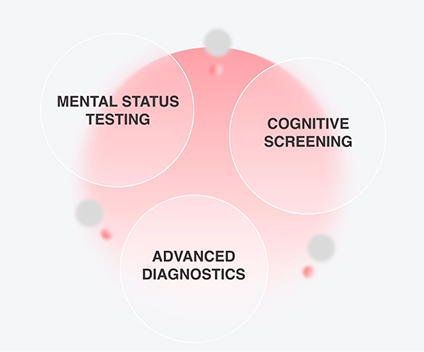
Diagnosis pathway
Staged process combining international standards with local practice. Diagnosis begins with confirming progressive dementia affecting memory and at least one additional cognitive domain for a minimum of six months, excluding delirium. Reversible causes (metabolic, endocrine, nutritious), are ruled out through laboratory testing. MMSE is recommended for suspected cases, and CT or MRI is mandatory. Advanced imaging (PET, SPECT, MRS) is not routine, though FDG-PET may be used in complex cases.
Based on the 2024 Clinical Recommendations of the Russian Ministry of Health, the diagnostic pathway for Alzheimer’s disease in Russia follows a stepwise process that combines international criteria with nationally adapted practices. The first step involves a clinical assessment: physicians establish the presence of dementia by confirming a decline in memory and at least one other cognitive domain (such as speech or executive functions) that interferes with daily or occupational activities. Furthermore, the diagnostic criteria stipulate that symptoms must appear gradually and worsen progressively over a period of at least six months, in the absence of delirium or other acute conditions. At this stage, reversible causes of cognitive decline — such as endocrine, metabolic, or nutritional deficiencies — are systematically excluded through laboratory testing (e.g., biochemical blood analysis, thyroid-Stimulating Hormone levels, Serum Vitamin B12 concentrations).
If Alzheimer’s disease is suspected and there are clear signs of cognitive decline, the Mini Mental State Examination (MMSE) is recommended. People with suspected Alzheimer’s disease undergo structural neuroimaging (computed tomography (CT) or magnetic resonance imaging (MRI)) to rule out alternative pathologies and to assess for characteristic changes. Routine use of positron emission tomography-computed tomography (PET-CT), single-photon emission computed tomography (SPECT), and proton magnetic resonance spectroscopy (MRS) is not recommended for Alzheimer’s disease diagnosis, but fluorodeoxyglucose (FDG)-PET may be applied in complex cases to detect reduced glucose metabolism in brain regions linked to cognitive impairment, including the hippocampus and cortical areas.
Wait times
In the public system, the Federal Program of State Guarantees sets maximum waiting time targets: 14 days for a visit to an outpatient specialist (e.g., Neurologist) and 30 days for instrumental diagnostics such as CT and MRI. However, since there is no effective centralised system to live-tracking waiting times across the country, it remains unclear whether the stated timeframes are actually met.
Diagnosis cost
The public Obligatory Medical Insurance system covers basic doctor and specialist visits without co-payments.
A defining characteristic of the Russian healthcare landscape is the high proportion of costs borne directly by users. Various estimates indicate that out-of-pocket payments constitute a substantial portion (approx. two fifths) of total healthcare spending.
Cognitive tests
Routine clinical assessment for suspected Alzheimer’s disease is conducted using standardised instruments. The Russian version of the Montreal Cognitive Assessment (MoCA-Ru) is a validated and key instrument for clinical use. The MMSE, 5 words test and Addenbrooke’s Cognitive Examination-Revised are also utilised.
Imaging tests
Structural neuroimaging (CT and MRI) is widely used in the diagnostic work-up and is generally available in urban hospitals and regional centres. Data from St. Petersburg indicates that the number of medical organizations conducting CT and MRI under the program of state guarantees doubled between 2013 and 2018.
Advanced molecular imaging, such as amyloid and tau PET, has been applied in Russia but its use remains largely confined to research contexts and selected tertiary hospitals in major cities. PET scanning is available also in expert-class institutions and specialised private clinics. Published reports mostly describe isolated clinical cases and small-scale studies, and there is no evidence that these modalities are widely integrated into routine diagnostic practice for Alzheimer’s disease.
- https://www.theglobaleconomy.com/Russia/magnetic_resonance_imaging_units
- https://doaj.org/article/c332445592b8482096d3101a53c179d9
- https://journals.rcsi.science/0362-1197/article/view/177978/
- https://journals.eco-vector.com/RMMArep/article/view/636520
- https://en.medicina.ru/diagnosis-and-treatment/diagnostics/positron-emission-tomography-pet-ct/
Genetic tests
Genetic testing for risk factors such as Apolipoprotein E (APOE) genotyping and research-grade polygenic risk panels is available in Russia through university and private laboratories, and several Russian studies have validated polygenic risk approaches in local populations; however, genetic testing is typically used for research, selected clinical cases, or private consumer testing rather than as a routine diagnostic step in everyday clinical practice.
Biomarker tests
Biomarker testing is an emerging tool for Alzheimer’s disease diagnosis but currently limited to the wider population as an integral part of routine Alzheimer’s disease diagnosis. Cerebrospinal fluid (CSF) assays for amyloid-β and tau are performed in only a handful of specialised research and tertiary centres, so lumbar-puncture-based biomarker diagnosis is not widely accessible across the country.
There is an ongoing exploratory and discovery work on blood biomarkers for Alzheimer’s disease within Russian research groups, indicating the field’s emphasis on assay development and validation rather than wide clinical rollout.
Cognitive Tests
Cognitive Tests
Routine clinical assessment for suspected Alzheimer’s disease is conducted using standardised instruments. The Russian version of the Montreal Cognitive Assessment (MoCA-Ru) is a validated and key instrument for clinical use. The MMSE, 5 words test and Addenbrooke’s Cognitive Examination-Revised are also utilised.
Imaging Tests
Imaging Tests
Structural neuroimaging (CT and MRI) is widely used in the diagnostic work-up and is generally available in urban hospitals and regional centres. Data from St. Petersburg indicates that the number of medical organizations conducting CT and MRI under the program of state guarantees doubled between 2013 and 2018.
Advanced molecular imaging, such as amyloid and tau PET, has been applied in Russia but its use remains largely confined to research contexts and selected tertiary hospitals in major cities. PET scanning is available also in expert-class institutions and specialised private clinics. Published reports mostly describe isolated clinical cases and small-scale studies, and there is no evidence that these modalities are widely integrated into routine diagnostic practice for Alzheimer’s disease.
- https://www.theglobaleconomy.com/Russia/magnetic_resonance_imaging_units
- https://doaj.org/article/c332445592b8482096d3101a53c179d9
- https://journals.rcsi.science/0362-1197/article/view/177978/
- https://journals.eco-vector.com/RMMArep/article/view/636520
- https://en.medicina.ru/diagnosis-and-treatment/diagnostics/positron-emission-tomography-pet-ct/
Genetic Tests
Genetic Tests
Genetic testing for risk factors such as Apolipoprotein E (APOE) genotyping and research-grade polygenic risk panels is available in Russia through university and private laboratories, and several Russian studies have validated polygenic risk approaches in local populations; however, genetic testing is typically used for research, selected clinical cases, or private consumer testing rather than as a routine diagnostic step in everyday clinical practice.
- https://www.theglobaleconomy.com/Russia/magnetic_resonance_imaging_units
- https://doaj.org/article/c332445592b8482096d3101a53c179d9
- https://journals.rcsi.science/0362-1197/article/view/177978/
- https://journals.eco-vector.com/RMMArep/article/view/636520
- https://en.medicina.ru/diagnosis-and-treatment/diagnostics/positron-emission-tomography-pet-ct/
Biomarker Tests
Biomarker Tests
Biomarker testing is an emerging tool for Alzheimer’s disease diagnosis but currently limited to the wider population as an integral part of routine Alzheimer’s disease diagnosis. Cerebrospinal fluid (CSF) assays for amyloid-β and tau are performed in only a handful of specialised research and tertiary centres, so lumbar-puncture-based biomarker diagnosis is not widely accessible across the country.
There is an ongoing exploratory and discovery work on blood biomarkers for Alzheimer’s disease within Russian research groups, indicating the field’s emphasis on assay development and validation rather than wide clinical rollout.
Treatment & Care
Treatment & care
Show moreAlzheimer’s care in Russia is concentrated in Moscow and St. Petersburg, with limited specialised facilities in regional cities. Initiatives like Деменция.net provide free primary cognitive screening, while day care centres are mostly private, and state homes exist in select regions such as Kazan. Palliative care is delivered at home via mobile teams or in hospitals and hospices, with Moscow’s Multidisciplinary centre as a key provider. Most antidementia medications require out-of-pocket payments, with limited subsidies based on disability status. Caregivers receive modest monthly state allowances, supplemented by private and NGO programs for respite, training, and peer support, though overall coverage remains limited.
Specialized facilities and services
Specialised memory clinics and diagnostic centres for Alzheimer’s are highly centralised in Moscow and St. Petersburg, with limited access in regional cities. Initiatives like Деменция.net provide free primary screening in select regions but not ongoing care. Day care centres are mostly private and urban-focused, while state-run homes exist in select regions like Kazan. Palliative care is delivered at home via mobile teams or in hospital and hospice settings, with Moscow’s Multidisciplinary centre serving as the largest publicly funded provider.
Specialised memory clinics and diagnostic centres for Alzheimer’s disease are heavily concentrated in Moscow and St. Petersburg, where numerous public and private options exist. Major regional capitals like Novosibirsk and Yekaterinburg may have one or two key centres, but such specialised facilities are extremely rare or nonexistent in the rest of the country. To address this gap, the Деменция.net project has established 20 regional prevention centres in cities like Kazan, Omsk, and Murmansk, which offer free primary screening for cognitive changes but do not provide comprehensive long-term medical care.
Day care centres, which provide respite for carers and a stimulating environment for patients, are almost exclusively private and located in the Moscow metropolitan area. In Yekaterinburg, a number of private nursing homes cater to elderly individuals, including those living with dementia and Alzheimer’s disease. In Kazan, the regional Ministry of Labor and Social Protection oversees a network of state homes for the elderly and disabled that accept residents with Alzheimer’s disease.
Palliative care in Russia can be delivered through two main channels: at home via specialised mobile medical teams, or in stationary facilities such as dedicated palliative care departments in hospitals or hospices. The most extensive state-funded provider is the Moscow Multidisciplinary centre for Palliative Care.
Approved medication
| Generic Name | Trade Name | Used for |
|---|---|---|
| Donepezil | Aricept, Aricept ODT, Adlarity, Eranz, Memac, Alzepil, Davia, Donecept, Donep, Donepex, Donesyn, Dopezil, Yasnal, Memorit, Pezale, Redumas, Zolpezil, Namzaric* | Donepezil is indicated for the symptomatic treatment of mild to moderately severe Alzheimer’s dementia. |
| Rivastigmine | Exelon, Exelon Patch, Prometax, Rivastach, Nimvastid | Symptomatic treatment of mild to moderately severe Alzheimer’s dementia. Symptomatic treatment of mild to moderately severe dementia in patients with idiopathic Parkinson’s disease. |
| Galantamine | Razadyne, Razadyne ER, Reminyl, Reminyl XL, Nivalin, Lycoremine, Galsya | Galantamine is indicated for the symptomatic treatment of mild to moderately severe dementia of the Alzheimer type. |
| Memantine | Namenda, Namenda XR, Ebixa, Memary, Axura, Akatinol, Maruxa, Nemdatine, Namzaric* | Treatment of adult patients with moderate to severe Alzheimer’s disease. |
*Namzaric = combination of Donepezil and Memantine
Treatment cost
In Russia, most Alzheimer’s treatments are paid out-of-pocket, with antidementia drugs used sparingly in routine practice. Government provides limited subsidies for select drugs (Memantine, Rivastigmine, and Galantamine) through the Vital and Essential Drugs program, while Donepezil is excluded. Access to free or discounted medications requires a formal disability assessment, with eligibility and subsidy levels determined by the assigned disability group, leaving substantial out-of-pocket expenses for many individuals.

In practice, most outpatient medicines are paid out-of-pocket, and many dementia and Alzheimer’s disease treatments are often not routinely provided free to all — prescription patterns studies in Russia report limited use of antidementia drugs and the broader health-system literature documents frequent payments for medicines.
The government does offer a limited subsidy program that only applies to drugs included on the government’s Vital and Essential Drugs list. For Alzheimer’s disease, this list includes Memantine, Rivastigmine, and Galantamine, but excludes Donepezil. To receive any support, one must first be officially assessed and assigned a formal disability status (Group I, II, or III). Depending on the disability classification, a person may be eligible to receive these specific drugs for free or at a 50% discount.
- https://pubmed.ncbi.nlm.nih.gov/26980731/
- https://pubmed.ncbi.nlm.nih.gov/32104783/
- https://www.wipo.int/edocs/mdocs/scp/en/scp_18/scp_18_inf_3.pdf
- https://bekhterev.ru/wp-content/uploads/2024/03/perechen-zhnvlp-dlja-medicinskogo-primenenija-na-2024-god.pdf
- https://en.iz.ru/en/1844915/sofia-prohorcuk/treatment-light-patients-copd-without-disability-ask-be-given-drugs
Caregiver support
Russian caregivers receive limited state support via a monthly 1,200 RUB payment for caring for persons with severe disabilities or elderly adults requiring constant assistance. Paid patronage, live-in services, and municipal pilot programs offer additional support in major cities. Civil society supplements support with educational programs, memory cafés, helplines, and counseling, providing skills, respite, and social interaction. However, these initiatives rely on donor funding or fees and do not replace formal state care provisions.
At the federal level Russia has a legal framework for social protection of disabled people and for monthly carer payments that create entitlements to small compensatory payments for individuals who care for people living with disabilities.
The cornerstone of direct state financial support for carers is the monthly compensation payment of 1,200 RUB. This benefit is available to able-bodied, non-working individuals who are providing care for a person living with a Group I disability (a classification that includes many individuals living with advanced dementia), a person over the age of 80, or an elderly person certified by a medical institution as needing constant care.
In larger cities there is a developing market of paid “patronage” and live-in care services and some municipal pilot programmes for day-care, respite, assisted-living models.
Beyond cash allowances, civil-society also plays the role in caregiver support. They run helplines, training, memory café groups, counselling and educational programmes that help families with skills, respite and peer support — but these are typically funded by non-governmental organizations (NGOs), donors or fees and are not a universal substitute for state care packages.
Policy
Policy
Show moreRussia currently lacks a formal, government-endorsed national dementia or Alzheimer’s strategy, with no confirmed plans for future initiatives. Policy gaps stem from both legal and cultural barriers: limited home and community care push patients into state Psychoneurological Institutions (PNIs), which profit from guardianship by retaining 75% of residents’ pensions. Dementia is heavily stigmatised, as 32% of the population views affected individuals as “not full members of society,” families often conceal diagnoses, and cognitive decline is frequently viewed as a shameful, natural part of aging rather than a medical condition.
National dementia plan
Russia does not have a formal, government-endorsed national dementia or Alzheimer’s disease strategy.
Upcoming plans
There are no confirmed plans for a national dementia or Alzheimer’s disease strategy in Russia
Policy gaps
Legal barriers
Underfunded home services funnel individuals into state-run Psychoneurological Institutions (PNIs). These institutions have a direct financial incentive to seek guardianship, as they are permitted to collect 75% of a resident’s pension, creating a system that profits from the legal incapacitation and confinement of vulnerable citizens.
Cultural barriers
Sociological studies show that a significant portion of the population (32%) believes people living with dementia “are not full members of society”, and half would prefer to keep a diagnosis secret within the family due to shame. Dementia is often not perceived as a medical condition but is culturally framed as a character flaw, “capriciousness”, or dismissed as ”elderly marasmus”, a shameful but natural part of aging.
Research
Research
Show moreInnovative Alzheimer’s research in Russia targets early diagnosis and regenerative therapies. Molecular tools at St. Petersburg State University aim to identify amyloidogenic proteins for less invasive diagnosis, while institutes such as the Research centre for Medical Genetics explore stem-cell interventions to support neuroprotection and recovery, highlighting experimental strategies for Alzheimer’s treatment.
Selected academic institutions
Clinical trials and registries
The regulatory authority for all clinical trials in Russia is the Ministry of Health of the Russian Federation. They maintain a state register of medicines, which includes a registry of all authorised clinical trials: https://grls.rosminzdrav.ru/CIPermitionReg.aspx
Clinical trials for neurological and psychiatric conditions are concentrated in a few federally-funded research centres like Research centre of Neurology (Moscow), Bekhterev National Medical Research centre for Psychiatry and Neurology (St. Petersburg), and Serbsky National Medical Research centre for Psychiatry and Narcology (Moscow).
Selected innovative methods
Russian researchers are exploring innovative approaches for Alzheimer’s disease focused on early detection and regenerative therapies. Molecular tools under development at St. Petersburg State University target amyloidogenic proteins for less invasive diagnosis. Multiple academic institutions, including the Research centre for Medical Genetics and the Research Institute of Molecular and Cellular Medicine, are stem-cell-based interventions to support neural regeneration as experimental approaches to treat Alzheimer’s disease.
Scientists at St. Petersburg State University are developing molecular tools aimed at detecting amyloidogenic proteins. These tools could potentially be used for earlier and less invasive diagnosis of Alzheimer’s disease.
Several academic institutions, including the Institute of Physiologically Active Compounds at Federal Research centre of Problems of Chemical Physics and Medicinal Chemistry of the Russian Academy of Sciences, the Research centre for Medical Genetics, and the Research Institute of Molecular and Cellular Medicine of the Medical Institute Peoples’ Friendship University of Russia, have been involved in research exploring cell therapy as a potential treatment for Alzheimer’s disease. This includes investigating the use of various stem cells for neuroprotection and regeneration.
Support
Support
Show moreRussia offers several initiatives to support people with Alzheimer’s and their caregivers, combining social, educational, and cognitive approaches. Nezabudka Club offers stigma-free community spaces for socialization and emotional support, while MEMINI Memory Academy promotes public and professional dementia awareness. The Alzrus Foundation runs programs like Together Against Dementia and School of Care offering training, regional networks, and resources. Moscow’s Longevity centres deliver free neurotraining and neurocorrection programs to enhance cognitive skills, stress resilience, and sleep for adults aged 55+, with plans for regional expansion.
Selected national associations, patient family associations, NGOs:
Selected initiatives
Various Russian programs aim to support individuals with Alzheimer’s and their caregivers. Nezabudka Club fosters social and emotional support, while MEMINI Memory Academy raises public and professional dementia awareness. Alzrus Foundation initiatives enhance caregiver and professional training and create regional networks. Moscow’s Longevity centres offer free neurotraining and neurocorrection workshops to improve cognitive skills, stress resilience, and sleep for residents aged 55+, with potential for regional expansion.
Nezabudka Club
The MEMINI Memory Academy
The Together Against Dementia program by the Foundation Alzrus
Longevity centres
Dedicated media outlets
The main source of information and assistance for Alzheimer’s disease and dementia is the Alzrus Foundation.