
Slovenia
Slovenia is steadily building a dementia-friendly ecosystem that starts with general practitioner-led screening and flows into specialist memory clinics in Ljubljana, while its national Alzheimer Association Spominčica expands a network of Dementia-Friendly Spots across ministries, pharmacies, libraries and local services to support families in everyday life. Guided by the Dementia Management Strategy to 2030, the country is aligning care to modern diagnostics and preparing for next-generation therapies, even as it addresses under-diagnosis and workforce pressures, with public awareness, carer training, telecare at home, and coordinated post-diagnostic support shaping a pragmatic, community-rooted response.

AD Rating
Diagnostic Pathway
Specialized Care
Caregiver Support
National Policies
Access to ATT-s
Highlights

Population
Median age
Health expenditure (% of GDP)
Diagnosis
Diagnosis
Show moreDementia assessment in Slovenia starts with family doctors performing cognitive screening using MMSE or MoCA, reviewing medications, mood, and daily functioning. Suspected cases are referred to specialized memory clinics at University Medical Centre Ljubljana or University Medical Centre Maribor for detailed neuropsychological testing, MRI and CT imaging, and selective genetic or biomarker evaluations. Functional scans like FDG-PET or SPECT support diagnosis in complex cases. Typical wait times are 3-6 months, with diagnostic costs ranging from €578 to €843 per patient under standardized European test sets.
Diagnosis pathway
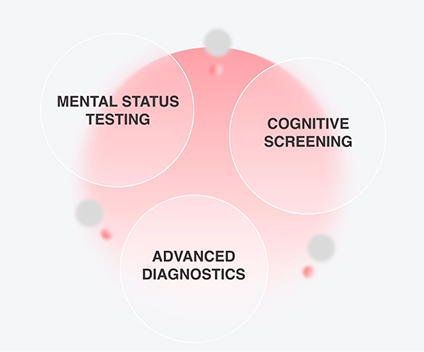
A patient’s journey usually begins with a family doctor, who performs brief cognitive screening using tests like the MMSE or MoCA, reviews medications, mood, and daily functioning, and orders basic labs or brain imaging. If concerns remain, specialists conduct detailed neurological, psychological, and imaging assessments.
The first point of contact is the family doctor who performs a preliminary cognitive screen using MMSE (Mini‑Mental State Examination) or MoCA (Montreal Cognitive Assessment), Clock‑Drawing Test, Geriatric Depression Scale (GDS‑15), a review of medications, mood, and functional status (ADL/IADL questionnaires). If symptoms suggest cognitive decline, the general practitioner (GP) orders basic laboratory tests (CBC, thyroid, vitamin B12, metabolic panel) and, if possible, brain computed tomography (CT) or magnetic resonance imaging (MRI). The GP then refers the person to a neurology or psychiatry specialist.
The specialist completes a full neurological and mental status exam, a detailed medical and family history, neuropsychological testing (EADC “uniform test set”: MoCA, RAVLT, Trail Making A/B, Stroop, Boston Naming, WMS subtests), structural imaging (MRI preferred) to exclude secondary pathology).and differential testing for psychiatric disorders (depression, psychosis, anxiety)
Wait times
At University Medical Centre Ljubljana Memory Clinic, patients typically wait 3-6 months, occasionally up to 9, after referral.
According to the University Medical Centre Ljubljana Memory Clinic peoplse typically wait 3-6 months from primary‑care referral to full cognitive testing and imaging, in some regional cases, up to 9 months.
Diagnosis cost
A cohort at University Medical Centre Ljubljana estimated annual diagnostic costs around €578 per patient, higher for dementia cases. A European comparison using the Uniform Test Set for Dementia Diagnostics reported average diagnostic costs near €843 across Slovenian memory-clinic settings.
A Slovenian memory clinic cohort (UMC Ljubljana) estimated the average annual cost per patient at EUR 578, with higher costs for people ultimately diagnosed with dementia (EUR 751) versus subjective cognitive or mild cognitive impairment (EUR 550) and lower for psychiatric and other disorders (EUR 324). A comparative study of diagnostic costs in three European memory clinic settings found Slovenia’s diagnostic cost using a uniform test set was EUR 843 (771–914). The Uniform test set refers to a standardized diagnostic package (a harmonized group of clinical, neuropsychological, laboratory, and imaging tests) used across several European memory clinics.
Cognitive tests
In Slovenia, dementia diagnosis uses primary-care screening followed by specialized memory-clinic assessment. Doctors apply tools like MMSE and MoCA. Suspected cases are referred to University Medical Centre Ljubljana or University Medical Centre Maribor for comprehensive neuropsychological testing aligned with European Alzheimer’s Disease Consortium standards and national dementia-strategy guidelines.
Imaging tests
Dementia imaging typically begins with MRI, the gold standard at University Medical Centre Ljubljana and University Medical Centre Maribor, identifying brain atrophy and vascular lesions. CT is used when MRI is unavailable. Functional scans like FDG-PET or SPECT help differentiate dementia types and support biomarker-guided treatment decisions.
Genetic tests
National strategy allows selective genetic testing for early-onset dementia or strong family history, via specialists at University Medical Centre Ljubljana Memory Clinic or University Psychiatric Clinic Ljubljana.
Biomarker tests
Slovenia is gradually adopting blood biomarkers alongside imaging and CSF markers. Amyloid PET remains mainly research-based at University Medical Centre Ljubljana Neurology Clinic, while CSF biomarkers support diagnosis in limited cases as new European guidelines and therapies expand biomarker use.
Cognitive Tests
Cognitive Tests
In Slovenia, dementia diagnosis uses primary-care screening followed by specialized memory-clinic assessment. Doctors apply tools like MMSE and MoCA. Suspected cases are referred to University Medical Centre Ljubljana or University Medical Centre Maribor for comprehensive neuropsychological testing aligned with European Alzheimer’s Disease Consortium standards and national dementia-strategy guidelines.
Imaging Tests
Imaging Tests
Dementia imaging typically begins with MRI, the gold standard at University Medical Centre Ljubljana and University Medical Centre Maribor, identifying brain atrophy and vascular lesions. CT is used when MRI is unavailable. Functional scans like FDG-PET or SPECT help differentiate dementia types and support biomarker-guided treatment decisions.
Genetic Tests
Genetic Tests
National strategy allows selective genetic testing for early-onset dementia or strong family history, via specialists at University Medical Centre Ljubljana Memory Clinic or University Psychiatric Clinic Ljubljana.
Biomarker Tests
Biomarker Tests
Slovenia is gradually adopting blood biomarkers alongside imaging and CSF markers. Amyloid PET remains mainly research-based at University Medical Centre Ljubljana Neurology Clinic, while CSF biomarkers support diagnosis in limited cases as new European guidelines and therapies expand biomarker use.
Treatment & Care
Treatment & care
Show moreSpecialized dementia care in Ljubljana is provided by the University Medical Centre Ljubljana Memory Clinic and the University Psychiatric Hospital Ljubljana Geriatric Psychiatry Department. Monthly care costs range €1,037-€3,369, with home help and nursing homes representing the largest expenses. Standard Alzheimer’s medications are fully reimbursed by Health Insurance Institute of Slovenia national programs, NGOs such as Spominčica Alzheimer Slovenija.
Specialized facilities and services
Specialized dementia care in Ljubljana is provided by the University Medical Centre Ljubljana Memory Clinic and the University Psychiatric Hospital Ljubljana Geriatric Psychiatry Department, offering neurological and psychiatric services for older adults.
University Medical Centre Ljubljana, Department of Neurology – Centre for Cognitive Impairments (Memory Clinic)
Within the University Psychiatric Hospital Ljubljana, the Geriatric Psychiatry Department provides psychiatric care for older adults, including dementia-related services; cited in national context for dementia care capacities.
Approved medication
| Generic Name | Trade Name | Used for |
|---|---|---|
| Donepezil | Aricept, Aricept ODT, Adlarity, Eranz, Memac, Alzepil, Davia, Donecept, Donep, Donepex, Donesyn, Dopezil, Yasnal, Memorit, Pezale, Redumas, Zolpezil, Namzaric* | Donepezil is indicated for the symptomatic treatment of mild to moderately severe Alzheimer’s dementia. Official National Product Information |
| Rivastigmine | Exelon, Exelon Patch, Prometax, Rivastach, Nimvastid | Symptomatic treatment of mild to moderately severe Alzheimer’s dementia. Symptomatic treatment of mild to moderately severe dementia in patients with idiopathic Parkinson’s disease. Official National Product Information |
| Galantamine | Razadyne, Razadyne ER, Reminyl, Reminyl XL, Nivalin, Lycoremine, Galsya | Galantamine is indicated for the symptomatic treatment of mild to moderately severe dementia of the Alzheimer type. Official National Product Information |
| Memantine | Namenda, Namenda XR, Ebixa, Memary, Axura, Akatinol, Maruxa, Nemdatine, Namzaric* | Treatment of adult patients with moderate to severe Alzheimer’s disease. Official National Product Information |
| Lecanemab | Leqembi | Lecanemab is indicated for the treatment of mild cognitive impairment and mild dementia due to Alzheimer’s disease in adult patients that are apolipoprotein E ε4 (ApoE ε4) heterozygotes or non-carriers. Official National Product Information |
| Donanemab | Kisunla | Donanemab is indicated for the treatment of mild cognitive impairment and mild dementia due to Alzheimer’s disease (AD) in adult patients that are apolipoprotein Eε4 (ApoE ε4) heterozygotes or non-carriers. Official National Product Information |
*Namzaric = combination of Donepezil and Memantine
Treatment cost
Monthly informal and social care for dementia patients in Slovenia ranges from €1,037 to €3,369, with formal and informal home help costing €265 million and nursing homes €105 million annually. Diagnostic costs are modest by comparison. Standard Alzheimer’s medications like donepezil, rivastigmine, galantamine, and memantine are fully reimbursed under Health Insurance Institute of Slovenia, while new biologics, such as Kisunla and Leqembi, are not yet covered, leaving patients responsible for these costs. Prescriptions require specialist oversight by neurologists or psychiatrists.

The monthly informal and social care costs for people living with dementia ranged between EUR 1,037 and EUR 3,369. Direct healthcare costs are a smaller portion of total dementia costs, with estimates of EUR 265 million for formal/ or informal home help and EUR 105 million for nursing home accommodation in Slovenia, underscoring that diagnostic costs are modest compared to broader societal care costs.
As of early 2026, Alzheimer’s disease medications in Slovenia are largely covered under the national compulsory health insurance scheme managed by the Health Insurance Institute of Slovenia (ZZZS). Standard cognitive enhancers, including donepezil, rivastigmine, galantamine, and memantine, are listed on the ZZZS positive reimbursement list and are typically reimbursed at 100% of the reference price, meaning people only pay a small co-payment if they opt for a brand-name drug priced above the ZZZS “maximum recognised value.” These medicines must be prescribed by a neurologist or psychiatrist, ensuring specialist oversight in diagnosis and treatment continuation. In contrast, the new biologic Alzheimer’s disease therapies, such as donanemab and lecanemab, though authorised at the European level, are not yet included in Slovenia’s reimbursement list and remain pending national HTA and pricing review. As a result, patients currently bear the full cost of these newer options, while the mainstay generic Alzheimer’s disease medications remain widely accessible through public coverage.
Caregiver support
Slovenia’s National Dementia Strategy recognizes family caregivers as central, promoting home and community support, day and respite centres, and professional training. Caregivers access social benefits under the Long-Term Care Act, while NGOs like Spominčica Alzheimer Slovenija offer counselling, support groups, and the Dementia-Friendly Points network. Home help, day centres, telecare services, and national training programs help caregivers manage daily care, though rural availability remains limited, with waiting times and uneven coverage.
Slovenia’s National Dementia Strategy (2017–2020) recognises family care partners as essential to dementia care. It aims to strengthen home and community support systems, create day and respite centres, and provide professional training for both formal and informal carers.
Carers can receive social support benefits under the Long-Term Care Act (effective 2024), including social security coverage, training, and respite services. Non-governmental organisations (NGOs) like Spominčica Alzheimer Slovenija also provide counselling and support groups.
Home help and dementia-specific day centres exist, mainly in larger cities, offering basic daily assistance and structured programmes. However, service availability remains inconsistent, with limited coverage and long waiting times in rural areas.
The Spominčica’s Dementia-Friendly Points network trains staff across public-facing organisations to support people living with dementia and their care partners; provides local information and post-diagnostic support, backed by the Ministries of Labour and Health.
E-care at home (telecare) project is a nationwide telecare service led by Telekom Slovenije and ZDUS; licensed by the Ministry of Labour; supports older adults and those living with cognitive decline or dementia to live safely at home, reducing carer strain.
National programmes co-financed by the Ministry of Labour and municipalities provide carer training (communication, home care skills, respite options, palliative care).
The DFS network’s growth has been co-funded via Ministry of Health tenders, embedding carer-oriented awareness and support across communities.
- https://www.gov.si/en/news/2023-07-06-57th-regular-session-of-the-government-of-the-republic-of-slovenia/
- https://www.who.int/news-room/fact-sheets/detail/dementia
- https://eurohealthobservatory.who.int/monitors/health-systems-monitor/updates/hspm/slovenia-2016/adoption-of-the-national-strategy-for-dementia-control-(2017--2020)
- https://www.alzint.org/news-events/news/spomincica-alzheimer-slovenija-dementia-friendly-spots/
- https://eurocarers.org/e-care-service-for-safe-living-at-home-with-amazing-results-in-slovenia/
- https://globaldementia.org/de/dementia-friendly-spots-network-in-slovenia
- https://eurocarers.org/country-profiles/slovenia/
Policy
Policy
Show moreSlovenia’s “Dementia Management Strategy until 2030” provides a multi-stakeholder framework for coordinated, person-centered care, focusing on stigma reduction, prevention, early detection, workforce training, carer support, and research. Implementation includes awareness campaigns, community initiatives like Spominčica Alzheimer Slovenija Dementia-Friendly Points, and updates to clinical pathways and funding models. Legal gaps, limited insurance coverage, uneven Long-Term Care Act implementation, and low public awareness continue to challenge early diagnosis, treatment access, and full realization of national dementia goals.
National dementia plan
Slovenia’s “Dementia Management Strategy until 2030” establishes a coordinated, multi-stakeholder framework for dementia care, building on the 2017-2020 National Strategy. Key objectives include reducing stigma, promoting prevention, improving early detection, ensuring person-centered care across home, community, and long-term settings, and strengthening post-diagnostic support. The strategy emphasizes workforce training, carer support, research, data infrastructure, and governance, including a National Dementia Centre and registry. Implementation is underway for awareness campaigns, workforce development, and community initiatives like Spominčica Alzheimer Slovenija Dementia-Friendly Points, while the 2024–2025 action plan outlines responsibilities, timelines, indicators, and funding to advance these measures and ensure coordinated, evidence-based dementia care nationwide.
The Slovenian government adopted the “Dementia Management Strategy in the country until 2030,” setting an integrated, multi-stakeholder approach and action plans to 2030, with initial actions for 2023–2024.
The current national strategy builds on Slovenia’s earlier National Strategy for Dementia Control (2017–2020), which defined ten areas including awareness, early diagnosis, coordinated care, access to medication, research, surveillance, social care, palliative care, regional multidisciplinary centres, GP cognitive testing, and education for professionals and carers.
The main objectives from Slovenia’s official Dementia Management Strategy until 2030 (Strategija obvladovanja demence v Sloveniji do leta 2030) are to:
• Reduce stigma and raise public awareness about dementia
• Strengthen prevention and risk reduction across the life course
• Improve early detection, diagnosis, and post-diagnostic support
• Ensure timely, coordinated, and person-centred health and social care across settings (home, community, long-term care)
• Develop and support long-term care for people living with dementia, with emphasis on care at home and in local communities
• Establish and maintain a national dementia dataset and registry and improve data, monitoring, and evaluation
• Build workforce capacity: education and training for health, social care professionals, informal carers, and volunteers
• Promote and support research, innovation, and evidence-based practice
• Protect the rights, dignity, and participation of people living with dementia and support carers
• Ensure appropriate care during epidemics and other emergencies, and strengthen system governance (including a National Dementia Centre)
Several elements are already in implementation, while others are in setup phases. Based on official announcements and stakeholder updates, the most advanced areas are action planning, awareness and outreach, workforce training, and steps toward data infrastructure. The government of Slovenia confirmed that the registry and National Dementia Centre are in progress but not yet fully operational.
Furthermore, the government approved the first two-year action plan to implement the 2030 Strategy, detailing measures, responsible bodies, indicators, timelines, funding, and expected results for 2024–2025.
Ongoing national awareness efforts to reduce stigma and community initiatives (e.g., Dementia-Friendly Points6) have been scaled and supported under the strategy framework, which were already active and continue under the new plan.
Continued education and competency-building for health and social care providers and support for informal carers are part of the active implementation, with defined actions in the 2024–2025 plan.
- https://www.alzheimer-europe.org/news/slovenian-government-approves-new-national-dementia-strategy-until-2030?language_content_entity=en
- https://www.spomincica.si/novice/vlade-republike-slovenije-sprejela-akcijski-nacrt-za-izvajanje-strategije-obvladovanja-demence-v-sloveniji-do-leta-2030
- https://www.gov.si/assets/ministrstva/MZ/DOKUMENTI/NOVICE/Strategija-obvladovanja-demence-v-Sloveniji-do-leta-2030.pdf
- https://www.gov.si/assets/ministrstva/MZ/DOKUMENTI/NOVICE/Strategija-obvladovanja-demence-v-Sloveniji-do-leta-2030.pdf
- https://www.gov.si/en/news/2023-07-06-57th-regular-session-of-the-government-of-the-republic-of-slovenia/
- https://www.spomincica.si/novice/vlade-republike-slovenije-sprejela-akcijski-nacrt-za-izvajanje-strategije-obvladovanja-demence-v-sloveniji-do-leta-2030
- https://www.spomincica.si/demenci-prijazne-tocke https://globaldementia.org/en/strengthening-capacites-for-dementia-in-slovenia
Upcoming plans
The National Institute of Public Health is updating clinical pathways and funding models for dementia therapies, while Spominčica Alzheimer Slovenija Dementia-Friendly Communities expands nationally through 2025-2027.
The National Institute of Public Health confirmed publicly that its technical groups are updating national clinical pathways and financing models for new dementia therapies within the strategic framework 2020–2030.
Led by Spominčica Alzheimer Slovenia in partnership with the Institute of Public Health and municipalities, the Dementia Friendly Communities program is expanding in 2025–2027 beyond pilot towns into a national programme, funded under the Health Promotion and Social Cohesion budget.
Policy gaps
Legal barriers
The dementia registry and National Dementia Centre remain under development, leaving gaps in surveillance, data management, and coordinated care. Outdated guardianship rules, strict data-protection laws, limited insurance coverage for memory-clinic services, and uneven Long-Term Care Act implementation continue to challenge early diagnosis, treatment access, and full realization of Slovenia’s 2020-2030 National Dementia Strategy.
The dementia registry and the National Dementia Centre are still in development, indicating that institutional and regulatory frameworks for surveillance, data management, and coordinated care remain incomplete.
Slovenia’s legal and institutional framework for dementia protection is advanced but faces several regulatory barriers affecting care and early diagnosis. The National Dementia Strategy 2020–2030 acknowledges that outdated guardianship rules still limit supported decision‑making for people living with cognitively impaired, while strict GDPR and national data‑protection laws (ZVOP‑2) slow the integration of the new Dementia Register and data exchange between health and social care. Financially, the current Health Insurance Act does not yet cover multidisciplinary memory‑clinic care or new antibody treatments for Alzheimer’s disease, creating a reimbursement gap that University Medical Centre Ljubljana has highlighted in its system‑impact study. Implementation of the Long‑Term Care Act (2021) remains uneven across municipalities, leaving families to fill support gaps. Together, these legal and administrative constraints continue to delay full realization of Slovenia’s national dementia goals.
Cultural barriers
The WHO European Observatory notes that low public awareness, stigma, and late help-seeking hinder early dementia detection in Slovenia, while studies show adolescents already develop misconceptions and negative attitudes toward Alzheimer’s and dementia patients.
The WHO European Observatory highlights that improving early detection and diagnosis is a major goal because awareness and help‑seeking remain low among the Slovenian population. It links detection barriers with insufficient public awareness and late presentation to clinicians. Hence, early detection remains a challenge, suggesting ongoing societal or cultural reluctance toward dementia screening and diagnosis, possibly due to stigma, lack of awareness, or limited engagement with preventive health services.
In a study of perceptions of a population of adolescents towards patients with Alzheimer’s disease and dementia, they found that adolescents are already forming negative attitudes and misconceptions of dementia.
Research
Research
Show moreResearchers at University Medical Centre Ljubljana project introducing lecanemab would strain systems and finances (€1.06 billion/year) while Slovenia advances early-detection (MOPEAD) and precision-medicine (PROMINENT) initiatives.
Selected academic institutions
Clinical trials and registries
Clinical trials in Slovenia are regulated by the Javna agencija Republike Slovenije za zdravila in medicinske pripomočke (JAZMP), which authorizes and oversees study conduct in line with EU Clinical Trials Regulation. Trials are typically registered in international platforms such as the EU Clinical Trials Information System (CTIS) and ClinicalTrials.gov, ensuring transparency and public access to study data.
- https://www.jazmp.si/en/human-medicines/clinical-trials-and-compassionate-use-of-medicinal-products/clinical-trials-of-medicinal-products/
- https://www.ema.europa.eu/en/human-regulatory-overview/research-development/clinical-trials-human-medicines/clinical-trials-information-system
- https://www.clinicaltrialsregister.eu&sa=D&source=docs&ust=1772535461079100&usg=AOvVaw1NbrbY06LJco9v6MiKTCMB
Selected innovative methods
Researchers at University Medical Centre Ljubljana modeled the national impact of introducing monoclonal antibody therapies like lecanemab, highlighting major system, workforce, imaging, and cost challenges. Treating all eligible patients could cost €1.06 billion annually, exceeding 2022 medication spending. Slovenia also piloted early-detection programs through MOPEAD and participates in the PROMINENT precision-medicine project to improve Alzheimer’s diagnosis and care.
University Medical Centre Ljubljana researchers outline how Slovenian memory clinics would reorganise pathways, capacity, safety monitoring, and costs to introduce therapies like lecanemab. The purpose was to anticipate national system implications of introducing monoclonal antibody treatments (lecanemab and similar) into Slovenia’s public health system, focusing on: diagnostic and care pathways, memory‑clinic capacity and workforce, infusion logistics, imaging, and safety monitoring, and financial affordability and scalability
They estimate substantial system impacts and model national affordability and logistics. More specifically, they find that treating all potential candidates nationwide would cost ≈ €1.06 billion per year, exceeding Slovenia’s entire 2022 national medication spending (€743 million). Even if restricted to high‑priority patients, fiscal impact remains “substantial and likely unsustainable without EU co‑financing or price renegotiation.”
Slovenia served as a regional hub in the Innovative Health Initiative project MOPEAD (Models of patient engagement for Alzheimer’s disease), which piloted innovative ways to find people living with prodromal Alzheimer’s disease and mild Alzheimer’s disease in the community (e.g., web‑based pre‑screening, memory clinic open days, GP routes)
Slovenian partners are involved in PROMINENT, a 5‑year Innovative Health Initiative public‑private project building a digital precision‑medicine platform to improve diagnosis and treatment of neurodegenerative diseases and co‑morbidities.
Support
Support
Show moreSince 2016, Spominčica Alzheimer Slovenija Dementia-Friendly Spots has built a nationwide network training public-facing staff, running a daily helpline, over 60 Alzheimer Cafés, and national events to raise awareness, reduce stigma, and strengthen care. With no dedicated dementia media in Slovenia, awareness is promoted through mainstream outlets like RTV Slovenija and Spominčica campaigns and documentaries.
Selected national associations, patient family associations, NGOs:
Selected initiatives
Since 2016, Spominčica Alzheimer Slovenija Dementia-Friendly Spots has expanded a nationwide network training public-facing staff to support people with dementia, runs a daily helpline, coordinates over 60 Alzheimer Cafés, and hosts national events to promote awareness, reduce stigma, and strengthen care collaboration.
Dementia Friendly Spots
Daily Helpline
Alzheimer Cafes
National Events
- https://www.alzint.org/news-events/news/spomincica-alzheimer-slovenija-dementia-friendly-spots/
- https://www.alzheimer-europe.org/news/alzheimer-slovenia-supports-and-empowers-people-dementia-during-covid-19-through-its-network
- https://www.alzheimer-europe.org/Conferences/Previous-conferences/2015-Ljubljana/Detailed-programme-abstracts-and-presentations/P5-Dementia-friendly-initiatives
- https://www.alzheimer-europe.org/news/spomincica-alzheimer-slovenia-organises-rhythm-human-brain-conference-ljubljana?language_content_entity=en
Dedicated media outlets
Slovenia does not have media outlets devoted solely to Alzheimer’s disease and dementia. Instead, coverage appears on mainstream platforms (such as RTV Slovenija) and through the national Alzheimer Association Spominčica’s own channels and collaborations, for example, Spominčica co‑created the prime‑time TV documentary “Facing Dementia” and leads nationwide Dementia‑Friendly Spots campaigns that regularly attract media attention.
- https://www.facebook.com/spomincica.zdruzenje/&sa=D&source=docs&ust=1772535461080190&usg=AOvVaw0JoGrltcJQiTpSTJXzr6tQ
- https://www.instagram.com/igspomincica/
- https://www.alzheimer-europe.org/news/alzheimer-slovenia-co-creates-tv-documentary-dementia-featuring-member-european-working-group?language_content_entity=en