

Switzerland
Switzerland combines high-efficiency healthcare, characterised by the low specialist waiting times, with progressive social policies. The country supports families through the unique “Caregiver Employment Model”, which allows relatives to be hired as salaried professionals via the Spitex home care network. This commitment to rights and autonomy extends to the legal sphere in the canton of Geneva, which recently became the first region to grant full voting rights to individuals under guardianship. Additionally, the nation is a hub for diagnostic innovation in the early detection of Alzheimer’s disease.

AD Rating
Diagnostic Pathway
Specialized Care
Caregiver Support
National Policies
Access to ATT-s
Highlights

Population
Median age
Health expenditure (% of GDP)
Diagnosis
Diagnosis
Show moreAlzheimer’s diagnosis follows standardised guidelines from the Swiss Memory Clinics network, starting with GP assessments and referrals to multidisciplinary memory clinics when needed. Evaluations combine cognitive tests (MMSE, Clock Drawing, MoCA), structural imaging (MRI, CT), advanced PET scans for complex cases, and biomarker analyses, including CSF tests and upcoming blood-based p-Tau testing. Genetic testing for early-onset forms requires physician oversight and counseling. Wait times are short, with GP appointments within days and minimal delays for specialist care. Mandatory health insurance covers these diagnostics, with deductibles and co-payments capped, limiting annual out-of-pocket costs to CHF 3,200.
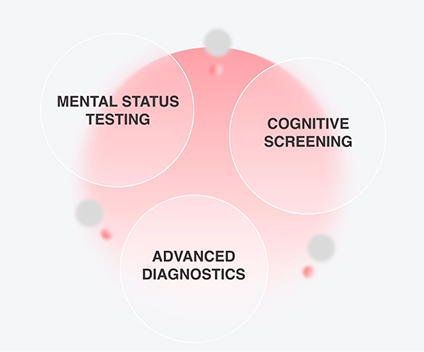
Diagnosis pathway
In Switzerland, Alzheimer’s diagnosis follows standardised guidelines developed by the Swiss Memory Clinics network. Family doctors conduct initial assessments, referring uncertain cases to multidisciplinary memory clinics for comprehensive evaluation using neuropsychological testing, structural imaging, and, when needed, advanced techniques like FDG-PET to ensure diagnostic accuracy.
The diagnostic pathway for Alzheimer’s disease in Switzerland is standardised through diagnostic guidelines developed by the Swiss Memory Clinics association. It begins with a family doctor, who conducts an initial assessment using cognitive screening tools like the MMS and rules out reversible causes for symptoms. If the diagnosis is uncertain, the family doctor refers the patient to a specialist, typically within a dedicated memory clinic. These clinics, organised under the national Swiss Memory Clinics network, use a multidisciplinary team of neurologists, geriatricians, and neuropsychologists for a comprehensive evaluation. The process includes detailed neuropsychological testing to define the cognitive deficits and a structural brain imaging to identify atrophy and exclude other pathologies. Advanced neuroimaging techniques like fluorodeoxyglucose positron emission tomography (FDG-PET) are recommended for patients to clarify unclear dementia etiologies, assess ambiguous cognitive symptoms (including possible non-neurodegenerative causes), and confirm or exclude neurodegeneration through characteristic metabolic patterns.
- https://www.bag.admin.ch/fr/strategie-nationale-en-matiere-de-demence-2014-2019
- https://swiss-dementia-network.ch/clinic/
- https://swiss-dementia-network.ch/documents/49/Die_Empfehlungen_der_Swiss_Memory_Clinics_f%C3%BCr_die_Diagnostik_der_Demenzerkrank_GSQpSON.pdf
- https://www.alzheimer-schweiz.ch/de/ueber-demenz/beitrag/der-weg-zur-diagnose
Wait times
Switzerland has short wait times, with GP visits within days and among the lowest rates of long specialist appointment delays globally.
Switzerland generally has relatively short waiting times. An appointment with a general practitioner (GP) can typically be secured within two days. Organisation for the Economic Co-operation and Development (OECD) metrics show that Switzerland has the lowest share of patients waiting one month or more for a specialist appointment, compared to other Western countries.
Diagnosis cost
Mandatory Swiss health insurance covers essential Alzheimer’s diagnostics, including consultations, neuropsychological testing, MRI, CSF and genetic analyses, plus PET imaging. Patients pay deductibles (CHF 300–2,500) and 10% co-payment, capped at CHF 700, totaling maximum annual out-of-pocket costs of CHF 3,200.
Mandatory basic health insurance covers the full range of medically necessary procedures for diagnosing Alzheimer’s disease. This includes consultations with general practitioners and specialists, neuropsychological assessments prescribed by a physician, MRI scans, and biomarker analyses like CSF tests and genetic testing. Advanced imaging, such as FDG-PET and amyloid-PET scans, is also covered. Patients bear initial costs through a mandatory annual deductible (franchise) of their choice, ranging from CHF 300 to CHF 2,500, plus a 10% co-payment on subsequent costs, which is capped at CHF 700 per year. This results in a maximum annual out-of-pocket liability of CHF 3,200 for covered medical services.
- https://www.krankenkasse-wechseln-schweiz.ch/leistungen/
- https://www.alzheimer-schweiz.ch/de/ueber-demenz/beitrag/der-weg-zur-diagnose
- https://www.praxis-gasser.ch/haeufige-fragen
- https://sonar.ch/global/documents/236053
- https://en.comparis.ch/krankenkassen/grundversicherungen/franchise
- https://www.bag.admin.ch/en/health-insurance-co-payment-for-persons-resident-in-switzerland
Cognitive tests
Mini-Mental-Status-Examination (MMSE) and Clock Drawing Test (CDT) are the most commonly used cognitive screening tests in Switzerland. Other tests, like the Montreal Cognitive Assessment (MoCA) are available and used as well.
Switzerland does not have a national screening programme for the general population for Alzheimer’s disease.
Imaging tests
Structural neuroimaging with Magnetic Resonance Imaging (MRI) and Computed Tomography (CT), as well as Positron Emission Tomography (PET) scanners are available across Switzerland.
In 2021, The Swiss Society of Nuclear Medicine and the Swiss Memory Clinics have jointly published Appropriate Use Criteria for amyloid-PET. These criteria specify that amyloid-PET is most useful for people living with persistent, progressive, and unexplained Mild Cognitive Impairment (MCI), or for individuals who meet the criteria for possible Alzheimer’s disease diagnosis but present with an atypical clinical course or suspected mixed etiology. Also, the introduction of subsidised FDG-PET within Medicare (the publicly funded universal healthcare system in Australia) means the use of FTG-PET is a more common element of diagnostics.
- https://www.bfs.admin.ch/asset/en/16584132
- https://www.versorgungsatlas.ch/en/indicator/_420/c
- https://www.versorgungsatlas.ch/en/indicator/_433
- https://www.versorgungsatlas.ch/en/indicator/_051
- https://www.statista.com/statistics/963552/positron-emission-tomography-pet-scanners-in-switzerland/
- https://www.thieme-connect.com/products/ejournals/abstract/10.1055/a-1277-6014
- *This section has been amended according to direct feedback from ADI’s member.
Genetic tests
Testing for Early-Onset Familial Alzheimer’s disease genes (example-APP, PSEN1, PSEN2) is governed by the Swiss Federal Act on Human Genetic Testing, which mandates that such tests be ordered by a physician and be accompanied by comprehensive pre- and post-test genetic counseling. This ensures that patients provide informed consent and receive the necessary support to understand and cope with the results.
Biomarker tests
Analysis of biomarkers in cerebrospinal fluid (CSF) is an established and accessible diagnostic method in specialised Swiss Memory Clinics (both private and public).
Cognitive Tests
Cognitive Tests
Mini-Mental-Status-Examination (MMSE) and Clock Drawing Test (CDT) are the most commonly used cognitive screening tests in Switzerland. Other tests, like the Montreal Cognitive Assessment (MoCA) are available and used as well.
Switzerland does not have a national screening programme for the general population for Alzheimer’s disease.
Imaging Tests
Imaging Tests
Structural neuroimaging with Magnetic Resonance Imaging (MRI) and Computed Tomography (CT), as well as Positron Emission Tomography (PET) scanners are available across Switzerland.
In 2021, The Swiss Society of Nuclear Medicine and the Swiss Memory Clinics have jointly published Appropriate Use Criteria for amyloid-PET. These criteria specify that amyloid-PET is most useful for people living with persistent, progressive, and unexplained Mild Cognitive Impairment (MCI), or for individuals who meet the criteria for possible Alzheimer’s disease diagnosis but present with an atypical clinical course or suspected mixed etiology. Also, the introduction of subsidised FDG-PET within Medicare (the publicly funded universal healthcare system in Australia) means the use of FTG-PET is a more common element of diagnostics.
- https://www.bfs.admin.ch/asset/en/16584132
- https://www.versorgungsatlas.ch/en/indicator/_420/c
- https://www.versorgungsatlas.ch/en/indicator/_433
- https://www.versorgungsatlas.ch/en/indicator/_051
- https://www.statista.com/statistics/963552/positron-emission-tomography-pet-scanners-in-switzerland/
- https://www.thieme-connect.com/products/ejournals/abstract/10.1055/a-1277-6014
- *This section has been amended according to direct feedback from ADI’s member.
Genetic Tests
Genetic Tests
Testing for Early-Onset Familial Alzheimer’s disease genes (example-APP, PSEN1, PSEN2) is governed by the Swiss Federal Act on Human Genetic Testing, which mandates that such tests be ordered by a physician and be accompanied by comprehensive pre- and post-test genetic counseling. This ensures that patients provide informed consent and receive the necessary support to understand and cope with the results.
- https://www.bfs.admin.ch/asset/en/16584132
- https://www.versorgungsatlas.ch/en/indicator/_420/c
- https://www.versorgungsatlas.ch/en/indicator/_433
- https://www.versorgungsatlas.ch/en/indicator/_051
- https://www.statista.com/statistics/963552/positron-emission-tomography-pet-scanners-in-switzerland/
- https://www.thieme-connect.com/products/ejournals/abstract/10.1055/a-1277-6014
- *This section has been amended according to direct feedback from ADI’s member.
Biomarker Tests
Biomarker Tests
Analysis of biomarkers in cerebrospinal fluid (CSF) is an established and accessible diagnostic method in specialised Swiss Memory Clinics (both private and public).
Treatment & Care
Treatment & care
Show moreSpecialised Alzheimer’s care is concentrated in urban centres such as Zurich, Geneva, Basel, Bern, and Lausanne, with rural residents often travelling for services. Support includes Spitex home care, day centres, residential and dementia-focused facilities, and palliative care, though access varies by canton. Mandatory health insurance covers medications, physician-prescribed treatments, and partial transport, while non-drug therapies are largely out-of-pocket. Financial support includes Helplessness Allowance, Supplementary Benefits, and Disability Insurance. Caregivers access Care Credits, salaried Spitex roles, Alzheimer Holidays, and resources from Alzheimer Switzerland and Pro Senectute, including counseling, training, support groups, and the iSupport Swiss app.
Specialized facilities and services
Specialised Alzheimer’s care in Switzerland is concentrated in urban centres like Zurich, Geneva, Basel, Bern, and Lausanne, ensuring strong access there but requiring travel for rural residents. Nationwide, support includes subsidised Spitex home care, day centres, and diverse residential options, including dementia-focused facilities. Palliative care follows national guidelines, yet specialised inpatient services are unevenly distributed and largely urban-based. Integrated models, such as Geneva’s coordinated network, highlight regional disparities, as access to comprehensive, continuous care varies significantly depending on canton of residence.
Specialised memory clinics for Alzheimer’s disease are primarily located in cities with university hospitals, including Basel, Bern, Geneva, Lausanne, and Zurich. While urban residents have good access to high-quality diagnostics, those in rural cantons may face significant travel and potential delays in receiving a comprehensive assessment. For example, Zurich alone hosts 11 memory clinics. In contrast, smaller or less densely populated cantons, like Uri or Graubünden, typically have one or two clinics, often linked to a local hospital. Some alpine or rural cantons (e.g., Schwyz) require residents to travel to neighboring cantons for specialist care.
At-home support is available throughout the country via the subsidised Spitex network for nursing care and private agencies for non-medical help. Day care centres, which offer caregiver respite, are also available, such as the Pilatusblick centre near Lucerne that provides small-group, home-like care. For residential care, options range from traditional nursing homes, many with dedicated dementia wards, to highly specialised, purpose-built centres found in cities like Zurich. Switzerland also hosts a dementia village in Wiedlisbach, designed to fulfill needs of people living with dementia.
Palliative care is available and is guided by the National Guidelines on Palliative Care. Specialised inpatient palliative units offering short-term, acute symptom management are unevenly distributed, and are mostly located within major hospitals in urban centres like Zurich and Geneva. The Geneva Palliative Care Network serves as an exemplary model, coordinating a full range of services from mobile medical teams to social and spiritual support throughout the canton. The existence of such integrated networks is highly dependent on cantonal policy, meaning access to holistic, continuous palliative support varies significantly based on a person’s place of residence.
Approved medication
| Generic Name | Trade Name | Used for |
|---|---|---|
| Donepezil | Aricept, Aricept ODT, Adlarity, Eranz, Memac, Alzepil, Davia, Donecept, Donep, Donepex, Donesyn, Dopezil, Yasnal, Memorit, Pezale, Redumas, Zolpezil, Namzaric* | Donepezil is indicated for the symptomatic treatment of mild to moderately severe Alzheimer’s dementia. Official National Product Information |
| Rivastigmine | Exelon, Exelon Patch, Prometax, Rivastach, Nimvastid | Symptomatic treatment of mild to moderately severe Alzheimer’s dementia. Symptomatic treatment of mild to moderately severe dementia in patients with idiopathic Parkinson’s disease. Official National Product Information |
| Galantamine | Razadyne, Razadyne ER, Reminyl, Reminyl XL, Nivalin, Lycoremine, Galsya | Galantamine is indicated for the symptomatic treatment of mild to moderately severe dementia of the Alzheimer type. Official National Product Information |
| Memantine | Namenda, Namenda XR, Ebixa, Memary, Axura, Akatinol, Maruxa, Nemdatine, Namzaric* | Treatment of adult patients with moderate to severe Alzheimer’s disease. Official National Product Information |
| Donanemab | Kisunla | Donanemab is indicated for the treatment of mild cognitive impairment and mild dementia due to Alzheimer’s disease (AD) in adult patients that are apolipoprotein Eε4 (ApoE ε4) heterozygotes or non-carriers. Official National Product Information |
*Namzaric = combination of Donepezil and Memantine
Treatment cost
In Switzerland, mandatory basic health insurance covers approved anti-dementia medications, doctor-prescribed treatments, and up to 50% of necessary transport (capped at CHF 500). Non-drug therapies like music or art therapy are generally excluded, though some supplementary insurance may partially cover them. Patients can access the Helplessness Allowance for daily support, Supplementary Benefits if income is insufficient, and Disability Insurance for pre-retirement diagnoses, aiding with pensions, necessary aids, or home modifications. Alzheimer Switzerland advocates for broader coverage of non-drug interventions to improve access.

Approved anti-dementia medications are covered by the mandatory basic health insurance provided by the government and private nonprofit insurers. Treatments that are explicitly prescribed by a doctor for a recognised medical purpose, such as physiotherapy, are also covered by mandatory basic health insurance, as well as up to 50% of medically necessary transport, capped at CHF 500 per calendar year.
Many beneficial non-drug treatments—such as music therapy, art therapy, and certain forms of specialised psychotherapy—are generally not covered by mandatory basic health insurance. Alzheimer Switzerland is actively campaigning for this to change, as many patients currently cannot access these therapies unless they pay for them privately. Some voluntary supplementary insurance policies may offer partial coverage for these types of therapies, but it depends on the specific plan.
For daily living assistance, patients can apply for a Helplessness Allowance, a non-means-tested cash benefit based on their level of dependency, which can be used to pay for private support. If a patient’s income and assets are insufficient to cover the high costs of care, particularly in a nursing home, they have a legal right to Supplementary Benefits (Ergänzungsleistungen), a means-tested programme that bridges the financial gap. Additionally, for those diagnosed before retirement age, Disability Insurance may provide a pension and cover costs for necessary aids or home modifications. The full list of financial benefits people living with Alzheimer’s disease or other dementia can access can be found on this link: https://www.alzheimer-schweiz.ch/de/ueber-demenz/beitrag/demenzbetroffene-haben-anspruch-auf-finanzielle-unterstuetzung
Caregiver support
Switzerland supports dementia caregivers through programs like Care Credits, salaried Caregiver Employment via Spitex, and Alzheimer Holidays. Organisations like Alzheimer Switzerland and Pro Senectute provide counseling, training, support groups, and digital tools such as the iSupport Swiss app.
Care Credits programme is a non-monetary benefit where a “fictitious income” is credited to the caregiver’s personal state pension account for each year they provide care, protecting their long-term financial security by compensating for career interruptions.
Caregiver Employment Model also directly empowers caregivers by transforming their role into a formal, salaried profession through Spitex agencies, which includes professional training, paid leave, and integration into a specialist support team.
Alzheimer Switzerland organises specialised Alzheimer Holidays that allow both the caregiver and the person living with dementia to take a supported vacation. Alzheimer Switzerland and Pro Senectute serve as points of contact, offering expert counseling, training courses, and local support groups where caregivers can share experiences. The latter also provides digital tools like the iSupport Swiss app to enhance caregiver skills.
- https://www.ahv-iv.ch/p/1.03.d
- https://en.spitexcare.ch/employment-and-wages-for-family-carers
- https://www.alzheimer-schweiz.ch/de/beitrag/alzheimer-ferien-entlastung-ohne-trennung
- https://www.alzheimer-schweiz.ch/de/ueber-demenz/beitrag/praevention-fuer-angehoerige-von-menschen-mit-demenz
- https://www.prosenectute.ch/de/ueber-uns/gesamtorganisation/strategie.html
- https://www.iph.usi.ch/en/events-news/isupport-swiss-supporting-family-caregivers-36081
Policy
Policy
Show moreSwitzerland’s 2014–2019 National Dementia Strategy promoted awareness, tailored services, professional training, and data sharing. Its successor, the National Dementia Platform, unites 88 organisations for nationwide, individualised support. Legal and cultural gaps remain: voting restrictions for adults under deputyship and limited public understanding, particularly for elderly migrants, sustain stigma.
National dementia plan
Switzerland’s 2014–2019 National Dementia Strategy focused on awareness, needs-based services, professional training, and data sharing. Its successor, the National Dementia Platform, unites 88 organisations to ensure tailored care, support, and treatment nationwide.
National Dementia Strategy (2014–2019) was approved jointly by the federal government and the cantons and it revolved around four main fields of action, each underpinned by specific objectives aimed at improving dementia care and support:
1. Health Literacy, Information & Participation: the goal was to raise public awareness and understanding of dementia and to empower individuals living with dementia and their families to participate actively
2. Needs-Based Services: to provide tailored, integrated support, from early detection and diagnosis to ongoing care, and to promote flexible medico-social offerings attuned to patient needs
3. Quality of Care & Professional Competence: to improve care standards through training and upskilling for healthcare professionals, and to encourage certification and ensure consistent quality across services
4. Data & Knowledge Transfer: to strengthen the exchange of research, best practices, and reliable data, and to enhance planning and policy-making through informed insights
Following the completion of the National Dementia Strategy, the federal government and cantons launched the National Dementia Platform, with a goal to ensure all individuals living with dementia and their caregivers receive care, support, and treatment tailored to their needs. The platform brings together 88 member organisations, encompassing all Swiss cantons as well as national bodies like Alzheimer Switzerland.
Upcoming plans
Currently, there is no plan for a new national Alzheimer’s strategy in the country.
Policy gaps
Legal barriers
Under Swiss federal law, adults under general deputyship cannot vote (Federal Act on Political Rights, Art. 2). Geneva pioneered reform, granting full political rights, aligning with UN CRPD standards, enhancing inclusive participation nationally and locally.
Under Swiss federal law, individuals who are under general deputyship—a form of adult guardianship due to severe mental or physical disabilities—are excluded from voting in national elections. Specifically, Article 2 of the Federal Act on Political Rights stipulates that persons lacking legal capacity, including those under comprehensive guardianship, are ineligible to vote. However, the canton of Geneva has granted full political rights to individuals living with severe mental or physical disabilities. This reform allows people under guardianship to participate in national, cantonal, and communal elections. Geneva became the first Swiss canton to introduce such a reform, aligning with international human rights standards, including the United Nations Convention on the Rights of Persons with Disabilities, which Switzerland signed in 2014.
Cultural barriers
A significant portion of Switzerland’s population lacks dementia knowledge, fueling stigma. Elderly migrants face culturally sensitive care challenges, while the documentary “Alzheimer’s at 56” won the 2024 Anti-Stigma Award.
One study showed that a significant portion of the population in Switzerland lacks comprehensive knowledge about dementia. This knowledge gap may contribute to misconceptions and stigma, as individuals may not understand the symptoms or progression of the disease. A Swiss documentary film “Alzheimer’s at 56 – Family life after the diagnosis” received the Anti-Stigma Award in 2024. There are also unique challenges faced by elderly migrants living with dementia in Switzerland. There is the need for culturally sensitive care that acknowledges the life histories and backgrounds of individuals, ensuring they are not marginalised due to both age and cultural differences.
Research
Research
Show moreResearchers in Geneva and Fribourg advance Alzheimer’s diagnostics through multiple avenues: the AMYPAD project studies beta-amyloid via PET, PRETAD examines ethical and clinical aspects of predictive testing, and saliva-based biomarkers enable early risk detection. A European consensus pathway guides individualised diagnostics across 11 phenotypes, while the HUG Memory Clinic validates new blood tests against established CSF and PET standards.
Selected academic institutions
Clinical trials and registries
The Swiss online Brain Health Registry facilitates the registration of people who wish to contribute to research on Alzheimer’s disease and memory-related diseases. Once registered in the registry, they are personally contacted by the researchers at the Centre of their choice and offered the opportunity to participate in a study. The register is open to all persons aged 50 and over, with or without cognitive impairment. After completing a questionnaire, the participant is contacted by a researcher if the criteria he or she has mentioned correspond to the subject of the research.
Additionally, Swiss Clinical Trial Organisation (SCTO) promotes and supports clinical trials in Switzerland, including those related to dementia. They provide information about ongoing trials and resources for researchers. There are Clinical Trial Units (CTUs) at seven hospitals, which have formed a network and thus an established and nationally coordinated clinical research infrastructure.
Selected innovative methods
Geneva and Fribourg researchers advance Alzheimer’s diagnostics through PET and saliva biomarkers, ethical predictive testing studies, and a European consensus pathway, while HUG Memory Clinic validates new blood tests against established CSF and PET standards.
Researchers at University Hospitals of Geneva are involved in various projects, including the AMYPAD project, which focuses on improving the understanding of beta-amyloid proteins as diagnostic and therapeutic markers using PET imaging, and the PRETAD project, which examines the ethical, clinical, linguistic, and legal aspects of predictive testing for Alzheimer’s disease.
A team of researchers at the University of Fribourg has pioneered the investigation of saliva-based biomarkers for the early diagnosis of Alzheimer’s disease. Their research has shown that analysing the microbial flora in saliva can help identify individuals at risk even before the onset of visible symptoms.
A collaborative group from the University of Geneva, Geneva University Hospital, and Italian partners have published a European consensus diagnostic pathway in Lancet Neurology. This tool enables memory clinics to deliver individualised diagnostic strategies, mapping 11 clinical phenotypes and aligning the most appropriate biomarker tests (e.g., lumbar puncture, amyloid/tau PET), thus improving accuracy, reducing unnecessary tests, and preparing for precise therapeutic interventions. The HUG Memory Clinic at the Geneva University Hospitals is a key centre conducting research that directly compares the performance of new blood tests against the established gold standards of CSF analysis and PET imaging.
- https://www.unige.ch/medecine/migrg/en/groupes-de-recherche/935frisoni
- https://www.frontiersin.org/journals/neurology/articles/10.3389/fneur.2022.1063598/full?
- https://journals.plos.org/plosone/article?id=10.1371/journal.pone.0319868
- https://www.unifr.ch/med/en/news-and-events/news/23188/prev
- https://alz-journals.onlinelibrary.wiley.com/doi/full/10.1002/dad2.12000
- https://www.unige.ch/medias/en/2024/consensus-europeen-pour-le-diagnostic-de-la-maladie-dalzheimer
- https://www.thelancet.com/journals/laneur/article/PIIS1474-4422(23)00447-7/fulltext
- https://www.bhr-suisse.org/en/news/blood-biomarkers-promising-new-avenue-large-scale-screening-alzheimers-disease
Support
Support
Show moreSwitzerland provides community-driven dementia support through 150+ Alzheimer Cafés, regional counseling, the Alzheimer-Telefon helpline, alzguide.ch, and the alzpeer digital platform, offering peer support, expert guidance, forums, and podcasts. Alzheimer Switzerland’s website remains the primary dementia information hub.
Selected national associations, patient family associations, NGOs:
Selected initiatives
Switzerland offers extensive grassroots dementia support, including over 150 Alzheimer Cafés, regional counseling, the Alzheimer-Telefon helpline, alzguide.chdirectory, and the digital alzpeer platform, providing peer support, expert guidance, forums, and podcasts in German, French, and Italian.
Alzheimer Café
Alzpeer
- https://www.alzheimer-schweiz.ch/fr/offres/article/cafe-alzheimer-une-pause-conviviale-et-des-connaissances-sur-la-maladie
- https://www.alzheimer-schweiz.ch/de/angebote/beitrag/das-alzheimer-telefon-information-beratung-und-hilfe-schweizweit
- https://alzguide.ch/
- https://www.alzheimer-europe.org/news/alzheimer-switzerland-has-launched-new-community-platform-named-alzpeer
- https://community.alz.ch/
Dedicated media outlets
Alzheimer Switzerland’s website provides the most extensive information about AD and dementia.