

Trinidad and Tobago
Trinidad and Tobago’s dementia ecosystem is anchored by a long-standing civil-society footprint, most visibly the Alzheimer’s Association of Trinidad and Tobago (AzATT), which concentrates awareness-raising, carer education, and support-group programming in the main population centres of Trinidad and Tobago. The public system is broadly tax-funded and delivered through Regional Health Authorities, while a parallel private sector offers faster access for those able to pay, creating a practical “two-track” pathway in which timeliness of specialist assessment and diagnostics often depends on navigation capacity and resources. WHO’s Global Dementia Observatory profile for Trinidad and Tobago indicates that a National Dementia Plan is about to be adopted, but there is no evidence of its official adoption, suggesting that implementation and standardisation remain key constraints even where policy intent is recorded.

AD Rating
Diagnostic Pathway
Specialized Care
Caregiver Support
National Policies
Access to ATT-s
Highlights

Population
Median age
Health expenditure (% of GDP)
Diagnosis
Diagnosis
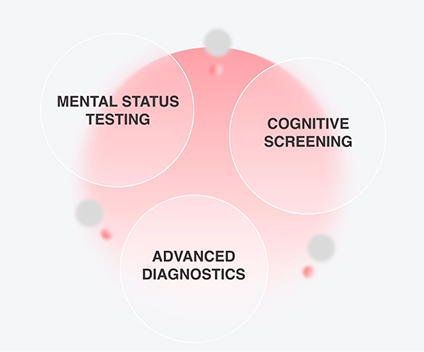
Show moreTrinidad and Tobago lacks codified national dementia pathways, relegating diagnosis to clinician-led protocols via cognitive tools and neuroimaging. Although state care is free, persistent bottlenecks and specialist deficits propel affluent families toward expedited, out-of-pocket private evaluations. Meanwhile, advanced genetic screening and fluid biomarkers remain largely inaccessible. This bifurcated system fosters profound socioeconomic disparities, where securing a timely assessment hinges more on personal financial resources than on a standardised, government-mandated clinical framework.
Diagnosis pathway
Trinidad and Tobago lacks a formal national dementia pathway. Instead, clinical assessment follows protocols from the University of the West Indies’ memory clinic and family physicians, utilizing medical histories, cognitive screening tools, laboratory testing, and neuroimaging to differentiate Alzheimer’s from other conditions.
The Ministry of Health does not publish a dedicated, stand-alone national dementia pathway. Clinical practice description from a family physician and board member of the Alzheimer’s Association of Trinidad and Tobago note that assessment involves obtaining a thorough medical history, using screening tools to evaluate cognitive symptoms, and determining whether symptoms are due to Alzheimer’s disease or other conditions. Evidence for the clinical assessment components is further drawn from dementia research programme at the University of the West Indies which established a memory clinic at a tertiary teaching hospital where people underwent clinical evaluation, laboratory testing, and neuroradiological imaging.
Wait times
Trinidad and Tobago lacks centralised dementia waiting-time data. While infrastructure has expanded, operational inefficiencies, diagnostic delays, and chronic specialist shortages persist. Consequently, patients face significant service bottlenecks, with access speed varying heavily between the public sector and private routes.
Trinidad and Tobago does not publish dementia-specific national waiting-time statistics in a centralised or routinely updated format. In practice, waiting times might vary substantially depending on whether families access services through public or private routes and across different RHAs.
Despite significant investment in new hospitals and health centres, operational efficiency in Trinidad and Tobago’s health system has lagged, resulting in long waiting times and persistent service bottlenecks. Inefficient internal processes, delays in diagnostics, governance and procurement challenges, while chronic shortages of nurses and specialists, partly driven by pay and working-condition disputes, have increased reliance on foreign recruits and raised system costs. Overall, infrastructure expansion has outpaced reforms in workforce management and operations, limiting gains in timely and efficient care.
Diagnosis cost
Trinidad and Tobago’s public healthcare is free, yet families often pay out-of-pocket for faster private diagnostics. This creates socioeconomic inequities, as wealthier households bypass public sector bottlenecks to secure earlier dementia assessments and confirmation.
Trinidad and Tobago operates a publicly funded health system in which services delivered through the public sector are provided without direct user charges. However, private services, including faster access to specialist consultations and diagnostic imaging, are paid out-of-pocket or via private insurance. As a result, the effective cost of dementia diagnosis depends heavily on whether families can remain within public routes or choose to accelerate care through private providers. This structure frequently produces inequities in diagnostic timeliness and continuity. While public care is formally available, households with greater financial means can obtain earlier assessment and confirmation, whereas others may face longer waits, reinforcing socioeconomic gradients in access even within a publicly funded system.
Cognitive tests
No specific national guideline detailing cognitive testing protocols or thresholds was identified in the sources reviewed. The World Health Organization (WHO) Global Dementia Observatory profile similarly notes the absence of approved national dementia care or support standards, suggesting that cognitive assessment practices are clinician-led rather than guided by nationally standardised protocols.
Imaging tests
Computed tomography (CT) scans and magnetic resonance imaging (MRI) scans are offered in both public hospitals and private imaging centres. In the public sector, imaging access is organised through hospital services under the RHAs, while private diagnostic centres provide an alternative route for faster access when affordable.
Genetic tests
There is no evidence that genetic testing for Alzheimer’s disease is routinely used in clinical practice in Trinidad and Tobago.
Biomarker tests
There is no public evidence of routine clinical availability of cerebrospinal fluid (CSF) or blood biomarker testing for Alzheimer’s disease diagnosis in the country.
Cognitive Tests
Cognitive Tests
No specific national guideline detailing cognitive testing protocols or thresholds was identified in the sources reviewed. The World Health Organization (WHO) Global Dementia Observatory profile similarly notes the absence of approved national dementia care or support standards, suggesting that cognitive assessment practices are clinician-led rather than guided by nationally standardised protocols.
Imaging Tests
Imaging Tests
Computed tomography (CT) scans and magnetic resonance imaging (MRI) scans are offered in both public hospitals and private imaging centres. In the public sector, imaging access is organised through hospital services under the RHAs, while private diagnostic centres provide an alternative route for faster access when affordable.
Genetic Tests
Genetic Tests
There is no evidence that genetic testing for Alzheimer’s disease is routinely used in clinical practice in Trinidad and Tobago.
Biomarker Tests
Biomarker Tests
There is no public evidence of routine clinical availability of cerebrospinal fluid (CSF) or blood biomarker testing for Alzheimer’s disease diagnosis in the country.
Treatment & Care
Treatment & care
Show moreCivil society organizations like AzATT spearhead dementia management, filling gaps left by an unmapped state network and absent palliative pathways. While public healthcare is nominally free, pervasive systemic delays force families to fund private diagnostics and long-term caregiving, as national policy lacks formal financial protections.
Specialized facilities and services
Trinidad and Tobago lacks a codified dementia network, with state “memory clinics” often undefined in public mapping. Consequently, community-based entities like AzATT and DARTT spearhead daily management through caregiver support and outreach. Furthermore, specific dementia-focused palliative pathways are absent from public policy, leaving end-of-life care largely reliant on general hospice services or family-led initiatives.
Trinidad and Tobago does not publicly outline a national network of day care centres, long-term treatment facilities, or a tiered dementia care model. While the Ministry of Health lists “memory clinics” within mental health therapeutic services, publicly available information does not clearly distinguish or map dedicated dementia day programs, residential care pathways, or specialised treatment facilities across the RHAs.
Community-based support for daily care and long-term management is therefore shaped largely by civil society. Alzheimer’s Association of Trinidad and Tobago (AzATT) and Dementia Awareness Research of Trinidad and Tobago (DARTT) provide carer support groups, education, and outreach that help families manage day-to-day care, behavioural challenges, and emotional strain, partially compensating for the limited visibility of formal dementia-specific day care or treatment centres. Palliative care services exist within hospital and hospice settings, but dementia-specific palliative pathways are not clearly articulated in public policy, and end-of-life care for people living with advanced dementia is typically absorbed into general palliative or family-led care.
Approved medication
| Generic Name | Trade Name | Used for |
|---|---|---|
| Donepezil | Aricept, Aricept ODT, Adlarity, Eranz, Memac, Alzepil, Davia, Donecept, Donep, Donepex, Donesyn, Dopezil, Yasnal, Memorit, Pezale, Redumas, Zolpezil, Namzaric* | Donepezil is indicated for the symptomatic treatment of mild to moderately severe Alzheimer’s dementia. |
| Memantine | Namenda, Namenda XR, Ebixa, Memary, Axura, Akatinol, Maruxa, Nemdatine, Namzaric* | Treatment of adult patients with moderate to severe Alzheimer’s disease. |
| Rivastigmine | Exelon, Exelon Patch, Prometax, Rivastach, Nimvastid | Symptomatic treatment of mild to moderately severe Alzheimer’s dementia. Symptomatic treatment of mild to moderately severe dementia in patients with idiopathic Parkinson’s disease. |
| Galantamine | Razadyne, Razadyne ER, Reminyl, Reminyl XL, Nivalin, Lycoremine, Galsya | Galantamine is indicated for the symptomatic treatment of mild to moderately severe dementia of the Alzheimer type. |
*Namzaric = combination of Donepezil and Memantine
Treatment cost
Trinidad and Tobago provides cost-free public healthcare, yet families frequently bypass systemic delays via expensive private diagnostics and consultations. Consequently, the financial strain of dementia stems from out-of-pocket expenditures on imaging, professional caregiving, and indirect household supervision.

Public health services in Trinidad and Tobago are funded without direct user charges at the point of use, but private services are widely used to obtain faster access to consultations and diagnostics. As a result, the long-run cost of dementia care is often driven not by formal fees in the public sector, but by private consultations and imaging, paid caregiving, transport, and the indirect costs of household time and supervision. For families who face delays in public routes, or who choose private providers for speed and continuity, out-of-pocket spending can accumulate over time despite the country’s publicly funded system.
Caregiver support
Trinidad and Tobago offers robust psychosocial caregiver support through AzATT’s regional groups and educational outreach. However, the WHO confirms a lack of formal financial benefits or social protection, leaving families to absorb the significant economic costs of long-term dementia care.
Carer support represents a relative strength of Trinidad and Tobago’s dementia ecosystem. AzATT runs multiple regular support groups in Port of Spain, Arima, San Fernando, and Tobago, complemented by year-round education and outreach through seminars, public talks, and radio/television engagement. These initiatives provide peer support, practical carer guidance, and psychosocial relief, helping families sustain care at home and navigate services.
At the policy level, the World Health Organization (WHO) Global Dementia Observatory (GDO) confirms the existence of carer support services but indicates the absence of financial benefits or social-protection measures specifically targeted to care partners of people living with dementia. This highlights a gap between the availability of psychosocial and educational support and the lack of formal economic relief for families managing long-term cognitive impairment, leaving caregiving costs largely absorbed at the household level.
Policy
Policy
Show more
https://cdn.who.int/media/docs/default-source/mental-health/global-dementia-observatory-(gdo)-country-profiles/gdo-trinidad-and-tobago.pdf
National dementia plan
Trinidad and Tobago does not currently have a national Alzheimer’s disease or dementia plan in place.
Upcoming plans
Government collaboration with AzATT and UWI since 2023 has catalysed a burgeoning National Dementia Plan. Success hinges on transitioning from advocacy-led strategies to cross-ministerial resource allocation, ensuring that upcoming frameworks move beyond mental-health portfolios into standardised, integrated care models.
Since late 2023 and throughout 2025, the government has engaged with key stakeholders, including members of the AzATT and researchers from the University of the West Indies (UWI), to form a committee tasked with producing the National Dementia Plan. As in many small island health systems, progress appears to be incremental and closely linked to civil society advocacy and international technical support. Whether upcoming strategies translate into measurable improvements, such as standardised care pathways, workforce training, or integrated health social care models, will depend on political prioritisation, resource allocation, and the extent to which dementia is embedded across ministries rather than confined to mental-health portfolios alone.
Policy gaps
Legal barriers
The 1999 Mental Health Act governs incapacity and property management, yet critical gaps persist. National care standards remain uncodified, and legal frameworks for supported decision-making or financial protections for informal caregivers are absent. This lack of statutory coordination delegates dementia care to local practice rather than enforceable, government-mandated obligations, weakening long-term security for affected households.
Trinidad and Tobago’s legal framework for dementia and mental health is Mental Health Act, with key amendments like the 1999 Act, focusing on care, property management for incapacitated individuals, and protection from abuse. Key provisions involve High Court applications to appoint committees for managing affairs, supported by medical evidence of incapacity, and rights protecting people from abuse, restraints, and non-therapeutic treatments, ensuring care through psychiatric services and policy reforms. Although Trinidad and Tobago has recognised dementia at a policy level and has legislation addressing the rights of people living with dementia, key legal and regulatory gaps remain. There are no nationally approved standards or guidelines governing dementia care, support, or service quality, and no formal mechanism to coordinate responsibilities across health, social care, and community services. This limits enforceability and consistency, leaving care pathways dependent on local practice rather than statutory obligations. In addition, there are no dementia-specific legal provisions covering issues such as supported decision-making, guardianship frameworks adapted to cognitive decline, or financial protections for informal carers, which weakens long-term security for affected households.
- https://www.ttparliament.org/wp-content/uploads/2022/01/a1999-14.pdf
- https://trinidadlaw.com/applications-under-the-mental-health-act-of-trinidad-and-tobago/
- https://www.ttparliament.org/wp-content/uploads/2022/01/a1999-14.pdf
- https://emonewsdm.com/caribbean-nations-call-for-urgent-action-on-dementia-following-skyrocketing-dementia-forecasts-and-stalling-progress-in-the-region/
Cultural barriers
Cultural stigma and the normalisation of memory loss as “natural aging” delay medical intervention in Trinidad and Tobago. This family-centered model fosters resilience but reinforces dementia as a private burden, stalling public awareness and reducing political impetus for comprehensive legal or policy reform.
Like in the rest of the Caribbean region, cultural and societal factors also shape dementia outcomes in Trinidad and Tobago. Limited public awareness and persistent stigma surrounding cognitive decline can delay help-seeking and diagnosis, with memory loss often normalised as part of ageing rather than recognised as a medical condition requiring support. This contributes to late presentation and increases reliance on family-managed care without professional guidance, particularly in the early stages of the disease. At the community level, care remains strongly family-centred, which can be a source of resilience but also reinforces the expectation that dementia is a private responsibility rather than a shared social concern. Without sustained national awareness campaigns or dementia-specific public education embedded in health promotion, stigma and misunderstanding continue to constrain demand for services and reduce political pressure for more comprehensive legal and policy responses.
Research
Research
Show moreUWI-led research converts fragmented dementia data into actionable evidence, bridging critical information gaps to guide national strategy and incremental systemic reform.
Selected academic institutions
Clinical trials and registries
The regulatory oversight for clinical research in Trinidad and Tobago falls under the government’s health ministry, with ethics heavily monitored by university boards. The Chemistry, Food and Drugs Division (CFDD) is the primary regulatory body responsible for approving new drugs and overseeing clinical trials.
Trinidad and Tobago does not currently maintain a patient-facing, national online database for clinical trials. Any major international interventional studies taking place in the country would be registered on global databases like ClinicalTrials.gov.
Selected innovative methods
The University of the West Indies spearheads research, converting dementia data into policy evidence to drive national reform and planning.
Research initiatives in Trinidad and Tobago, led by The University of the West Indies, prioritise translating dementia data into actionable policy evidence to address the nation’s systemic care and economic challenges. In the absence of large-scale clinical trials or registries, these initiatives function as a pragmatic evidence base to guide awareness-raising, national dementia planning, and incremental system reform.
Support
Support
Show moreAzATT drives dementia visibility through regional support and high-profile events, transitioning private struggles into public discourse. While the #WhatsYourPlan campaign pressures policymakers, the absence of dedicated media outlets results in fragmented, episodic awareness rather than a sustained national narrative.
Selected national associations, patient family associations, NGOs:
Selected initiatives
AzATT engages Trinidad and Tobago’s community and policymakers to raise dementia awareness and support. Events like Launch, Learn, and Lime (2024) and BINGO (2023) combined social interaction with education and fundraising, strengthening public engagement and care services. Through ADI’s #WhatsYourPlan Caribbean campaign, AzATT collaborates with the Ministry of Health to advance national dementia planning, sustaining advocacy, policy focus, and access to resources for people living with dementia and their caregivers.
Launch, Learn, and Lime
BINGO
#WhatsYourPlan Caribbean campaign
- https://www.facebook.com/AlzheimersAssociationofTrinidadandTobago/
- https://www.facebook.com/photo.php?fbid=941543908002701&set=pb.100064413022673.-2207520000&type=3
- https://www.facebook.com/photo.php?fbid=1204460275044395&set=pb.100064413022673.-2207520000&type=3
- https://www.alzint.org/what-we-do/policy/whatsyourplan/caribbean-region-campaign
Dedicated media outlets
Trinidad and Tobago does not have a stand-alone media outlet dedicated exclusively to dementia or Alzheimer’s disease. Information dissemination instead occurs through a combination of non-governmental organisation (NGO) communication channels, particularly AzATT’s outreach and social-media presence, Ministry of Health messaging, and coverage in mainstream national media. While this approach ensures some public visibility, the absence of a dedicated dementia media platform limits sustained, in-depth public engagement and contributes to episodic rather than continuous awareness.