

Tunisia
Tunisia has one of the oldest populations in the African continent and is facing a heavy burden when it comes to dementia. Major challenges facing dementia care in Tunisia include the need for early diagnosis and intervention, better coordination dementia care pathways, wider implementation of daycare and residential care with the concurrent establishment of rigorous quality standards, as well as financial and psychological support for carers. However, Tunisia also boasts a strong primary care framework, as well as significant diagnostic imaging capabilities. That being said, Tunisia features a solid foundation for building a robust dementia management system.

AD Rating
Diagnostic Pathway
Specialized Care
Caregiver Support
National Policies
Access to ATT-s
Highlights

Population
Median age
Health expenditure (% of GDP)
Diagnosis
Diagnosis
Show moreDementia diagnosis in Tunisia occurs across public and private sectors, beginning with primary care assessments that are often hindered by a lack of provider training and regional specialist imbalances. Patients frequently bypass primary care to visit neurologists or geriatricians directly for comprehensive neuropsychological evaluations. Diagnostic imaging via CT and MRI scans is highly accessible and standard practice, whereas advanced tools like PET scans, cerebrospinal fluid biomarker tracking, and APOE genetic testing are restricted to private clinics or research settings. Costs are partially covered at 70 percent by compulsory national insurance (CNAM).
Diagnosis pathway
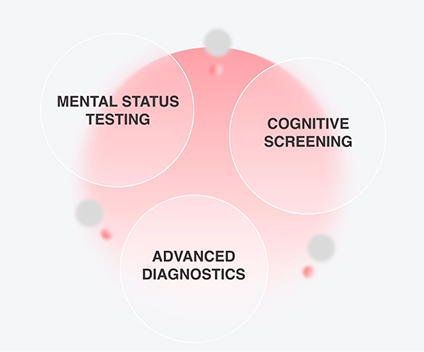
The diagnostic pathway for dementia is available in public and private sectors, typically beginning with a primary care physician who reviews medical history and conducts physical exams. However, primary care staff lack specific training, and early symptoms are often misattributed to ageing. Poor coordination and specialist shortages in rural areas lead to direct specialist visits and overburdened urban facilities. Specialist appointments with neurologists or geriatricians involve comprehensive neuropsychological assessments. While structural imaging like MRI and CT is highly prevalent, PET scans are mostly confined to private clinics, and advanced biomarker or genetic testing remains limited to research.
In Tunisia, the standard diagnostic pathway for Alzheimer’s disease and related dementias is available in both the public and private healthcare sectors. While the process of diagnosing dementia largely follows international clinical procedures, access to diagnostic services needed for that endeavor varies greatly between urban and rural areas. Moreover, coordination between primary care and higher levels of healthcare is poor, and there is a pronounced lack of specialists in rural areas. In practice, this means that secondary and tertiary healthcare facilities in Tunisia are overburdened – contributing to delays in diagnosing Alzheimer’s disease and other dementias.
Like in many countries, the route towards diagnosing Alzheimer’s disease usually begins with a visit to a primary care physician. When visiting a primary care physician, people are likely to undergo a review of their medical history and a physical examination to rule out other conditions. Tunisian primary care physicians and nurses rarely undergo training needed to notice symptoms of Alzheimer’s disease . That being said, cognitive screening at the primary care level – especially in rural areas – tends to be limited, with most assessments taking place in secondary and tertiary facilities. Early signs of dementia, such as memory loss, are still often attributed to aging8.
A visit to a primary care physician is usually followed by a specialist appointment – either with a neurologist or geriatric specialist. As primary care is not well coordinated with higher levels of healthcare – care pathways are not defined clearly and gatekeeping in higher levels of healthcare is ineffective – those experiencing symptoms of Alzheimer’s disease tend to directly visit specialists, when they are available. Tunisia had about 1.2 neurologists per 100,000 people in 2024, or 250 in total. Geriatric medicine in Tunisia is a developing field, with geriatric training only introduced in 1995. That being said, waiting times for these services can be long. During a specialist visit, people usually undergo a comprehensive neuropsychological assessment. Apart from cognitive screening, this could also involve diagnostic imaging or laboratory tests.
Diagnostic imaging services are readily available in Tunisian clinical settings and their use is considered to be standard practice for diagnosing Alzheimer’s disease. In particular, magnetic resonance imaging (MRI) and computed tomography (CT) are available at many public and private healthcare facilities – with their prevalence being among the highest on the African continent. Positron emission tomography (PET), on the other hand, is not as prevalent, with its availability largely confined to private, specialized clinics.
The use of advanced biomarkers is an evolving field in Tunisia. Cerebrospinal fluid (CSF) analysis – in the interest of measuring biomarkers such as amyloid-β42, phosphorylated tau and total tau protein levels – is conducted in both clinical and research settings in Tunisia, but is generally not considered to be part of the standard diagnostic pathway for Alzheimer’s disease. A similar situation is observed with genetic testing, such as apolipoprotein E (APOE) genotype testing for the ε4 allele, which can be accessed in specialized laboratories or clinics, the most prominent being the Institut Pasteur de Tunis (IPT). APOE genotype testing for the ε4 allele is commonly used in studies of people living with Alzheimer’s disease in Tunisia.
- https://p4h.world/app/uploads/2024/06/TUN-Health-System-Profiles-2018.x73677.pdf
- https://www.researchgate.net/publication/388068418_Revisiting_Africa's_Stroke_Obstacles_and_Services_SOS
- https://www.sciencedirect.com/science/article/abs/pii/S1878764914001181
- https://pubmed.ncbi.nlm.nih.gov/40425715/
- https://ourworldindata.org/grapher/availability-of-computed-tomography-ct-imaging
- https://ourworldindata.org/grapher/magnetic-resonance-imaging-mri-units-availability
- https://esnms.net/journal/Vol.%2025/1.pdf
- https://pasteur.tn/notre-institution/analyses
- https://www.med.tn/etude-du-liquide-cephalo-rachidien-lcr.html
- https://www.sciencedirect.com/science/article/abs/pii/S0035378716003398
- https://www.sciencedirect.com/science/article/abs/pii/S0035378715008693
- https://www.researchgate.net/publication/7067767_Apolipoprotein_E_polymorphism_in_the_Tunisian_population_Frequency_and_effect_on_lipid_parameters
Wait times
In the public healthcare system, waiting times for primary care physicians are minimal, with most patients seen on the same day. However, due to low numbers of neurologists and geriatric specialists combined with ineffective gatekeeping, specialist consultation wait times are likely prolonged. Public imaging wait times are undocumented, but the government launched a digital on-call service for remote medical imaging to reduce delays. Conversely, the private sector offers significantly shorter wait times for both consultations and diagnostic imaging, although patients incur higher out-of-pocket expenses.
In the public healthcare system, waiting times for accessing primary care physicians are generally not considered to be substantial, with most people received on the same day. Conversely, little information is available online when it comes to specialist appointments waiting times. Nevertheless, as there is little coordination between primary care and higher levels of healthcare, gatekeeping in higher levels of healthcare is ineffective and the number of neurologists and geriatric specialists is rather low, it is likely that people in the public healthcare system need to deal with longer waiting times for consultations. Similarly, there is no publicly available information on waiting times for diagnostic imaging services in public healthcare facilities – but the Tunisian government has been making efforts at improving access to this. Namely, in late August, the Ministry of Health launched a digital on-call service for remote medical imaging, aiming to ensure that everyone, wherever they are, can undergo urgent imaging examinations in a timely manner – even in the absence of specialized doctors.
Waiting times for neurological consultations and diagnostic imaging services tend to be much shorter in the private healthcare sector, but out-of-pocket costs borne by patients are generally higher. A majority of diagnostic imaging facilities have historically been concentrated there
Diagnosis cost
Most Tunisians are covered by the Caisse Nationale d’Assurance Maladie (CNAM), which acts as a national insurance scheme. Enrollment in the CNAM is compulsory for all, including foreigners residing and working in Tunisia. In general, CNAM insurance provides comprehensive coverage, including that for medication, diagnostic services, work accidents, maternity leave and other needs. Insured persons have to choose between three plans to cover their outpatient care – the (1) public sector plan (or blue card), which provides full coverage in the public healthcare system, subject to the payment of moderate co-payments, the (2) private sector plan (yellow card), which provides reimbursement in the form of third party payments for care provided in the public and private sectors under an agreement, according to a specific scale, and the (3) reimbursement of expenses plan (green card), which allows access to all types of care facilities, public or private, with or without prior referral by the general practitioner.
If a given disease or condition is included in the Affection Prise en Charge Intégralement (APCI) list, CNAM beneficiaries enjoy 100% coverage for diagnosis, treatment and care costs. However, dementia is not included in the given list3, meaning that standard coverage rates apply. In practice, this means that CNAM beneficiaries are reimbursed 70% of primary care physician and specialist consultation costs, as well as around 70% of diagnostic procedure costs, including CT and MRI scans or laboratory tests.
In Tunisia, private-sector consultations are widely used to access specialist dementia assessment more rapidly. According to the WHO, private consultation fees typically range from TND 30–35 for a general practitioner, TND 40–50 for a specialist physician, and TND 45–55 for a neurologist or psychiatrist, with patients frequently paying the difference between official reimbursement tariffs and actual provider charges out of pocket. Cerebrospinal fluid (CSF) analysis costs around TND 1807 at the Institut Pasteur de Tunis (IPT).
Cognitive tests
In Tunisia, cognitive screening tests used or validated for use in diagnosing dementia include:
(1) Mini-Mental State Examination (MMSE)
(2) Alzheimer’s Disease Assessment Scale – Cognitive (ADAS – Cog)
(3) Dementia Screening Battery-100 (DSB-100)
(4) Montreal Cognitive Assessment (MoCA)
(5) Memory and Executive Screening (MES)
(6) 5 Words Test (5WT)
- https://pmc.ncbi.nlm.nih.gov/articles/PMC10394639/
- https://pmc.ncbi.nlm.nih.gov/articles/PMC5498961/
- https://www.sciencedirect.com/science/article/pii/S0924933814784214
- https://journals.viamedica.pl/arterial_hypertension/article/download/100152/82395
- https://alz-journals.onlinelibrary.wiley.com/doi/full/10.1002/alz.70207
Imaging tests
Diagnostic imaging services are readily available in Tunisian clinical settings and their use is considered to be standard practice for diagnosing Alzheimer’s disease. As of 2013, Tunisia had 8.9 computed tomography (CT) units and 2 magnetic resonance imaging (MRI) units per one million population. Data from 2022 points that there are currently 5 positron emission tomography (PET) scanners present in Tunisia, although they are mostly used in oncological care, and are confined to either university hospitals—in Tunis, Sousse, Sfax, Monastir, Gabes—or specialized private diagnostic facilities such as the CERU Nuclear Medicine Center.
Genetic tests
Genetic testing is seldom used in diagnosing Alzheimer’s disease in Tunisia. APOE genotype testing for the ε4 allele can be accessed in specialized public laboratories in Tunis, such as the Institut Pasteur de Tunis (IPT). The test is administered in research settings primarily, however, with published studies on the association of APOE polymorphism and Alzheimer’s disease prevalence in the Tunisian population.
Biomarker tests
Advanced biomarkers are commonly available for the purpose of diagnosing Alzheimer’s disease in Tunisia, but are generally not considered to be part of the standard diagnostic pathway for the disease. Cerebrospinal fluid (CSF) analysis in the interest of measuring biomarkers such as amyloid-β42, phosphorylated tau and total tau protein levels is most commonly offered in specialized laboratories such as the Institut Pasteur de Tunis (IPT).
Cognitive Tests
Cognitive Tests
In Tunisia, cognitive screening tests used or validated for use in diagnosing dementia include:
(1) Mini-Mental State Examination (MMSE)
(2) Alzheimer’s Disease Assessment Scale – Cognitive (ADAS – Cog)
(3) Dementia Screening Battery-100 (DSB-100)
(4) Montreal Cognitive Assessment (MoCA)
(5) Memory and Executive Screening (MES)
(6) 5 Words Test (5WT)
- https://pmc.ncbi.nlm.nih.gov/articles/PMC10394639/
- https://pmc.ncbi.nlm.nih.gov/articles/PMC5498961/
- https://www.sciencedirect.com/science/article/pii/S0924933814784214
- https://journals.viamedica.pl/arterial_hypertension/article/download/100152/82395
- https://alz-journals.onlinelibrary.wiley.com/doi/full/10.1002/alz.70207
Imaging Tests
Imaging Tests
Diagnostic imaging services are readily available in Tunisian clinical settings and their use is considered to be standard practice for diagnosing Alzheimer’s disease. As of 2013, Tunisia had 8.9 computed tomography (CT) units and 2 magnetic resonance imaging (MRI) units per one million population. Data from 2022 points that there are currently 5 positron emission tomography (PET) scanners present in Tunisia, although they are mostly used in oncological care, and are confined to either university hospitals—in Tunis, Sousse, Sfax, Monastir, Gabes—or specialized private diagnostic facilities such as the CERU Nuclear Medicine Center.
Genetic Tests
Genetic Tests
Genetic testing is seldom used in diagnosing Alzheimer’s disease in Tunisia. APOE genotype testing for the ε4 allele can be accessed in specialized public laboratories in Tunis, such as the Institut Pasteur de Tunis (IPT). The test is administered in research settings primarily, however, with published studies on the association of APOE polymorphism and Alzheimer’s disease prevalence in the Tunisian population.
Biomarker Tests
Biomarker Tests
Advanced biomarkers are commonly available for the purpose of diagnosing Alzheimer’s disease in Tunisia, but are generally not considered to be part of the standard diagnostic pathway for the disease. Cerebrospinal fluid (CSF) analysis in the interest of measuring biomarkers such as amyloid-β42, phosphorylated tau and total tau protein levels is most commonly offered in specialized laboratories such as the Institut Pasteur de Tunis (IPT).
Treatment & Care
Treatment & care
Show morePublic dementia care is anchored in urban university hospitals, notably CHU Razi, CHU Habib Bourguiba, and CHU Fattouma Bourguiba, leaving rural areas underserved. The private sector offers high-quality services and medical tourism but remains unaffordable for most locals seeking long-term residential or daycare facilities. Approved medical therapies include donepezil, rivastigmine, galantamine, and memantine. Because dementia is excluded from the APCI list, treatments are only partially reimbursed by CNAM. Caregiver support relies heavily on NGOs providing psychosocial rather than financial aid.
Specialized facilities and services
Tunisia features a developing public network of memory clinics, primarily concentrated within urban university hospitals such as CHU Razi in Manouba, CHU Habib Bourguiba in Sfax, and CHU Fattouma Bourguiba in Monastir. Rural access remains low, forcing patients to travel long distances. The private sector provides robust diagnostic and treatment options, making Tunisia a medical tourism hub. However, long-term nursing care and daycare facilities are mostly private and unaffordable for most. Palliative care remains isolated and largely restricted to oncology.
Tunisia features a developing network of public memory clinics, which specialize in diagnosing, treating and caring for people living with dementia. Services for people living with dementia are primarily available at university hospitals located in urban centers. Their availability tends to be lower in rural areas, and many people need to travel significant distances in order to access them. Some of the most prominent hospitals specializing in dementia treatment and care include:
(1) Centre Hospitalier Universitaire (CHU) Razi is the premier public institution specializing in dementia treatment, care and research in Tunisia. Located in Manouba, a suburb of the capital Tunis, Razi University Hospital focuses on neurology, pain management and geriatric health, while also engaging in genetic research, contributing to the understanding of hereditary diseases.
(2) CHU Habib Bourguiba is the main public hospital of Sfax, the second largest city of Tunisia. It serves as the tertiary hospital of reference for most people living in southern Tunisia. Its Department of Neurology has a dedicated memory consultation service and engages in Alzheimer’s disease research. CHU Habib Bourguiba serves as the teaching hospital for the Faculty of Medicine at the University of Sfax.
(3) CHU Fattouma Bourguiba is a tertiary public hospital located in Monastir. It features a dedicated Department of Neurology, which offers a memory consultation service and actively partakes in dementia research.
Tunisia also features a developed private healthcare sector, which offers a variety of diagnostic, treatment and care services for dementia. In fact, Tunisia is known as a medical tourism destination in North Africa, offering quality medical care at relatively low costs. Some of the most prominent private facilities involved in dementia treatment and care in Tunisia include the Clinique Taoufik and Clinique Hannibal in Tunis, Centre International Carthage Medical in Monastir.
The World Health Organization (WHO) classifies Tunisia as a country with isolated provision of palliative care services, that is, a country where palliative care services are limited in relation to population size. Progress in developing palliative care is rather slow—there are very few providers and the services provided are not well organized. Palliative care in Tunisia remains largely restricted to oncology, existing within specialized facilities such as the Salah Azaiez Institute in Tunis or within tertiary hospitals in Sousse and Sfax.
A number of long-term care and nursing facilities catering to people living with Alzheimer’s disease operate in Tunisia—but are largely concentrated in the private sector and their services are unaffordable for most Tunisians. The Alzheimer Family Assistance (AFA) Center, located in the Menzah district of Tunis, is the first specialized residential care facility catering to older adults living with cognitive decline. A number of nursing home facilities also operate on the Tunisian coastline, including the La Pace nursing home in Hammamet or the REMES in Monastir. Daycare centers for people living with dementia are not widespread—mainly being private initiatives. The AFA Center in Tunis offers limited daycare services for people living with cognitive impairments.
Approved medication
| Generic Name | Trade Name | Used for |
|---|---|---|
| Donepezil (Aricept, Dopezil) | Aricept, Aricept ODT, Adlarity, Eranz, Memac, Alzepil, Davia, Donecept, Donep, Donepex, Donesyn, Dopezil, Yasnal, Memorit, Pezale, Redumas, Zolpezil, Namzaric* | Donepezil is indicated for the symptomatic treatment of mild to moderately severe Alzheimer’s dementia. |
| Rivastigmine (Exelon) | Exelon, Exelon Patch, Prometax, Rivastach, Nimvastid | Symptomatic treatment of mild to moderately severe Alzheimer’s dementia. Symptomatic treatment of mild to moderately severe dementia in patients with idiopathic Parkinson’s disease. |
| Galantamine (Reminyl) | Razadyne, Razadyne ER, Reminyl, Reminyl XL, Nivalin, Lycoremine, Galsya | Galantamine is indicated for the symptomatic treatment of mild to moderately severe dementia of the Alzheimer type. |
| Memantine (Memixa) | Namenda, Namenda XR, Ebixa, Memary, Axura, Akatinol, Maruxa, Nemdatine, Namzaric* | Treatment of adult patients with moderate to severe Alzheimer’s disease. |
*Namzaric = combination of Donepezil and Memantine
Treatment cost
As Alzheimer’s disease and other dementias are not included in the Affection Prise en Charge Intégralement (APCI) list, costs of treating them are not fully reimbursed for CNAM beneficiaries. CNAM beneficiaries are partially covered for Alzheimer’s disease medications like donepezil and rivastigmine, albeit a prescription from a medical professional would be necessary for accessing these treatments. Families often face significant financial cots in caring for people living with dementia. Accessing long term care services, nursing and other types of therapies can be expensive, these services tend to be primarily offered within the private healthcare sector.

- https://www.facebook.com/100065549857263/photos/-%D9%82%D8%A7%D8%A6%D9%85%D8%A9-%D8%A7%D9%84%D8%A3%D9%85%D8%B1%D8%A7%D8%B6-%D8%A7%D9%84%D8%AB%D9%82%D9%8A%D9%84%D8%A9-%D8%A3%D9%88-%D8%A7%D9%84%D9%85%D8%B2%D9%85%D9%86%D8%A9-apci%D8%A7%D9%84%D8%AA%D9%8A-%D9%8A%D8%AA%D9%83%D9%81%D9%91%D9%84-%D8%A8%D9%87%D8%A7-%D8%A7%D9%84%D8%B5%D9%86%D8%AF%D9%88%D9%82-%D8%A7%D9%84%D9%88%D8%B7%D9%86%D9%8A-%D9%84%D9%84%D8%AA%D8%A3%D9%85%D9%8A%D9%86-%D8%B9%D9%84%D9%89/1247414870786830/
- http://www.sciencespharmaceutiques.org.tn/telechargement/journees/Evolution_de_utilisation_des_neuromedicaments_en_Tunisie.pdf
- https://www.lapresse.tn/2026/01/11/apci-liste-complete-des-affections-graves-et-chroniques-couvertes-a-100-par-la-cnam/
Caregiver support
Government social protection mechanisms like CNAM, CNRPS, and CNSS provide limited long-term illness coverage and disability pensions, failing to adequately sustain dementia carers. General welfare initiatives like AMEN Social are also unequipped for intensive dementia care needs. Consequently, caregiver support is primarily managed by non-governmental organisations like the Association Alzheimer Tunisie, which offers psychosocial assistance rather than financial aid. Additionally, the World Health Organisation has introduced its iSupport tool to selected Tunisian carers ahead of a wider rollout.
Social protection mechanisms offered by the Tunisian government—including CNAM—offer coverage for long term illnesses and disability pensions—administered through the National Pension and Social Insurance Fund (CNRPS) and the National Social Security Fund (CNSS). Yet, these are often limited in coverage, failing to adequately address the needs of people living with Alzheimer’s disease or sustain their carers. The Ministry of Social Affairs also provides general welfare programs to vulnerable populations, such as the AMEN Social, but these are not designed for the intensive needs of caring for people living with Alzheimer’s disease.
Support for dementia carers is primarily a prerogative of non-governmental organizations (NGOs), such as the Association Alzheimer Tunisie. However, support received is primarily psychosocial, rather than financial. The WHO has also provided its iSupport tool to a number of Tunisian carers, in preparation for a wider rollout.
- https://erf.org.eg/app/uploads/2022/09/1664287463_427_508089_pb93.pdf
- https://www.unicef.org/mena/media/24061/file
- https://alzheimertunisie.blogspot.com/
- https://www.alzint.org/member/association-alzheimer-tunisie/
- https://www.researchgate.net/publication/377921994_Preparing_for_implementing_iSupport_in_Tunisia_Experience_and_needs_of_caregivers_of_persons_with_dementia
Policy
Policy
Show moreTunisia lacks a standalone national dementia strategy, and a plan proposed in 2019 was never formally adopted. Instead, ageing policy is being integrated into the upcoming Multisectoral National Strategy for Older Persons (2021–2030). Major policy gaps exist because dementia is excluded from the APCI list, preventing full insurance coverage. Furthermore, outdated 2005 mental health laws enforce a medical model that can strip individuals of legal capacity based on medical evaluation. Culturally, intense social stigmatisation and an absolute reliance on unsupported family care further impede formal policy execution.
National dementia plan
Tunisia does not currently have a standalone national dementia strategy. In March 2019, national stakeholders reported that a dementia plan was under development, focusing on early diagnosis and intervention, improved coordination of care pathways, expansion of day-care and residential services with quality standards, and greater financial and psychological support for caregivers. However, no subsequently adopted national dementia strategy could be identified in publicly available sources.
Upcoming plans
Tunisia has been working on developing a Multisectoral National Strategy for Older Persons (2021 to 2030). As of May 2025, Tunisia was finalizing the executive plan of its 2030 National Multisectoral Strategy on Ageing, which was developed through inclusive and participatory consultations. The strategy is meant to address poverty, social vulnerability, institutional care standards and the protection of older persons during crises, including pandemics and climate – related events. As part of the strategy, Tunisia wants to ensure a regular income for all senior citizens, among other things.
Policy gaps
Legal barriers
Dementia is excluded from the APCI list, denying beneficiaries full diagnostic and treatment coverage, which heightens family financial burdens and social stigma. Mental health and disability laws have not been updated since 2005. Although Tunisia ratified the UN Convention on the Rights of Persons with Disabilities, it has failed to harmonise its legal framework. The system retains an outdated medical model that evaluates individual capacity, allowing an individual’s legal capacity to be restricted based purely on medical evaluation, severely compromising the autonomy of people living with dementia.
People living with dementia in Tunisia face a number of legal barriers, which complicate issues with accessing adequate treatment and care, as well as efficient decision making. To begin with, dementia is not explicitly covered by the Affection Prise en Charge Intégralement (APCI) list, meaning that CNAM beneficiaries do not enjoy full coverage for diagnosis, treatment and care costs35. This increases financial costs by families of people living with dementia or their carers, while also increasing feelings of stigma and dependency among the people living with dementia themselves. Tunisia laws on mental health and disability were last updated in 2005. Tunisia has also ratified the United Nations (UN) Convention on the Rights of Persons with Disabilities (CRPD), but failed to fully harmonize its legal framework on the matter with the CRPD. The legal framework has faced criticism for retaining a “medical model” approach—by which the assessment of disability is based on the evaluation of “individual capacities” of individuals. Under this approach, the legal capacity of any person could be restricted upon a medical evaluation—having significant consequences for individuals living with dementia in practice, especially regarding their autonomy in personal, financial, and medical decisions.
Cultural barriers
Dementia is widely viewed as a normal part of ageing or associated with madness, causing deep social stigmatisation. To avoid social exclusion and shame, families frequently deny the illness or hide affected relatives, creating a major barrier to timely diagnosis and formal care. Families are considered the cornerstone of care, an expectation that places an unsupported emotional, physical, and psychological burden on relatives. This isolation particularly affects women, who typically manage the progressive disease without external healthcare system support.
Like in many countries of the Middle East and North Africa (MENA) region, dementia is widely perceived as an inevitable part of aging, rather than as a treatable medical condition. Such a belief fosters deep social stigmatization of people living with dementia and their families, with the condition often being associated with madness. Families often deny the existence of dementia or hide affected relatives to avoid the shame of social exclusion—with this fear being a major impediment to seeking timely diagnosis and care. The family of a person living with dementia is considered to be the cornerstone of dementia care—an expectation placing an immense and unsupported physical, emotional and psychological burden on relatives, particularly women, who tend to manage their relatives’ disease in isolation.
Research
Research
Show moreDementia research is conducted through key academic entities, including the Faculty of Medicine at the University of Tunis El Manar, University of Sfax, University of Monastir, the Mongi-Ben Hamida National Institute of Neurology, and the Institut Pasteur de Tunis. There are no active clinical trials for new dementia medications, and the country lacks a national dementia registry. Most local research is observational or genetic, such as a cohort study investigating the association between APOE promoter polymorphism and Alzheimer’s disease, which ultimately found no definitive correlation within the local population.
Selected academic institutions
Clinical trials and registries
Currently, there are no major, active clinical trials for new dementia drugs recruiting people living with dementia in Tunisia. Most of the research conducted within the country is observational, focusing on understanding the disease (and perceptions of it) within the local population.
In addition, Tunisia does not have a national registry of people living with Alzheimer’s disease and other dementias.
Selected innovative methods
A study was conducted to understand the association between APOE promoter polymorphism and Alzheimer’s disease in a cohort of Tunisian. However, upon comparison between people living with Alzheimer’s disease and healthy controls, or upon stratification by the APOE ɛ4 allele, the researchers found no evidence of said association within that cohort.
Support
Support
Show moreDementia support is driven by non-governmental organisations, prominently the Association Alzheimer Tunisie (AAT), an ADI member, and the Association for the Protection of the Elderly in Tunisia (AAPA). AAT provides public awareness campaigns, helpline services, caregiver training, and psychosocial support groups, while using social media and state media to combat stigma. AAPA, funded by the Damartex Foundation, provides medical consultations, food, and chronic medications to vulnerable older adults in the Zaghouan region. No standalone, dementia-specific media outlets exist within the country.
Selected national associations, patient family associations, NGOs:
Selected initiatives
The Association Alzheimer Tunisie (AAT), the national Alzheimer’s Disease International member, works to establish a domestic dementia management system. AAT raises public awareness, promotes early diagnosis, and delivers psychosocial support via caregiver support groups, training programmes, conferences, and a dedicated helpline. Additionally, the Association for the Protection of the Elderly in Tunisia (AAPA), supported by the Damartex Foundation, provides critical medical visits, basic foodstuffs, chronic disease medications, and paramedical equipment to unsupported older adults, focusing extensively on the Zaghouan region.
Association Alzheimer Tunisie (AAT) is a national association supporting the establishment of a management system for Alzheimer’s disease and other dementias in Tunisia. AAT strives to (1) raise awareness of dementia through public awareness campaigns, (2) to promote early diagnosis efforts nationally in Tunisia, and to (3) provide support to people living with dementia, their families and carers in managing the disease. To achieve these goals, AAT organizes carer support groups, dementia carer trainings and runs a helpline for people living with dementia, their families and carers. In addition, AAT periodically organizes conferences — for both the broader public and for medical professionals — aimed at raising awareness of dementia. AAT is the Tunisian member organization of Alzheimer’s Disease International (ADI).
Deprecated: trim(): Passing null to parameter #1 ($string) of type string is deprecated in /home/bcdafabe/public_html/wp-content/themes/bricks-child/functions.php on line 753
The Association for the Protection of the Elderly in Tunisia (AAPA) is an association which works to provide support and care for the elderly without support, with a particular focus on and reach in the region of Zaghouan. For its beneficiaries, AAPA works on providing medical visits, basic foodstuffs, distributing medication for chronic diseases and providing paramedical equipment. Its work is supported by the Damartex Foundation.
Deprecated: trim(): Passing null to parameter #1 ($string) of type string is deprecated in /home/bcdafabe/public_html/wp-content/themes/bricks-child/functions.php on line 753
Dedicated media outlets
Tunisia does not have a media outlet dedicated to dementia patients, but AAT is active on social media, sharing posts that raise awareness of dementia and its consequences regularly on its Facebook page. Occasionally, state-controlled media outlets, such as Radio Kef and El Watania 1 report on the activities of AAT, with the aim of raising awareness of dementia.