

Ukraine
Ukraine faces significant challenges including modernising its legal and regulatory systems and securing sufficient resources, both of which are complicated by the ongoing war. The country still has no national dementia strategy, clinical guidelines, or registry, and dementia remains fragmented across ageing, disability, and mental health policies. Diagnostic capacity is concentrated in major cities, with limited access to biomarkers, imaging, or specialist care, and most treatment and medication costs are out-of-pocket. Caregiving is usually informal, complicated by stigma, displacement, and war-related trauma, while legal frameworks on capacity, guardianship, and driving fitness remain outdated. Still, the difficult wartime situation has boosted innovations like telemedicine and mobile e-health networks, which now deliver remote consultations and carer support to elderly people. Non-governamental organisations (NGOs) such as Nezabutni Foundation operate helplines and memory cafes, and international partners, Alzheimer Europe, Alzheimer’s Disease International (ADI), and HelpAge International, provide translated resources, humanitarian guidance, and training. Despite fragmentation, these local and international initiatives are bridging the gap between humanitarian response and long-term recovery of the health system.

AD Rating
Diagnostic Pathway
Specialized Care
Caregiver Support
National Policies
Access to ATT-s
Highlights

Population
Median age
Health expenditure (% of GDP)
Diagnosis
Diagnosis
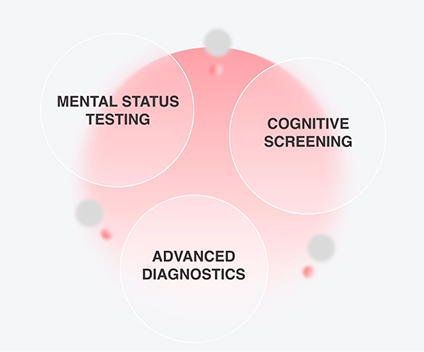
Show moreIn Ukraine, Alzheimer’s diagnosis begins with patient or family concerns and progresses from primary care to specialists and memory clinics. Screening uses MMSE and MoCA, while neuropsychological batteries, CT, and MRI are available in larger centres, and PET, genetic testing, and CSF biomarkers are largely restricted or private. Rural and conflict-affected regions face severe delays due to workforce shortages, damaged infrastructure, and travel barriers. Telehealth partially improves access, but in-person assessments remain essential. Basic care may be covered by the NHSU, yet advanced diagnostics often require out-of-pocket payment.
Diagnosis pathway
In Ukraine, Alzheimer’s diagnosis typically begins when patients or families report memory loss, behavioural changes, or functional decline. Primary care physicians may perform basic screenings or refer to neurology or psychiatry specialists, with memory clinics and tertiary centres offering advanced diagnostics like CSF biomarkers and PET scans. Recent digitalization and telehealth have improved remote access, yet physical imaging and neuropsychological assessments are required. The healthcare system lacks national programs to guide or support patients and caregivers, which leaves many families without structured resources.
In Ukraine, the diagnosis of Alzheimer’s disease typically begins when an individual, or their family, raises concerns about memory decline, changed behaviour, or functional impairment. Primary care physicians from the national polyclinic system may perform basic screening or refer to neurology or psychiatry specialists in regional hospitals. From there, people may be directed to a memory clinic or neurology department for further evaluation. Imaging is mainly used to exclude vascular or other structural causes, and in larger tertiary centres, more advanced diagnostics may be available. However, the pathway is uneven: rural and conflict-affected regions have fewer specialist capacities, and many people experience delays because of travel, war-related disruption of services, and low awareness of dementia among general practitioners (GPs).
For example, the United Kingdom Parliament reported in 2024 that there is no available capacity for people living with dementia within the Ukrainian healthcare system and no national program to advise or support the families and carers of those affected. In recent years, the digitalization of records and virtual care platforms have helped some people access consultations remotely, though for dementia diagnosis the requirement of physical imaging and in-person neuropsychological assessment remains a barrier.
- https://rm.coe.int/old-people-eng-soft/1680a242de
- https://hansard.parliament.uk/commons/2024-01-10/debates/5FF4ACBF-833E-482C-A6D2-397E84844A9E/DementiaServicesInUkraine
- https://ejist.ro/files/pdf/420.pdf https://rm.coe.int/old-people-eng-soft/1680a242de
- https://hansard.parliament.uk/commons/2024-01-10/debates/5FF4ACBF-833E-482C-A6D2-397E84844A9E/DementiaServicesInUkraine
- https://www.researchgate.net/publication/328183310_Prospects_of_Effective_Management_of_Dementia_for_Ukraine_Learning_from_International_Experience
- https://healthpolicy-watch.news/virtual-healthcare-ukraine/
Wait times
No national data exists on dementia diagnosis wait times in Ukraine, but private clinics typically offer quicker access. Advanced diagnostics, however, face significant delays due to war-related workforce shortages and infrastructure damage. Urban residents may wait weeks, whereas those in rural or conflict zones may wait months or have no services. Displacement and poor housing exacerbate challenges. Telehealth initiatives help partially, but detailed dementia evaluations still require in-person assessments
While no national dataset outlines average waiting times for diagnosis in Ukraine, a qualitative study from 2024 suggests that Ukrainians generally do not experience long waiting times, especially when it comes to private clinics. However, other recent studies point out significant delays especially for advanced diagnostics, mostly due to workforce shortages caused by the war. In cities with better access to healthcare services and neurological care, clinic appointments may be attainable within weeks, but for many people living outside major hubs the waiting times to access advanced diagnostics stretch to months or more. The war has exacerbated delays by damaging infrastructure, displacing the older population, and diverting health-system capacity toward trauma and emergency care. These challenges are forcing many people to stay in compromised housing or avoid movement. In decentralized regions and zones affected by conflict, the wait may be longer or the service may simply not exist. The virtual care infrastructure and tee-medicine initiatives offer some mitigation but are less well adapted for detailed dementia diagnostics.
- https://bmchealthservres.biomedcentral.com/articles/10.1186/s12913-024-11052-6
- https://repo.knmu.edu.ua/server/api/core/bitstreams/f94ff6f6-b402-440c-96ed-135acdc7178b/content
- https://www.thelancet.com/journals/laneur/article/PIIS1474-4422(23)00026-1
- https://repo.knmu.edu.ua/server/api/core/bitstreams/f94ff6f6-b402-440c-96ed-135acdc7178b/content
- https://www.europeancancer.org/resources/publications/cancer-services-disruptions-during-the-war-in-ukraine-results-from-a-joint-multidisciplinary-survey.html
- https://www.ispionline.it/en/publication/the-fate-of-the-health-infrastructure-in-ukraine-between-occupation-and-reconstruction-213424
Diagnosis cost
The NHSU covers basic outpatient care and some imaging, yet advanced diagnostics like MRI, PET, and biomarkers are largely self-paid. Patients in remote or conflict-affected areas face additional travel cost, resulting in some of the region’s highest out-of-pocket costs for mental health care.
Under the contract model of the national health insurer, National Health Service of Ukraine (NHSU), basic outpatient consultations and some imaging like CT scanner, may be covered by the program. However, more advanced diagnostics, such as MRI, PET, biomarker tests, typically require out-of-pocket payment. People from remote or conflict-affected regions also have to pay additional travel and accommodation costs. A 2023 World Bank review of Ukraine’s health-financing reforms flagged that out-of-pocket spending on mental health medications and diagnostics remains among the highest in the region.
Cognitive tests
Dementia assessment in Ukraine relies on MMSE and MoCA, with specialist clinics offering comprehensive neuropsychological tests for differential diagnosis. Research in Odesa shows an average MMSE score of 18.6 at diagnosis. However, inconsistent application in general practice limits early detection of mild cognitive impairment.
Imaging tests
Alzheimer’s diagnosis in Ukraine relies on CT and MRI, with CT widely used in district hospitals and MRI in regional centres. PET scans are highly restricted, mostly limited to research. Overall, Ukraine lags behind Europe in imaging access and dementia-care infrastructure.
- https://www.kmu.gov.ua/en/news/ukrainski-likarni-otrymaiut-suchasni-kt-aparaty
- https://hbmedical.com.ua/en/services-price/diagnostics/mri/
- https://www.mymeditravel.com/pet-scan-positron-emission-tomography-procedures-in-ukraine
- https://mhgc21.org/en/mhgc21/events/october2018/MHGC-Proceedings-2018/Changing-Approaches-to-Dementia-Management-How-Relevant-Is-It-for-Ukraine
Genetic tests
Genetic testing for Alzheimer’s in Ukraine is mainly offered privately, with APOE genotyping for risk assessment. Mutation panels (PSEN1, PSEN2, APP) are limited to select academic centres and rarely reimbursed. Genetic counselling is specialized, urban-centred, and largely accessed through private fees rather than public coverage.
- https://www.synevo.ua/en/tests/9698
- https://medicine.dp.ua/index.php/med/article/view/021509
- https://zmj.zsmu.edu.ua/article/view/270277/271255
- https://pubmed.ncbi.nlm.nih.gov/40679987
- https://dobrobut.com/en/doctors/category-genetics
- https://www.nature.com/articles/BF03406002
- https://genetics.kyiv.ua/en/diahnostyka/
Biomarker tests
CSF biomarkers like Aβ42/40, total tau, and phosphorylated tau are not routinely available in Ukraine. When offered, they are limited to specialist or research centers and largely inaccessible due to cost, infrastructure gaps, and under-resourced dementia diagnostic frameworks.
Cognitive Tests
Cognitive Tests
Dementia assessment in Ukraine relies on MMSE and MoCA, with specialist clinics offering comprehensive neuropsychological tests for differential diagnosis. Research in Odesa shows an average MMSE score of 18.6 at diagnosis. However, inconsistent application in general practice limits early detection of mild cognitive impairment.
Imaging Tests
Imaging Tests
Alzheimer’s diagnosis in Ukraine relies on CT and MRI, with CT widely used in district hospitals and MRI in regional centres. PET scans are highly restricted, mostly limited to research. Overall, Ukraine lags behind Europe in imaging access and dementia-care infrastructure.
- https://www.kmu.gov.ua/en/news/ukrainski-likarni-otrymaiut-suchasni-kt-aparaty
- https://hbmedical.com.ua/en/services-price/diagnostics/mri/
- https://www.mymeditravel.com/pet-scan-positron-emission-tomography-procedures-in-ukraine
- https://mhgc21.org/en/mhgc21/events/october2018/MHGC-Proceedings-2018/Changing-Approaches-to-Dementia-Management-How-Relevant-Is-It-for-Ukraine
Genetic Tests
Genetic Tests
Genetic testing for Alzheimer’s in Ukraine is mainly offered privately, with APOE genotyping for risk assessment. Mutation panels (PSEN1, PSEN2, APP) are limited to select academic centres and rarely reimbursed. Genetic counselling is specialized, urban-centred, and largely accessed through private fees rather than public coverage.
- https://www.kmu.gov.ua/en/news/ukrainski-likarni-otrymaiut-suchasni-kt-aparaty
- https://hbmedical.com.ua/en/services-price/diagnostics/mri/
- https://www.mymeditravel.com/pet-scan-positron-emission-tomography-procedures-in-ukraine
- https://mhgc21.org/en/mhgc21/events/october2018/MHGC-Proceedings-2018/Changing-Approaches-to-Dementia-Management-How-Relevant-Is-It-for-Ukraine
Biomarker Tests
Biomarker Tests
CSF biomarkers like Aβ42/40, total tau, and phosphorylated tau are not routinely available in Ukraine. When offered, they are limited to specialist or research centers and largely inaccessible due to cost, infrastructure gaps, and under-resourced dementia diagnostic frameworks.
Treatment & Care
Treatment & care
Show moreAlzheimer’s care in Ukraine is uneven, with private memory clinics in Kiev and regional hospitals providing limited specialized teams or social support. The Nezabutni Foundation and ADI provide helplines, Memory Cafes, workshops, and caregiver guidance, while NGOs and telehealth support displaced populations. Palliative care has improved but remains under-resourced for over 500,000 families annually. The NHSU and PMG expand public coverage, yet dementia-specific diagnostics, long-term care, and formal caregiver support remain limited and inconsistently documented.
Specialized facilities and services
Alzheimer’s treatment and care in Ukraine are unevenly distributed, with private memory clinics concentrated in Kiev while regional hospitals provide dementia care with limited specialized teams or social support. The Nezabutni Foundation supports patients and caregivers via a national helpline, Memory Cafes, and workshops. Telehealth and mobile NGO outreach help displaced populations, yet rural areas face digital gaps. Palliative care has progressed toward EU standards but remains under-resourced, uneven, and unable to meet demand for over 500,000 families annually.
Treatment and care services for Alzheimer’s disease in Ukraine are highly variable in geography and capacity. Private memory clinics are mostly located in Kiev, and the majority of dementia care is delivered via neurology and psychiatry departments in regional hospitals. These hospitals often lack dedicated dementia teams or integrated social-care support. The Nezabutni Foundation has emerged as the primary advocacy and service-support organization, offering a national helpline, community “Memory Cafe” initiatives, and carers workshops. In the context of war-related displacement and infrastructure damage, telehealth platforms and NGO-supported mobile outreach have become increasingly important, though the digital divide remains a barrier in rural and conflict zones.
Palliative care in Ukraine is institutionalized within the health system and has progressed in recent years toward integration within the national health system, yet it remains under-resourced, unevenly distributed, and heavily strained by war. Moreover, Ukraine has been upgraded by the European Association for Palliative Care to from Level 3a to Level 4a, which indicates steady progress towards European Union standards. Still, the lack of resources remains the main challenge. In 2024ReliefWeb reported that over 500,000 families in Ukraine annually need palliative support services which is where institutions fall short on demand. Many institutions lack formal multidisciplinary palliative teams and patients may only access basic supportive care rather than full palliative-care teams.
Approved medication
| Generic Name | Trade Name | Used for |
|---|---|---|
| Donepezil | Aricept, Aricept ODT, Adlarity, Eranz, Memac, Alzepil, Davia, Donecept, Donep, Donepex, Donesyn, Dopezil, Yasnal, Memorit, Pezale, Redumas, Zolpezil, Namzaric* | Donepezil is indicated for the symptomatic treatment of mild to moderately severe Alzheimer’s dementia. |
| Rivastigmine | Exelon, Exelon Patch, Prometax, Rivastach, Nimvastid | Symptomatic treatment of mild to moderately severe Alzheimer’s dementia. Symptomatic treatment of mild to moderately severe dementia in patients with idiopathic Parkinson’s disease. |
| Galantamine | Razadyne, Razadyne ER, Reminyl, Reminyl XL, Nivalin, Lycoremine, Galsya | Galantamine is indicated for the symptomatic treatment of mild to moderately severe dementia of the Alzheimer type. |
| Memantine | Namenda, Namenda XR, Ebixa, Memary, Axura, Akatinol, Maruxa, Nemdatine, Namzaric* | Treatment of adult patients with moderate to severe Alzheimer’s disease. |
*Namzaric = combination of Donepezil and Memantine
Treatment cost
Ukraine’s NHSU guarantees state-financed healthcare for all citizens, including primary, outpatient, and inpatient services. The 2025 PMG expansion integrated mental health, increasing coverage for psychiatric care and dementia-related consultations. Funding boosts rural clinics, emergency readiness, palliative and specialized care, and rehabilitation services. While all public and research hospitals now operate under PMG, the scope of dementia-specific diagnostics, long-term care, and medication coverage remains incompletely documented.

Under the state-financed healthcare program run by the National Health Service of Ukraine (NHSU), all Ukrainian citizens are legally entitled to receive medical care in state-owned health institutions, including outpatient consultations, inpatient treatment, and primary-care services. In 2025, mental-health services were formally incorporated into the Program of Medical Guarantees (PMG) which expanded public coverage for psychiatric and psychological care across the primary-care network, including consultations relevant to dementia evaluation and management.3 The program has boosted primary healthcare funding to 25 billion UAH, adding mental health support at the primary-care level, and applying higher funding coefficients for rural clinics. Emergency services received 11 billion UAH with new wartime-readiness modifiers, while specialized and palliative care received more than 122 billion UAH, including expanded services for older adults, comorbidities, and age-related dementia. Rehabilitation funding rises to 6 billion UAH, offering up to 26 inpatient rehab cycles and new outpatient therapy packages.
From 2025, all public, departmental, and specialized medical institutions will operate exclusively through the PMG, including major national research hospitals. However, the extent to which dementia-specific diagnostics, long-term care services or full medication reimbursement are covered remains incompletely documented.
- https://www.ncbi.nlm.nih.gov/books/NBK447695
- https://visitukraine.today/insurance/medical-insurance
- https://www.ukrinform.net/rubric-society/3943899-program-of-medical-guarantees-for-2025-launched-in-ukraine.html
- https://www.ukrinform.net/rubric-society/3943899-program-of-medical-guarantees-for-2025-launched-in-ukraine.html
Caregiver support
Caregiver support in Ukraine is growing but is underdeveloped. NGOs like the Nezabutni Foundation and ADI offer training and counselling, while state-funded respite services and formal programs are still largely absent.
There is growing recognition of the role of family care partners, but formal systems of support remain under-developed. The Nezabutni Foundation provides caregiver education, psychosocial counselling, and navigation assistance, and international organizations such as Alzheimer’s Disease International (ADI) have produced Ukrainian-language carer guidance for war-affected settings. However, government-funded respite services, carer allowances or formal training programs remain largely absent.
Policy
Policy
Show moreIn Ukraine, the absence of national guidelines and limited financing leave dementia care fragmented and largely unsupported, while cultural norms frame it as a private family matter. Low awareness, unpaid caregiving, and the ongoing war exacerbate challenges, with NGOs like the Nezabutni Foundation stepping in amid a lack of national campaigns.
National dementia plan
Ukraine lacks EU membership and, consequently, access to core EU dementia frameworks, which leaves it with no coordinated prevention, research, or long-term-care policies. Dementia is managed under general ageing and mental-health strategies, without disease-specific guidelines or funding. Emerging initiatives, such as digital mental health platforms, telemedicine, and the Mental Health Coordination Center, aim to decentralize care. The establishment of community mental health centres, mobile teams, and mandatory integration of mental health into primary care by 2025 provides a foundation for early diagnosis, community-based management, and long-term dementia care.
In April 2026, the Cabinet of Ministers of Ukraine approved the country’s first National Action Plan on Dementia (2026–2028). Its implementation through 2028 aims to improve the accessibility, continuity, and quality of dementia care across Ukraine while supporting the country’s broader health system recovery.
Ukraine does not have a dedicated national dementia strategy and dementia is broadly referenced within ageing and long-term-care frameworks such as the “State Strategy for Healthy and Active Longevity of the Population until 2022”. This document focuses on extending life expectancy, healthy ageing, and social inclusion of older adults, but it does not outline concrete measures for dementia prevention, early diagnosis, or care coordination. Since the strategy’s expiry, no successor plan has been introduced, leaving dementia policy fragmented across health and social sectors. This results in Alzheimer’s disease and dementia being managed within the umbrella of general mental programs, without disease-specific protocols, national guidelines, or earmarked funding.
Upcoming plans
Although no national dementia plan exists, Ukraine is building infrastructure to support future strategies. Mental health services are being decentralized, with 31 centres established and 200 targeted nationwide, complemented by 100 mobile multidisciplinary teams. Digital platforms and telemedicine initiatives enhance chronic disease and dementia management, especially in conflict-affected regions. From 2025, primary care providers under NHSU must integrate mental health services, supported by the Mental Health Gap Action Program, training over 25,000 family doctors to detect and manage cognitive decline and related conditions.
Although no formal dementia plan exists, several ongoing initiatives could form the foundation for a future national strategy. The Ministry of Health and its Mental Health Coordination Center (established in 2022 in partnership with the WHO and EU) have begun integrating neurocognitive conditions into broader mental health and community-care reform agendas, including the development of digital mental health platforms. This centre aims to create a network of mental health services embedded in primary care and community settings, which could later serve as an institutional framework for dementia support once specific modules and training are developed. At the same time, the Public Health Center of the Ministry of Health has expanded telemedicine and eHealth systems for chronic disease management. These platforms could be leveraged to register dementia cases, coordinate remote consultations, and track medication adherence, especially in conflict-affected regions.
Ukraine’s mental-health strategy is moving decisively toward a community-based, decentralized model, with the first 31 mental health centres already established and a national target of at least 200 centers covering the entire country. These centres represent a major structural shift away from Ukraine’s historically hospital-centered psychiatric system toward integrated outpatient care, multidisciplinary teams, and mobile psychiatric support that can reach individuals directly in their homes. The strengthened deployment of 100 mobile multidisciplinary teams, each now serving smaller population clusters, indicates that Ukraine is creating a scalable frontline mental-health response network capable of operating during wartime disruptions, internal displacement, and rural service gaps.
A defining strategic direction is the full integration of mental health services into primary care, which becomes mandatory for every NHSU-contracted primary care provider starting in 2025. The Mental Health Gap Action Program aims to train more than 25,000 family doctors , in line with the shift from specialist units to community-level providers. This is especially relevant for older adults experiencing depression, anxiety, cognitive decline, or trauma-related symptoms. By embedding detection and early intervention within primary care, Ukraine is building a sustainable pathway for long-term mental-health management even in regions with few psychiatrists.
Policy gaps
Legal barriers
Ukraine lacks national clinical guidelines or standardized care pathways for dementia, leaving clinicians to rely on international references like WHO mhGAP or EFNS recommendations. Financing is limited, as the Affordable Medicines Programme excludes anti-dementia drugs and advanced diagnostics. Dementia is largely excluded from ageing and mental health strategies, leaving patients and caregivers without structured guidance. Existing mental health reforms and community-based structures do not extend to neurocognitive disorders, which reinforces systemic neglect.
From a regulatory perspective, Ukraine still lacks national clinical guidelines or standardised care pathways for dementia, a gap that contrasts sharply with more advanced frameworks in the country’s ageing and mental health sectors. The Ministry of Health has not adopted a unified clinical protocol for Alzheimer’s disease and related dementias, leaving neurologists, psychiatrists, and GPs to rely on international references, most commonly the WHO mhGAP guidelines or European Federation of Neurological Societies recommendations, without national adaptation. Financing mechanisms are also weak. The Affordable Medicines Programme, Ukraine’s key pharmaceutical reimbursement scheme, does not cover anti-dementia drugs or advanced diagnostic tests, forcing families to bear almost all costs out-of-pocket.
While the State Strategy for Healthy and Active Longevity of the Population until 2022 emphasized healthy ageing and chronic-disease management, it did not include dementia-specific objectives or caregiver-support measures. Likewise, Ukraine’s general mental health reforms, supported by WHO, EU and the Union Nations (UN), focuses primarily on trauma, depression, and severe mental illness, not neurocognitive disorders. As a result, dementia sits at the intersection of ageing, mental health, and disability frameworks but is substantively addressed by none.
Beyond clinical and social-service gaps, there is a marked absence of regulatory provisions addressing decision-making capacity and legal protection for people living with dementia. Ukraine has no national policy on fitness to drive assessments related to cognitive impairment, nor a modernized guardianship or supported decision-making framework comparable to those in EU member states. Legal capacity is still governed by civil code provisions that allow full guardianship (often removing legal autonomy) rather than graduated or supported models in line with the UN Convention on the Rights of Persons with Disabilities (CRPD).7 UN’s 2025 Situational Analysis on the Rights of Persons with Disabilities in Ukraine reports more than 35,000 individuals deprived of legal capacity in Ukraine, with about 80% of appeals for restoration of legal capacity denied.8
There are also no protocols defining medical consent, financial management, or advance-care planning for individuals living with dementia. This lack of legislation leaves both families and clinicians navigating ethical and legal uncertainties without guidance. In contrast, the ongoing mental health reform explicitly mandates the establishment of multidisciplinary community centres and patient rights protection mechanisms, yet none of these provisions extend to dementia care. The resulting vacuum reinforces systemic neglect.9 While the infrastructure for reform exists, dementia remains excluded from the legal, ethical, and clinical architecture that could guarantee people continuity of care and protection of rights.
- https://www.ean.org/research/ean-guidelines/guideline-reference-center
- https://globaldementia.org/en
- https://www.bond.org.uk/news/2024/11/providing-effective-dementia-care-in-low-and-middle-income-countries-five-lessons-for-the-sector/
- https://www.who.int/europe/news/item/14-11-2022-who-and-ukraine-ministry-of-health-sign-memorandum-on-cooperation-on-mental-health
- https://health.ec.europa.eu/internationalcooperation/eu-ukraine-solidarity-and-cooperation-health_en
- https://euneighbourseast.eu/news/latest-news/eu-and-undp-launch-campaign-to-raise-awareness-of-mental-health-challenges-in-ukraine/
- https://pravoua.com.ua/storage/files/magazines/files/content-family-codex-eng-4.pdf
- https://globaldisabilityfund.org/new/wp-content/uploads/2025/03/Country-brief-Ukraine.pdf
- https://moz.gov.ua/en/mental-health-care-system-key-achievements-and-plans
Cultural barriers
Dementia in Ukraine is culturally framed as a private family issue, with low public awareness and stigma delaying diagnosis and care. Informal caregiving, primarily by women, is unpaid and unsupported. The ongoing war has worsened these challenges, displacing patients, collapsing day centres, and forcing reliance on volunteer or faith-based aid. While NGOs like the Nezabutni Foundation provide outreach, national campaigns are absent, which leaves cognitive health under-addressed.
Stigma and social misconceptions remain significant barriers to effective dementia policy and care. Public understanding of Alzheimer’s disease is low, and many families perceive cognitive decline as a natural part of ageing rather than a medical condition requiring intervention. Surveys and qualitative reports indicate that over one-third of Ukrainians would hide a dementia diagnosis within their family, reflecting fears of discrimination and social exclusion.
This cultural context discourages early help-seeking and delays diagnosis until advanced stages. Also, caregiving is culturally expected to occur within the family, predominantly by women, without formal recognition or compensation. This traditional expectation, combined with limited awareness of available support, leads to emotional exhaustion and economic strain. Furthermore, the lack of public campaigns or school-based education about dementia perpetuates generational stigma. NGOs like Nezabutni Foundation have attempted to counter these perceptions through awareness events and media outreach, yet national-level communication campaigns have not been implemented. As a result, dementia continues to be framed more as a private family challenge than as a collective social and health priority.
The ongoing war has profoundly intensified the caregiving crisis for people living with dementia in Ukraine, compounding pre-existing system gaps with displacement, trauma, and resource scarcity. Thousands of people living with Alzheimer’s disease have been uprooted from familiar environments, separated from carers, or confined to damaged housing without reliable access to medicines, utilities, or continuity of medical supervision.
According to ADI, many carers, predominantly women and elderly spouses, now shoulder dual burdens: providing 24-hour care while coping with insecurity, evacuation stress, and loss of income.
In war-torn areas formal caregiving networks and day centres have collapsed, forcing reliance on volunteer or faith-based assistance. Memory loss, disorientation, and confusion make evacuation especially dangerous for people living with dementia, with humanitarian reports documenting cases of separation, wandering, and premature institutionalization in temporary shelters. Psychosocial distress and post-traumatic symptoms among both people living with dementia and carers are rising, yet mental health and social service teams rarely include dementia specialists.
The war thus magnifies the invisibility of dementia within Ukraine’s humanitarian health response, revealing the urgent need to embed cognitive health and carer support components into emergency and reconstruction planning.
Research
Research
Show moreUkraine’s dementia care has quickly embraced digital solutions amid war-related disruptions. Telemedicine, messaging apps, and mobile or hybrid clinics enable remote assessments, treatment supervision, and caregiver support. Cross-border teleconsultations expand specialist access, while online programs like cognitive sessions and digital “Memory Cafes” maintain care continuity, reduce isolation, and offer crucial psychosocial support for patients and families in conflict-affected areas.
Selected academic institutions
Clinical trials and registries
The State Expert Center of the Ministry of Health of Ukraine is an official government institution responsible for evaluating medicines, overseeing clinical trials, and managing drug registration, pharmacovigilance, and health technology assessment in Ukraine. A search of ClinicalTrials.gov returned no currently active or recruiting Alzheimer’s disease-specific clinical trials. Our findings do not exclude the possibility that ClinicalTrials.gov does not appropriately reflect real-life trial adaptations with regard to the war in Ukraine.
- https://www.dec.gov.ua/
- ClinicalTrials.gov
Selected innovative methods
Dementia care in Ukraine has rapidly adapted through digital innovation amid war and healthcare disruption. Telemedicine, including national eHealth system, commercial teleconsultation networks, and messaging apps allow neurologists and psychologists to conduct remote assessments, supervise treatments, and support caregivers. Cross-border teleconsultations are permitted under Law No. 2494-IX. Mobile teleclinics and hybrid models combine community health workers, NGOs, and online services, providing cognitive stimulation, webinars, and digital “Memory Cafes.” These tools help maintain continuity of care, reduce isolation, and provide critical psychosocial support for patients and caregivers in conflict-affected regions.
Innovation in Ukraine’s dementia-care sector has evolved rapidly under the pressures of war, displacement, and health-system disruption. Telemedicine, originally developed to manage chronic diseases and mental health, has become a critical tool for maintaining contact with people and carers amid fragmented service delivery. Platforms such as the government-sponsored national eHealth system and commercial teleconsultation networks now enable neurologists, psychiatrists, and psychologists to conduct remote assessments, behavioural counselling, and medication monitoring for older adults who cannot travel to clinics.
Messaging apps like Viber, Telegram, and WhatsApp are widely used for carer check-ins and real-time support, allowing professionals to supervise daily routines, track cognitive decline, and adjust treatment remotely. The wartime legal framework, Law No. 2494-IX (2022), also permits licensed foreign physicians to deliver telemedical consultations, enabling cross-border specialist input when local expertise is unavailable.
These digital innovations have expanded to include mobile teleclinics and hybrid models that integrate community nurses, psychologists, and NGOs into online service delivery. Remote cognitive-stimulation sessions, caregiver webinars, and digital “Memory cafes” now function as psychosocial lifelines for families under stress. A 2025 WHO Europe review highlights that telemedicine can maintain continuity of dementia care and mitigate social isolation in crisis environments.
- https://jogh.org/2024/jogh-14-04158/
- https://pmc.ncbi.nlm.nih.gov/articles/PMC10754247/
- https://healthpolicy-watch.news/virtual-healthcare-ukraine/
- https://cms.law/en/int/expert-guides/cms-expert-guide-to-digital-health-apps-and-telemedicine/ukraine
- https://www.globalgiving.org/projects/make-dementia-cafes-for-200-ukrainians-in-5-cities/
- https://www.who.int/europe/news/item/06-11-2025-telemedicine-shows-promise-in-improving-dementia-care--who-study-finds
Support
Support
Show moreAlzheimer Europe provides centralized resources and “Advice for Carers” cards for displaced dementia patients and their families. The Nezabutni Foundation runs a helpline and “Memory Cafes” for psychosocial support, while HelpAge International integrates older adults with cognitive impairments into humanitarian assistance. Ukraine lacks dedicated media outlets for Alzheimer’s disease.
Selected national associations, patient family associations, NGOs:
Selected initiatives
Alzheimer Europe’s war-time resource hub centralizes guidance for carers and professionals, while “Advice for Carers” cards provide practical support during displacement. Nezabutni Foundation operates a national helpline and “Memory Cafe” pop-ups offering counselling, peer support, and psychosocial rehabilitation. HelpAge International integrates cognitively impaired older adults into humanitarian programs, covering food, cash, and protection.
Ukraine is Alzheimer Europe’s resource hub
Advice for Carers
Nezabutni Foundation Memory Cafes
- https://www.alzheimer-europe.org/resources/ukraine-resources?language_content_entity=en
- https://www.alzint.org/news-events/news/advice-and-support-for-those-affected-by-the-ukrainian-crisis/
- https://www.facebook.com/photo.php?fbid=1132940155696054&set=pb.100069402390929.-2207520000&type=3
- https://www.facebook.com/photo/?fbid=1132940152362721&set=pb.100069402390929.-2207520000
- https://www.alzint.org/member/nezabutni-foundation/
- https://reliefweb.int/report/ukraine/home-even-walls-help-exploring-palliative-care-needs-experiences-preferences-and-hopes-older-people-serious-illness-ukraine-july-2024
Dedicated media outlets
There is no specific Alzheimer’s disease-related media outlet.