

Venezuela
Venezuela’s Alzheimer’s disease and dementia ecosystem is best described as civil-society anchored and urban-concentrated, operating inside a wider health-system emergency where access, continuity, and affordability vary sharply by geography and ability to pay. The most visible organized reference point for families is Fundación Alzheimer de Venezuela, which is also profiled within Ibero-American Alzheimer networks and functions as a practical gateway for awareness, carer guidance, and signposting. In parallel, long-running documentation on Venezuela’s health-sector breakdown highlights high out-of-pocket spending and service instability, which structurally pushes dementia diagnosis and long-term care costs onto households and informal networks rather than predictable public pathways.

AD Rating
Diagnostic Pathway
Specialized Care
Caregiver Support
National Policies
Access to ATT-s
Highlights

Population
Median age
Health expenditure (% of GDP)
Diagnosis
Diagnosis
Show moreSymptom recognition begins in general medical settings, though urban families often self-refer directly to specialists. While PAHO training attempts to integrate detection into general pathways, the system is fragmented and plagued by staff shortages, equipment downtime, and geographic disparities. Screening relies on the MMSE and Clock Drawing Test, which are heavily influenced by age and education. Structural neuroimaging is concentrated in private urban facilities, making it prohibitively expensive. Biomarkers, advanced PET scans, and genetic tests remain confined to research.
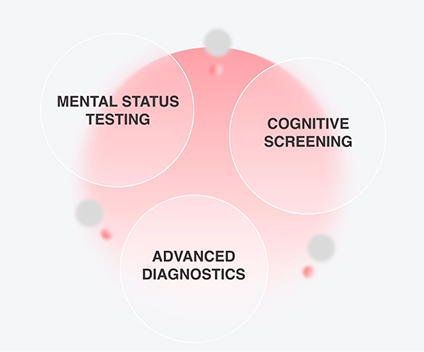
Diagnosis pathway
In Venezuela, dementia detection begins in primary care, though urban families frequently self-refer directly to specialists. While PAHO/WHO guidelines conceptually embed dementia within general mental health and neurology pathways rather than dedicated memory clinics, the public pathway is highly fragmented. Severe shortages of staff, equipment, and medicine cause discontinuous care and incomplete diagnoses. Private providers offer better continuity but are costly and unregulated. Ultimately, the healthcare system’s core challenge is not a lack of referral pathways, but the inability to consistently access and sustain appointments, diagnostics, and treatments.
In routine practice in Venezuela, recognition of dementia symptoms often begins in primary care or general medical settings, particularly when people present with memory complaints, behavioral changes, or functional decline. In urban centers, however, families frequently bypass formal referral chains and self-refer directly to neurology or psychiatry once symptoms escalate, reflecting both urgency and limited confidence in continuity at the primary-care level. A useful indicator of the intended system design is Pan American Health Organization (PAHO)-supported mental-health capacity-building in Venezuela (World Health Organization (WHO) mhGAP Intervention Guide-style training), which explicitly includes dementia among priority conditions for frontline detection and referral. This suggests that, where services are functioning, dementia is conceptually embedded within general mental health and neurology pathways rather than managed through a dedicated national memory-clinic system.
In practice, however, the diagnostic pathway is highly fragmented. Access to public sector services depends on the availability of trained staff, functioning diagnostic equipment, medicines, and facility operations, all of which vary widely by location and over time. As a result, families often face discontinuous care, repeated consultations, or incomplete work-ups. Private providers, when accessible and affordable, can offer more predictable evaluations, follow-up, and continuity, but they operate outside any standardized national pathway. Broader reporting on Venezuela’s health-system crisis indicates that the principal challenge is frequently not uncertainty about referral destinations, but whether appointments, tests, and treatments can be obtained consistently and sustainably.
Wait times
Venezuela lacks national, dementia-specific waiting-time benchmarks, and delays for specialist assessments and imaging are not systematically measured. Public sector waiting times are highly variable, prolonged, or indeterminate due to workforce shortages, equipment downtime, supply deficits, and geographic disparities. Although private alternatives offer shorter wait times, access depends entirely on the ability to pay. This creates a distinct two-track reality where delays are common and poorly tracked, contrasting constrained public healthcare with faster but expensive private routes.
Venezuela does not publish national, dementia-specific waiting-time benchmarks, and waiting periods for specialist assessment and diagnostic imaging are not systematically measured. In practice, delays are highly variable and closely tied to system constraints such as workforce shortages, equipment downtime, supply availability, and geographic disparities. Public sector waiting times consultations or access to imaging tests can be prolonged or indeterminate, particularly during periods of service disruption. Where private services are available, waiting times are typically shorter, but access is contingent on the ability to pay. Documentation of broader access barriers for older adults and people living with disabilities supports the conclusion that delays are common, uneven, and poorly tracked, reinforcing a two-track reality between constrained public access and faster but costly private routes.
Diagnosis cost
Although public healthcare in Venezuela is nominally free, severe shortages force families to pay out-of-pocket for basic dementia diagnostic steps, including neurologist consultations, laboratory tests, and neuroimaging. Costs accumulate across multiple stages, alongside transport expenses. Consequently, the system functions as a de facto semi-privatised model where out-of-pocket spending accounts for 56% of overall health expenditures. This financial burden creates a two-track reality, making personal affordability the central gatekeeper to receiving a timely, complete dementia diagnosis and ensuring continuity of care.
In Venezuela, the cost of dementia diagnosis is shaped less by formal pricing and more by the need to pay privately to complete basic steps of the work-up. Although public sector care is nominally free, persistent shortages of staff, supplies, medicines, and functioning diagnostic services often force families to cover expenses out-of-pocket to secure consultations, laboratory tests, or imaging. As a result, even entry-level diagnostic steps, such as reaching a neurologist or obtaining a CT or MRI, frequently involve private payment, transport costs, and repeated visits, turning “free” care into a de facto household-financed process. For dementia specifically, costs accumulate across multiple stages, including specialist visits, cognitive assessment, neuroimaging, and ongoing follow-up and medication. When public imaging or medicines are unavailable or subject to indefinite delays, families who can afford it turn to private providers or informal markets, while those without resources experience prolonged delays or incomplete diagnosis. This dynamic is consistent with broader reporting that characterizes the system as de facto semi-privatized in practice, with a majority share of health spending falling on household, with assessment citing 56% of overall health expenditures as out-of-pocket. This produces a clear two-track reality: financial capacity largely determines whether dementia is identified in a timely and complete manner, making affordability a central gatekeeper to diagnosis and continuity of care.
Cognitive tests
There is no evidence of a national population-wide dementia screening program in Venezuela, and in low-resource clinical settings the most practical cognitive tools remain brief, low-cost instruments such as the Mini-Mental State Examination (MMSE) and the Clock Drawing Test (CDT). Evidence from a Venezuelan neuropsychology service sample from Caracas suggests that MMSE and CDT, used separately or combined, have only moderate sensitivity for distinguishing people living with mild Alzheimer’s disease from cognitive unimpaired once age and years of education are taken into account, but those tests do not perform well for differential diagnosis across other common clinical presentations such as mild cognitive impairment, depression, or subjective cognitive complaints not confirmed on fuller assessment. Importantly, test performance is strongly shaped by education and age (with lower scores among older adults and those with fewer years of schooling), meaning that unadjusted cut-offs can misclassify people in a highly unequal educational context. In practice, this supports a “screen-and-triage” model in which MMSE and CDT can help flag likely dementia, especially for mild Alzheimer’s disease, yet clinicians often need contextual interpretation, collateral history, functional assessment, and, when possible, fuller neuropsychological evaluation to separate dementia from depression, benign forgetfulness, or other causes of cognitive complaints.
Imaging tests
Neuroimaging (computed tomography (CT) and magnetic resonance imaging (MRI) is concentrated primarily in major urban centers and is used mainly to exclude secondary causes of cognitive decline and support differential diagnosis when accessible. However, actual availability and accessibility reflect a deep divide between public and private sectors. While CT and basic MRI scans are present in the private sector, high costs make them prohibitive for the majority of the population. Public healthcare facilities face persistent equipment downtime, maintenance deficits, and severe resource constraints, leaving vulnerable patients facing extensive waitlists or a total lack of imaging accessibility. Advanced dementia imaging techniques such as FDG-PET and amyloid PET are not routinely available and are generally restricted to research settings or require referral abroad.
Genetic tests
There is no evidence that routine genetic testing for Alzheimer’s disease is a part of the standard diagnostic pipeline within the public health network of Venezuela. Testing for risk-susceptibility genes, such as the Apolipoprotein E epsilon 4 (APOE-ε4) allele, or definitive causative mutations in familial Alzheimer’s (such as PSEN1, PSEN2, and APP), is restricted to academic registries and longitudinal cohort studies.
Biomarker tests
There is no public evidence of standardised Alzheimer’s disease biomarker pathways, such as cerebrospinal fluid (CSF) Aβ/tau panels or blood-based biomarkers, embedded in routine care in Venezuela. Given the documented constraints on specialty care access and system capacity, biomarker use, if present, is likely sporadic, centre-dependent, and privately financed, rather than incorporated into a national diagnostic algorithm.
Cognitive Tests
Cognitive Tests
There is no evidence of a national population-wide dementia screening program in Venezuela, and in low-resource clinical settings the most practical cognitive tools remain brief, low-cost instruments such as the Mini-Mental State Examination (MMSE) and the Clock Drawing Test (CDT). Evidence from a Venezuelan neuropsychology service sample from Caracas suggests that MMSE and CDT, used separately or combined, have only moderate sensitivity for distinguishing people living with mild Alzheimer’s disease from cognitive unimpaired once age and years of education are taken into account, but those tests do not perform well for differential diagnosis across other common clinical presentations such as mild cognitive impairment, depression, or subjective cognitive complaints not confirmed on fuller assessment. Importantly, test performance is strongly shaped by education and age (with lower scores among older adults and those with fewer years of schooling), meaning that unadjusted cut-offs can misclassify people in a highly unequal educational context. In practice, this supports a “screen-and-triage” model in which MMSE and CDT can help flag likely dementia, especially for mild Alzheimer’s disease, yet clinicians often need contextual interpretation, collateral history, functional assessment, and, when possible, fuller neuropsychological evaluation to separate dementia from depression, benign forgetfulness, or other causes of cognitive complaints.
Imaging Tests
Imaging Tests
Neuroimaging (computed tomography (CT) and magnetic resonance imaging (MRI) is concentrated primarily in major urban centers and is used mainly to exclude secondary causes of cognitive decline and support differential diagnosis when accessible. However, actual availability and accessibility reflect a deep divide between public and private sectors. While CT and basic MRI scans are present in the private sector, high costs make them prohibitive for the majority of the population. Public healthcare facilities face persistent equipment downtime, maintenance deficits, and severe resource constraints, leaving vulnerable patients facing extensive waitlists or a total lack of imaging accessibility. Advanced dementia imaging techniques such as FDG-PET and amyloid PET are not routinely available and are generally restricted to research settings or require referral abroad.
Genetic Tests
Genetic Tests
There is no evidence that routine genetic testing for Alzheimer’s disease is a part of the standard diagnostic pipeline within the public health network of Venezuela. Testing for risk-susceptibility genes, such as the Apolipoprotein E epsilon 4 (APOE-ε4) allele, or definitive causative mutations in familial Alzheimer’s (such as PSEN1, PSEN2, and APP), is restricted to academic registries and longitudinal cohort studies.
Biomarker Tests
Biomarker Tests
There is no public evidence of standardised Alzheimer’s disease biomarker pathways, such as cerebrospinal fluid (CSF) Aβ/tau panels or blood-based biomarkers, embedded in routine care in Venezuela. Given the documented constraints on specialty care access and system capacity, biomarker use, if present, is likely sporadic, centre-dependent, and privately financed, rather than incorporated into a national diagnostic algorithm.
Treatment & Care
Treatment & care
Show moreDementia care lacks a purpose-built national network, meaning services are embedded within general urban neurology and psychiatry departments. Continuity is highly volatile, relying on shifting hospital functionalities and a family’s capacity to navigate fragmented care. Approved medications include donepezil, rivastigmine, galantamine, and memantine. High out-of-pocket costs for consultations, transport, and prescriptions place a catastrophic financial burden on households. Unpaid caregiving falls disproportionately on women, who frequently abandon paid employment. State support is absent, leaving caregiver aid to non-governmental organisations.
Specialized facilities and services
Venezuela lacks a national memory-clinic network, embedding dementia care within general neurology and psychiatry services concentrated in major urban centres. Infrastructure is shaped by overall health-system capacity and workforce availability, both severely destabilised by the current crisis. This causes significant fluctuations in hospital functionality, staffing, and diagnostic capacity. Consequently, continuity of care depends heavily on geographic location and real-time service operations. Civil society organisations provide vital support and navigation assistance in urban areas, but these resources remain unevenly distributed and largely unavailable to those living outside major cities.
Venezuela is not publicly profiled as having a national memory-clinic network or a dedicated dementia service tier. Instead, dementia care is largely embedded within general neurology and psychiatry services, primarily located in major urban centers, alongside ad hoc referrals to psychology or neuropsychology where available. Historically, clinical literature from Venezuela and comparable Latin American contexts shows that dementia services have been shaped more by overall health-system capacity and workforce availability than by purpose-built dementia infrastructure. This structural pattern has been significantly intensified under current crisis conditions, where hospital functionality, staffing levels, and diagnostic capacity fluctuate over time and geography. As a result, continuity of dementia care depends heavily on where people live, which services are operational at a given moment, and whether families can navigate multiple entry points. Civil society organizations in urban areas play an important bridging role, helping families identify available clinicians, interpret diagnoses, and cope with fragmented service provision, but these supports are unevenly distributed and largely inaccessible outside major cities.
Approved medication
| Generic Name | Trade Name | Used for |
|---|---|---|
| Donepezil | Aricept, Aricept ODT, Adlarity, Eranz, Memac, Alzepil, Davia, Donecept, Donep, Donepex, Donesyn, Dopezil, Yasnal, Memorit, Pezale, Redumas, Zolpezil, Namzaric* | Donepezil is indicated for the symptomatic treatment of mild to moderately severe Alzheimer’s dementia. |
| Rivastigmine | Exelon, Exelon Patch, Prometax, Rivastach, Nimvastid | Symptomatic treatment of mild to moderately severe Alzheimer’s dementia. Symptomatic treatment of mild to moderately severe dementia in patients with idiopathic Parkinson’s disease. |
| Galantamine | Razadyne, Razadyne ER, Reminyl, Reminyl XL, Nivalin, Lycoremine, Galsya | Galantamine is indicated for the symptomatic treatment of mild to moderately severe dementia of the Alzheimer type. |
| Memantine | Namenda, Namenda XR, Ebixa, Memary, Axura, Akatinol, Maruxa, Nemdatine, Namzaric* | Treatment of adult patients with moderate to severe Alzheimer’s disease. |
*Namzaric = combination of Donepezil and Memantine
Treatment cost
Dementia care in Venezuela imposes a catastrophic financial burden on households, driven by private spending on consultations, tests, medicines, transport, and adaptive care due to public sector gaps. The most significant hidden cost is unpaid caregiving time, primarily falling on women who often reduce or abandon paid employment to provide care. Combined with economic instability and limited social protection, these cumulative expenses can trigger long-term household impoverishment. Ultimately, this deepens inequalities regarding who can afford sustained treatment and support.

Dementia care in Venezuela represents a substantial and often catastrophic financial load for households. Because financing is heavily household-based in practice, costs accumulate across repeated consultations, private diagnostic tests, medication purchases, transportation, and adaptive care needs. Even when some services are theoretically available in the public sector, indirect costs and system gaps frequently push families into private spending to maintain continuity of care. The most significant hidden cost is unpaid caregiving time, which often falls on family members, typically women, who may reduce or abandon paid employment to provide full-time care. In the context of economic instability and limited social protection, dementia care can therefore trigger long-term household impoverishment, reinforcing inequalities in who can sustain ongoing treatment and support.
Caregiver support
Carer support in Venezuela relies on NGOs and communities rather than formal state programmes. The Fundacion Alzheimer de Venezuela acts as a key information and counselling hub in Caracas-Baruta, focusing on education and awareness. No national carer benefit schemes or dementia-specific social entitlements exist. Instead, carers depend on informal family networks and community solidarity. This lack of structured state assistance puts sustained caregiving at risk, particularly for lower-income households and those outside major urban centres, highlighting civil society’s vital role in the country’s dementia ecosystem.
Carer support in Venezuela is predominantly non-governmental organisation (NGO)- and community-driven, rather than embedded in formal state programs. The Fundación Alzheimer de Venezuela functions as a visible hub for information, counselling, and guidance, particularly in the Caracas-Baruta area, and often serves as a practical first point of contact for families seeking help. Its activities include education, awareness-raising, and signposting rather than formal service provision, reflecting both necessity and resource constraints. There is no clear evidence of national carer benefit schemes or dementia-specific social entitlements. Broader reporting on health and social-service limitations suggests that carers rely primarily on informal family networks, community solidarity, and NGO support rather than structured state assistance. This places sustained caregiving at risk, particularly for lower-income households and those outside major urban centers, and further underscores the central role of civil society in Venezuela’s dementia ecosystem.
Policy
Policy
Show moreenezuela lacks an operational national dementia plan or any forward-looking strategies with defined budgets or timelines. Dementia is addressed indirectly within broader mental health or ageing frameworks, resulting in a complete absence of standardised care pathways or service benchmarks. Legal gaps are severe; there are no binding standards for long-term care or statutory frameworks for supported decision-making and carer protection. Culturally, cognitive decline is normalised as standard ageing. Stigma discourages help-seeking, and the view of care as a private family duty hides immense unmet need.
National dementia plan
Venezuela has no dedicated, operational national dementia plan with defined objectives, financing, or monitoring mechanisms. While grouped regionally among countries developing strategies, this reflects aspirational engagement rather than formal implementation. Dementia is addressed indirectly, subsumed within broader policies on mental health, ageing, and chronic disease. Consequently, it lacks institutional anchors like standardised care pathways, service benchmarks, and dedicated budgets. The absence of a disease-specific governance structure means policy intent does not translate into service delivery, leaving dementia care entirely contingent on general health system capacity.
There is no clear public evidence of a dedicated, operational national dementia plan in Venezuela with defined objectives, financing, timelines, or monitoring mechanisms. Regional health policy literature notes that Venezuela has at times been grouped among Latin American countries working toward dementia strategies, but this framing reflects aspirational or conceptual engagement rather than formal adoption and implementation. In practical terms, dementia appears to be addressed indirectly, subsumed within broader discussions on mental health, ageing, disability, and chronic disease, rather than treated as a standalone policy priority with its own governance structure. As a result, dementia policy lacks the institutional anchors typically associated with national plans, such as standardized care pathways, service benchmarks, workforce planning targets, or dedicated budget lines. The absence of these elements means that policy intent does not reliably translate into service delivery, and dementia care remains contingent on general system capacity rather than protected through disease-specific planning.
Upcoming plans
No Venezuela-specific forward-looking dementia strategy with official timelines, milestones, or legislative status has been identified in accessible public documentation.
Policy gaps
Legal barriers
Venezuela lacks a dedicated legal and regulatory framework for dementia, meaning there are no binding national standards for diagnosis, treatment, or long-term care. Addressed only indirectly through broader mental health, disability, and ageing policies, dementia care lacks standardised referral pathways and specific protections. Significant legal gaps exist regarding supported decision-making, guardianship, workplace protections for carers, and dementia-specific benefits. Without these safeguards, caregiving responsibilities shift entirely onto households and informal networks, a situation intensified by high out-of-pocket spending and weak social-protection enforcement.
Venezuela lacks a dedicated legal and regulatory framework for dementia, reflecting the absence of an operational national dementia plan. There are no nationally binding standards that define minimum requirements for dementia diagnosis, treatment, long-term care, or palliative support, leaving service provision dependent on general health system capacity rather than enforceable obligations. Dementia is addressed indirectly through broader mental health, disability, or ageing policies, which do not provide the specificity needed to ensure continuity of care, equitable access to diagnostics and medicines, or standardized referral pathways across the country. Equally important are gaps in legal protections for carers and people living with cognitive impairment. There is no clear statutory framework covering supported decision-making, guardianship adapted to progressive cognitive decline, workplace protections for family carers, or dementia-specific social benefits. In practice, this leaves families without formal legal or financial safeguards and shifts responsibility for care almost entirely onto households and informal networks, a situation that is exacerbated by high out-of-pocket health spending and weak enforcement capacity within the social-protection system.
Cultural barriers
n Venezuela, cultural perceptions of ageing shape dementia outcomes, as memory loss is often normalised as a natural part of growing old. This, alongside stigma surrounding neurological disorders, delays clinical recognition and early help-seeking, especially outside urban centres. Dementia care is widely viewed as a private family responsibility, driven by traditions of intergenerational support and low trust in public institutions. While this strengthens informal caregiving, it reduces demand for state support and formal services. Under crisis conditions, these cultural norms mask unmet needs, keeping dementia invisible in public discourse and policy prioritisation.
Like in the rest of Latin America, cultural perceptions of ageing and cognitive decline also shape dementia outcomes in Venezuela. Memory loss is often normalized as a natural part of ageing, particularly in contexts of limited access to medical assessment, which can delay recognition of dementia as a clinical condition requiring care and support. Stigma surrounding mental and neurological disorders further discourages early help-seeking, especially outside major urban centers where specialist services and public awareness are more limited. At the family and community level, dementia care is widely viewed as a private, family responsibility, reinforced by longstanding traditions of intergenerational support and by the erosion of trust in public institutions. While this can foster strong informal caregiving, it also reduces expectations of state involvement and weakens societal demand for formal dementia services or legal reform. In crisis conditions, these cultural norms can unintentionally mask unmet need, keeping dementia largely invisible in public discourse and policy prioritization.
Research
Research
Show moreDementia research is regulated by the Ministry of People’s Power for Health and the National Institute of Hygiene Rafael Rangel. The country lacks a centralised public registry for clinical trials. Local innovation focuses adaptively on service adjustments and frontline provider training within resource-limited settings rather than advanced biomarker platforms. Historically, the Central University of Venezuela anchored the 10/66 Dementia Research Group. This consortium provided critical cross-cultural data proving underestimations in local prevalence, examined comorbidities, and piloted caregiver training interventions that informed regional policies.
Selected academic institutions
Clinical trials and registries
The Ministry of People’s Power for Health (MPPS) and the National Institute of Hygiene Rafael Rangel (INHRR) are responsible for approving and overseeing clinical trials to ensure they comply with national laws and international standards for good clinical practice. Venezuela does not currently maintain a centralized, patient-facing online national registry for clinical trials. The most reliable way to check for major international or interventional studies taking place in the country is by searching global databases like ClinicalTrials.gov.

Selected innovative methods
Innovation in Venezuela’s dementia space is adaptive and focused on workforce training rather than technology, aligning with PAHO guidelines for frontline providers. Historically, the 2009 10/66 Dementia Research Group, anchored at the Central University of Venezuela, revealed that local dementia prevalence was underestimated and closely linked to chronic conditions. This research also successfully piloted caregiver training interventions. Ultimately, data from these Venezuelan centres influenced regional PAHO policies, global WHO initiatives, and World Alzheimer Reports.
Innovation in Venezuela’s dementia space is predominantly adaptive rather than technological. Rather than biomarker platforms, precision diagnostics, or advanced neuroimaging research, innovation focuses on service adaptation and workforce training. This aligns with PAHO-supported approaches that emphasize integrating dementia recognition into general clinical and mental-health training, particularly for frontline providers working in low-resource and unstable settings. Such models prioritize early identification, basic cognitive assessment, referral awareness, and caregiver guidance, aiming to preserve clinical capacity under constraint. While this approach does not expand access to advanced diagnostics, it represents a pragmatic effort to maintain minimum diagnostic competence and continuity of care in a severely resource-limited environment.
In 2009, 10/66 Dementia Research Group, a global research consortium coordinated through Alzheimer’s Disease International (ADI) and led academically by King’s College London’s Institute of Psychiatry, Psychology & Neuroscience. In Venezuela, this work was anchored in Central University of Venezuela and its affiliated academic hospital and neuropsychology units, which served as key national centres for data collection, clinical evaluation, and carer-focused interventions. Through standardized, cross-cultural instruments applied across multiple countries, the network demonstrated that dementia prevalence in Venezuela and other low- and middle-income settings had been significantly underestimated and that dementia is a leading driver of disability and dependency among older adults. The research also highlighted the interaction between dementia and poorly controlled chronic conditions such as diabetes and hypertension, reflecting broader gaps in access to basic medical care. Importantly, the work extended beyond measurement: university- and hospital-based teams piloted structured caregiver training interventions, delivered through clinical and community settings, which showed tangible improvements in household functioning and carer wellbeing. Findings from these centers have fed into regional policy work with the PAHO, influencing geriatric and ageing strategies across Latin America and contributing to global WHO and World Alzheimer Report.
Support
Support
Show moreDementia support relies entirely on civil society entities like HelpAge International and Fundación Alzheimer de Venezuela. The foundation provides nationwide carer training, memory clubs, counselling, and support groups, including a major hybrid educational conference in 2023. HelpAge manages humanitarian interventions targeting isolated, food-insecure older adults left vulnerable by migration. Through door-to-door outreach and the Rapid Needs Assessment conducted with Convite, they provide health monitoring and push for inclusive aid distribution. No dedicated dementia media outlets exist, restricting information to NGO channels.
Selected national associations, patient family associations, NGOs:
Selected initiatives
The Fundacion Alzheimer de Venezuela provides carer training, counselling, and therapeutic activities through national branches, and organised a multidisciplinary cognitive decline conference in Caracas on 21 September 2023. Meanwhile, HelpAge addresses Venezuela’s humanitarian crisis by supporting isolated, food-insecure older adults left behind by migration. Their Rapid Needs Assessment with Convite surveyed over 900 adults across three states, revealing severe healthcare deficits, collapsed pensions, and high disability. HelpAge advocates for integrating older people into aid programmes, demonstrating how community outreach mitigates isolation and neglect amid systemic constraints.
Activities organised by The Fundación Alzheimer de Venezuela
Conference on cognitive decline
HelpAge
The Rapid Needs Assessment of Older People
- https://www.facebook.com/alzheimervenezuela/photos?locale=es_LA
- https://alzheimervenezuela.org/
- https://alzheimervenezuela.org/zonas/multimedia/conferencia-sobre-el-deterioro-cognitivo/
- https://www.thenewhumanitarian.org/news-feature/2020/02/25/Venezuela-elderly-hunger-crisis
- https://www.helpage.org/silo/files/rapid-needs-assessment-of-older-people-venezuela.pdf
Dedicated media outlets
There is no consistently documented, Venezuela-specific media outlet dedicated exclusively to Alzheimer’s disease or dementia. Information dissemination occurs mainly through NGO communications on social media, general health journalism, and regional or international Alzheimer’s disease platforms. As a result, dementia coverage is often episodic and advocacy-driven, rather than embedded in sustained public-health communication. The absence of dedicated media further contributes to low public visibility of dementia as a policy issue, reinforcing reliance on civil society channels for information and limiting broader societal engagement with the challenges of cognitive ageing.